



In-depth guide · CampingSpirit
From Senj by ferry to Rab, along the coast road beneath the Velebit to Starigrad, over the Pag bridge through the moonscape to Novalja, then on to the salt pans of Nin and a short hop to Zadar: around 450 kilometres between the Kvarner and northern Dalmatia, with two islands, a karst gorge and a ferry that dictates your timetable.
The spirit of the route
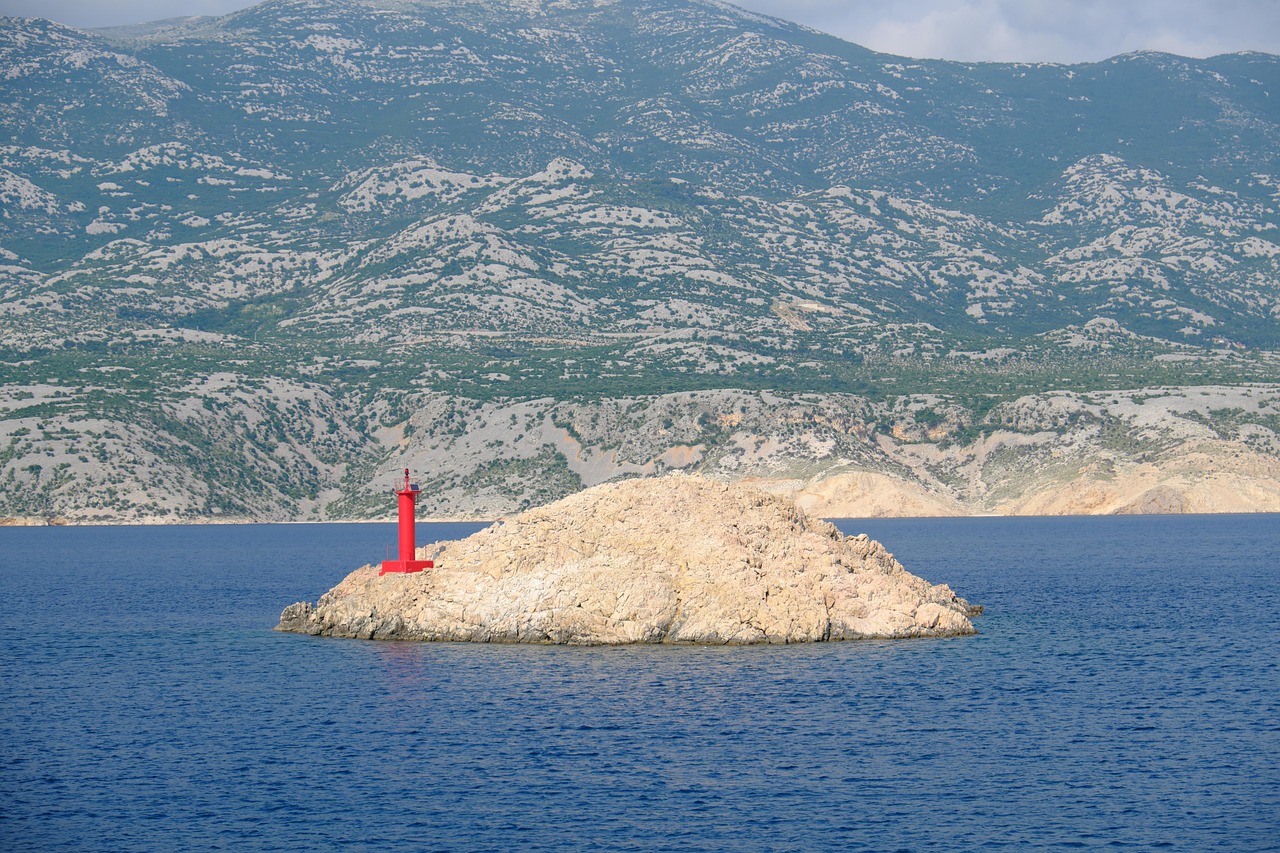
Here the Adriatic is not gentle but stern. From your sliding door on the coast road you see the grey wall of the Velebit on the left, the channel water in shifting blues on the right, and beyond it the bare ridges of Rab and Pag, which look as if someone had scraped off the green. That is exactly what the bora has done: it carries salt across the island, and the sheep eat what is left – sage, immortelle, wormwood. You taste it later in the cheese. On Rab, by contrast, holm oaks and pines reach down to the water, and in Lopar there is a flat sandy beach you would not expect on the Kvarner coast. After Rab the camper rolls onto the ferry, stops at viewpoints overlooking the islands and spends the evening beside salt pans in which the sky is mirrored. The route demands respect for the wind – and rewards you with places where time moves more slowly.
Stage-by-stage plan
1Stage 1: Senj to Rab (town) via the Stinica–Mišnjak ferry (approx. 45 km)
- The drive
- From Senj take the coast road D8 southwards, directly beneath the bare Velebit: long stretches with open views of the sea, few villages, often a crosswind. After a good 30 kilometres the access road to the Stinica ferry port branches off. The car ferry to Mišnjak on Rab takes about 15 to 20 minutes. On Rab it is then a good ten kilometres through holm oak forest and maquis to Rab town. Pure driving time is about an hour, plus the ferry and waiting time at the port.
- Highlights & must-sees
- Senj: the Nehaj fortress above the town, built in the 16th century for the Uskoks, with a view over the channel – go early in the morning, before the sun starts to bite.
- The ferry crossing itself: from the upper deck you see the Velebit wall at its full height, a vantage point the road does not offer.
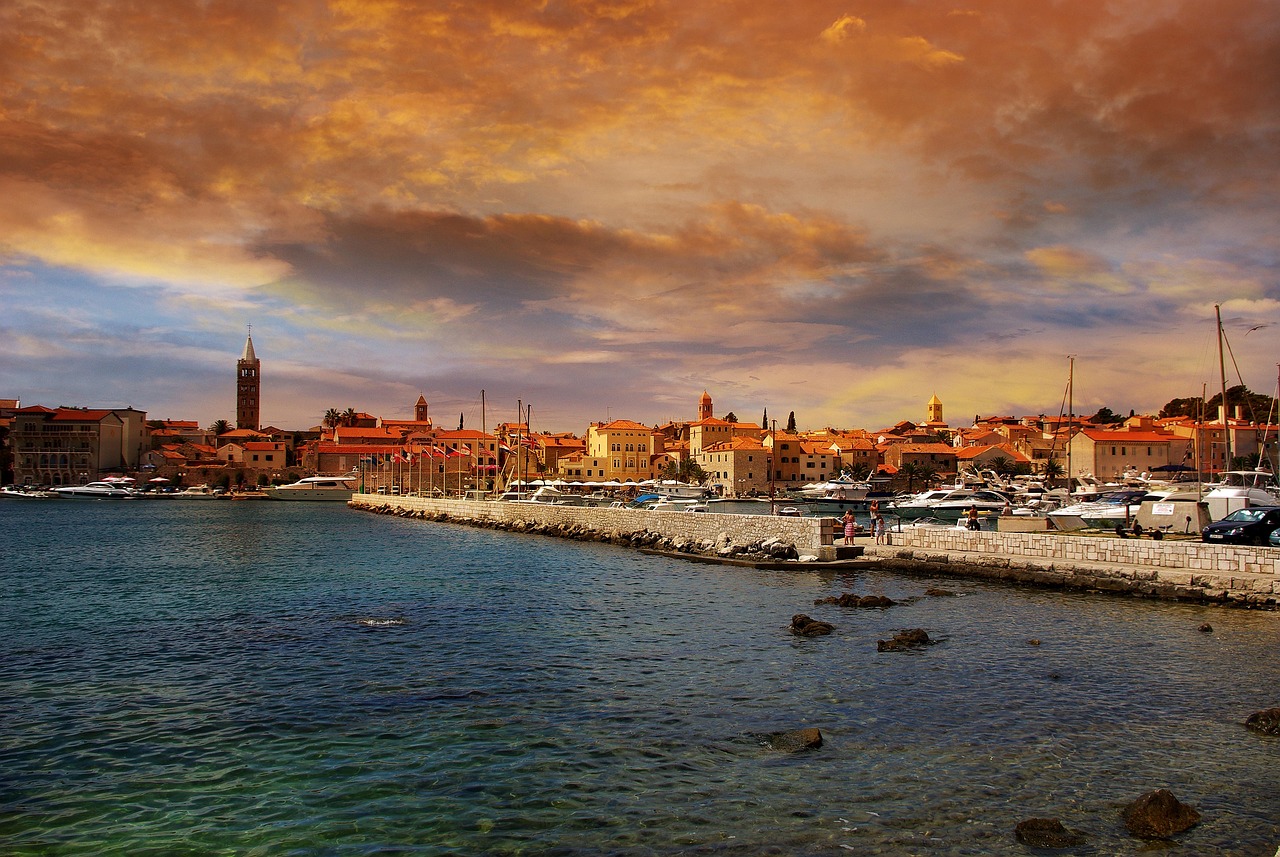
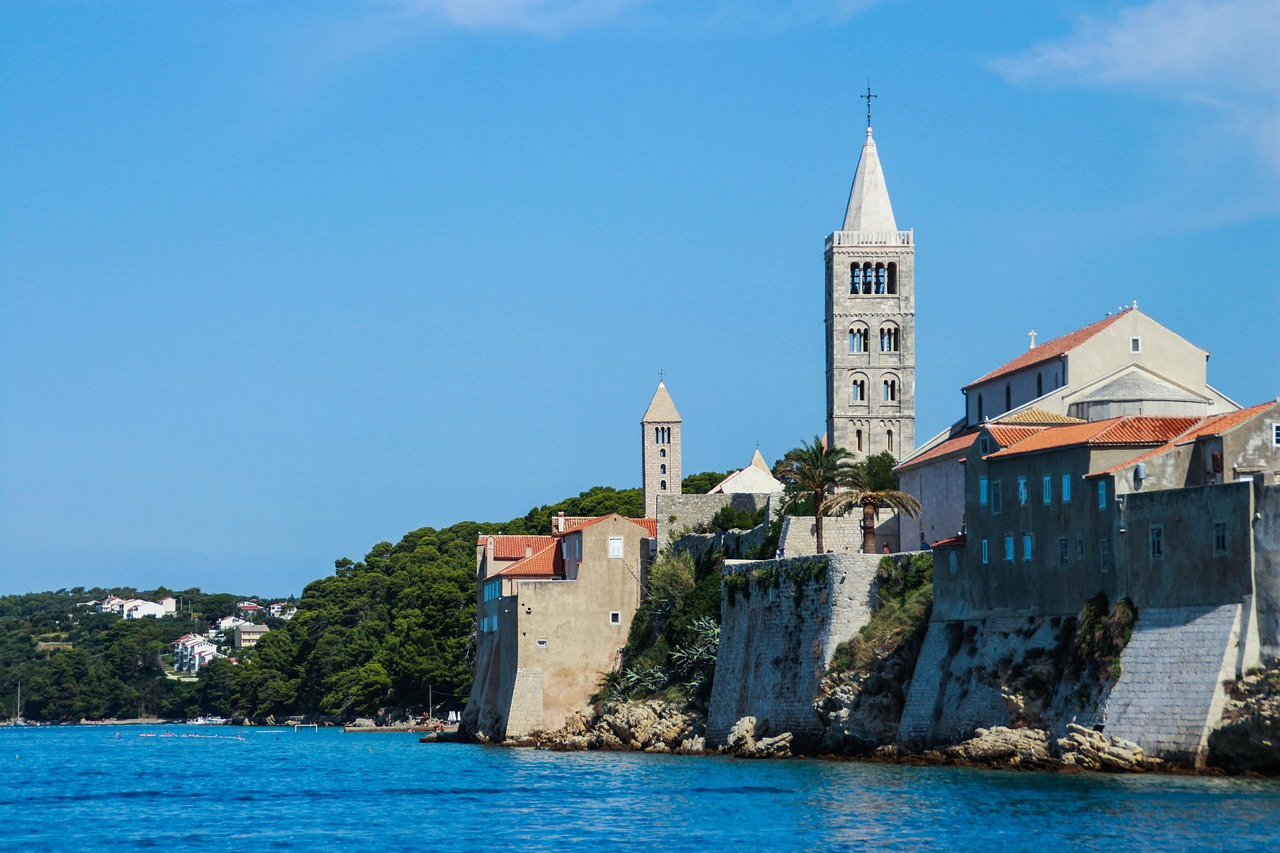
- Rab town in the evening: the four bell towers on the ridge of the old-town peninsula, best seen from the water or from the promenade.
- CampingSpirit overnight tip
-
Official campsite or RV park: Rab town has several campsites on its outskirts, including Autokamp Padova III in a sandy bay close to the town, with beach access; ask in advance about facilities (electricity, fresh water and waste disposal) and the length of the season. In Senj itself, Kamp Škver by the sea is an option if you need another night before the crossing.
Free camping or nature tip (where legal): The Croatian ban on overnighting outside registered sites also applies on Rab. The municipalities carry out checks in summer, including at bays in the west of the island and on the approaches to the old town. Fines are high. If you arrive late from the ferry, it is better to plan your site in advance than to search for a parking spot at night.
- Insider tip for campers
- In summer the ferry is the bottleneck: arrive early, expect a wait in high season and check the current timetable with the operator, Rapska plovidba. To the best of our knowledge there is no place reservation: tickets are sold at the port and vehicles are taken in order of arrival. In strong bora, crossings are cancelled and the D8 is closed to motorhomes and high vehicles – then all you can do is wait. The old town of Rab is pedestrianised; motorhomes park at the car parks on the edge of town, and you do not drive into the lanes. Turn the gas off at the bottle before boarding the ferry.
2Stage 2: Rab (town) to Lopar (approx. 35 km)
- The drive
- From Rab town first make a detour west to Kampor (Dundo forest), then return and take the island road D105 north via Supetarska Draga onto the Lopar peninsula, until the road drops down to the sandy beach. The direct route is just under 20 kilometres; with the detour you come to around 35. The road is narrow and winding with stone walls at the edge; it gets tight in the villages. Pure driving time is under an hour and a half; plan the rest of the day for beach and forest.
- Highlights & must-sees
- Rajska plaža (“Paradise Beach”) in Lopar: a long, gently shelving sandy beach, unusual for the Croatian coast and good for children. Lopar has many more sandy bays, which you can reach on foot or by bike.
- The Dundo forest near Kampor, west of Rab town: a protected forest reserve with centuries-old holm oaks and shady paths, one of the few places where you can walk in the cool in high summer. Take water and provisions.
- Kamenjak (408 m), the island’s highest point, with a wide view over the islands; reach it on foot or by bike rather than by camper, because the access roads are narrow.
- CampingSpirit overnight tip
-
Official campsite or RV park: There are several sites near the beaches on the Lopar peninsula, among them San Marino, right on the sandy beach Rajska plaža, with electricity, sanitary facilities and beach access. Rab has a long naturist tradition: in Lopar there are several designated naturist beaches (such as Sahara), and near Rab town Kandarola; the areas are signposted. Ask in advance about facilities, pitch sizes and opening times, and book early in July and August.
Free camping or nature tip (where legal): On Lopar and Rab, overnighting in a motorhome outside campsites is not tolerated. Beach car parks are day-use car parks, and the municipality carries out checks, especially at weekends. Fires and barbecues in the forest are banned in summer – the fire risk on Rab is high.
- Insider tip for campers
- The beaches of Lopar are flat and warm but without shade: bring a sun awning or go to the water early. Do your water and shopping beforehand in Rab town. In the low season the island’s coastal villages often have only a few shops open – use the markets and bakeries in Rab town.
3Stage 3: Lopar to Starigrad-Paklenica via Mišnjak, Stinica and the Velebit coast road (approx. 125 km)
- The drive
- Back via Rab town to the Mišnjak ferry port, cross to Stinica and then take the D8 south for two to two and a half hours: via Jablanac and Karlobag, at first with deep views of Pag and Rab, past Prizna (ferry to Pag) and finally along a long straight to Starigrad. The road is narrow, winding, hard to overtake on and busy in summer. Refuel and shop in Karlobag; in between, supplies are thin. With the ferry and breaks, it is a long driving day.
- Highlights & must-sees
- The viewing bays along the D8 between Jablanac, Prizna and Karlobag: stop on a lay-by and look out over the channel with Pag and Rab, best in the late afternoon light.
- Karlobag: a small harbour town with a pebble beach, good for a lunch break and for refuelling; from here the mountain road climbs up to the Velebit.
- Arriving in Starigrad: the view of the limestone walls of Paklenica above the sea changes with the light, and in the evening the rock turns reddish.
- CampingSpirit overnight tip
-
Official campsite or RV park: Starigrad-Paklenica has a chain of campsites along the coast road, mostly small family-run places between the road and the pebble beach, such as Autocamp Jaz and Camp Peko near the park entrance, and also Camping Plantaža a little further off. Electricity and sanitary facilities are usually available, waste disposal not always. For further sites in the village, including the one run by the national park by the sea, see the CampingSpirit guide “Castles, watermills and bear forests – by camper through Croatia’s interior from Zagreb to the Krka”.
Free camping or nature tip (where legal): Between Senj and Starigrad, checks are carried out at swimming bays and in harbours; camping in the lay-bys of the D8 is forbidden and punished. In the Velebit there is a general ban on fires in the open in summer. Take care when a bora warning is in force: the authorities then close parts of the coast road to motorhomes.
- Insider tip for campers
- Before you set off, check the road conditions with the Croatian automobile club (HAK): in strong bora the D8 beneath the Velebit is often closed to high vehicles, trailer combinations and motorcycles, and then all that remains is waiting at the ferry or taking the detour via the motorway. On the coast road there are long stretches without a petrol station – fill up in Senj, Karlobag or before. The nature destinations on the inland side of the Velebit, Zavižan and Sjeverni Velebit National Park, are covered in the inland guide.
4Stage 4: Starigrad-Paklenica to Pag town (Šimuni) via the Pag bridge (approx. 60 km)
- The drive
- Morning: a hiking day in the gorge; afternoon: the drive. Take the D8 south to Maslenica, then head towards Pag and cross the Paški most, the bridge over the Ždrelo strait, onto the island. On the island the main road D106 runs through an almost treeless stone desert, past drystone walls and sheep. The bridge is open but exposed to the wind; driving time is about an hour without stops.
- Highlights & must-sees
- Velika Paklenica: the path into the gorge begins at the park entrance just beyond Starigrad, past rock walls several hundred metres high; even the walk through the lower part of the gorge is worthwhile for occasional hikers. Bring enough water and ask about the entrance fee and trail conditions at the park entrance.
- Manita peć: a stalactite cave above the gorge, which can only be visited with a guide; from the Velika Paklenica car park it is about an hour and a half’s walk uphill. Ask at the park entrance about visiting times and tours.
- The Pag bridge and the moonscape: beyond the bridge there are car parks with a view of the Ždrelo strait. In Pag itself, the planned old town with the Church of the Assumption and the unfinished Duke’s Palace.
- CampingSpirit overnight tip
-
Official campsite or RV park: On the west coast of the island lies Kamp Šimuni in the bay of Šimuni, about ten kilometres north-west of Pag town: electricity, sanitary facilities and beach access, season usually spring to autumn. In Pag town itself the choice of campsites is thin – plan your search for a site in advance and check whether you can reserve.
Free camping or nature tip (where legal): Camping is forbidden in Paklenica National Park, as is sleeping in a vehicle and open fires; in the park there are only mountain huts, and the campsites lie outside, in the village. On the island of Pag, too, wild campers are unwelcome: beach access roads and salt pans are marked, and the municipalities carry out checks. Taking stones or salt from the salt pans is not allowed.
- Insider tip for campers
- In strong bora the Pag bridge is closed, in some cases to all vehicles, and the ferries to the island are cancelled too – find out beforehand and, if necessary, plan a buffer day. Paški sir (Pag sheep’s cheese) is sold by the island’s cheese dairies or at small roadside stalls; ask to be shown the stages of maturity and store it cool. If you want to try spit-roast lamb, order it in advance at a family restaurant – it is often available by weight and by prior notice.
5Stage 5: Pag town to Novalja with a detour to Lun (approx. 75 km)
- The drive
- From Pag town take the D106 through the stony landscape north to Novalja, then the narrow road to the island’s northern tip with Lun. The road to Lun is narrow and wind-whipped; large motorhomes drive slowly. Where pasture and fences lie along the way, gates must be kept closed. Return to Novalja the same way; in total about two and a half hours of driving time with stops.
- Highlights & must-sees
- The salt pans of Pag: flat basins on the edge of the town where salt has been produced since the Middle Ages; salt harvest in high summer, with Paška sol sold on the spot.
- Lun and its olive grove: around 80,000 olive trees on stony ground, many of them very old, the oldest estimated at around 1,600 to 2,000 years; the grove is protected as a botanical reserve, and part of it can be walked on gravel tracks.
- Novalja: the Roman aqueduct tunnel Talijanova buža (about 1.2 kilometres long, access via the town museum, only a short stretch can be entered with protective equipment) and the remains of the Roman settlement sunk in the sea in Caska bay – evidence of the ancient town of Cissa.
- CampingSpirit overnight tip
-
Official campsite or RV park: Kamp Straško near Novalja lies on a peninsula with a beach and is one of the island’s large sites: electricity, sanitary facilities, fresh water and waste disposal, pitches for campers; in high season book well in advance. In Šimuni (Kamp Šimuni) you will find alternatives with less bustle if you need them.
Free camping or nature tip (where legal): Around Novalja and especially at Zrće beach, overnighting in motorhomes outside the sites is banned; the municipality carries out checks, above all in summer. Camping is likewise prohibited on the natural beaches and in the olive-grove area of Lun; fires and barbecues are banned in summer.
- Insider tip for campers
- In summer Zrće is the centre of the beach clubs and loud until late at night – if you want peace, choose a site in Šimuni or at the end of the island. In Pag town it is best to buy salt, cheese and lace in the morning; Pag needle lace belongs to the Croatian lace-making tradition that UNESCO lists as intangible cultural heritage. Top up water and supplies in Novalja: further north there are hardly any shops.
6Stage 6: Novalja to Nin (approx. 90 km)
- The drive
- Back on the D106 via Pag town and the Pag bridge to the mainland, then on the D8 and minor roads into the lowland of Ravni Kotari and to the Nin lagoon. Your camper already knows the road across the island; on the mainland it gets wider, but busier in summer. Driving time is about an hour and a half to two hours. Nin itself lies on a small island, reached by a bridge.
- Highlights & must-sees
- Nin’s old town on the lagoon island: the 9th-century Church of the Holy Cross (Sv. Križ), regarded as the smallest cathedral in the world, and the statue of Bishop Grgur Ninski, whose toe is said to bring luck.
- The salt gardens of Nin (Ninska solana): flat basins where salt is harvested in summer, with a museum and sales of salt products; photogenic in the evening light.
- Kraljičina plaža (“Queen’s Beach”): a long, flat sandy beach with lagoon mud that locals use for therapeutic purposes; the name refers to Nin’s role as an early royal city of the Croats.
- CampingSpirit overnight tip
-
Official campsite or RV park: Around Nin there are several sites on flat sandy ground: Ninska Laguna is a large site on the lagoon with electricity, sanitary facilities and beach; in Zaton there is also the larger Zaton Holiday Resort with plenty of facilities. Ask in advance about pitch sizes, fresh water and waste disposal, and season; book early in summer.
Free camping or nature tip (where legal): Around the lagoon and the salt pans, overnighting outside the sites is forbidden, as is walking into the salt basins away from the paths. The municipality carries out checks in season; fires and barbecues are banned in the pine zone.
- Insider tip for campers
- Nin’s old town is small and unsuitable for motorhomes: park on the edge of the village and walk the few metres over the bridge. The wind on the beach is often strong – that makes Nin a destination for kitesurfers, but also a place where your awning must be well anchored. It is best to buy salt directly at the salt works.
7Stage 7: Nin to Zadar (approx. 20 km)
- The drive
- A short detour from Nin to Zadar on the country road through the coastal plain, then into the city. The route is flat and well built, with traffic only at the city entrance. Pure driving time is about half an hour; Zadar is meant as a short finale, not as a focus in its own right.
- Highlights & must-sees
- Zadar’s old town on the peninsula: the Forum with the round church of Sv. Donat and the Sea Organ on the waterfront promenade, where the sea makes music.
- The sunset on the promenade – a calm finish after the windy days on the islands.
- The market hall on the edge of the old town: a good chance to stock up on cheese, olives and fish for the journey home.
- CampingSpirit overnight tip
-
Official campsite or RV park: For a last night near the city, Premium Camping Zadar in the Borik district is a good choice; its facilities are described in the CampingSpirit guide “Limestone, cathedrals and oyster beds – by camper along the Jadranska magistrala from Zadar to Dubrovnik”. Alternatively, stay in Nin or Zaton and only make a day trip into the city.
Free camping or nature tip (where legal): In Zadar, overnighting in a motorhome outside the sites is not permitted; the city carries out checks, especially on the promenade and in Borik. Parking in public car parks is chargeable; day parking is possible.
- Insider tip for campers
- Leave the camper on the edge of town and take the bus or a bike into the old town; the pedestrian zone is narrow, and parking spaces for motorhomes are scarce. If you want to continue south, take the coast road, as described in the guide to the Dalmatian coast; for the Kvarner islands of Krk, Cres and Lošinj, see the guide “Mountain nests, lighthouses and island ferries – by camper through Istria and across the Kvarner Bay”.
Camping practice & local rules
Wild camping & overnight parking
- In Croatia, camping outside registered campsites is banned nationwide, including overnighting in a motorhome in car parks, on beaches and in harbours. On the islands of Rab and Pag, the municipal police and enforcement officers carry out strict checks in summer; fines run to three-figure euro amounts and can be considerably higher.
- Paklenica National Park forbids tents, sleeping in vehicles and open fires outside its own mountain huts. The Velebit Nature Park and the salt pans of Pag and Nin are also protected: stay on the paths, take neither salt nor stones and keep pasture gates closed.
- In summer a comprehensive ban on fires and barbecues applies in the open; the karst forests on the Velebit and the maquis on Rab burn quickly. At the slightest sign of smoke, call the emergency number 112.
- In strong bora, the downslope wind from the Velebit, the authorities close the D8 to motorhomes, and also the Pag bridge and the ferries; allow buffer time. Useful directories: park4night, Campercontact and the directory of the Croatian camping association (camping.hr). Book in advance between mid-July and mid-August.
Waste disposal & supplies
- Public fresh-water and waste-disposal stations are rare on the route. Dispose of waste at campsites; many accept passers-by for a fee, so ask at reception.
- Never empty grey water or the toilet cassette onto the ground or into storm drains: the karst channels everything into the groundwater and the sea, and water is scarce on Pag and Rab in particular.
- Tap water on the coast is generally drinkable; on the islands it gets scarce in high summer, so fill up completely at the campsite and carry an additional canister.
- Gas: German exchange bottles are not swapped. Autogas (autoplin) is available at larger filling stations; for refillable tanks, take the Dish adapter with you. Turn off the gas bottles on the ferry. Fill up in Senj, Karlobag, Novalja and Zadar; in between, filling stations are few and far between.
Vehicle size & traffic rules
- Speed limits: motorhomes up to 3.5 t 50 km/h in built-up areas, 90 km/h outside built-up areas, 110 km/h on expressways, 130 km/h on motorways; over 3.5 t and trailer combinations 80 km/h outside built-up areas, 90 km/h on motorways. On the D8 along the Velebit and on Pag, lower limits often apply and are signposted.
- Tolls: on the route described you drive almost only on country roads; the Pag bridge is toll-free to the best of our knowledge, but check the current position beforehand. Ferries are chargeable and are priced by vehicle length and height. The toll system is due to be converted to electronic collection without toll booths – if you use the motorway (A1), check the current position and method of payment in advance.
- Dimensions: on Rab, in old towns and on access roads to beaches, roads are narrow; large motorhomes (over 7 m) struggle here. Observe height and width restrictions.
- Driving lights: in the winter period (from the clock change in autumn to the clock change in spring) you must drive with dipped headlights or daytime running lights even during the day. Winter equipment (winter tyres or snow chains) is mandatory on signposted winter routes between mid-November and mid-April, and otherwise in snow or ice.
- Alcohol: limit 0.5 per mille, zero for young drivers and professional drivers; mobile phone at the wheel only with a hands-free kit. A high-visibility vest and warning triangle must be on board; trailer combinations carry a second triangle. Emergency number 112.
CampingSpirit packing & preparation checklist
- Sturdy steel pegs or ground anchors and tension straps for awning and porch awning: the rocky karst ground will not hold ordinary pegs, and the bora comes without warning.
- Water shoes with a firm sole: stony beaches, pebble bays and sea urchins come with Rab, Pag and Nin.
- Hiking boots with a grippy sole and three litres of water per person for Velika Paklenica: the limestone is slippery, and water points in the gorge are rare.
- Cool box or cool bag with ice packs for Pag cheese, lamb and fish: in summer it quickly gets too warm in the car.
- An additional 10-litre water canister: on Pag and Rab water is scarce, and filling points are far apart.
- Sun awning or shade net and sun cream: on Pag and on the sandy beaches of Lopar there are hardly any trees.
As of 2026-10. Closures, fees and booking rules change: check official sources before you go.