



In-depth guide · CampingSpirit
From the cascades of Una National Park via Jajce, Travnik and Sarajevo through the Neretva Valley to Mostar and into the karst of Herzegovina: around 725 kilometres across a country you need to drive slowly and take in with open eyes.
The spirit of the route
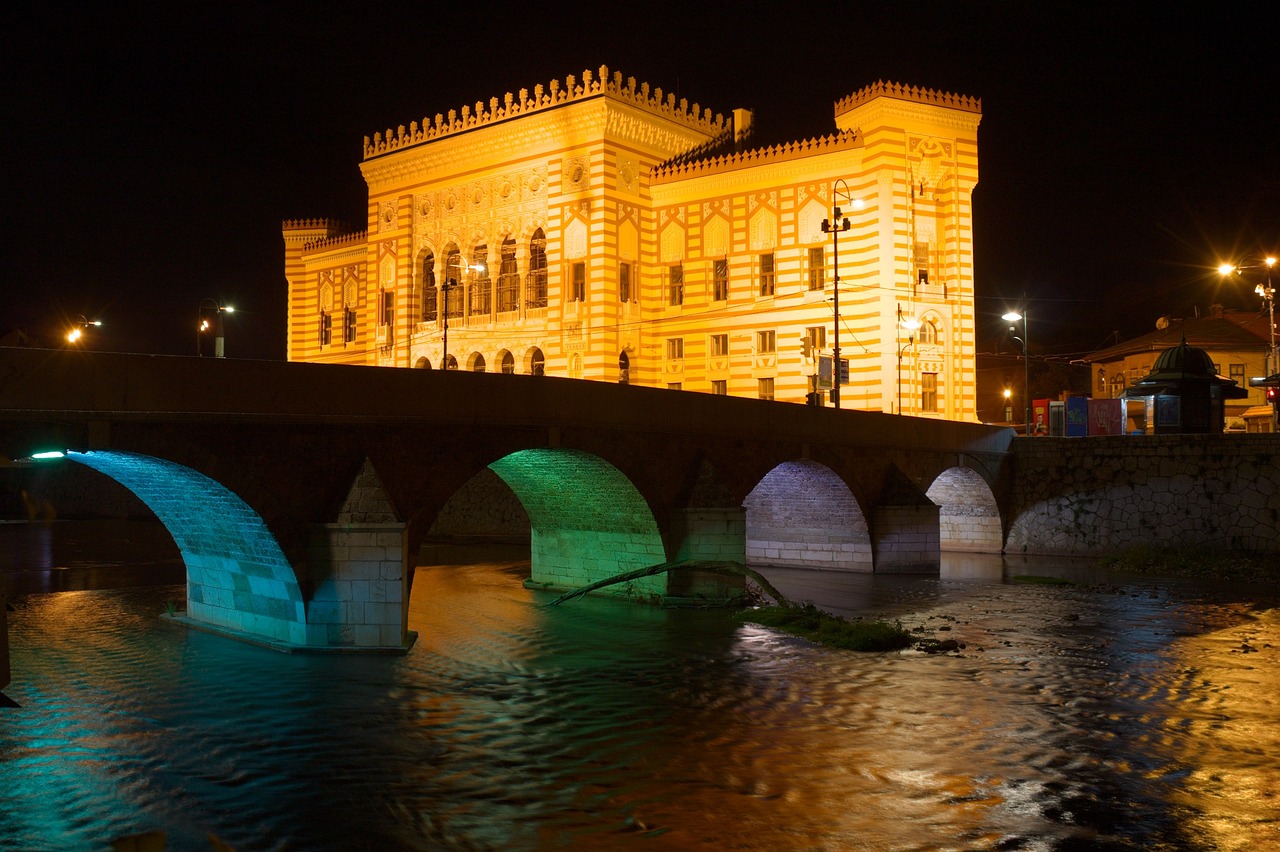
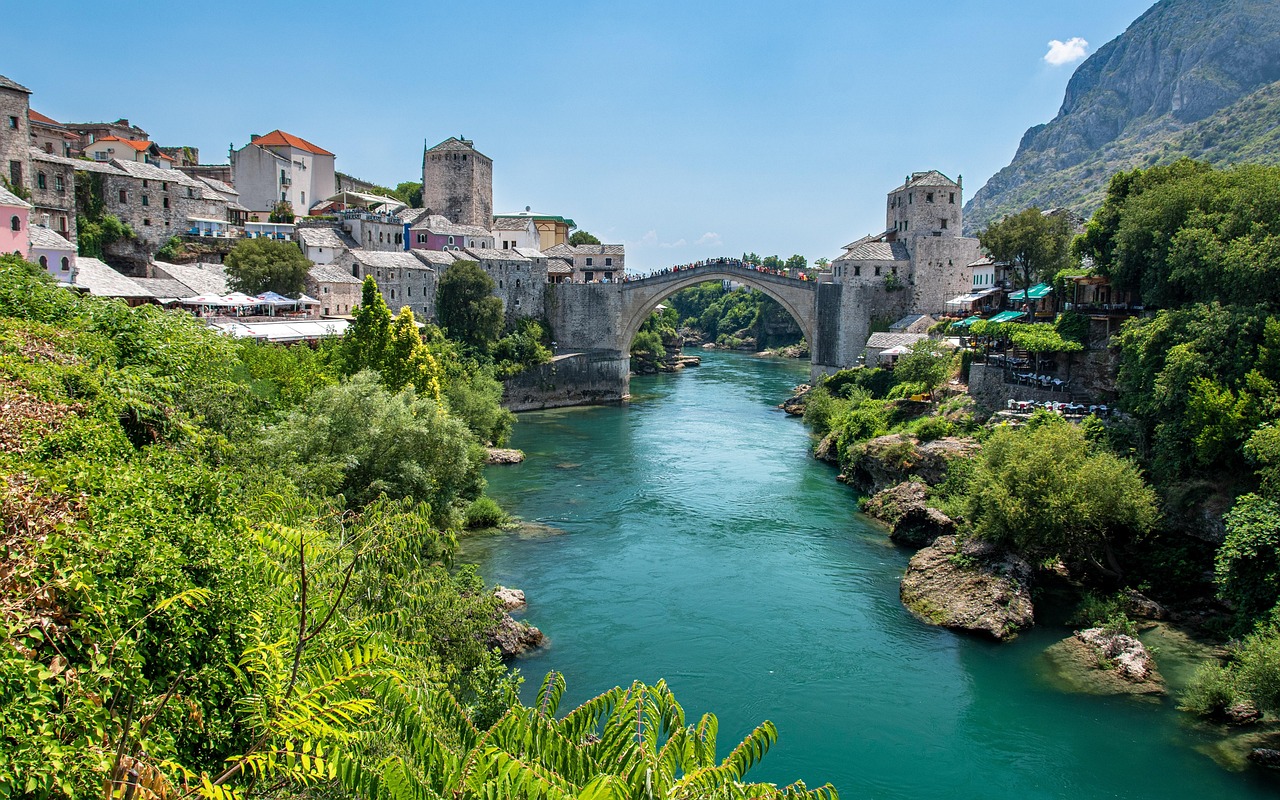
Bosnia and Herzegovina tells its story through water. Up in the north-west the Una rushes emerald green over tufa steps, in Jajce the Pliva plunges into the Vrbas right in the middle of town, and beyond Konjic the Neretva cuts a turquoise course through the rock all the way to Mostar, where the Old Bridge hangs above the river in the evening light. In between lie wooden mills, mosques next to Orthodox monasteries and Catholic church towers, coffee in little copper pots and the smell of ćevapi over charcoal. From the sliding door you see beech forests, mountain pastures with haystacks and later the bare, pale karst of Herzegovina, where figs and pomegranates ripen. This route demands respect: the traces of the war are visible, mines still lie off marked paths, and the roads are often narrow. If you embrace it, you will find hospitality you won't forget.
Stage-by-stage plan
1Stage 1: Bihać to Štrbački buk (Una National Park) (approx. 35 km)
- The drive
- Entry from Croatia is usually via the Izačić border crossing, a few kilometres before Bihać. From Bihać take the main road towards Kulen Vakuf south-east via Ripač and along the high plateau, then the access road to the Ćukovi park entrance. The last kilometres to Štrbački buk are partly gravel, dusty and narrow – in large motorhomes drive slowly and keep an eye out for passing places. Just under an hour's driving time.
- Highlights & must-sees
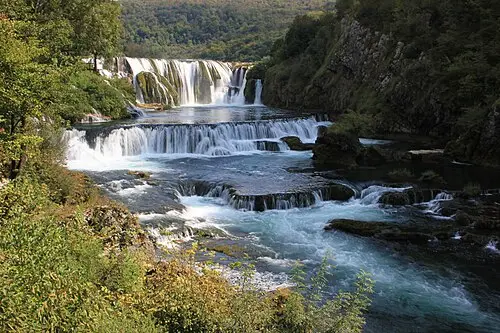
- Štrbački buk: the highest waterfall in Una National Park, around 25 m over several tiers, with wooden walkways and viewing platforms – here the Una forms the border with Croatia.
- Kostelski buk and the Bihać riverbank with tufa cascades right by the road to the north.
- Bihać old town with the Fethija Mosque, a former Gothic church, and the Kapetanova kula on the bank of the Una.
- CampingSpirit overnight tip
-
Official campsite or RV park: Camping Una RC Kiro Rafting in Bihać by the river, a rafting base with pitches and sanitary facilities, open roughly April to October according to camping portals – good as a first night after the border; ask about electric hook-up in advance. Closer to the waterfall is the small, family-run Camping Vasva & Hazim in Čelije right on the Una, around 3 km from Štrbački buk, with electricity, showers and grass pitches, open March to early November according to portals. According to the 2026 price list, the national park itself offers camping (price per vehicle, tent, caravan or motorhome); ask about location and terms at the park ticket office.
Free camping or nature tip (where legal): In Una National Park, overnight stays are only permitted at designated sites; meadows and forest tracks along the Una are off-limits. The front line ran through the Bihać region, and suspected minefields are only partly marked – never turn off onto unpaved farm tracks or into fallow land to look for a quiet spot. Staying with innkeepers and farmers with their consent is common and the better way.
- Insider tip for campers
- In Bihać, fill up, withdraw convertible marks (KM) from a cash machine and buy a local SIM card – coverage in the park is patchy, and small campsites, snack bars and ticket offices often take cash only. Admission to Štrbački buk varies by season (highest in July and August), small children go free – check the current price list on the national park's website.
2Stage 2: Štrbački buk to Martin Brod (approx. 45 km)
- The drive
- Back to the main road and south-east to Kulen Vakuf, where the Una emerges from the gorge into the valley, then upstream along the riverbank to Martin Brod. Narrow, winding road, a good hour's driving time.
- Highlights & must-sees
- Milančev buk in Martin Brod: a fan of dozens of small waterfalls between old wooden mills, where the Unac flows into the Una.
- Rmanj Monastery (Manastir Rmanj) on the Unac, reachable on foot from Martin Brod.
- Ostrovica fortress ruins high above Kulen Vakuf with views into the Una Valley.
- CampingSpirit overnight tip
-
Official campsite or RV park: Martin Brod has simple overnight options for campers, including at the national park information point and at small private campsites in the village – facilities are mostly basic, electricity not always available. Check the current situation by phone or on Campercontact beforehand; if you need comfort, stay a second night near Bihać and visit Martin Brod as a day trip.
Free camping or nature tip (where legal): The national park rules also apply in Martin Brod: no overnight stays outside designated sites, no fires on the riverbank. Hosts in the village often offer a spot in their garden for a small fee – that's legal, because it's with the owner's consent.
- Insider tip for campers
- Admission at Milančev buk also varies by season, so check beforehand. At the first ticket office, ask about combined or family tickets for Štrbački buk and Milančev buk. Fill up with water at the site in Bihać; there is no waste disposal along the way.
3Stage 3: Martin Brod to Jajce (approx. 170 km)
- The drive
- Via Kulen Vakuf up onto the karst plateau to Bosanski Petrovac, then down to Ključ in the Sana Valley and via Mrkonjić Grad to Jajce; the last kilometres run along the Pliva Lakes. The main roads are two-lane but without hard shoulders, with lorry traffic and village through-roads. Around 3.5 hours without breaks.
- Highlights & must-sees
- Mlinčići: the row of wooden watermills between the Great and Small Pliva Lakes, a photo spot in the morning light.
- Pliva Waterfall in Jajce: a good 20 m high, where the Pliva plunges into the Vrbas right in the middle of town – view from the platform below.
- Jajce Fortress, catacombs and Bear Tower above the old town, plus the AVNOJ Museum.
- CampingSpirit overnight tip
-
Official campsite or RV park: Camping Plivsko jezero on the Great Pliva Lake, a few kilometres before Jajce, with electricity and sanitary facilities, close to the mills and the swimming area. Reviews of the sanitary facilities are mixed. Alternatively, Auto Camp Jajce closer to the old town, a few minutes' walk from the waterfall.
Free camping or nature tip (where legal): Bosnia and Herzegovina prohibits wild camping in principle; on private land you need the owner's consent. Lakeside car parks at the Pliva Lakes are intended for day use – overnight you are better and safer on the campsite.
- Insider tip for campers
- Diesel and petrol are generally cheaper in Bosnia than in Croatia – fill up in the Sana Valley or in Ključ. Card payment works at most filling stations. The centre of Jajce is cramped; leave the camper on the site and walk or cycle into town along the Pliva.
4Stage 4: Jajce to Sarajevo (Ilidža) via Travnik (approx. 150 km)
- The drive
- Through the Vrbas Valley to Donji Vakuf, then over the Komar Pass into the Lašva Valley to Travnik. On via Vitez, Busovača and Kiseljak to Ilidža on the western edge of Sarajevo. Alternatively, from the Lašva junction via Zenica onto the A1 toll motorway to Sarajevo. Around 3 hours on the main road, with heavier traffic from Kiseljak.
- Highlights & must-sees
- Plava voda in Travnik: a spring below the fortress with grill restaurants by the stream, plus the Coloured Mosque (Šarena džamija) on the main street.
- Travnik Fortress and the birthplace of Ivo Andrić in the old town.
- Vrelo Bosne in Ilidža: the park at the source of the Bosna, reachable along a plane-tree avenue on foot, by bike or by horse-drawn carriage.
- CampingSpirit overnight tip
-
Official campsite or RV park: Autocamp Oaza in Ilidža is the classic city site for Sarajevo: electricity, sanitary facilities and disposal for cassette and grey water; trams and buses run to the centre. Ask about opening times outside the main season in advance. Reviews of the facilities are mixed, but the location is practical for city visits. Plan two nights – Sarajevo needs a full day.
Free camping or nature tip (where legal): There are no tolerated free-standing spots in Sarajevo; the general camping ban applies – for the city, the campsite in Ilidža is the right choice. On the slopes around Sarajevo, including Trebević, stick to marked paths – the siege line ran here, and suspected minefields have not been fully cleared everywhere.
- Insider tip for campers
- Don't drive into the Baščaršija old town in a motorhome: narrow one-way streets, paid car parks with attendants or machines, ticket clearly visible behind the windscreen. The cable car up Trebević starts below the old town and leads to the old Olympic bobsleigh track.
5Stage 5: Sarajevo to Konjic (approx. 70 km)
- The drive
- On the M17 south-west via Hadžići and Tarčin, then over the Ivan-sedlo pass and down to Bradina and into the Neretva Valley near Konjic. Winding, with lorry traffic and slow uphill stretches; the A1 motorway is being built in sections alongside – check the current state of construction beforehand. Including the detour to Boračko jezero, around 2 hours.
- Highlights & must-sees
- Stara ćuprija in Konjic: the Ottoman stone bridge over the Neretva, faithfully rebuilt after its destruction in 1945.
- ARK D-0, Tito's nuclear bunker near Konjic – guided tours only; arrange dates with the operator in advance.
- Boračko jezero: a mountain lake south-east of Konjic, reachable via a narrow road, for swimming and hiking.
- CampingSpirit overnight tip
-
Official campsite or RV park: Around Konjic and upstream on the Neretva near Glavatičevo, several rafting camps offer pitches for campers, mostly with simple sanitary facilities and a restaurant; the season is mainly May to September. Check names, electric hook-up and access (sometimes narrow) on Campercontact or park4night beforehand and phone ahead.
Free camping or nature tip (where legal): Wild camping is not permitted on the banks of the Neretva or at Boračko jezero, and gravel banks flood quickly during hydropower surges and after rain. Staying with rafting operators or innkeepers is the usual, legal solution – asking costs nothing.
- Insider tip for campers
- The road to Boračko jezero is narrow and steep; with vehicles over 7 m, better plan the day with a rafting operator or by taxi. Konjic has large supermarkets and filling stations – stock up once more before the Neretva gorge.
6Stage 6: Konjic to Mostar (approx. 70 km)
- The drive
- On the M17 along Jablaničko jezero to Jablanica, then through the narrow Neretva gorge with tunnels, rock overhangs and short galleries to Mostar. The road is easy to drive but tight and very busy at weekends. Around 1.5 hours.
- Highlights & must-sees
- Museum of the Battle of the Neretva in Jablanica with the railway bridge blown up in 1943.
- Neretva gorge near Drežnica: lay-bys with views of the turquoise water between limestone walls.
- Stari most in Mostar: the Old Bridge, rebuilt in 2004, a UNESCO World Heritage Site, with the bridge divers and the Kujundžiluk bazaar.
- CampingSpirit overnight tip
-
Official campsite or RV park: Camping Mali Wimbledon in Mostar is a small, well-rated city site with electricity and sanitary facilities. Quieter is Autocamp Blagaj in Malo Polje on the bank of the Buna around 12 km south-east, a small site with water and waste services for vehicles up to about 8 m; according to travel reports, the site arranges transfers to Mostar – so you can visit the old town without hunting for parking.
Free camping or nature tip (where legal): There are no tolerated free-standing spots in Mostar or in the Neretva gorge; the lay-bys on the M17 are only for brief photo stops. The front line ran across the hills around Mostar – no paths away from the marked trails.
- Insider tip for campers
- The old town around Stari most is not suitable for motorhomes. Visit early in the morning or in the evening: from mid-morning, day-trip coaches arrive from Dubrovnik and Split. The view over the bridge and river is from the minaret of the Koski Mehmed Pasha Mosque. In summer, temperatures in Mostar often reach almost 40 °C – plan for shade and water.
7Stage 7: Mostar to Kravica via Blagaj and Počitelj (approx. 60 km)
- The drive
- From Mostar south-east to Blagaj at the source of the Buna, back onto the M17 and down the Neretva to Počitelj, then via Čapljina west towards Ljubuški to the Kravica waterfalls. A short stage on good roads; the final access to the waterfall is narrow. Driving time a good hour.
- Highlights & must-sees
- Tekija in Blagaj: an Ottoman-era dervish monastery at the source of the Buna beneath a rock face a good 200 m high, with the Stjepan grad castle ruins above.
- Počitelj: an Ottoman fortified village on the steep slope above the Neretva with the Hadži Alija Mosque, clock tower and the Kula Gavrankapetan.
- Kravica waterfalls on the Trebižat: a semicircle of cascades around 25 m high, with swimming in the pool in summer.
- CampingSpirit overnight tip
-
Official campsite or RV park: Auto Camp Kravica near the waterfalls, family-style according to travel reports and with a steep access road – large vehicles should enquire first. Alternatively, a second night at Autocamp Blagaj on the Buna. There are further campsites in the area around Međugorje.
Free camping or nature tip (where legal): At Kravica itself an admission fee is charged, and the car park is not an overnight spot. In Herzegovina in summer, open fires are strictly off-limits because of the risk of forest fires; karst meadows are often private land or pasture.
- Insider tip for campers
- Don't drive the camper up to Počitelj: stop at the car park on the M17 below and walk up the steep slope, with sturdy shoes on the slippery stone steps. Visit Kravica early in the morning; in July and August it's crowded at midday. From Kravica, the Bijača border crossing to the Croatian motorway isn't far – handy if you cut the route short here.
8Stage 8: Kravica to Trebinje (approx. 125 km)
- The drive
- Via Čapljina to Stolac in the Bregava Valley, then across the karst uplands to Ljubinje and down to Trebinje in the Trebišnjica Valley. The road beyond Stolac is narrow, quiet and windy; more bends than villages, hardly any filling stations. A good 2.5 hours.
- Highlights & must-sees
- Radimlja necropolis near Stolac: medieval tombstones (stećci) with reliefs, part of the UNESCO World Heritage Site.
- Stolac old town on the Bregava with mills and the Begovina.
- Trebinje: the Arslanagić Bridge over the Trebišnjica, the plane-tree square with a market in the old town, and Tvrdoš Monastery with its wine cellar.
- CampingSpirit overnight tip
-
Official campsite or RV park: In Trebinje itself the choice of sites is small and changes; check the current situation on Campercontact or park4night. One option along the way is Auto Camp Heaven in Nature right by the river, around 2.5 km outside Stolac, with electricity, sanitary facilities and waste disposal, open mid-April to mid-October according to camping portals. Around Trebinje, wine estates also offer overnight stays for campers – phone ahead.
Free camping or nature tip (where legal): The karst uplands between Stolac and Trebinje are sparsely populated, but wild camping isn't permitted here either, and old farm tracks off the road are off-limits because of possible mines. Ask hosts for a night's stay; never head off into the terrain on your own.
- Insider tip for campers
- Fill up before Stolac. Vjetrenica Cave near Zavala is a worthwhile detour, but the access through Popovo polje is partly single-track – plan carefully with large motorhomes. From Trebinje it is only around 30 km to Dubrovnik (Ivanica border crossing); Montenegro is close too.
Camping practice & local rules
Wild camping & overnight parking
- Bosnia and Herzegovina is not part of the EU. Wild camping is prohibited in principle; overnight stays on private land are only permitted with the owner's prior consent. In practice, many innkeepers, rafting operators and farmers offer a spot – asking is customary and welcomed.
- Mines: the Mine Action Centre BHMAC (Centar za uklanjanje mina u BiH) still designates suspected hazardous areas, mainly along former front lines – around Bihać, Sarajevo, Mostar and in Herzegovina. Stay on tarmac and marked paths, don't enter abandoned houses, fallow land or overgrown farm tracks, and heed red warning signs with a skull (“Pazi mine”). Never drive into unknown terrain to spend the night.
- In Una National Park, overnight stays are only permitted at designated sites; fires, wild camping and swimming outside approved spots are prohibited. Admission depends on season and zone (Štrbački buk, Martin Brod) and is collected at the park entrances.
- Foreigners must register their stay in Bosnia and Herzegovina within 72 hours of entry; hotels and many accommodation providers do this for you – ask at campsites. Otherwise, the nearest office of the Service for Foreigners' Affairs (Služba za poslove sa strancima) is responsible. When staying with private individuals, raise the matter with your host.
- The campsite network is thin, many sites are small and family-run, and opening times vary. park4night, Campercontact and the ACSI platform Eurocampings help with the search; enquire in advance by phone or messenger.
Waste disposal & supplies
- Service points outside campsites practically don't exist. Empty grey water and cassette at campsites, also as a passing visitor for a small fee. In the karst, waste water seeps straight into the groundwater – never empty it onto the ground.
- Tap water is generally drinkable in towns; after heavy rain, karst water can turn cloudy. At small sites, ask where the water comes from and use a filter.
- Gas: German exchange cylinders are not exchanged. Autogas (LPG, “autoplin”) is available at many filling stations; refillable cylinders and gas tanks need a Dish adapter. Arrive with two full cylinders.
- The currency is the convertible mark (KM/BAM), pegged to the euro (€1 = 1.95583 KM). Euros are often accepted, but change comes in KM. Small campsites, snack bars, parking attendants and national park ticket offices often expect cash.
Vehicle size & traffic rules
- Speed limits according to ADAC: cars and light motorhomes 50 km/h in built-up areas, 80 km/h outside built-up areas, 100 km/h on expressways, 130 km/h on motorways; heavy motorhomes (generally over 3.5 t) and vehicle-trailer combinations 80 km/h outside built-up areas, and a maximum of 80 km/h on expressways and motorways too. Dipped headlights all year round, also during the day. Radar detectors and sat navs with speed camera POIs are prohibited; dashcams are allowed.
- Tolls: no vignette. Sections of the A1 motorway are tolled, with a ticket at the entrance and payment at the exit (cash in KM, usually also in euros, or by card); motorhomes are classified by number of axles and height above the front axle. A large part of this route runs on toll-free main roads; the A1 is only partly finished.
- Documents: driving licence, vehicle registration document and nationality sticker; the international motor insurance card (Green Card) with the country code “BIH” not crossed out is strongly recommended. If you are not the registered keeper, you need a letter of authorisation. The minimum cover amounts are low – check your own insurance cover in advance.
- Border crossings: the border with Croatia is an external Schengen border with checks in both directions; in summer expect waiting times at Izačić (near Bihać), Bijača (near Kravica) and Ivanica (Trebinje–Dubrovnik). Within the country you will cross the boundary between the Federation and Republika Srpska several times without checks.
- Blood alcohol limit 0.3 ‰, 0.0 ‰ for drivers under 21 and those who have held a licence for less than three years. Phone calls only with a hands-free kit. Winter tyres (M+S) from 1 November to 1 April; snow chains may be required on mountain roads. Maximum dimensions for motorhomes 12 m length and 2.55 m width.
- Fines are often collected on the spot; unpaid fines can block your departure. Report every accident to the police and ask for a confirmation. Avoid driving at night – road markings are often faint, and pedestrians, animals and unlit vehicles are on the road.
CampingSpirit packing & preparation checklist
- Green Card with a valid “BIH”, vehicle registration document and, if applicable, keeper's letter of authorisation in a folder close at hand – there are checks at three Schengen border crossings.
- Dish adapter for LPG filling stations and two full gas cylinders on entry.
- Cash in convertible marks in small notes for national park ticket offices, parking attendants, Kravica admission and small campsites.
- Offline maps on your smartphone and a local SIM – coverage is patchy in the Una Valley and in the karst between Stolac and Trebinje, and detours over unknown farm tracks are out of the question because of the mines.
- Water shoes with firm soles for the slippery tufa steps at Kravica and on the Una.
- Sunshade or reflective cover for the windscreen and a 12 V fan – Mostar and Herzegovina get very hot in summer.
As of 2026-10. Closures, fees and booking rules change: check official sources before you go.