

In-depth guide · CampingSpirit
From Timișoara through the Banat Mountains to the turquoise springs of the Nera, along the Danube road through the Kazan gorges to the Iron Gates and back via Băile Herculane: around 780 kilometres between Baroque squares, mining villages and the narrowest stretch of the Danube.
The spirit of the route
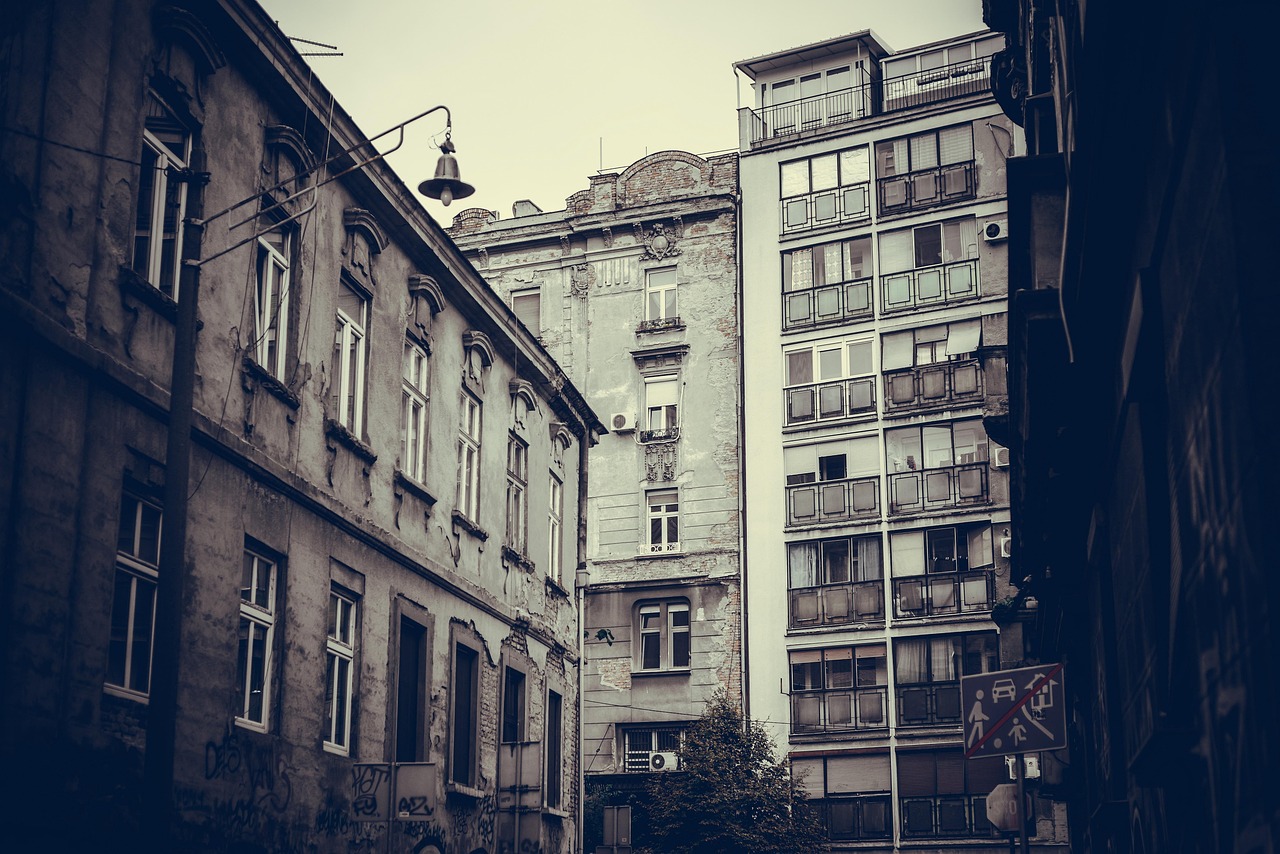
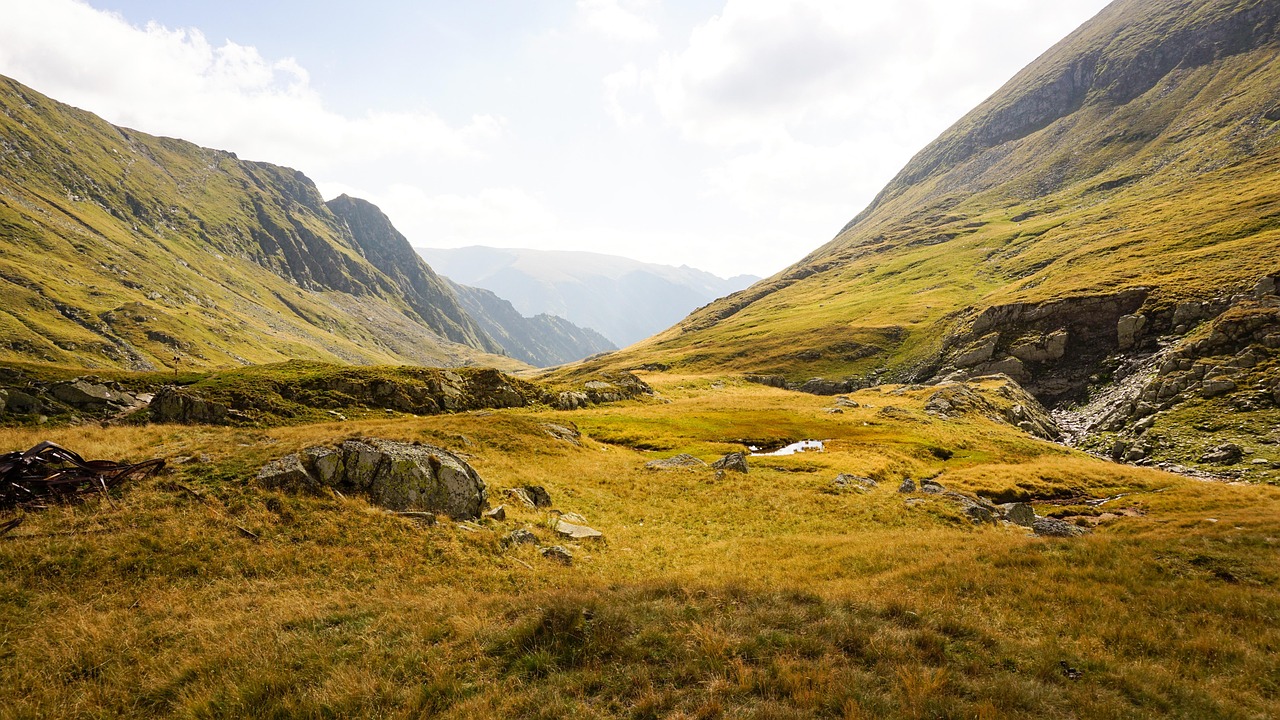
The Banat starts out genteel: Baroque façades in Timișoara, trams, cafés under plane trees. Then the road climbs into the mountains and the landscape grows quieter – beech forests, the coal tips of Anina, villages where gravestones still bear German names. In the limestone gorges of the Nera the water glows so turquoise that you look twice, and beneath the Bigăr Waterfall it trickles over cushions of moss. Beyond Moldova Nouă the Danube opens out, wide as a lake, with Golubac Fortress perched on the Serbian side opposite. The further east you go, the narrower it gets: in the Kazan gorges the limestone walls close in to just a few hundred metres, mist hangs over the water in the morning, and barges glide silently past. From the sliding door you see fishermen in wooden boats, rocks steeped in history and, in the evening, the lights of Serbia on the far bank. A route for people who will trade bad roads for big landscapes.
Stage-by-stage plan
1Stage 1: Timișoara to Văliug (Semenic) (approx. 130 km)
- The drive
- Head south out of Timișoara across flat farmland to Voiteg and take the DN58B via Bocșa to Reșița; the road is in good condition, with speed bumps through villages. From Reșița climb into the Bârzava valley to the Gozna reservoir near Văliug, now winding and narrower, with the forests growing denser. Around 2.5 hours' pure driving time.
- Highlights & must-sees
- Piața Unirii in Timișoara: a Baroque square between the Roman Catholic cathedral and the Serbian Orthodox cathedral, with the Plague Column in the middle.
- Piața Victoriei and the Orthodox Cathedral: in December 1989 people took to the streets here in their tens of thousands, the spark of the uprising against Ceaușescu – find out more at the Revolution Museum (Memorialul Revoluției) in the old town.
- Reșița Steam Locomotive Museum: an open-air site with steam locomotives, some of which were built in the town's works – an hour is enough.
- CampingSpirit overnight tip
-
Official campsite or RV park: Camping Internațional in the Pădurea Verde city forest on the eastern edge of Timișoara is the classic place for the night before you set off, with pitches in the woods and cabins; the older site only opens in summer, and whether it is open has recently been uncertain – call ahead. At your destination, Camping Trei Ape lies on the mountain lake of the same name above Văliug and Gărâna – simple and close to nature; ask about facilities and season beforehand.
Free camping or nature tip (where legal): At weekends many locals pitch tents on the shores of the Gozna and Trei Ape reservoirs. Legally, private and municipal land requires permission, and in the Semenic-Cheile Carașului National Park camping is only allowed in designated areas. A motorhome parked overnight in a lakeside car park is usually tolerated as long as nothing is set up outside – observe the signs.
- Insider tip for campers
- In Timișoara, do not drive into the old town in a motorhome: the squares are pedestrian zones, the streets narrow and parking scarce. Fill up and shop in Reșița before the mountains; above Văliug there are hardly any shops.
2Stage 2: Văliug to Sasca Montană (approx. 170 km)
- The drive
- Back to Reșița and south over the mountain road to Anina, through forest and mining country. From Anina take the DN57B into the Miniș gorge to the Bigăr Waterfall and back again, then down the winding road to Oravița and on to Sasca Montană. A long mountain stage with many bends and changing road surfaces, a good 4 hours' pure driving time – start early.
- Highlights & must-sees
- Bigăr Waterfall: a stream falls over a moss-covered cone of calcareous tufa into the Miniș. A few years ago part of the cone broke off under its own weight; the moss has been growing back since, and the fall looks different but is still worth seeing. A short path with a footbridge leads down from the road.
- Steierdorf, the old district of Anina: founded in the 18th century by Austrian woodcutters, with wooden houses, a Catholic church and the mining heritage of the Banat's oldest coal pits.
- The Banat Semmering Railway between Anina and Oravița: opened in 1863, the mountain line winds through 14 tunnels and over 10 viaducts; if you have time, ride a stretch by train – services have been cut back several times, so check in advance whether and when trains run. Oravița is also home to one of the oldest theatres in the country.
- CampingSpirit overnight tip
-
Official campsite or RV park: Sasca Montană has no large campsite, but plenty of guesthouses at the entrance to the Nera gorge. Some let motorhomes stay on their grounds by arrangement – call ahead or search park4night and Campercontact for current listings.
Free camping or nature tip (where legal): The Bigăr Waterfall lies in the Cheile Nerei-Beușnița National Park: no overnight stays in the roadside car park, and camping in the park is only permitted at designated sites. Outside the park the usual Romanian rule applies – the owner's consent, and observe the signs.
- Insider tip for campers
- The DN57B at Bigăr is narrow, with tight bends and little room to stop; get to the car park at the waterfall early in the morning, before the day-trippers arrive. Long vehicles and car-and-caravan combinations should avoid the Anina–Oravița road in the rain – it is steep, twisting and in poor condition in places.
3Stage 3: Sasca Montană to Coronini (approx. 50 km)
- The drive
- Ideally plan two nights in Sasca Montană and spend the first full day walking through the Nera gorge. Then comes the short drive via Moldova Nouă to the Danube: first through hill country, then down into the broad Danube valley and east on the DN57 to Coronini. Around 1 hour's driving time.
- Highlights & must-sees
- Ochiul Bei: a small, crystal-clear turquoise karst spring lake in the middle of the forest, with trout rising from it – swimming and dipping your feet are prohibited.
- Beușnița Waterfall: a cascade over steps of calcareous tufa, a good half-hour's walk upstream from Ochiul Bei.
- Cheile Nerei: the hiking trail from Sasca Montană follows the river through tunnels cut into the rock and over narrow walkways, past the Devil's Lake (Lacul Dracului), a collapsed cave lake; you need to be sure-footed and wear good shoes, and the full route to Șopotu Nou is a long day hike of around 9 to 10 hours.
- CampingSpirit overnight tip
-
Official campsite or RV park: There are hardly any established campsites on the Danube between Moldova Nouă and Coronini. Guesthouses and fishermen's guesthouses on the bank near Coronini and Pescari sometimes take campers on their grounds by arrangement; if you need a fully equipped site, drive on the same day to stage 4 at Eșelnița.
Free camping or nature tip (where legal): A visitor fee may be charged in the Cheile Nerei-Beușnița National Park; tents are only allowed at designated sites and fires only in marked fireplaces. The Danube bank is the state border with Serbia: the border police patrol, and if you stand on the bank at night you will be approached – keep your ID to hand and do not fly a drone.
- Insider tip for campers
- If you want to see Ochiul Bei without walking the whole gorge, ask the national park administration or the guesthouses in Sasca about access and transfers via the forest roads; the walk from the trout farm in the Nera valley takes about an hour. The forest roads are not suitable for motorhomes – observe access restrictions. Fill up and get cash in Moldova Nouă: both become scarce until Orșova.
4Stage 4: Coronini to Eșelnița (approx. 100 km)
- The drive
- The DN57 follows the Danube downstream through the Clisura Dunării: at first long open stretches of riverbank with fishing villages, narrower from Berzasca, then via Svinița into the Kazan gorges. The road is mostly asphalted but narrow, patched and at risk of rockfall below the cliffs; potholes and subsidence occur, and in a few places protective galleries shield the carriageway from falling rocks. Around 2.5 hours without stops, considerably longer with photo stops.
- Highlights & must-sees
- Golubac Fortress on the Serbian bank opposite Coronini and Pescari, plus the Babakai rock pinnacle in the middle of the river and the ruins of Ladislaus Castle above Coronini.
- The Kazan gorges (Cazanele Mari and Cazanele Mici): the river squeezes between sheer limestone walls; the finest views are from the car park at the Great Kazan and from the lay-bys along the road.
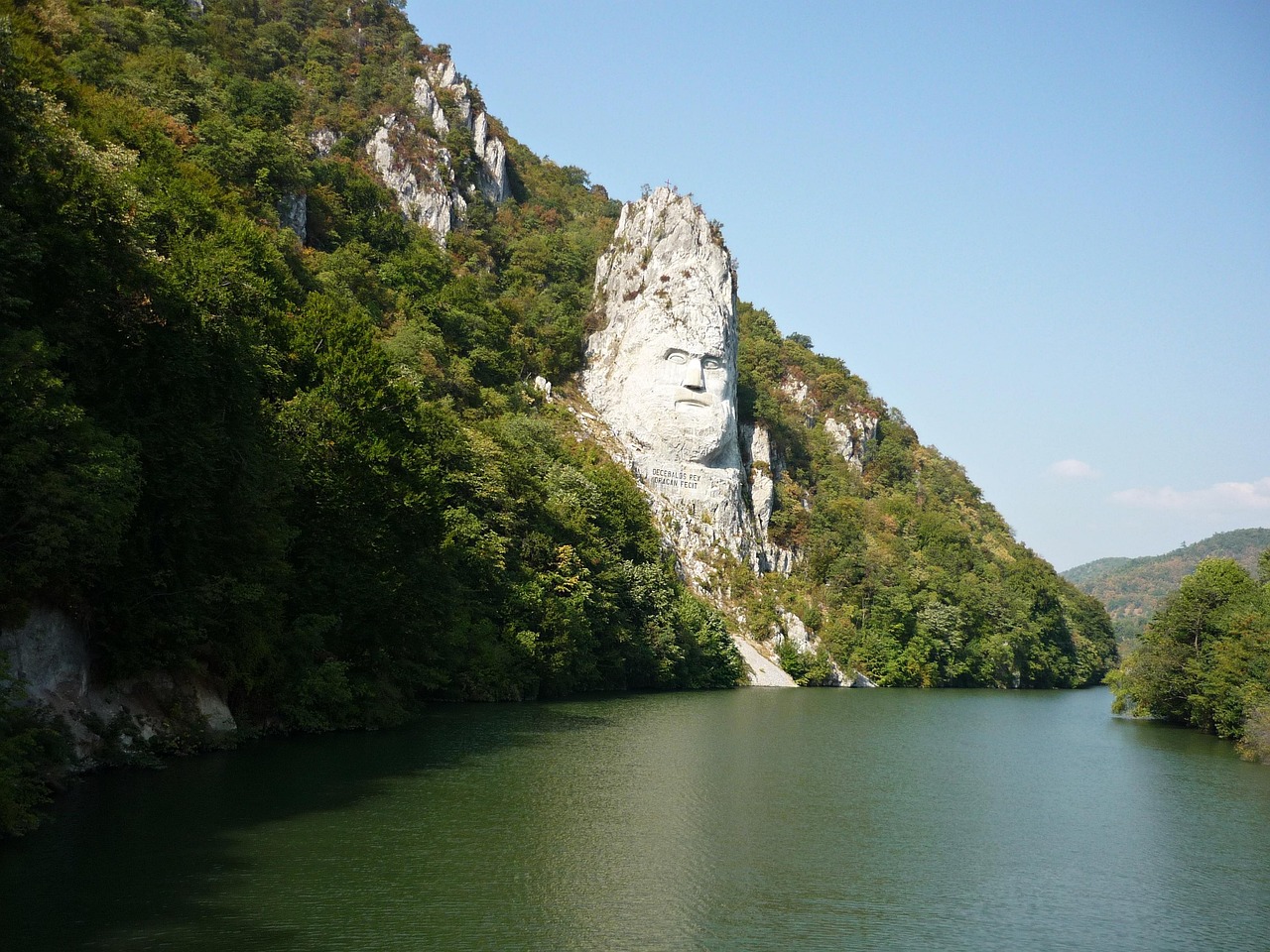
- The rock sculpture of the Dacian king Decebalus, at around 55 metres high one of the largest in Europe, and right next to it Mraconia Monastery at the mouth of the Mraconia – observe the dress code for churches; the rock sculpture and the Tabula Traiana on the Serbian bank are best seen from a boat.
- CampingSpirit overnight tip
-
Official campsite or RV park: Camping Cazanele Dunării in Eșelnița, right on the Danube, with motorhome pitches, electricity, toilets and showers, and water and waste disposal; often full in high summer and at weekends – enquire in advance. Between Dubova and Eșelnița further guesthouses and small sites offer pitches on the bank.
Free camping or nature tip (where legal): The entire Danube gorge lies within the Porțile de Fier Nature Park and also in the border zone. Overnighting in the lay-bys along the Kazan stretch is not explicitly banned everywhere, but it is frowned upon; rockfall and border checks argue against it anyway. Better to stay at campsites or on guesthouse grounds.
- Insider tip for campers
- Boat trips into the Kazan gorges, to Ponicova Cave and to the Decebalus sculpture leave from Dubova and Eșelnița; in high summer go in the morning, before the wind picks up. There are hardly any filling stations between Moldova Nouă and Orșova – set off with a full tank.
5Stage 5: Eșelnița to Băile Herculane (approx. 85 km)
- The drive
- Via Orșova along the Danube to the Porțile de Fier I power station at Gura Văii and on to Drobeta-Turnu Severin; the road here is well built and busier, including lorries heading for the border crossing. Back to Orșova and up the Cerna valley to Băile Herculane. Around 2 hours' driving time.
- Highlights & must-sees
- Orșova: the old town sank beneath the reservoir in the 1970s, as did the island of Ada Kaleh with its Turkish village; on the new waterfront the promenade and the modern Catholic church invite you to look out over the bay.
- Porțile de Fier I power station: the Romanian-Serbian dam with locks and a border crossing is a structure of enormous dimensions – the installation is considered sensitive and photography is not permitted there; observe signs and instructions.
- Drobeta-Turnu Severin: the remains of the piers of Trajan's Bridge, built across the Danube by Apollodorus of Damascus at the beginning of the 2nd century, the Roman fort of Drobeta and the Iron Gates Region Museum with a model of the bridge and an aquarium.
- CampingSpirit overnight tip
-
Official campsite or RV park: Camping Hercules in the spa town of Băile Herculane, by the river and open all year according to the operator, with only a few pitches; further up the Cerna valley, at the warm springs of 7 Izvoare, there is a simple site. Both are small operations – check facilities and opening beforehand.
Free camping or nature tip (where legal): Around Drobeta and the power station, free camping is not a good idea: industry, border installations and heavy traffic. At the power station stopping is prohibited outside the marked areas; police and border police carry out checks.
- Insider tip for campers
- If you want to continue into Serbia, cross over the dam – have your Green Card and travel documents ready and allow for waiting times in summer. Drobeta-Turnu Severin has large supermarkets and filling stations with LPG; stock up here for the days in the Cerna valley.
6Stage 6: Băile Herculane to Valea Cernei (7 Izvoare) (approx. 70 km)
- The drive
- From the spa town take the road up the Cerna valley into the Domogled-Valea Cernei National Park, between limestone walls, black pines and warm springs. Decent as far as the springs at 7 Izvoare, after that narrower, with potholes in places and unpaved sections towards the upper reaches and the Iovanu reservoir. Depending on your excursion, 2 hours' pure driving time; with large vehicles only go as far as there are places to turn.
- Highlights & must-sees
- Băile Herculane: one of the oldest spa towns in Europe, with a Hercules statue, Roman traces and crumbling Austro-Hungarian bathhouses such as the Neptune Baths – an hour's stroll is enough.
- Domogled (a good 1,100 m): the climb through beech and Banat black pine leads to wide views over the Cerna valley and the Mehedinți Mountains; the trail starts in the town.
- Grota Haiducilor and the warm springs on the Cerna: a cave on the edge of town and thermal water that emerges into pools by the river.
- CampingSpirit overnight tip
-
Official campsite or RV park: The simple site at 7 Izvoare above Băile Herculane, with a meadow by the river; alternatively, head back to Camping Hercules in the spa town.
Free camping or nature tip (where legal): In the Domogled-Valea Cernei National Park camping is only permitted in designated areas; a visitor fee may also be charged here. In summer many tents stand on tolerated meadows by the river – ask the ranger or at the campsite about the situation and observe fire bans.
- Insider tip for campers
- Nose-horned vipers (sand vipers) live in the Cerna valley and on the rocks of the Kazan gorges: watch the ground on paths, do not reach under stones, and wear sturdy footwear. Never leave rubbish outside – there are bears about here too.
7Stage 7: Băile Herculane to Timișoara (approx. 175 km)
- The drive
- Take the DN6 through the corridor between the Banat Mountains and the Țarcu Mountains to Caransebeș, then across flat country to Lugoj and back to Timișoara on the A1 motorway. Well built, but with lorry traffic and many villages to pass through as far as Caransebeș. Around 2.5 to 3 hours.
- Highlights & must-sees
- Teregova and the Timiș-Cerna corridor: mountain villages on the old Military Frontier, with views of the Țarcu Mountains.
- Lugoj: a small Banat town with a bridge over the Timiș and a Baroque church – a coffee by the river.
- Finish in Timișoara: a walk along the Bega Canal and through the Fabric district with its Art Nouveau façades.
- CampingSpirit overnight tip
-
Official campsite or RV park: Back to Camping Internațional in Pădurea Verde, Timișoara – if it is open; otherwise look for an alternative in advance.
Free camping or nature tip (where legal): The flat Banat is dominated by privately owned farmland; free camping only with permission. For a last night before heading home, the campsite by the city forest is the most convenient option.
- Insider tip for campers
- Fill up before leaving for Hungary, for example at Nădlac or Cenad. Empty the cassette and grey water at the campsite beforehand.
Camping practice & local rules
Wild camping & overnight parking
- Romania has no nationwide ban on sleeping in a motorhome, but no right to roam either: on private land you need the owner's consent, and local prohibition signs apply. Parking is not camping – awnings, tables and chairs belong on campsites, not in car parks.
- Protected areas: in the Cheile Nerei-Beușnița and Domogled-Valea Cernei national parks and in the Porțile de Fier Nature Park, visitor fees may be charged; tents and camping are only permitted at designated sites, fires only in marked places, and dogs must be on a lead. Ranger checks are frequent at weekends.
- Danube border zone: the Romanian bank between Moldova Nouă and Drobeta-Turnu Severin is the state border with Serbia. The border police patrol at night too, drone flights in the border zone are not permitted without authorisation, and the installations of the Porțile de Fier power station must not be photographed.
- Bears: brown bears live in the Banat Mountains, the Cerna valley and the forests above the Danube. Lock food and rubbish in the vehicle, leave nothing standing outside, keep dogs inside at night, do not hike alone in the forest at dusk and never feed bears. For this reason, free camping on forest edges is not recommended.
- Useful apps: park4night and Campercontact; read reviews by date, as small sites on the Danube open and close from year to year. Many guesthouses take motorhomes for a fee – it is worth asking.
Waste disposal & supplies
- Water and waste disposal is available almost only at campsites; public service points are rare. In Timișoara, Eșelnița and Băile Herculane, empty the cassette and fill up with water whenever you can. Never drain grey water into the Danube, the Nera or the Cerna.
- Drinking water: in Timișoara and the larger towns tap water is generally drinkable; in mountain villages it often comes from springs and wells. Roadside spring outlets are popular but not tested – fill up at campsites or filter.
- Gas: German exchange cylinders are not swapped. LPG (GPL) is available at larger filling stations in Timișoara, Reșița, Caransebeș and Drobeta-Turnu Severin, but hardly at all along the Danube road and in the mountains. Bring an adapter set for refillable cylinders and arrive with two full cylinders.
- Fuel and cash: between Moldova Nouă and Orșova there are practically no filling stations and only a few cash machines. Guesthouses, boatmen and village shops often accept only cash in lei.
Vehicle size & traffic rules
- Rovinietă: the electronic vignette is compulsory for the entire national road network, so also for the DN57, DN57B and DN6, not just the A1. It is linked to the number plate; it is sold via the TollRo system (etoll.ro portal and app), Ghișeul.ro, authorised outlets and at border crossings, and checked by camera. Whether a motorhome counts as a car (category A) or as a goods vehicle up to 3.5 t (category B) depends on its registration. Vehicles over 3.5 t pay distance-based tolls via TollRo – clarify the details with CNAIR or on etoll.ro before entering the country.
- Speed limits for cars: 50 in built-up areas, 90 outside built-up areas, 100 on expressways and national roads designated as European routes, 130 km/h on motorways. Motorhomes over 3.5 t: 80 outside built-up areas, 90 on expressways/European routes, 110 km/h on motorways; car-and-caravan combinations: 80 outside built-up areas, 90 on expressways, 120 km/h on motorways. The ADAC also gives the limits for over 3.5 t for motorhomes up to 3.5 t; if you want to be safe, stick to those. Drivers in their first year: 20 km/h less in each case.
- Blood alcohol limit 0.0: zero tolerance for alcohol at the wheel, and high readings are a criminal offence. Dipped headlights are compulsory outside built-up areas, even during the day. Mobile phones only with a hands-free kit. Winter tyres are compulsory when there is snow or ice on the road; in the mountains around Anina and Semenic this happens regularly from November. A fire extinguisher and two warning triangles are mandatory; carry a first-aid kit and a high-visibility vest.
- DN57 – the Danube road: scenically the highlight, technically the most difficult stretch of the route. Narrow, often without a hard shoulder, with patches, potholes and rockfall; after heavy rain there are rocks on the carriageway, closures due to rockfalls, landslides or roadworks occur, and roadworks are often controlled by traffic lights with single-lane running. Adjust your speed, do not drive after dark and check current reports before setting off. For very large motorhomes and car-and-caravan combinations, the DN57B at Bigăr and the Anina–Oravița road are similarly demanding.
- Traffic and border: horse-drawn carts, herds of livestock and cyclists without lights are part of everyday life in the mountains. Border crossings into Serbia include the one over the Porțile de Fier I dam; Serbia is not an EU country, so have your Green Card and ID documents ready for everyone travelling. There are no environmental stickers; in the centres of Timișoara and Drobeta-Turnu Severin, park on the outskirts.
CampingSpirit packing & preparation checklist
- Sturdy hiking boots and a head torch – the rock tunnels on the Nera trail are dark, and the paths to Ochiul Bei and Beușnița are stony and wet.
- Bear-proof storage: tightly sealing boxes for food and rubbish in the vehicle, plus bear spray for hikes off the main trails.
- A full-size spare wheel (not a repair kit) and a compressor – the potholes and sharp stones on the DN57 are hard on tyres.
- Insect repellent and mosquito nets for windows and doors: along the Danube and the reservoirs they bite hard from dusk in summer.
- Water containers and a filter: places to fill up are scarce between Moldova Nouă and Orșova, and spring water is not tested.
- Cash in lei for guesthouses, boat trips, visitor fees and village shops along the Danube.
As of 2026-10. Closures, fees and booking rules change: check official sources before you go.