In-depth guide · CampingSpirit
From Potenza to the sandstone pinnacles of Castelmezzano and Pietrapertosa, via Acerenza and Horace’s Venosa to the Hohenstaufen castle of Melfi, to the crater lakes of Monticchio and back through the wine cellars of the Vulture: around 360 kilometres through the quiet northern half of Basilicata.
The spirit of the route
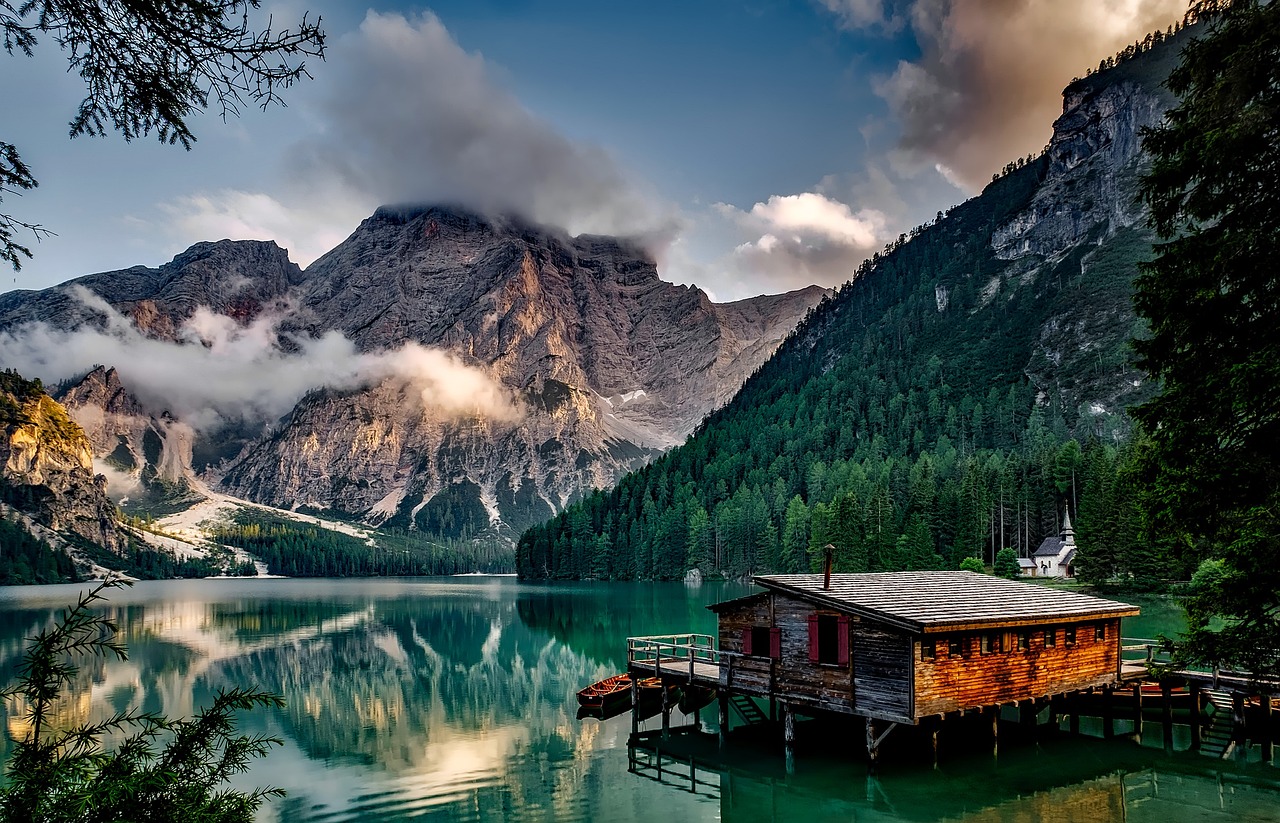
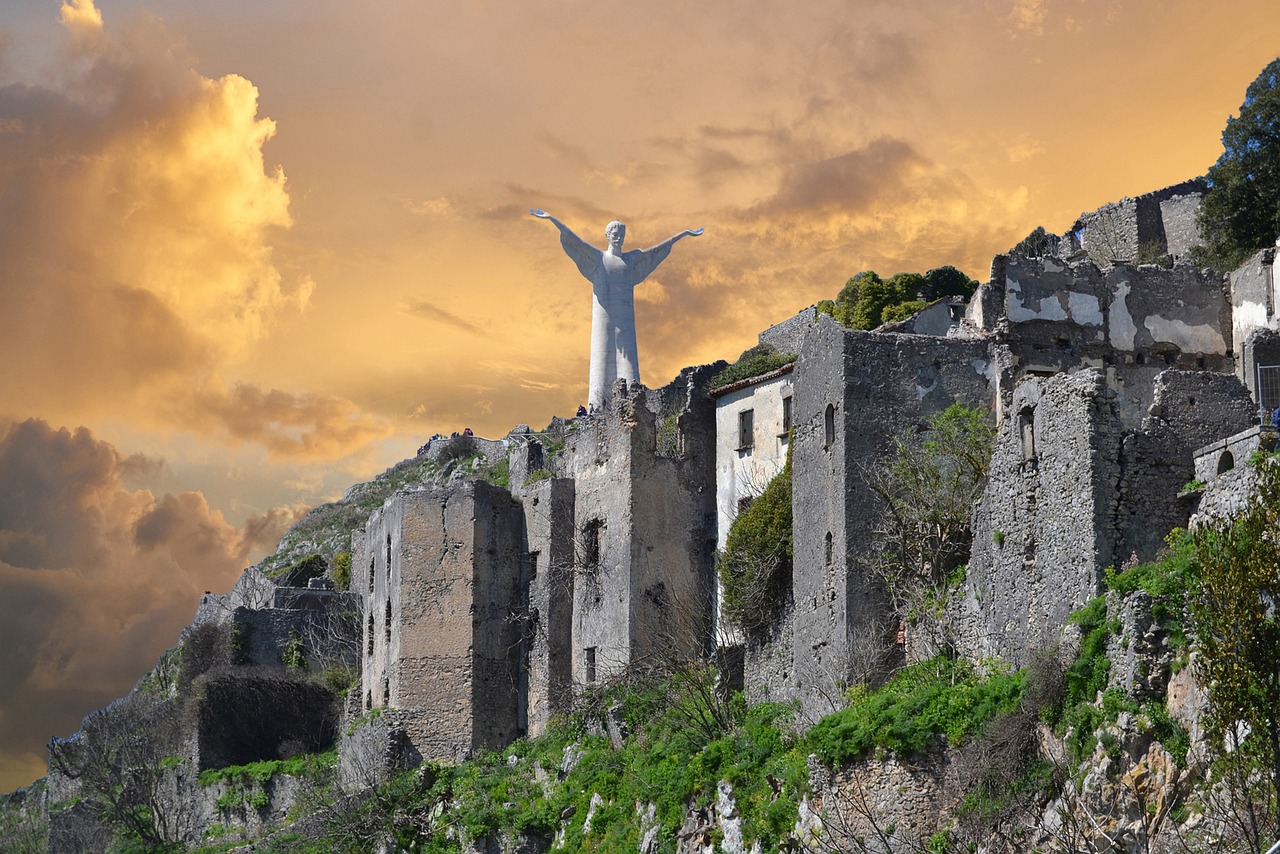
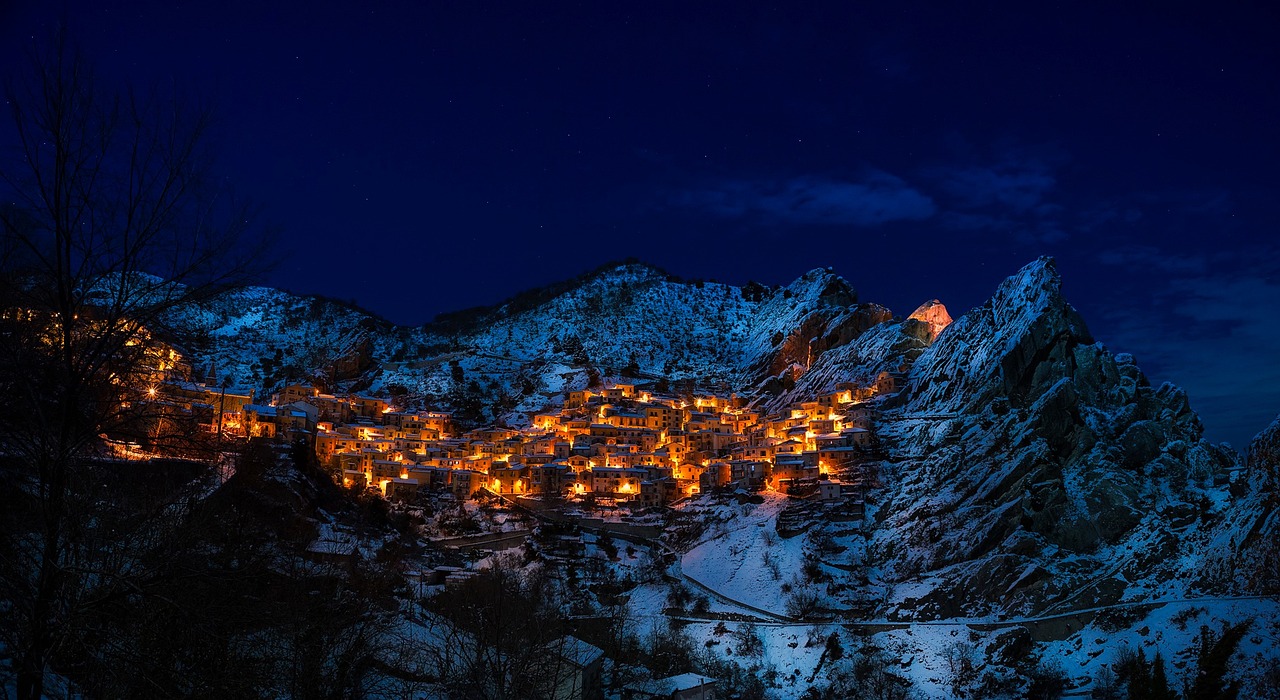
Northern Basilicata is a land of heights and emptiness. Beyond Potenza, sandstone spikes suddenly rise out of oak forests, with Castelmezzano and Pietrapertosa clinging to them like swallows’ nests; above the valley, the brave ones of the Volo dell’Angelo whizz along a steel cable. Further north the landscape softens: wheat hills, straw bales, an abandoned village whose walls are slowly sinking into the grass, then Acerenza on its rocky spur with the cathedral as its crown. In Venosa, Roman baths lie next to a church that was never finished; in Melfi, the Norman castle watches over the town. At the end the extinct Vulture awaits: beech forest, two green crater lakes, a monastery in the rock face and cellars where the Aglianico matures. From the sliding door you see mist in the valleys in the morning and shepherds’ fires on the slopes in the evening – encounters with other campers remain rare here.
Stage-by-stage plan
1Stage 1: Potenza to Castelmezzano (approx. 55 km)
- The drive
- You reach Potenza via the toll-free Raccordo Sicignano–Potenza; half a day is enough for the city. Then take the SS407 Basentana down the valley along the Basento, a well-built expressway with tunnels and viaducts, to the exit towards Campomaggiore/Castelmezzano. From there, provincial roads wind up in hairpins into the rocks. A good hour of pure driving time, the last kilometres narrow and twisty.
- Highlights & must-sees
- Potenza’s old town via the escalators: several installations link car parks at the foot of the hill with the centre; the Scala mobile Santa Lucia alone is around 600 m long, and the city’s whole escalator network ranks among the longest in Europe. At the top: Via Pretoria, San Gerardo Cathedral and Torre Guevara.
- Ponte Musmeci over the Basento – the curved concrete shell bridge by engineer Sergio Musmeci from the 1970s, clearly visible as you enter the city.
- First view of the Dolomiti Lucane on the approach: the spikes above Castelmezzano in the late-afternoon light.
- CampingSpirit overnight tip
-
Official campsite or RV park: There is no campsite in either Castelmezzano or Pietrapertosa, and we know of no official Area di sosta in Castelmezzano – that leaves only the car parks on the edge of the village, without electricity or water and waste services. The only designated motorhome car park is in Pietrapertosa (see next stage). In the surrounding area several agriturismi accept motorhomes – check access, facilities and prices by phone in advance and check the current situation on CamperOnline or park4night.
Free camping or nature tip (where legal): The villages lie in the Gallipoli Cognato – Piccole Dolomiti Lucane Regional Park. Under Italian law you may spend the night in your vehicle wherever parking is allowed, as long as you do not camp (no chairs, awning or levelling blocks). Camping is not permitted in the park away from roads or on forest tracks; observe the signs at the village car parks.
- Insider tip for campers
- Do not drive into Potenza’s old town: the centre is a ZTL and pedestrian zone, and multi-storey car parks have height restrictions. Leave the motorhome on an open area at one of the lower escalator stations. Fill up and shop in Potenza – the rock villages have only small shops and no petrol station.
2Stage 2: Castelmezzano to Pietrapertosa and back (approx. 25 km)
- The drive
- The connecting road between the two villages runs in tight bends through the Caperrino valley and back up again; passing places are scarce, and for vehicles over 7 m it gets tiresome. If you prefer it quieter, leave the motorhome parked and walk the Path of the Seven Stones. By vehicle, about half an hour each way.
- Highlights & must-sees
- Volo dell’Angelo: hanging from a steel cable, face down in a harness, over the valley between Pietrapertosa and Castelmezzano – two lines, from Pietrapertosa to Castelmezzano and back, each almost 1.5 km long. Operates seasonally and depending on the weather; check booking, weight and age limits with the operator.
- Via Ferrata delle Dolomiti Lucane in Castelmezzano with the Ponte nepalese, a swaying rope bridge over a gorge – only with a via ferrata set, helmet and experience, or with a local mountain guide.
- Percorso delle Sette Pietre: a footpath of around 2 km between the villages (about an hour) with seven stations based on the novel “Vito ballava con le streghe” by Mimmo Sammartino; in Pietrapertosa there is also the Arabat quarter and the castle ruin in the rock.
- CampingSpirit overnight tip
-
Official campsite or RV park: Second night at the same spot. Pietrapertosa has a free motorhome car park (Area parcheggio camper) on the access road at the edge of the village, without shade, with a water and electricity post away from the pitches; a simple disposal drain that used to exist was reportedly in poor condition. It is around ten minutes’ walk into the village. Check its condition in advance in the motorhome-stopover apps.
Free camping or nature tip (where legal): At the viewpoints between the villages the lay-bys are narrow and unsuitable for overnight stays. Do not stop off-road in the regional park; in summer the forest-fire risk is high and open fires are taboo.
- Insider tip for campers
- The lanes of both villages are stairways; no motorhome drives into the villages themselves. Pietrapertosa lies at over 1,000 m – even in summer it gets cool in the evening, and in winter snow is to be expected here. For the Volo dell’Angelo, come early in the day; at weekends in high summer there are long queues.
3Stage 3: Castelmezzano to Venosa via Campomaggiore Vecchio and Acerenza (approx. 110 km)
- The drive
- Back into the Basento valley and across to old Campomaggiore, which can only be reached via short minor roads. Then north on provincial roads through the hill country around Oppido Lucano to Acerenza on its rocky spur, and on through wide wheat fields via Forenza or Genzano to Venosa. Many bends, little traffic, patched surfaces and subsidence in places; a good 2.5 hours of pure driving time.
- Highlights & must-sees
- Campomaggiore Vecchio: the planned village of the Counts Rendina, abandoned in 1885 after a landslide – stay only briefly and keep to the paths, as the ruins are at risk of collapse.
- Acerenza Cathedral: Romanesque with an ambulatory on the French model, beneath it the Renaissance crypt; from the edge of the village a wide view over the Bradano valley.
- The drive itself: straw bales, wind turbines and farmsteads on the hilltops between Acerenza and Venosa, golden fields in June.
- CampingSpirit overnight tip
-
Official campsite or RV park: In Venosa, on the eastern edge of town, is the paid Area Camper Venusia, attached to a car wash: around 18 gravel pitches, water, electricity and water and waste services (information on grey-water disposal is contradictory); clarify prices in advance. As an alternative, a good 10 km north, the Area camper Lavello with water and waste services. We know of no official motorhome stopover in Acerenza – hence the longer stage.
Free camping or nature tip (where legal): In the car parks on the edge of Acerenza, parking is usually possible for motorhomes too; whether you can stay overnight depends on the signs. Farm tracks and the farmers’ access roads are private and barely passable after rain.
- Insider tip for campers
- Do not drive into the old town of Acerenza: the lanes to the cathedral are narrow, so park below and walk the last few metres. Petrol stations are rare on this stage – fill up beforehand. The ghost town of Craco lies around an hour and a half to the south-east and is described in the CampingSpirit guide “Cave city, rock churches and ghost village” via Matera and the Murgia Materana; as a detour from here it is only worthwhile with an extra day.
4Stage 4: Venosa to Laghi di Monticchio via Rapolla and Melfi (approx. 50 km)
- The drive
- Venosa on foot in the morning, then west via Rapolla to Melfi and up into the Vulture forest to the lakes. Well-built state and provincial roads, the last kilometres to the lake winding through beech and chestnut forest. About an hour’s driving time.
- Highlights & must-sees
- Venosa: birthplace of the poet Horace, the Abbazia della Santissima Trinità with the unfinished “Incompiuta”, the Archaeological Park with baths and houses of the Roman colony of Venusia, plus the National Archaeological Museum in the castle.
- Melfi: the Norman castle where Frederick II issued his Constitutions in 1231; inside is the National Archaeological Museum of the Melfese with the marble sarcophagus of Rapolla.
- Rapolla: a small town with cellars dug into the tuff and the Romanesque church of Santa Lucia.
- CampingSpirit overnight tip
-
Official campsite or RV park: Camping Parco Naturale Europa (also Camping Europa) on Lago Grande in Monticchio Laghi, Via Lago Grande, at around 680 m: about 50 pitches under trees, electric hook-ups (16 A), sanitary facilities and restaurant; open roughly from mid-March to early November. Grey water can be emptied; ask in advance about full water and waste services, length limits and prices. Plan two nights.
Free camping or nature tip (where legal): The Monticchio lakes lie within a nature reserve and the area of the Vulture Regional Park; the lakeside car parks are for daytime parking, and overnight stays are not intended there. Plan on the campsite.
- Insider tip for campers
- The old towns of Venosa and Melfi are narrow and traffic-calmed; watch for ZTL signs – park outside, in Melfi for example below the castle. The museums in Venosa and Melfi have changing opening hours and are closed on certain weekdays; check in advance with the Ministry of Culture or the relevant directorates.
5Stage 5: Laghi di Monticchio to Rionero and Barile (wine circuit) (approx. 40 km)
- The drive
- From the lake downhill to Rionero in Vulture and on to Barile, back via Rapolla or the minor road along the slope. Short distances on good roads, narrow in the town centres. With cellar visits, a full day with about an hour’s driving time.
- Highlights & must-sees
- Badia di San Michele above Lago Piccolo: the monastery, founded in the Middle Ages, clings to the crater wall; inside is a small natural history museum on the flora and fauna of the Vulture, for instance the rare Brahmaea moth; walk up from the lakeshore in the morning.
- Barile: founded by Arbëreshë, with the wine cellars dug into the tuff on the edge of the village, the Sheshë – home of well-known Aglianico del Vulture producers such as Paternoster and Elena Fucci.
- Rionero in Vulture: Palazzo Fortunato and wineries such as Cantine del Notaio; plus mineral-water springs on the slopes of the Vulture.
- CampingSpirit overnight tip
-
Official campsite or RV park: Second night at Camping Parco Naturale Europa on Lago Grande.
Free camping or nature tip (where legal): Do not drive after wine tastings: Italy’s limit is 0.5 per mille, and 0.0 for drivers who have held a licence for less than three years and for professional drivers. Overnight stays in the car parks at the lake remain not intended; for the evening: return to the campsite or ask a winery with a place to park.
- Insider tip for campers
- Winery visits are almost always by appointment only, and often fully booked at weekends. Aglianico del Vulture is DOC, the longer-aged version Superiore DOCG – buying bottles directly from the producer is cheaper than in town. You reach Monte Vulture (a good 1,300 m) via a narrow dead-end road to the antennas; with a large vehicle, better to hike up from the lake.
6Stage 6: Laghi di Monticchio to Potenza via Lagopesole and Pietragalla (approx. 80 km)
- The drive
- Via Rionero and Atella to the SS658 Potenza–Melfi expressway, well built, and south to Lagopesole, which sits enthroned on a hill beside the road. Then east on provincial roads over hills and valleys to Pietragalla and from there back to Potenza. Just under 2 hours’ driving time.
- Highlights & must-sees
- Castello di Lagopesole: Frederick II had the Hohenstaufen castle built in the last years of his life; exhibitions on the emperor and the castle inside.
- Pietragalla: the Parco urbano dei Palmenti on the edge of the village on the SS169 – dozens of dry-stone wine-pressing huts half dug into the hillside, with earth and grass roofs, freely accessible, though the cellars themselves are mostly locked.
- Looking back at the Vulture from the hilltop near Lagopesole.
- CampingSpirit overnight tip
-
Official campsite or RV park: There is no campsite in Potenza, and no currently operating Area di sosta is listed – check the situation before you set off. Many travellers continue straight on after the circuit or spend the night at an agriturismo in the area that accepts motorhomes, for example in Vaglio Basilicata. Check the current situation on CamperOnline or park4night.
Free camping or nature tip (where legal): The car park below Lagopesole castle is for daytime parking; for the night, Art. 185 applies only where no ban is signposted. In Pietragalla, do not stay overnight by the Palmenti – the area is a public park on the edge of the village, not a motorhome stopover.
- Insider tip for campers
- If you want to continue south: the SS407 Basentana leads directly to Matera, and Pollino National Park is described in the CampingSpirit guide “Bosnian pines, rocky coast and white water” with Maratea and the Lao valley. In Pietragalla and Lagopesole the roads through the villages are narrow – park on the edge of the village where possible.
Camping practice & local rules
Wild camping & overnight parking
- Italian law (Codice della Strada, Art. 185) distinguishes between parking (“sosta”) and camping (“campeggio”): wherever parking is allowed, a motorhome may also stand overnight. What is prohibited is camping behaviour – chairs, tables, awning, lowered levelling jacks or blocks, waste water on the ground.
- In Basilicata there is no region-wide ban on overnight stays, but municipalities can ban motorhomes from individual car parks. In the Gallipoli Cognato – Piccole Dolomiti Lucane and Vulture regional parks, tent and vehicle camping outside designated areas is prohibited.
- Official campsites are rare on this route; legal overnight stays are offered by municipal Aree di sosta, agriturismi and wineries with pitches. Facilities and operators change frequently – check the current situation on CamperOnline, park4night or Campercontact immediately before your trip.
- In summer the forest-fire risk is high: barbecues and open fires outside designated spots are prohibited, and the fines are steep.
Waste disposal & supplies
- Water and waste services are called “camper service” or “carico e scarico”. Stations are few and far between on this route – use every opportunity, for example in Venosa, Lavello or at the campsite in Monticchio; Pietrapertosa has water but no reliable disposal.
- Empty grey water and the cassette only at a station; in villages without a station, it is better to carry full tanks than to empty them into drains.
- Tap water is usually drinkable; look out for “acqua potabile” / “acqua non potabile” signs. Well-known mineral springs bubble up on the Vulture – bottled water in the supermarket is cheap.
- Gas: German exchange cylinders are not exchanged in Italy. Fill refillable cylinders and gas tanks at LPG (GPL) stations using the Italian adapter; there are stations in and around Potenza and Melfi, and at many only the staff may fill up.
Vehicle size & traffic rules
- Speed limits: motorhomes up to 3.5 t 90 km/h outside built-up areas, 110 km/h on expressways, 130 km/h on motorways; over 3.5 t 80 km/h outside built-up areas and 100 km/h on motorways. Vehicles with trailers 70 km/h outside built-up areas, 80 km/h on motorways. Headlights on during the day outside built-up areas.
- Tolls: none on the route itself. On the way there, the A16 Naples–Canosa is tolled (exit Candela for Melfi and Venosa); the A2 from Salerno southwards and the Raccordo Sicignano–Potenza are toll-free.
- ZTL: Potenza’s old town is a ZTL and pedestrian zone, and the historic centres of Melfi and Venosa are also traffic-calmed; wherever a ZTL is signposted, cameras record number plates and fines arrive by post.
- Length and width: the rock villages and old towns are barely passable for motorhomes over 7 m; satnavs like to lead you through village centres – set a motorhome profile and park on the edge of town.
- Winter equipment: from 15 November to 15 April, ANAS requires winter tyres or snow chains on board on the snow- and ice-prone sections of state roads in Basilicata; the province and municipalities can order the same for their roads (observe the signs). Potenza, Pietrapertosa and the Vulture are high enough for snow and black ice.
- If bikes or boxes protrude beyond the rear, the red-and-white warning sign (50 × 50 cm) is mandatory. Mobile phones only hands-free; alcohol limit 0.5 per mille, 0.0 for novice drivers.
CampingSpirit packing & preparation checklist
- Italian LPG adapter and two full gas cylinders – LPG stations are rarer inland than on the coast.
- Large fresh-water container and a watering-can attachment: water points are scarce, and some posts have no hose connection.
- Light hiking shoes with good grip for the steep stepped lanes of the rock villages and the path to the Badia di San Michele.
- Via ferrata set and helmet if you want to do the Via Ferrata without a guide – on site, rental gear is only available through operators.
- Warm layer and rain jacket: between 700 and 1,100 m it cools down noticeably in the evening even in high summer, and thunderstorms come quickly.
- Wine box with bottle dividers to stow your Aglianico purchases safely on winding roads.
As of 2026-10. Closures, fees and booking rules change: check official sources before you go.