




In-depth guide · CampingSpirit
From the Fortaleza de la Mota via Martos and Jaén into the olive country around Baeza, then up into the Sierra de Andújar, to Baños de la Encina, La Carolina and into the Despeñaperros gorge: around 440 kilometres among oil mills, limestone crags and holm oak forest.
The spirit of the route
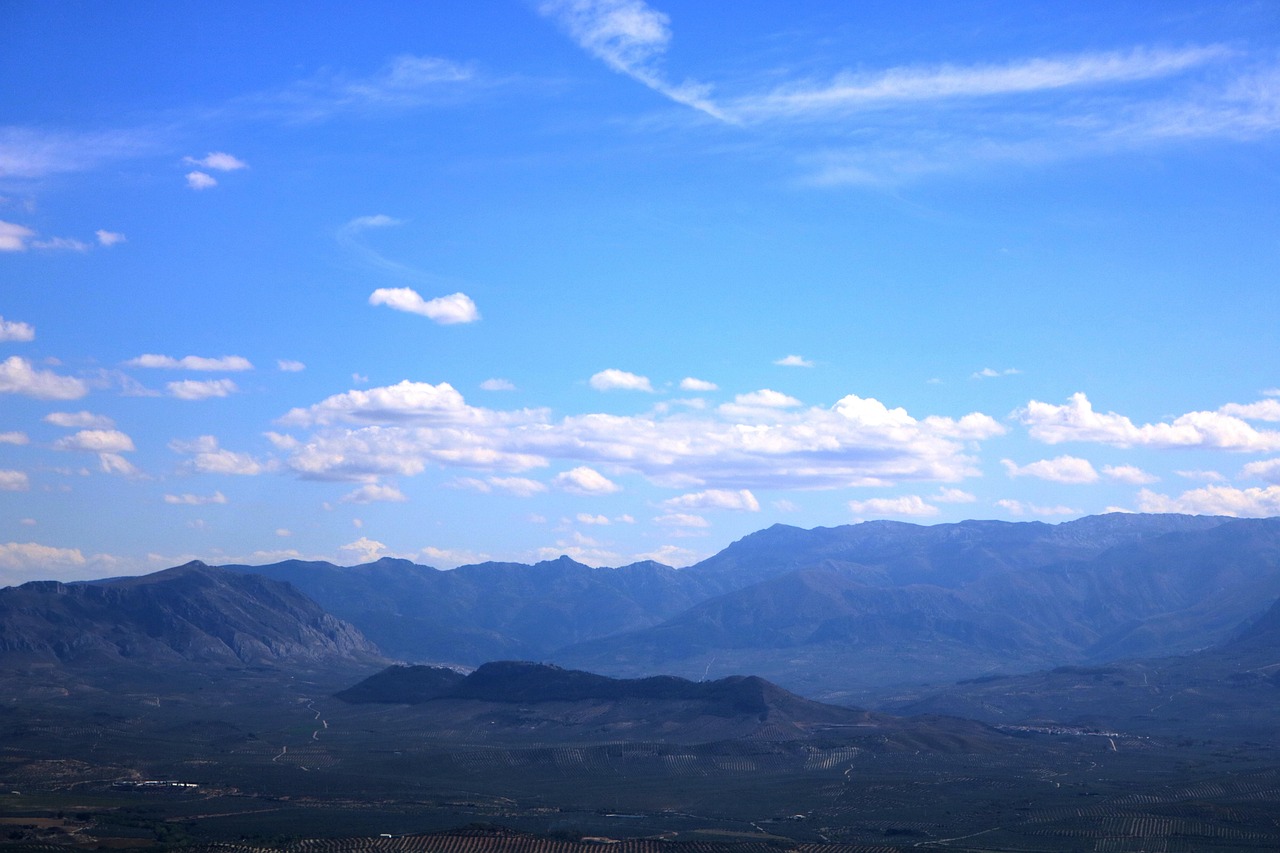
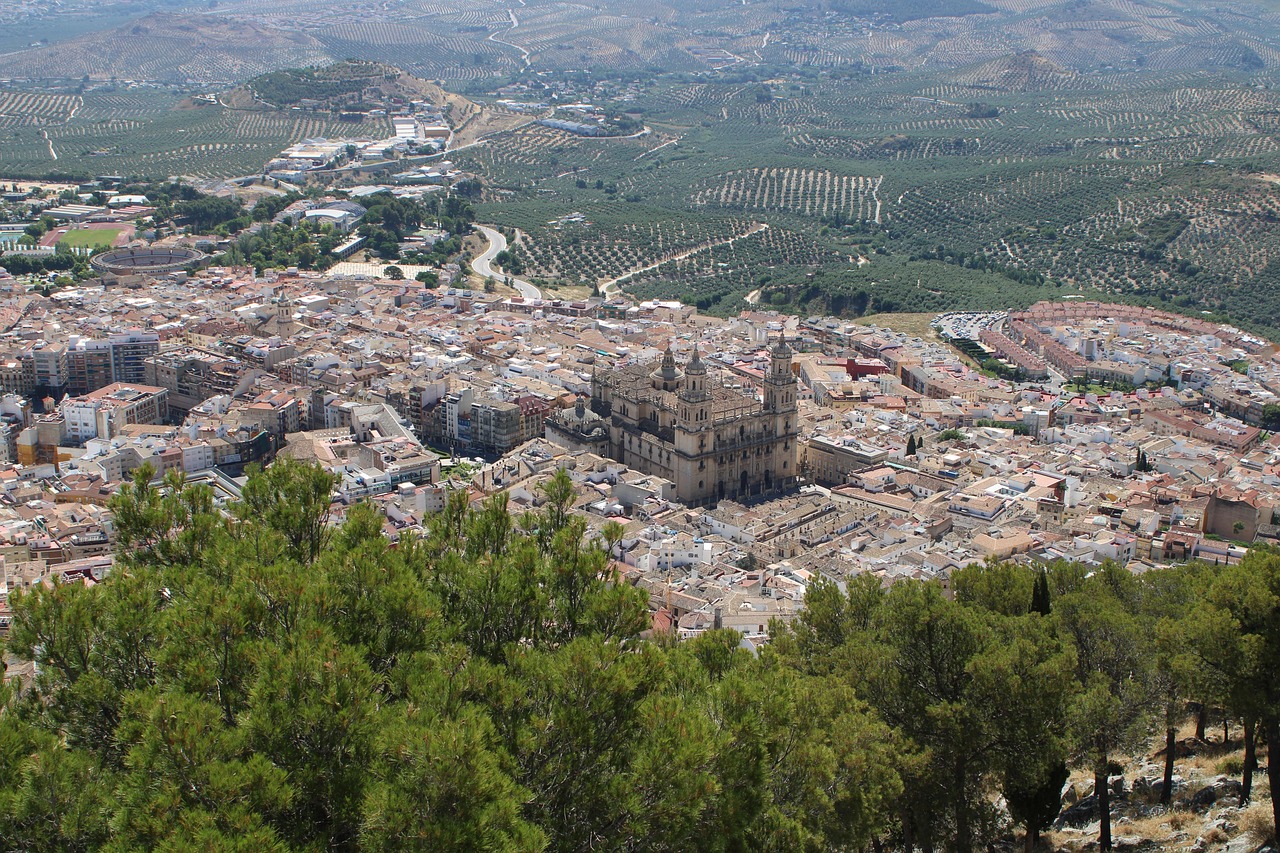
Beyond Alcalá la Real a sea begins that is not made of water: olive trees in dead-straight rows, combed over the hills to the horizon, with white cortijos and the chimneys of oil mills in between. In autumn and winter the air smells of freshly pressed oil and wood smoke, tractors pulling trailers full of olives trundle along the country roads, and in the evening the sun turns the castles on their crags orange – in Alcalá, Martos, Jaén and Baños de la Encina. Further north the landscape tips over: the Sierra Morena is a dark carpet of holm oaks, cork oaks and rockrose, where red deer roar, cinereous vultures circle and, with luck, an Iberian lynx trots across the track. From the sliding door you look out on granite domes, reservoirs and, at the end, the vertical quartzite ribs of Los Órganos. This loop lives on silence, early light and the patience to sit by the roadside with binoculars for two hours now and then.
Stage-by-stage plan
1Stage 1: Alcalá la Real to Jaén (La Guardia de Jaén) (approx. 80 km)
- The drive
- From Alcalá la Real take the N-432 north-west through olive-covered hills to Alcaudete, there join the A-316 to Martos and continue to Jaén; well-built, mostly two-lane roads, autovía from Martos onwards. The aire in La Guardia de Jaén lies a few kilometres south-east of the city along the A-44. Pure driving time just over 1.5 hours; the access roads to the castles are steep and narrow.
- Highlights & must-sees
- Fortaleza de la Mota in Alcalá la Real: Nasrid and later Castilian frontier fortress on a cone above the town, with defensive towers and the remains of the Iglesia Mayor Abacial inside the walls – on a clear day the view reaches as far as the Sierra Nevada.
- Martos: Plaza de la Constitución with the Renaissance building of the old town hall and the Fuente Nueva; above the town the Peña de Martos with a ruined castle, a steep climb for late afternoon.
- Olive country between Alcaudete and Martos: the municipality of Martos is one of the province’s major oil producers – from the back roads you can see the almazaras (oil mills) in the middle of the groves.
- CampingSpirit overnight tip
-
Official campsite or RV park: Área de autocaravanas La Guardia de Jaén: small municipal aire on the edge of the village with few pitches and water and waste services, around 10 km from the centre of Jaén; check electricity and fees in advance. If you are already spending the night in Alcalá la Real: Alcalá Camper Park, a private aire on the edge of town with electricity and water and waste services.
Free camping or nature tip (where legal): Since Real Decreto 518/2026, sleeping in a correctly parked motorhome in public car parks is permitted in principle, as long as the municipality does not regulate parking times or zones differently by signage. At the castle car parks in Alcalá and Martos there is often little space and hardly any peace at night; the aires are the better choice.
- Insider tip for campers
- The Fortaleza de la Mota has its own car park on the hillside; the approach through the old town is steep and narrow – larger vehicles park down on the edge of town and walk up. In Alcaudete and Martos avoid the town centres with the motorhome; the through roads are enough for fuel and shopping.
2Stage 2: Jaén to Baeza (via the oil mills) (approx. 55 km)
- The drive
- Into the city in the morning, then on the A-316 north-east through the sea of olives to Puente del Obispo and Baeza; dual carriageway, hardly any gradients. The drive up to the Castillo de Santa Catalina is a separate spur road with tight hairpins up the city’s hill. Pure driving time around an hour, a full day with sightseeing.
- Highlights & must-sees
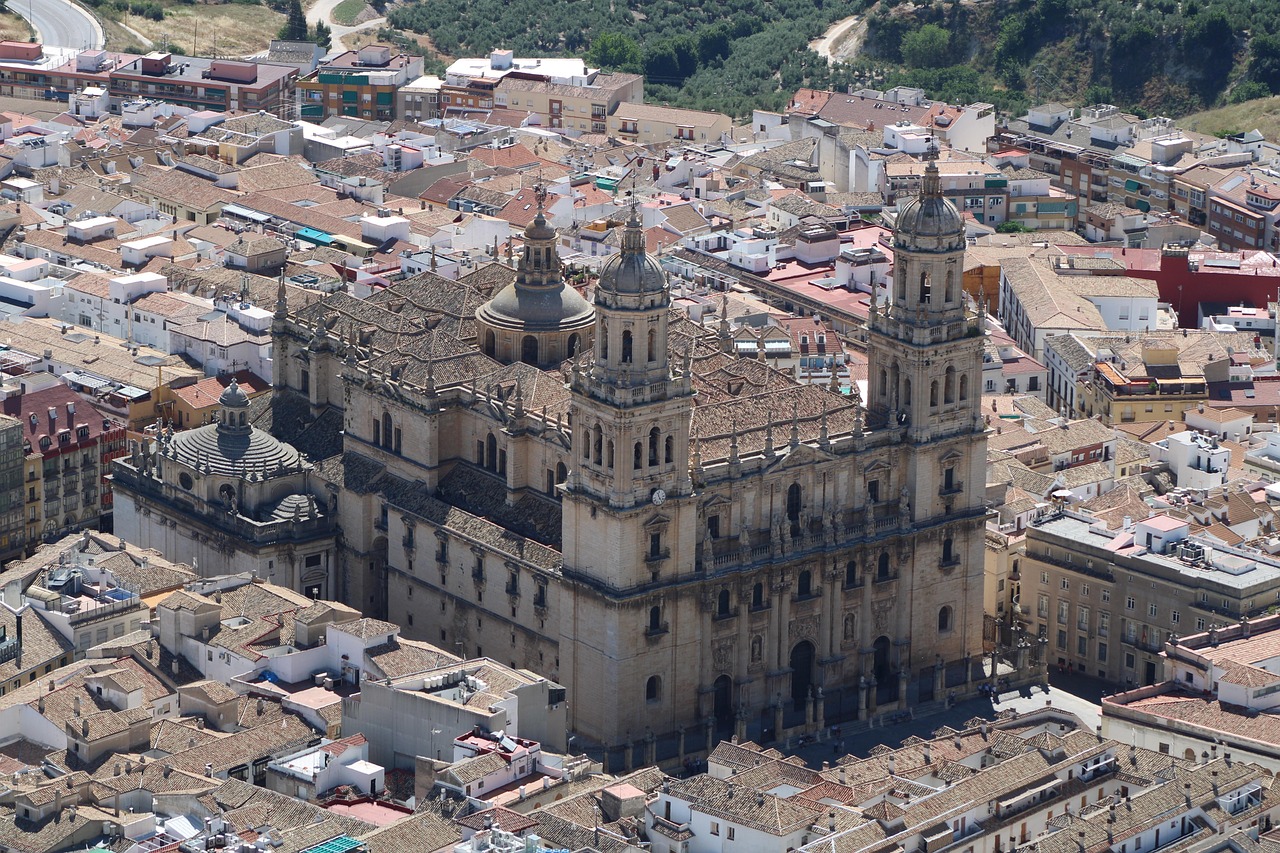
- Jaén Cathedral: Renaissance building by Andrés de Vandelvira, the model for many cathedrals in Spain and Latin America; the west façade looks most impressive in the late afternoon.
- Baños Árabes in the Palacio de Villardompardo: a large surviving 11th-century bath complex beneath a Renaissance palace, with a folk-culture museum and a museum of naïve art in the same building.
- Castillo de Santa Catalina on the hill of the same name, with the Parador next to it; from the large white cross on the edge of the hill Jaén and its cathedral lie directly below you, with the sea of olives beyond.
- CampingSpirit overnight tip
-
Official campsite or RV park: Aparcamiento para autocaravanas in Baeza, a municipal site within walking distance of the old town with water and waste services; check status and fees on the town’s tourism website or Campercontact. Baeza and neighbouring Úbeda only briefly: an evening stroll across the Renaissance squares is enough – more in the CampingSpirit guide “Renaissance, black pines and peach blossom” covering Úbeda, Cazorla and the Murcia hinterland.
Free camping or nature tip (where legal): In Jaén itself there is no place we can reliably recommend for the night; in car parks on the edge of the city, sleeping in a correctly parked vehicle is permitted in principle (observe the signage), but noisy and brightly lit at night. Better to carry on to Baeza or go back to La Guardia.
- Insider tip for campers
- Plan some oleoturismo along the way: the Museo de la Cultura del Olivo at the Hacienda La Laguna near Puente del Obispo displays presses, millstones and an olive garden with many varieties in old estate buildings – a good hour is enough. Many almazaras in the area offer tours with tastings, usually by appointment. For sightseeing in Jaén choose a car park on the edge of the new town; the lanes around the cathedral and the Magdalena are unsuitable for motorhomes.
3Stage 3: Baeza to Sierra de Andújar (Santuario Virgen de la Cabeza) (approx. 95 km)
- The drive
- West via Linares and Bailén on autovías through the Campiña to Andújar, then north on the J-5010 into the Parque Natural Sierra de Andújar. The last 30-odd km are a narrow, winding mountain road through holm oak and cork oak forest, with climbs and few passing places. Pure driving time just under two hours.
- Highlights & must-sees
- Linares briefly: the Conjunto Arqueológico de Cástulo a few kilometres south of the town, the Iberian-Roman city where the Mosaico de los Amores was found; plus the mining history of the town, whose lead mines were once among the most important in Europe.
- Andújar: Iglesia de Santa María la Mayor with El Greco’s “Oración en el Huerto” and the Roman bridge over the Guadalquivir.
- Santuario de la Virgen de la Cabeza on a granite cone above the Sierra: the basilica was rebuilt after the siege in the Civil War; at the end of April the Romería draws hundreds of thousands here.
- CampingSpirit overnight tip
-
Official campsite or RV park: Camping La Mirada on the road to the Santuario at km 31, just below the basilica: pool, sanitary facilities, electric hook-ups; be sure to clarify by phone in advance whether motorhomes are accepted and up to what length, and when it is open. Other places to stay in the Sierra are mostly country hotels and casas rurales, not campsites.
Free camping or nature tip (where legal): The entire natural park is off-limits for wild camping, and overnight stays on forest tracks and reservoir shores outside designated sites are not permitted either. The large pilgrim car parks at the Santuario are intended for day visitors; during the Romería and on public holidays they are closed or charged.
- Insider tip for campers
- Fill up, shop and top up water in Andújar – there is neither a filling station nor a supermarket in the Sierra. The J-5010 is also lynx territory: stick to the signposted speed limits, as road accidents are among the most common causes of death for the animals.
4Stage 4: Santuario Virgen de la Cabeza to Santuario Virgen de la Cabeza (lynx and vulture day) (approx. 40 km)
- The drive
- A wildlife-watching day without moving camp: narrow tarmac and gravel roads branch off the J-5010 into the valleys of the Jándula, for example towards the Encinarejo reservoir and La Lancha. Partly single-track, on dirt tracks only at walking pace and not with long vehicles; many tracks end at private hunting estates with gates. Two to three hours each way including stops.
- Highlights & must-sees
- Iberian lynx: the Sierra de Andújar is one of the core areas of the species. Your best chances are in the cool season in the morning and late afternoon, from public roads with binoculars or a spotting scope.
- Encinarejo reservoir on the Jándula: stretches of shore with holm oaks, otter tracks and views of the granite slopes, a popular vantage point for lynx watchers.
- Cinereous vultures, Spanish imperial eagles and black storks over the slopes; in autumn the red deer roar during the “Berrea”, especially at dusk.
- CampingSpirit overnight tip
-
Official campsite or RV park: Second night at Camping La Mirada. If you cannot get a pitch in the Sierra, drive back to Andújar in the evening and fall back on an área in the surrounding area or a campsite on the A-4 – check the current status on Campercontact or park4night.
Free camping or nature tip (where legal): During the day too: only stop in roadside lay-bys, and do not drive on along tracks marked “Prohibido el paso” or as “Coto privado de caza”. Chairs, tables and awning stay in the vehicle – otherwise you will quickly be approached at the roadside in the natural park.
- Insider tip for campers
- Watch lynx at a distance: stay in the vehicle or right next to it, do not follow the animals, no calls, no food, no drones and no flash. Speak quietly, engine off, do not slam doors. If you see a lynx, do not share the location on social media – gatherings of vehicles disturb the animals. For identification, the Viñas de Peñallana visitor centre on the J-5010 is worth a visit; it is only open on some days of the week, so check times in advance.
5Stage 5: Santuario Virgen de la Cabeza to Baños de la Encina (approx. 75 km)
- The drive
- Back along the J-5010 to Andújar, north-east on the A-4 to Bailén and up a minor road to Baños de la Encina on the edge of the Sierra Morena. Drive down out of the Sierra in low gears; from Andújar a wide autovía, finally a narrow country road with views of the Rumblar reservoir. Pure driving time around 1.5 hours.
- Highlights & must-sees
- Castillo de Burgalimar in Baños de la Encina: 10th-century fortress with 14 towers of rammed earth (tapial) and a later keep, one of the best-preserved castles from the Caliphate period in Spain.
- Ermita de Jesús del Llano on the edge of the village with a Baroque camarín whose stucco decoration ranks among the finest in the province.
- Bailén: in the fields outside the town Napoleon’s army lost its first major pitched battle in 1808; a small interpretation centre tells the story.
- CampingSpirit overnight tip
-
Official campsite or RV park: Área de autocaravanas y camper Baños de la Encina on the Camino Cascarrillo, around 700 m from the centre: according to Campercontact up to 15 pitches, fresh water, grey water and cassette disposal, toilets and showers, electricity for a fee; the site charges a fee, current prices on site. The walk into the centre is short but steep.
Free camping or nature tip (where legal): Around the Rumblar reservoir you are close to the natural park, and in summer the fire risk is at its highest – do not spend the night on the shore. The aire in Baños is the obvious solution.
- Insider tip for campers
- The castle can only be entered during fixed opening hours, with a guided tour on request; tickets and times at the castle or on the municipality’s website. In the evening the walk to the mill above the village is worthwhile for the view over the Guadalquivir plain.
6Stage 6: Baños de la Encina to Santa Elena (Despeñaperros) (approx. 45 km)
- The drive
- Along a country road to Guarromán and north on the A-4 to La Carolina and Santa Elena; the autovía climbs steadily into the Sierra Morena, and in the Despeñaperros gorge the two directions run on separate alignments with viaducts and tunnels. Pure driving time under an hour.
- Highlights & must-sees
- La Carolina: main town of the “Nuevas Poblaciones de Sierra Morena”, laid out on the drawing board under Charles III from 1767 with settlers from Central Europe – with straight streets, large squares, the Palacio del Intendente Olavide and the Iglesia de la Inmaculada Concepción.
- Las Navas de Tolosa: near this small village the battle of 1212 took place, after which the way into Andalusia lay open to the Christian kingdoms; in Santa Elena the Museo de la Batalla de las Navas de Tolosa near the battlefield explains how it unfolded.
- Despeñaperros gorge: from viewpoints on the edge of Santa Elena you look out on the folded quartzite walls through which the route between Castile and Andalusia has run for centuries.
- CampingSpirit overnight tip
-
Official campsite or RV park: Camping Despeñaperros in Santa Elena (Calle Infanta Elena), on the edge of the village with plenty of tree shade and a pool, electric hook-ups and water and waste services; check the season and pitch size with the operator in advance. Plan two nights.
Free camping or nature tip (where legal): In the Parque Natural Despeñaperros camping outside the campsite is not permitted; picnic sites and recreation areas such as La Aliseda are for day visitors. The lorry rest areas on the A-4 are noisy at night – not an alternative.
- Insider tip for campers
- Fill up and shop in La Carolina; the town centre with its squares is easy to bypass even in larger vehicles. The Puerta de Andalucía visitor centre on the A-4 near Santa Elena is worth a stop for current trail information and closures.
7Stage 7: Santa Elena to Santa Elena (via Aldeaquemada) (approx. 50 km)
- The drive
- On the A-6200 east towards Aldeaquemada and back: a narrow, winding country road across the plateau of the Sierra Morena, with short steep sections and little traffic. Around an hour’s driving there and back, a full day with walks.
- Highlights & must-sees
- Los Órganos: Monumento Natural of vertically tilted quartzite beds reminiscent of organ pipes; nearby are the prehistoric paintings of the Cueva de las Vacas del Retamoso.
- Cueva de los Muñecos at the Collado de los Jardines: an Iberian sanctuary from the 6th century BC where numerous small bronze figures (votive offerings) were found. The linear path from the interpretation centre is around 3.2 km long, not signposted and also leads up the Cerro del Castillo (961 m) with a view of Los Órganos.
- Aldeaquemada: the Cascada de la Cimbarra in a rocky gorge and rock paintings such as the Tabla del Pochico, part of the UNESCO World Heritage Rock Art of the Mediterranean Basin since 1998.
- CampingSpirit overnight tip
-
Official campsite or RV park: Back at Camping Despeñaperros. If you are heading home north from here, you are on the A-4 towards Madrid within a few minutes.
Free camping or nature tip (where legal): Neither at the trailheads nor in Aldeaquemada is the natural park a place to spend the night; park properly during the day and do not drive on dirt tracks.
- Insider tip for campers
- Wear sturdy shoes on the way to the Cueva de los Muñecos: the last stretch is steep and there are excavation pits at the cave. Take water and sun protection, there are no springs along the way. For the Cimbarra, park in Aldeaquemada village – the access road to the waterfall is unsuitable for motorhomes.
Camping practice & local rules
Wild camping & overnight parking
- The basic Spanish principle: sleeping in a legally parked vehicle is allowed, but camping with anything that extends beyond the vehicle’s outline is not. Since 1 October 2026, Real Decreto 518/2026 (new Art. 92.4 of the Reglamento General de Circulación) sets out explicitly when a motorhome is correctly parked: no parts extending beyond the vehicle’s outline, resting only on its tyres (levelling ramps allowed), no discharge of liquids. Municipalities may still regulate parking times, zones and maximum duration, but according to the DGT may not issue penalties on the basis of the vehicle type alone; rules for protected areas and coasts apply regardless. Implementation on the ground may take time – observe the signage.
- Andalusia only permits camping on licensed sites in principle; wild camping with a tent, awning or furniture is penalised. In the Sierra de Andújar and Despeñaperros natural parks, overnight stays outside campsites are off-limits – this also applies to miradores, forest tracks and reservoir shores. Agentes de Medio Ambiente and the Guardia Civil (SEPRONA) carry out checks.
- Wildfires: in Andalusia, under the Plan INFOCA, the high fire-risk period runs from June to mid-October, during which fires and barbecues are banned in and near woodland, usually also at barbecue sites and on campsites close to woodland; at high alert levels paths and forest roads are closed. The Sierra Morena with its dry scrub forest burns again and again in summer – no cigarettes out of the window, do not park on dry grass (hot catalytic converter), report any fire immediately on 112.
- Hunting: the Sierra Morena is a big-game hunting area. From autumn to February driven hunts (“monterías”) take place on the estates, mostly at weekends; take “coto de caza” and “cacería” signs seriously and stay on public roads and waymarked paths.
- You can stay legally on campsites and in the municipal “áreas de autocaravanas” such as those in La Guardia de Jaén, Baeza or Baños de la Encina, as well as on private aires such as the one in Alcalá la Real. Campercontact, park4night and Áreas AC provide current information on prices, closures and broken service points – the user comments are often more up to date than the descriptions.
Waste disposal & supplies
- Water and waste services are available at the áreas in La Guardia de Jaén, Baeza and Baños de la Encina, at the aire in Alcalá la Real and at Camping Despeñaperros. There is no public service point in the Sierra de Andújar – head into the mountains with full fresh-water tanks and empty waste tanks.
- Only empty chemical toilets at service points (“vaciado WC químico”); under Real Decreto 518/2026, grey water at the roadside or in drains explicitly no longer counts as correct parking, and it is forbidden in the natural park anyway.
- Tap water in the towns is drinkable but chlorinated; only use fountains in villages and along pilgrim routes if they are marked “agua potable”.
- Gas: Spanish butane and propane cylinders (Repsol, Cepsa) are available at many filling stations, but only fit with a Spanish regulator. Autogas (GLP) for refillable cylinders is offered by some filling stations in Jaén, Linares and on the A-4 – check locations in an app beforehand and bring the dish adapter.
- Olive harvest (roughly November to January): slow tractors with trailers are out on the country roads, and road surfaces in front of field entrances and oil mills can be muddy and slippery. The almazaras are busy at this time – ask in advance about visits.
Vehicle size & traffic rules
- Speed limits: motorhomes up to 3.5 t 120 km/h on autopistas and autovías, 90 km/h on country roads; over 3.5 t 90 and 80 km/h respectively; vehicle-and-trailer combinations 90 and 80 km/h respectively. In built-up areas, 30 km/h applies on roads with only one lane in each direction. In the Sierra de Andújar signs warn of crossing lynx; be sure to observe the lower limits signposted there.
- Tolls: the entire route is toll-free – the A-4, A-44, A-316 and A-32 cost nothing, and there is no vignette in Spain.
- Low-emission zones: Spanish cities with more than 50,000 inhabitants, including Jaén and Linares, must introduce Zonas de Bajas Emisiones (ZBE). Both are planning a ZBE mainly for the old town (in Linares around Las Ocho Puertas) with number-plate cameras and phased introduction; check on the cities’ websites before travelling whether and from when driving bans apply to vehicles without a DGT sticker and to foreign number plates. Avoid the old towns with the motorhome anyway.
- Summer heat: the Guadalquivir valley around Andújar, Bailén and Jaén is one of the hottest areas in Spain, and in July and August temperatures above 40 °C are not unusual. Drive and sightsee early in the morning and take a break in the shade at midday; the AEMET warning levels (yellow, orange, red) also apply to walking trails. The best times to travel are spring and autumn, and winter for lynx watching.
- Rear carriers: if the load protrudes beyond the rear, the red-and-white V-20 warning panel is mandatory. For vehicles registered in Spain the connected V-16 warning light replaces warning triangles; foreign vehicles travel with the equipment required by their home country’s law.
- Blood alcohol limit 0.5 ‰, 0.3 ‰ for novice drivers in their first two years and professional drivers. Holding a phone while driving is banned even when stationary, as are headphones. Report collisions with deer, wild boar or lynx to the Guardia Civil (112).
CampingSpirit packing & preparation checklist
- Spotting scope with tripod and window mount – lynx, imperial eagles and cinereous vultures often only show themselves at several hundred metres in the Sierra de Andújar, and you are best off watching from the vehicle.
- Insulating screens for the windscreen and side windows and a 12 V fan: in the Guadalquivir valley vehicles barely cool down even at night in summer.
- Collapsible water containers for 10–20 litres of fresh water: there is no public water point for campers in the Sierra de Andújar.
- Fire extinguisher and fire blanket within reach – in the fire season every minute counts in a vehicle or grass fire until help reaches the Sierra.
- Sturdy walking boots and a sun hat for the unsignposted, stony paths to the Cueva de los Muñecos and up the castle crags.
- Spanish gas regulator or dish adapter for GLP filling stations, so that the fridge and cooker keep running far from the towns.
As of 2026-10. Closures, fees and booking rules change: check official sources before you go.