

In-depth guide · CampingSpirit
From the Mezquita and the caliphs’ palace of Medina Azahara via the fino bodegas of Montilla into the limestone mountains of the Subbética with a bat cave, baroque fountains and anise villages, on to the Iznájar reservoir and back to Córdoba via the oil town of Baena: around 430 kilometres through the heart of Andalusia.
The spirit of the route
Córdoba begins in half-light: hundreds of columns, red-and-white arches, cool stone, while outside the sun blazes on the white walls of the Judería. South of the city the Campiña rolls away in gentle waves of wheat and vines, and in the bodegas of Montilla it smells of wood, yeast and Pedro Ximénez grapes. Then limestone humps rise out of the sea of olives, grey and furrowed, with villages clinging to the rocks like sugar cubes. From the sliding door you see castle ruins above every other village, in the evening the rock of Zuheros glows orange, and after sunset the scent of freshly pressed oil hangs over the hills when the mills are running in late autumn. In Priego more than a hundred spouts splash, and at the Iznájar reservoir you swim below olive-covered slopes. This loop is all about short stages, early mornings and being willing to leave the camper on the edge of town.
Stage-by-stage plan
1Stage 1: Córdoba to Córdoba (old town day) (approx. 5 km)
- The drive
- A day on foot: from the motorhome area on the Guadalquivir across the Puente Romano to the Mezquita, through the Judería to the Alcázar de los Reyes Cristianos and up into the San Lorenzo and Santa Marina quarters with their patios. With the motorhome, only the short drive along the riverbank; the old town itself is off-limits for your vehicle.
- Highlights & must-sees
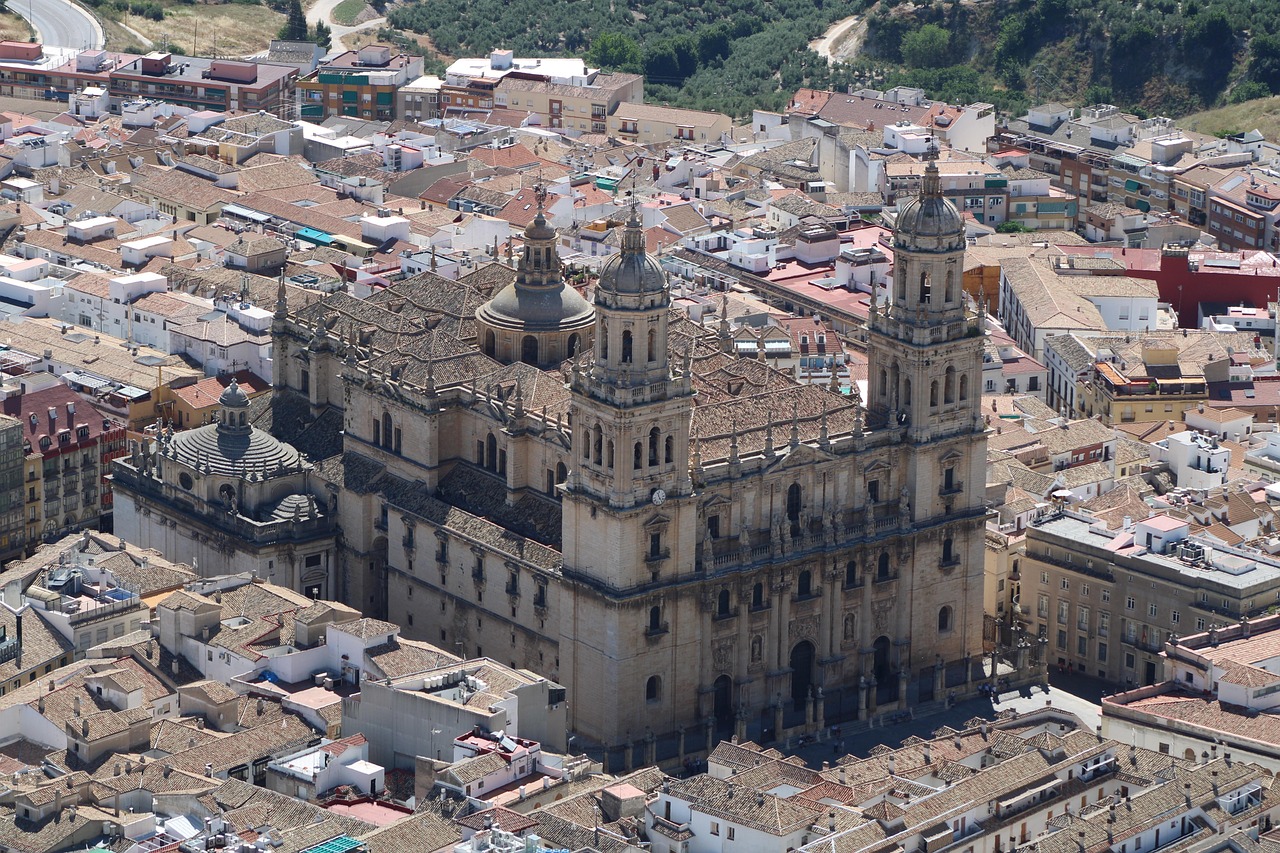
- Mezquita-Catedral: the forest of columns of the 8th- to 10th-century mosque with the mihrab niche beneath gold mosaics, and the Renaissance cathedral built right into the middle of it. Quietest in the first hour after opening; the Courtyard of the Orange Trees is free to enter.
- Judería and Alcázar de los Reyes Cristianos: lanes around the 14th-century synagogue, the Calleja de las Flores with its view of the bell tower, then the terraced gardens of the Alcázar with pools and cypresses.
- Patios: the courtyards with geraniums on the walls are part of UNESCO’s intangible cultural heritage. You can see them year-round in the Palacio de Viana with its twelve courtyards and in some courtyards in the San Basilio quarter; in May many private houses open for the Patio Festival.
- CampingSpirit overnight tip
-
Official campsite or RV park: The motorhome area on the south bank of the Guadalquivir near the Puente de San Rafael (Avenida de los Custodios) is the most central option: tarmac, around 30 pitches for vehicles up to about 8 m, around 15 to 20 minutes’ walk to the Mezquita, paid via a parking meter. There is a disposal point, water costs extra, electricity is practically non-existent; there are no toilets or showers. Prices and facilities have changed several times here – check the current situation on Campercontact or park4night. Quieter and with electricity is the private Camper Park Medina Azahara on the road to the caliphs’ city west of town (see stage 2). The former El Brillante campsite in the north of the city has been closed for years, even though some directories still list it.
Free camping or nature tip (where legal): Under Real Decreto 518/2026 you may spend the night in a correctly parked motorhome in public car parks unless signs say otherwise. In Córdoba this makes little sense in practice: the city centre is a restricted-access and low-emission zone, the streets around the river have time-limited paid parking, and break-ins into vehicles at isolated spots do happen. Use the area by the river or the Camper Park.
- Insider tip for campers
- The entire old town is a camera-monitored access zone that also contains the Zona de Bajas Emisiones – and the satnav likes to send you straight through it. Coming from the A-4 or the A-45, take the ring roads and the riverside road to the area and don’t touch the vehicle again until you leave. In summer, plan sightseeing for the morning and late evening: Córdoba is one of the hottest cities in Europe, and afternoon temperatures above 40 °C are not unusual.
2Stage 2: Córdoba to Montilla (via Medina Azahara) (approx. 65 km)
- The drive
- West on the A-431 to the turn-off for the Medina Azahara visitor centre, around 8 km from the edge of the city, and back the same way. Then south on the A-45 through the Campiña – wide wheat fields, later the first vineyards – and off at the Montilla exit, or alternatively on the parallel N-331 via Fernán Núñez and Montemayor. Wide, well-built roads; driving time around 1.25 hours.
- Highlights & must-sees
- Medina Azahara (Madinat al-Zahra), UNESCO World Heritage Site: the palace city that Caliph Abd al-Rahman III had built at the foot of the Sierra Morena in the 10th century. From the visitor centre and museum a shuttle bus runs up to the excavation with the Salón Rico, archways and terraced gardens; the shuttle bus is the usual way up.
- Castillo de Montemayor: a well-preserved 14th-century castle above the village on the N-331, a photo stop with views across the Campiña.
- Bodegas in Montilla: fino, amontillado and sweet Pedro Ximénez of the Montilla-Moriles designation of origin. Alvear in the centre is considered the oldest bodega in Andalusia, and Pérez Barquero also shows its solera cellars; tours with tastings are usually by appointment.
- CampingSpirit overnight tip
-
Official campsite or RV park: Área de Autocaravanas Montilla a few minutes’ walk from the centre: around 20 pitches on a paved surface, fresh water and disposal, within walking distance of the centre and the bodegas. According to the directories there is no electricity; check fees and maximum stay on site. If you would rather stay in Córdoba, take the Camper Park Medina Azahara on the A-431, a privately run site with electric hook-ups and water and waste services, just before the visitor centre.
Free camping or nature tip (where legal): At the Medina Azahara visitor centre there are large coach car parks that work well for day visitors in a motorhome; you don’t stay overnight there. Montemayor has its own motorhome by-law: on the reserved pitches a maximum of 72 hours per week is allowed, awning, levelling jacks, tables and chairs stay inside on public land, and waste water may only be emptied at the service point. You will find municipal rules like these along the whole route.
- Insider tip for campers
- For Medina Azahara, secure a seat on the shuttle bus early in the morning – the excavation lies on a south-facing slope with no shade, and from midday it gets very hot. No wine tastings before driving on: the limit in Spain is 0.5 per mille, and the Guardia Civil carries out regular checks. If you want to buy fino, you need a cool storage space, because an opened fino only keeps for a few days.
3Stage 3: Montilla to Cabra (via Aguilar de la Frontera and Lucena) (approx. 50 km)
- The drive
- South on the N-331 to Aguilar de la Frontera, a short detour to the Laguna de Zóñar, then on country roads through olive hills to Lucena and on to Cabra on the northern edge of the Sierras Subbéticas. Two-lane, mostly wide roads, narrow in the village centres. Driving time just over an hour.
- Highlights & must-sees
- Plaza de San José in Aguilar de la Frontera: an octagonal square from the early 19th century with uniform white façades – on foot only, as the access streets are narrow. Above it are the clock tower and the remains of the castle.
- Reserva Natural Laguna de Zóñar near Aguilar: a salt lake with bird hides and a small visitor centre; with luck you will see white-headed ducks, grebes and herons.
- Lucena: the Castillo del Moral, where according to tradition Boabdil, the last emir of Granada, was held prisoner, and the church of San Mateo with its baroque sacrament chapel. In the Middle Ages Lucena was a centre of Jewish scholarship.
- CampingSpirit overnight tip
-
Official campsite or RV park: Área de autocaravanas Cabra on the edge of town: one of the larger areas in the Subbética with around 24 pitches and a disposal point; Cabra explicitly promotes itself as a motorhome-friendly town. A second, smaller area with water lies in the north of the town. Lucena also has a designated area; check facilities in advance.
Free camping or nature tip (where legal): The Laguna de Zóñar is a nature reserve: parking only in the visitor car park, no overnight stays, no dogs on the shores. Between the villages the olive groves are private land and the farm tracks are the farmers’ working roads – don’t drive onto them.
- Insider tip for campers
- In Lucena there are large supermarkets and fuel stations on the edge of town on the A-45 – a good place for a big shop before the mountain villages, where the shops are small. In Aguilar a bodega points to the town’s wine tradition: the original Toro Albalá bodega stands in the area’s first power station, hence the name of its fino “Eléctrico”. In the evening in Cabra, walk to the Fuente del Río on the edge of town, where the river emerges from the limestone.
4Stage 4: Cabra to Zuheros (via the Ermita Virgen de la Sierra) (approx. 55 km)
- The drive
- From Cabra up a narrow mountain road to the Ermita de la Virgen de la Sierra on the Picacho, around 1,200 m, and back the same way; the last few kilometres are steep, winding and in places barely two lanes wide. Then via Doña Mencía to Zuheros and from there along the cave road, around 4 km of hairpins, to the Cueva de los Murciélagos. Driving time around 1.5 hours.
- Highlights & must-sees
- Ermita de la Virgen de la Sierra: a pilgrimage church on the highest point of the Sierra de Cabra, a viewing balcony over the whole province as far as the Sierra Nevada. The Picacho is not called the “Balcón de Andalucía” for nothing; early in the morning bands of haze often lie over the sea of olives.
- Vía Verde del Aceite: the old railway line of the “oil train”, now a cycling and walking path with viaducts and tunnels. A section from the former Zuheros station or from Doña Mencía is ideal for an afternoon bike ride.
- Zuheros: a white village at the foot of a rock face with the castle on a rocky spur, the small archaeological museum and the path into the Cañón del Río Bailón. Above it is the Cueva de los Murciélagos, a dripstone cave used from the Palaeolithic to Roman times that holds rock paintings and Neolithic finds; visits only on guided tours in small groups.
- CampingSpirit overnight tip
-
Official campsite or RV park: Área de Autocaravanas Doña Mencía, a few kilometres before Zuheros and designated for motorhomes by the municipality; facilities and rules are on the municipal website. Zuheros itself only offers parking areas at the village entrance, with no confirmed water and waste services. Back in Cabra, the área there remains the most convenient alternative.
Free camping or nature tip (where legal): Zuheros, the cave and the Sierra de Cabra lie within the Parque Natural Sierras Subbéticas, which is also a UNESCO Geopark: camping outside authorised sites is prohibited, and you don’t stay overnight at the Ermita or the cave. In the public car parks on the edge of Zuheros, correct parking with an overnight stay is generally possible unless a sign restricts it – chairs, awning and levelling jacks stay inside.
- Insider tip for campers
- Don’t drive into the village: the lanes of Zuheros are steep, narrow and end in steps. Park at the village entrance and walk up to the castle. Book the cave tours in advance, as they fill up quickly at weekends and in the holidays; the cave road is hard going for vehicles over 7 m, and the car park at the top is small. In the village, try the goat’s cheese of the Subbética.
5Stage 5: Zuheros to Priego de Córdoba (through the natural park) (approx. 50 km)
- The drive
- Back to Cabra and east on the A-339 right across the natural park: up to the pass at the Santa Rita visitor centre, then down between limestone domes and olive slopes past Carcabuey to Priego de Córdoba. A well-built, winding mountain road with climbs; driving time around one hour.
- Highlights & must-sees
- Centro de Visitantes Santa Rita at the pass: an exhibition on the natural park and geopark, maps of the walking trails, and the starting point for short loops among limestone rocks.
- Fuente del Rey in Priego: the baroque fountain with its more than a hundred spouts and sculpture groups, and behind it the older Fuente de la Salud.
- Barrio de la Villa and Balcón del Adarve: the Moorish-influenced old quarter with flowers on every wall, then the promenade along the cliff edge with views over the olive country.
- CampingSpirit overnight tip
-
Official campsite or RV park: Área de Autocaravanas Priego de Córdoba on the edge of town, around ten pitches with fresh water and disposal; the town’s tourist office lists it. No electric hook-ups; arrive early before festivals and at weekends.
Free camping or nature tip (where legal): On the way through the natural park, no overnight stays at miradores, trailhead car parks or forest tracks. In the park, Agentes de Medio Ambiente and the Guardia Civil carry out checks; barbecues and open fires are prohibited during the fire season.
- Insider tip for campers
- Priego is the capital of the Priego de Córdoba protected designation of origin for olive oil. Several oil mills on the edge of town sell direct and show the pressing – most impressive during the harvest from roughly November to January. Don’t take the motorhome into the old town: the lanes around the Barrio de la Villa are for cars only, and the satnav doesn’t always know the one-way rules.
6Stage 6: Priego de Córdoba to Rute (via Carcabuey) (approx. 40 km)
- The drive
- West on the A-339 to Carcabuey, then south on a narrower country road through the Sierra de Rute, with bends and stretches without a centre line. If you are travelling in a large vehicle, it is easier to go via Cabra and Lucena and take the A-331 to Rute, which adds around 30 km. Driving time around one hour.
- Highlights & must-sees
- Carcabuey: castle ruins with the Ermita de la Virgen del Castillo on the hill above the village, a short, steep footpath with views over the limestone mountains of the natural park.
- Rute: anise has been distilled here since the 19th century. The Museo del Anís in an old distillery shows copper stills and labels, and there are also museums on ham, turrón and sugar run by local producers.
- Asociación para la Defensa del Borrico on the edge of Rute: a donkey sanctuary that welcomes visitors; donations welcome.
- CampingSpirit overnight tip
-
Official campsite or RV park: Área de Autocaravanas de Rute on the edge of town: around ten pitches with fresh water and disposal, within walking distance of the centre. There are also other parking areas on the Paseo del Fresno where motorhomes park; observe the signs.
Free camping or nature tip (where legal): The Sierra de Rute is part of the Sierras Subbéticas natural park: no camping, no overnight stays at viewpoints or on forest tracks. Outside the park the Spanish parking rule applies; farm tracks through olive groves are private roads.
- Insider tip for campers
- The anise museums are linked to shops – you can taste and buy the dry and the sweet anís from Rute. If you come in late autumn, you will find Rute in Advent full of turrón and mantecado shops. The road through Carcabuey is narrow; park on the main road on the edge of the village.
7Stage 7: Rute to Iznájar (reservoir) (approx. 20 km)
- The drive
- South on the A-331 down to the Embalse de Iznájar, up into the village on its rocky ridge and on to the Valdearenas beach on the lakeshore below the village. A short, winding drive with views of the water; driving time around 30 minutes.
- Highlights & must-sees
- Iznájar: a white village on a tongue of rock above the largest reservoir in Andalusia, with the remains of the Moorish fortress of Hisn Ashar and the church of Santiago at the top; from the plaza, views across the lake.
- Playa de Valdearenas: a sandy beach on the reservoir with a swimming area, sunbathing lawn and boat hire – in high summer, the place where the whole Subbética goes swimming.
- Kayak and SUP tours on the lake early in the morning, when the water is calm and herons stand in the coves.
- CampingSpirit overnight tip
-
Official campsite or RV park: Camping Valdearenas (on some maps “Nuevo Valdearenas”) above the Playa de Valdearenas: according to the directories, pitches with electricity, sanitary facilities, a pool and water and waste services, season February to December. Users have repeatedly found the site closed despite stated opening times, or open only at weekends, and the sanitary facilities and pool were not always in operation – be sure to phone ahead. The fallback is the área in Rute.
Free camping or nature tip (where legal): The shores and lakeside paths of the reservoir are public water domain with their own rules: camping on the shore is prohibited, driving on shoreline tracks is forbidden, and the Guardia Civil carries out checks in summer. In the beach car parks the parking regulations apply – often restricted at night.
- Insider tip for campers
- In the village of Iznájar, parking a motorhome is difficult: it is best to leave it down on the through road or at the village entrance and walk up. Water quality and swimming permission at the beach can change in dry years when the water level drops sharply – ask in the village about the current situation.
8Stage 8: Iznájar to Córdoba (via Baena and Castro del Río) (approx. 145 km)
- The drive
- Back via Rute and Lucena to Cabra and north-east on the country road to Baena, then a detour to the Parque Arqueológico de Torreparedones on a hill between Baena and Castro del Río; the last kilometre is a narrow access road. From Castro del Río take the N-432 through the Campiña back to Córdoba. Wide, well-built roads; driving time just under 2.5 hours – if you prefer a calmer pace, stay overnight in Castro del Río.
- Highlights & must-sees
- Baena: an olive oil town with its own designation of origin, a castle and the church of Santa María la Mayor in the high-lying Almedina; in the old town, the long-established Núñez de Prado oil mill and a museum on olive growing and oil.
- Parque Arqueológico de Torreparedones: an Iberian and Roman town with a restored east gate, forum, market and main street, plus a sanctuary outside the walls and the remains of a medieval castle. Ask the Baena municipality about opening times in advance.
- Castro del Río, briefly: the castle and old town above the Guadajoz, and the building where Miguel de Cervantes was briefly imprisoned while working as a tax collector.
- CampingSpirit overnight tip
-
Official campsite or RV park: For the last night in Córdoba, back to the area by the Puente de San Rafael or the Camper Park Medina Azahara. If you split the stage, use the Área de Castro del Río with around 20 pitches, fresh water and disposal.
Free camping or nature tip (where legal): Torreparedones is a fenced excavation with a car park for day visitors, not a place to stay overnight. In Baena the Spanish parking rule applies; the steep lanes of the Almedina are unsuitable for motorhomes – park on the edge of town.
- Insider tip for campers
- Before returning to Córdoba, fill up once more and use the water and waste services at the área in Castro del Río, and the last night by the river in Córdoba will be relaxed. If you are heading east, Alcalá la Real is quickly reached from Baena or Priego – that is where the CampingSpirit travel guide to Jaén and the Sierra Morena begins. The Sierra Nevada and the Alpujarras are covered by the CampingSpirit travel guide from Granada, and the White Villages between Arcos and Vejer by another travel guide to Andalusia.
Camping practice & local rules
Wild camping & overnight parking
- The basic Spanish principle: sleeping in a legally parked vehicle is allowed, but camping with anything that extends beyond the vehicle’s outline is not. Since 1 October 2026, Real Decreto 518/2026 (new Art. 92.4 of the Reglamento General de Circulación) explicitly defines when a motorhome is correctly parked: no parts extending beyond the vehicle’s outline, contact with the ground only via the tyres (wheel chocks allowed), no emptying of liquids. Municipalities may still regulate parking times, zones and maximum stays, but according to the DGT may not issue penalties solely because of the vehicle type; rules for protected areas and coasts apply independently of this. Implementation on the ground may take time – observe the signs.
- Under its camping regulations, Andalusia generally only allows camping on authorised sites; wild camping or camping with awning, table and chairs is penalised. Many municipalities in the province of Córdoba have their own motorhome by-laws, such as Montemayor with 72 hours per week on the reserved pitches and a ban on awnings and levelling jacks on public land; the site rules of the áreas apply in addition.
- In the Parque Natural Sierras Subbéticas (UNESCO Geopark), camping outside campsites is prohibited, as are overnight stays at miradores, trailhead car parks, the Ermita Virgen de la Sierra and the Cueva de los Murciélagos. At the Embalse de Iznájar and the Laguna de Zóñar, water and nature conservation rules apply respectively. Agentes de Medio Ambiente and the Guardia Civil (SEPRONA) carry out checks.
- Wildfires: from June to mid-October, the high fire-risk period applies in Andalusia – no open fires, no charcoal barbecues near woodland or scrub, and paths are closed at high alert levels. Don’t park on dry grass, and report fires on 112.
- You can stay legally at the áreas in Córdoba, Montilla, Cabra, Lucena, Doña Mencía, Priego, Rute and Castro del Río, at the Camper Park Medina Azahara and at Camping Valdearenas. Campercontact, park4night and Áreas AC provide current information on broken service points, closures and festivals; user comments are usually more up to date than the descriptions.
Waste disposal & supplies
- The Subbética is well served by municipal áreas: fresh water and disposal are available in Montilla, Cabra, Priego, Rute and Castro del Río, plus electricity at the Camper Park Medina Azahara and at Camping Valdearenas. Two áreas are rarely more than 30 km apart.
- Empty the chemical toilet only at service points (“vaciado de WC químico”); under Real Decreto 518/2026, emptying grey water in car parks no longer counts as correct parking, and it is prohibited in the natural park anyway. Some municipalities limit the hours when the service points can be used – read the signs.
- Tap water in the towns and villages is drinkable; only use village fountains if they are marked “agua potable”. In high summer in dry years, water pressure at the áreas can be weak – fill your tank where it flows well.
- Gas: Spanish butane and propane cylinders (Repsol, Cepsa) are available at many fuel stations, but they need a Spanish regulator. You will find autogas (GLP) for refillable cylinders in Córdoba and along the main routes, but hardly at all in the mountain villages – start with full tanks and bring the right adapter (usually Dish, Euronozzle at newer pumps).
- Shopping and fuel: large supermarkets in Córdoba, Montilla, Lucena, Cabra, Priego and Baena; in Zuheros, Carcabuey and Iznájar only small shops. Olive oil, wine and cheese are best bought directly from mills, bodegas and cheese makers.
Vehicle size & traffic rules
- Speed limits: motorhomes up to 3.5 t 120 km/h on autopistas and autovías, 90 km/h on country roads; over 3.5 t 90 and 80 km/h respectively; vehicle-trailer combinations 90 and 80 km/h respectively. In built-up areas, 30 km/h applies on roads with only one lane in each direction.
- Tolls: the entire route is toll-free; there is no vignette in Spain.
- Low-emission zone and old town of Córdoba: the Zona de Bajas Emisiones largely coincides with the camera-monitored access zone of the old town; only authorised vehicles may enter, and under Spanish traffic law the fine for unauthorised entry is €200. Foreign vehicles do not have a DGT sticker; check the boundaries and current status of the zone on the city’s website before you travel – in a motorhome you will stay outside anyway. The towns and villages of the Subbética have no low-emission zones.
- Heat: Córdoba and the Campiña regularly exceed 40 °C in July and August, and the Subbética is hot too at 500 to 1,000 m. Drive and sightsee early in the morning, take a break in the shade at midday, and watch the AEMET warning levels. The best times to travel are spring, when the patios are in bloom, and autumn until the olive harvest.
- Narrow village streets: Zuheros, Priego (Barrio de la Villa), Carcabuey, Iznájar, the Almedina of Baena and Aguilar have steep lanes with nowhere to turn. Satnavs like to route you through the village centres – park on the edge of town and walk. The mountain roads to the Ermita Virgen de la Sierra and the Cueva de los Murciélagos are hard going for vehicles over 7 m.
- Rear racks: if a load projects beyond the rear, the red-and-white V-20 warning panel is mandatory. For vehicles registered in Spain, the connected V-16 warning light replaces warning triangles; foreign vehicles may continue to use triangles. Blood alcohol limit 0.5 ‰, 0.3 ‰ for novice drivers – take care after wine tastings in Montilla. Using a mobile phone at the wheel is prohibited even when stopped in traffic.
CampingSpirit packing & preparation checklist
- 12 V fan and insulating mats for the windows: in Córdoba and the Campiña, during summer heatwaves it hardly drops below 25 °C at night.
- Folding bike or e-bike with a pannier for the Vía Verde del Aceite between Cabra, Doña Mencía and Zuheros – it has tunnels, so bring lights.
- A well-insulated cool box or wine-box compartment for fino and Pedro Ximénez from Montilla and olive oil from Priego and Baena.
- Sturdy shoes with good tread: the cave tour in Zuheros, the Cañón del Río Bailón and the cobbled lanes of the mountain villages are slippery.
- Water shoes and a dry bag for the Iznájar reservoir – the bottom near the shore is stony, and on hot days the water beckons even in the morning.
- Spanish gas regulator or Dish or Euronozzle adapter for GLP fuel stations, because autogas is hard to find in the mountain villages.
As of 2026-10. Closures, fees and booking rules change: check official sources before you go.