

In-depth guide · CampingSpirit
From the giant waves at Nazaré via the Gothic monasteries of Alcobaça and Batalha, the bird islands off Peniche and the palace hill of Sintra to the cape above Sesimbra: around 360 kilometres on which the Atlantic is almost always on your right, next to the sliding door.
The spirit of the route
The Costa de Prata takes its name from the light: when the sea mist hangs over the cliffs in the morning, the sea gleams like hammered metal, and by midday the north wind has swept the sky clear. Between Nazaré and Sesimbra, fishing towns, pine forests, vineyard terraces on sand and limestone capes alternate, and in between stand monasteries where Portugal’s kings lie buried. In the evening the air smells of grilled sardines and eucalyptus, and you can hear the surf from every campsite. From the open sliding door you watch surfers in the water at Ericeira, the lighthouse at Cabo da Roca and, from the south bank of the Tejo, the skyline of Lisbon with its red bridge. This route demands no mountain passes, but it does demand discipline: the most beautiful beach car parks lie in protected areas, Sintra and Lisbon are best explored on foot and by train, and the Atlantic is chilly even in high summer.
Stage-by-stage plan
1Stage 1: Nazaré to Óbidos (Lagoa de Óbidos) via Alcobaça and Batalha (approx. 90 km)
- The drive
- From Nazaré take the N8-5 inland to Alcobaça, then continue via Aljubarrota to Batalha; head back towards the coast on the IC2/N1 and the toll motorway A8, or more leisurely on the N8 through orchards to Caldas da Rainha and the Óbidos lagoon. Wide, well-built roads; it only gets narrow in the town centres. Around 1.5 hours of pure driving time – with two monasteries, a full day.
- Highlights & must-sees
- Nazaré in the early morning: on the beach of the lower town, fishermen’s wives still dry fish on wooden racks (estendais), and from the Miradouro do Suberco at Sítio you look out over the bay and harbour.
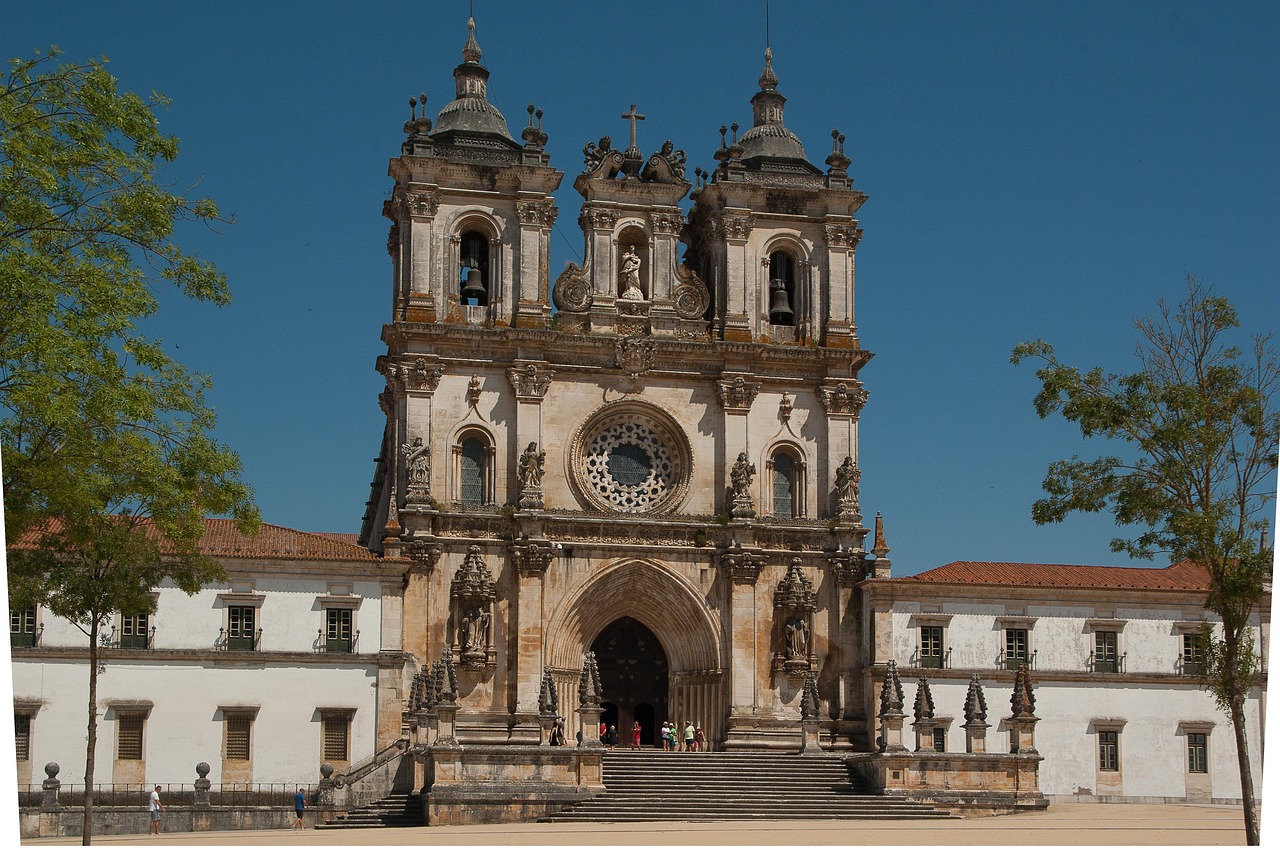
- Mosteiro de Alcobaça: the monks’ dormitory and the Hall of Kings (Sala dos Reis) with azulejo panels depicting the founding of the monastery – less noticed than the royal tombs in the transept.
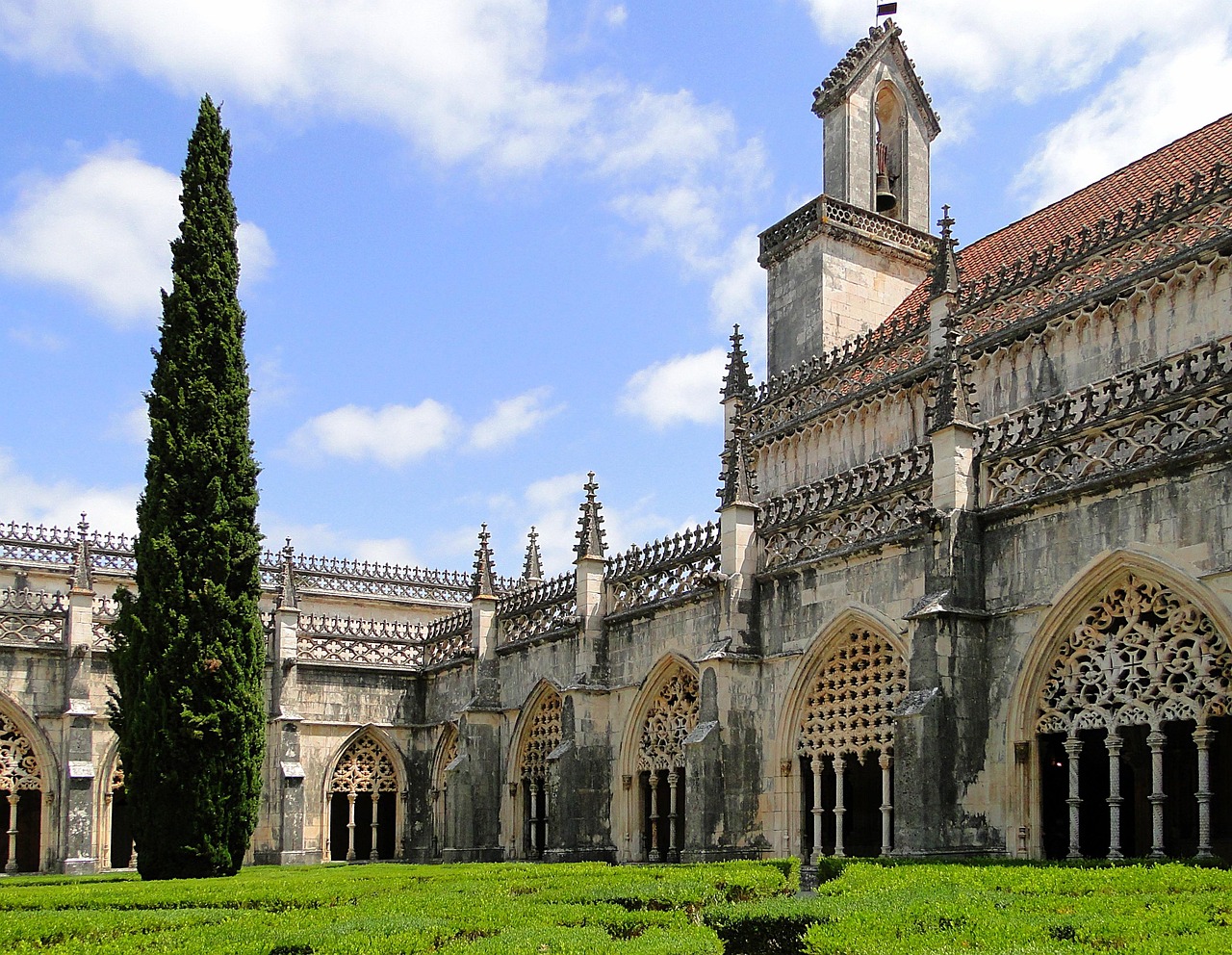
- Mosteiro da Batalha: the chapter house with its unsupported star vault, where the Tomb of the Unknown Soldiers lies under a permanent guard of honour.
- CampingSpirit overnight tip
-
Official campsite or RV park: Camping Orbitur Foz do Arelho lies in pine forest above the Lagoa de Óbidos: electricity, sanitary facilities, water and waste disposal; the village and the lagoon mouth are a few minutes away. The nearby Huttopia Lagoa de Óbidos only rents tents and cabins and has no pitches for motorhomes. Check seasonal opening times in advance.
Free camping or nature tip (where legal): The Óbidos lagoon and the coast up to Nazaré fall within the scope of a coastal zone management plan; under Art. 50-A of the Código da Estrada, overnight stays (pernoita) outside authorised sites are prohibited there, and the beach car parks at the lagoon outlet are checked. For water and waste disposal along the way, the municipal Área de Serviço in Alcobaça is a good option.
- Insider tip for campers
- In Nazaré, avoid the lower town in a motorhome and park on the edge of town – the funicular runs up to Sítio. If you want to see the waves at Praia do Norte in autumn or winter, check the surf forecast: during big swells the car parks at the lighthouse fill up early, and motorhomes often find no space. In Batalha, the car parks are right next to the monastery on the edge of the pedestrian zone.
2Stage 2: Óbidos to Peniche (with a boat day to the Berlengas) (approx. 30 km)
- The drive
- From the lagoon, a short hop to Óbidos, then on the IP6 or the parallel country road via Serra d’El-Rei onto the Peniche peninsula. Flat and wide; you are there in half an hour. Plan two nights: one day for Peniche and Baleal, one for the crossing to Berlenga Grande if the sea allows.
- Highlights & must-sees
- Óbidos in the morning: the aqueduct at the entrance to the town and the church of Santa Maria on the main lane; the ginjinha (sour cherry liqueur) comes in a chocolate cup.
- Fortaleza de Peniche: the fortress where the Salazar regime held political prisoners now houses the Museu Nacional Resistência e Liberdade.
- Berlenga Grande: a crossing of around 30 to 45 minutes from Peniche harbour to the rock fort of São João Baptista, the lighthouse and the breeding colonies of gulls and shags in the Reserva Natural das Berlengas (UNESCO Biosphere Reserve).
- CampingSpirit overnight tip
-
Official campsite or RV park: Parque Municipal de Campismo de Peniche at the eastern entrance to town (electricity, sanitary facilities, water and waste disposal), or Peniche Praia on the north coast of the peninsula towards Cabo Carvoeiro. Specifically for motorhomes, there is the private ASA Motorhome Park Peniche with water and waste disposal. On Berlenga itself there is a small tent site, only for foot passengers with a reservation.
Free camping or nature tip (where legal): The peninsula lies on a stretch of coast with a coastal zone management plan, and the Berlengas are a nature reserve and Natura 2000 site. Overnight stays in a motorhome are prohibited at the beach car parks of Baleal, Consolação and Cabo Carvoeiro; the Polícia Marítima and GNR check regularly. For visits to Peniche, use the sites listed.
- Insider tip for campers
- Visits to Berlenga are limited to 550 people per day and require prior online registration with the ICNF (BerlengasPass) and a small visitor fee; the boat operators at the harbour ask for proof when you board. Boats run mainly in the warmer months and only in calm seas – the crossing is rough in a north-westerly swell. You will find grilled fish in the restaurants on Avenida do Mar by the harbour.
3Stage 3: Peniche to Ericeira (approx. 75 km)
- The drive
- Head south on minor roads via Consolação to Areia Branca and on via Santa Cruz past vineyards and wind turbines; from Santa Cruz, mostly on the coast road N247 via São Pedro da Cadeira and Ribamar to Ericeira. Hilly, with many villages to pass through and roundabouts; a good 1.5 hours. A variant takes you via Mafra and its palace – from there it is only 10 km back to the coast.
- Highlights & must-sees
- Dinosaur coast near Lourinhã: the cliffs between Peniche and Santa Cruz are among the most important fossil sites in Europe; finds are on display at the Museu da Lourinhã in town and at the Dino Parque inland.
- Praia de Santa Cruz with the Penedo do Guincho rock below the clifftop promenade.
- Palácio Nacional de Mafra (UNESCO World Heritage Site): a baroque palace with a basilica, carillons and a large library, with the Tapada de Mafra hunting reserve behind it.
- CampingSpirit overnight tip
-
Official campsite or RV park: Ericeira Camping in the north of the town on the N247 towards Ribamar, a public site run by the municipality of Mafra, reopened after modernisation: pitches for tents, caravans and motorhomes with natural shade, sanitary facilities, a pool and bungalows; ask in advance about electricity and water and waste disposal. The old town is reachable by bike or on a longer walk. In Mafra, the municipality runs a small Área de Serviço for motorhomes near the palace, with water and waste disposal and a few spaces.
Free camping or nature tip (where legal): Ericeira has been a World Surfing Reserve since 2011, and the coast from Ribamar to Foz do Lizandro is covered by a coastal zone management plan. Overnight stays in a motorhome are not allowed at the surf spots of Ribeira d’Ilhas, São Lourenço and Foz do Lizandro; the GNR carries out checks in the evening, partly because of complaints about noise and waste water.
- Insider tip for campers
- In Ericeira, the lanes around Largo da Ribeira are narrow and the car parks in the centre are unsuitable for motorhomes – leave yours at the campsite. Check waves and wind: with a north wind the coast is cold and foggy, and then the detour to Mafra is worthwhile. Shopping and fuel are cheaper in the surrounding area than in the town centre.
4Stage 4: Ericeira to Guincho via Sintra and Cabo da Roca (approx. 60 km)
- The drive
- From Ericeira take the N247 and the N9 to Sintra – not into the centre, but to the parking options in the east near Portela de Sintra. Then go round the outside of the Serra to Colares and via Azóia up to Cabo da Roca, finally descending on the N247 to Guincho. A short distance, but winding and busy with day-trippers; about 1.5 hours of pure driving time – with Sintra, a full day.
- Highlights & must-sees
- Sintra: Palácio Nacional da Pena, Castelo dos Mouros and Quinta da Regaleira with its Initiation Well – book timed tickets from Parques de Sintra online; Pena is quietest in the morning.
- Azenhas do Mar: the white village on the cliff with its ocean pool; the photo spot is the viewpoint on the road above.
- Cabo da Roca: the westernmost point of mainland Europe, with a lighthouse, a stone cross and cliffs around 140 m high.
- CampingSpirit overnight tip
-
Official campsite or RV park: Orbitur Guincho lies in pine forest near Areia, around 1 km behind Guincho beach: electricity, sanitary facilities, water and waste disposal, open all year; some pitches are uneven and tight for large motorhomes. A good base for two nights – there are bus connections to Cascais and for a second day in Sintra.
Free camping or nature tip (where legal): The Serra de Sintra, Cabo da Roca and Guincho form the Parque Natural de Sintra-Cascais. Overnight stays and leaving your vehicle outside authorised sites are prohibited here (fines of €120 to €600), including in the large car parks at Guincho and at the cape. When the wildfire risk is very high, the municipality may close the forested area of the Serra, including its access roads.
- Insider tip for campers
- Do not drive into the Serra in a motorhome: the Calçada da Pena is open only to authorised vehicles, the roads in the Serra are narrow, winding and partly one-way, and there is no parking for campers at the monuments. With its “Viver e Visitar a Vila de Sintra” plan, the municipality is also gradually restricting traffic in the historic centre and directing visitors to car parks on the edge of town; the rules keep changing. The easiest option is to park in the east near Portela de Sintra and take the train one stop to Sintra, or take the bus or walk from there. At Cabo da Roca the car park is small – arrive in the morning.
5Stage 5: Guincho to Lisbon (Monsanto) (approx. 40 km)
- The drive
- From Guincho take the N247 to Cascais, then the Marginal (N6) waterfront road past Estoril, Carcavelos and Oeiras to Belém and up into the Monsanto forest park. City traffic, traffic lights and roundabouts, busy at weekends; around an hour. The A5 motorway is quicker but tolled.
- Highlights & must-sees
- Boca do Inferno west of Cascais: a rock arch through which the surf thunders in a westerly swell; afterwards walk to the citadel and the Casa das Histórias Paula Rego.
- Belém: Mosteiro dos Jerónimos and Torre de Belém (UNESCO World Heritage Site) and the Padrão dos Descobrimentos on the Tejo.
- Lisbon’s old town by tram: line 28 through Graça and Alfama, plus miradouros such as Senhora do Monte and Santa Luzia.
- CampingSpirit overnight tip
-
Official campsite or RV park: Lisboa Camping in the Parque Florestal de Monsanto in the west of the city: a large, terraced site with electricity, sanitary facilities, water and waste disposal, usually open all year; city buses run to the centre. Plan two nights for Lisbon – the motorhome stays on site.
Free camping or nature tip (where legal): Lisbon is no place for a night at the roadside: the EMEL pay-parking zones have time limits, many multi-storey car parks have height restrictions of around 2 m, and break-ins at viewpoints and waterfront car parks are common. The legal 48-hour rule for pernoita only applies where parking is permitted and the municipality has no other regulations – the campsite is the safe choice.
- Insider tip for campers
- Lisbon has the Zona de Emissões Reduzidas (ZER) with two zones: in Zone 1 (Avenida da Liberdade to Baixa), vehicles meeting Euro 3 or higher are allowed on weekdays from 7 am to 9 pm, and in Zone 2 (the wider centre) Euro 2 or higher; EMEL is expanding enforcement by number-plate recognition, and whether and how foreign plates are recorded is unclear. Most motorhomes meet the standards, but the narrow, steep lanes with tram tracks are the bigger problem. You can drive the camper to the waterfront car park in Belém during the day; for the old town, load a Navegante card or Zapping credit for buses, trams, the metro and ferries.
6Stage 6: Lisbon to Costa da Caparica (approx. 20 km)
- The drive
- Cross the Ponte 25 de Abril on the A2 to the south bank of the Tejo, then exit towards Costa da Caparica via the IC20. Short, but with crosswinds and traffic jams on the bridge; outside rush hour you can do it in 30 minutes. Only the direction into Lisbon is tolled; the drive south is free.
- Highlights & must-sees
- Cristo Rei in Almada: a viewing platform on the plinth looking out over the bridge, the Tejo and Lisbon – in the afternoon, with the light from the west.
- Paisagem Protegida da Arriba Fóssil da Costa da Caparica: the ochre cliffs above the beach, with viewpoints on the road to Fonte da Telha.
- Beaches south of the town: the former Transpraia beach train stopped running some years ago; you reach the quieter stretches towards Fonte da Telha on foot, by bike or by bus.
- CampingSpirit overnight tip
-
Official campsite or RV park: Orbitur Costa da Caparica on the northern edge of town: electricity, sanitary facilities, water and waste disposal, a few minutes from the beach. On the northern and southern edges of town there are further sites run by clubs and foundations (including INATEL), some of them home to seasonal campers – ask in advance about guest pitches for motorhomes.
Free camping or nature tip (where legal): The cliffs are a protected landscape, and the beaches as far as the Lagoa de Albufeira are covered by a coastal zone management plan. Overnight stays in beach car parks, for example at Fonte da Telha, are prohibited and checked in summer.
- Insider tip for campers
- Back from the Costa to Lisbon without the motorhome: buses run to Cacilhas, from where the ferry crosses to Cais do Sodré in a few minutes – cheap, with no bridge toll and the best view of the city. A speed limit applies on the Ponte 25 de Abril and is enforced by radar; in strong winds, watch the signs – high-sided vehicles are particularly sensitive to crosswinds there.
7Stage 7: Costa da Caparica to Sesimbra via Cabo Espichel (approx. 50 km)
- The drive
- Head south via Charneca and the Lagoa de Albufeira to Aldeia do Meco, then on via Azóia to Cabo Espichel and back down to Sesimbra. Country roads through pine forest and fields, opening onto a windswept plateau towards the cape. The descent to Sesimbra is steep and the town centre narrow. A good hour of pure driving time.
- Highlights & must-sees
- Lagoa de Albufeira: a lagoon with shellfish beds, calm water and kitesurfers, with a footpath along the dunes on the north shore.
- Cabo Espichel: the pilgrimage sanctuary of Nossa Senhora do Cabo with its pilgrims’ lodgings, the Ermida da Memória on the edge and the dinosaur tracks at Pedra da Mua below the cliffs.
- Sesimbra: the castle on the hill above the town, and below it the fishing harbour and Fortaleza de Santiago; grilled fish on the seafront promenade.
- CampingSpirit overnight tip
-
Official campsite or RV park: Campimeco near Aldeia do Meco, a large site in pine forest near Praia das Bicas: electricity, sanitary facilities, water and waste disposal. West of Sesimbra’s centre, the municipal Parque de Campismo do Forte do Cavalo sits above the sea; it was closed for a time after storm damage, and the access road is steep – check opening and suitability for long vehicles in advance.
Free camping or nature tip (where legal): Cabo Espichel and the coast up to Sesimbra belong to the Parque Natural da Arrábida and the Natura 2000 network. Overnight stays at the cape and in the beach car parks of Meco are prohibited, with fines of €120 to €600. During the day you may park in the square in front of the sanctuary.
- Insider tip for campers
- There are no railings on the cliffs at the cape, and the wind is strong – keep children and dogs close, and hold on to doors when opening them. Sesimbra has large car parks up on the edge of town; the centre, with its one-way streets and seafront promenade, is unsuitable for motorhomes.
Camping practice & local rules
Wild camping & overnight parking
- The legal basis is Art. 50.º-A of the Código da Estrada as amended by Lei n.º 66/2021. It distinguishes between parking (estacionamento), which is permitted for motorhomes wherever their vehicle class may park; pernoita – staying in the motorhome with occupants between 10 pm and 7 am; and aparcamento, where the vehicle, with awning, chairs, tables or opened windows, takes up more space than the parking space.
- Outside protected areas, pernoita is permitted for up to 48 hours in the same municipality, unless the municipality rules otherwise; on expressly authorised sites there is no time limit. Violations cost €60 to €300; camping in public spaces, disposing of waste water or rubbish outside the facilities and occupying space beyond the vehicle cost an additional €30 to €150.
- In Natura 2000 areas, protected areas and the zones covered by coastal zone management plans (POOC), pernoita and aparcamento outside authorised sites are prohibited, with fines of €120 to €600. On this route that affects large parts of the coast: the Lagoa de Óbidos, the Reserva Natural das Berlengas, the coast from Peniche to Ericeira, the Parque Natural de Sintra-Cascais with Cabo da Roca and Guincho, the Arriba Fóssil of the Costa da Caparica, the Lagoa de Albufeira and the Parque Natural da Arrábida with Cabo Espichel.
- Checks are carried out by the GNR, Polícia Marítima, ICNF and municipal police; if you pay on the spot, the minimum amount usually applies. Wild camping with a tent is not permitted outside licensed sites.
- You can stay legally at campsites (parques de campismo), at municipal and private Áreas de Serviço para Autocaravanas (ASA) and at private motorhome parks. Apps: park4night and Campercontact; reviews praising a beach car park as quiet do not change the legal situation. In the Lisbon area, campsites are busy and free pitches are rare – book in high season.
Waste disposal & supplies
- Water and waste disposal: almost all campsites on the route have service points, plus municipal áreas such as in Alcobaça and Mafra and private sites such as in Peniche. Between Ericeira and Sesimbra there are only a few public service points outside campsites – fill up and empty fully at the campsites.
- Empty grey water and cassette toilets only at service points; draining them in car parks is prosecuted as an administrative offence under Art. 50-A.
- Tap water in Portugal is drinkable, but in the Lisbon area it often tastes of chlorine. During droughts, regional water-saving measures apply – do not use your tank for washing the vehicle.
- Gas: German exchange cylinders are not refilled; Portuguese cylinders (Galp, Repsol, Rubis) are available against a deposit, with different connections. Autogas (GPL Auto) is offered at many Galp, Repsol and Cepsa filling stations along the A8 and in the Lisbon area; for refillable cylinders, bring a complete adapter set (Dish, bayonet, ACME).
Vehicle size & traffic rules
- Speed limits: motorhomes up to 3.5 t are treated like cars – 50 km/h in built-up areas, 90 km/h on country roads, 100 km/h on expressways, 120 km/h on motorways. Motorhomes over 3.5 t count as heavy vehicles with lower limits (usually 80 km/h on country roads and 90 to 100 km/h on motorways, depending on classification). Vehicles towing a trailer: 70 km/h on country roads, 80 km/h on expressways, 100 km/h on motorways. Minimum speed on motorways 50 km/h.
- Tolls: the A8 (Leiria–Lisbon), the A5 (Lisbon–Cascais) and the Tejo bridges 25 de Abril and Vasco da Gama (only towards Lisbon) are tolled. Besides toll stations with barriers, Portugal has stretches with toll gantries only (“Electronic toll only”), where the number plate is recorded. For foreign vehicles: Easytoll at selected border crossings (number plate linked to a credit card), registration with Via Verde Visitors or a rented Via Verde device. Only use the Via Verde lanes marked “V” at toll stations if you have a device.
- Vehicle classes: Class 1 for two-axle vehicles under 1.10 m high above the front axle, Class 2 for two-axle vehicles from 1.10 m, Class 3 for three-axle vehicles. Most motorhomes travel in Class 2; being charged as Class 1 with a Via Verde device requires, among other things, less than 1.30 m above the front axle – check individual cases with Via Verde in advance.
- Low emission zone: Lisbon has the Zona de Emissões Reduzidas (ZER) – Zone 1 Avenida/Baixa with at least Euro 3, Zone 2 in the wider centre with at least Euro 2, each on weekdays from 7 am to 9 pm; there is no sticker, and enforcement is by number plate. The announced stricter ZER Avenida–Baixa–Chiado has not been implemented. Check with the city or EMEL in advance whether and how foreign number plates are recorded.
- Sintra: the Calçada da Pena is open only to authorised vehicles, and the municipality is increasingly restricting traffic in the historic centre; the rules keep changing. Park motorhomes outside and use the train or bus.
- Blood alcohol limit 0.5 ‰; 0.2 ‰ for drivers who have held a licence for less than three years and professional drivers. Mobile phones only with a hands-free kit. A warning triangle is compulsory and a hi-vis vest strongly recommended; secure protruding loads such as bike racks, and number plates and lights must not be covered. During the critical wildfire period (usually July to September), fires and barbecues are prohibited in rural areas; danger levels from IPMA. Swimming: observe the flags – the west coast has strong currents.
CampingSpirit packing & preparation checklist
- Seasickness remedies and a windproof jacket – the crossing to Berlenga is rough in a swell, and at Cabo da Roca and Cabo Espichel it blows hard even in summer.
- A wetsuit or at least neoprene shoes: even in August the Atlantic on the Silver Coast is often only around 18 °C, and on the rocky beaches of Santa Cruz and Ericeira shoes protect you from shells and sea urchins.
- A Via Verde device or an Easytoll account set up in advance – the A8, A5 and the Tejo bridges are on your way almost every day.
- A complete gas adapter set (Dish, bayonet, ACME) for GPL filling stations if you travel with a refillable cylinder or gas tank.
- A steering wheel lock and a lockable bike lock: break-ins at viewpoints in Sintra, Lisbon and at Guincho are not uncommon.
- Light hiking shoes with good tread for the paths in the Serra de Sintra and the limestone slabs at Cabo Espichel.
As of 2026-10. Closures, fees and booking rules change: check official sources before you go.