

In-depth guide · CampingSpirit
Around 640 kilometres from the Atlantic coast at Óbidos and Nazaré via the monasteries of Alcobaça, Batalha and Tomar, the university city of Coimbra and the schist villages of the Serra do Açor, up to the Torre and down to the border villages of Belmonte, Monsanto and Castelo Branco.
The spirit of the route
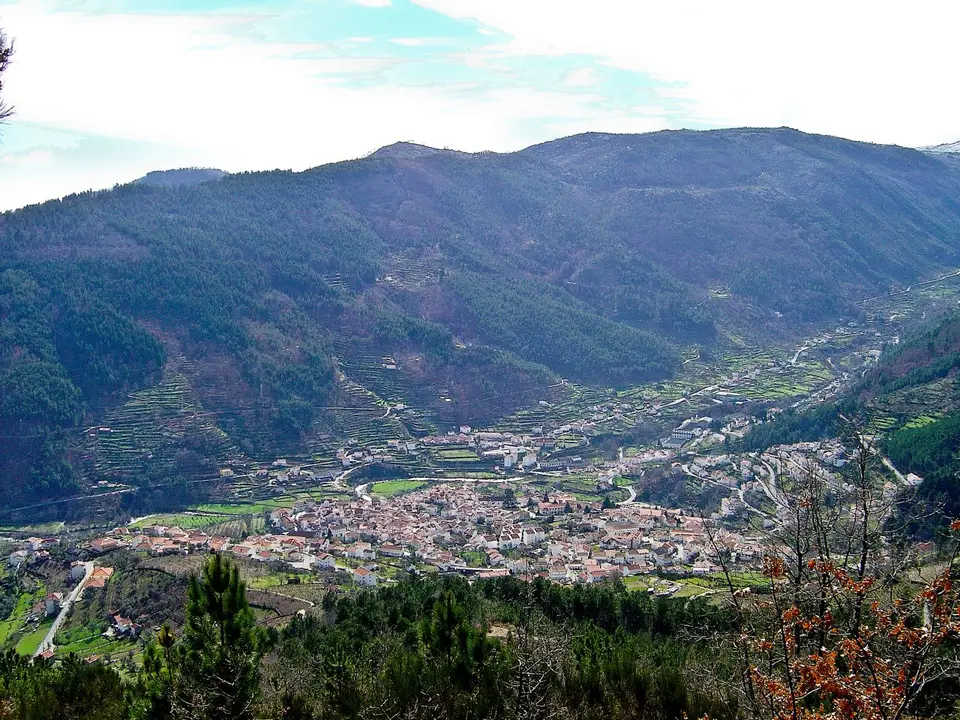
This route begins in the salty wind of the Atlantic and ends in the shimmering heat of the Beira Baixa. In between lies a Portugal that many know only from a train window: Gothic naves so tall that swallows circle inside them, a university on the hill above the Mondego, and then, beyond Arganil, valleys full of schist roofs that smell of chestnut wood and pine resin. From the sliding door you see terraces where goats graze and roads that lie across the slopes like lengths of string. Up in the Serra da Estrela it turns quiet and cool: granite boulders, glacier-polished rock, juniper, a wind that calls for a jacket even in August. At the end come villages built between boulders, and the view reaches across empty plains all the way to Spain. Drive slowly, start early, stay on site in the evenings – that is how the route works.
Stage-by-stage plan
1Stage 1: Óbidos to Nazaré (Valado dos Frades) (approx. 50 km)
- The drive
- From Óbidos take the N8 to Caldas da Rainha, then follow minor roads past the Lagoa de Óbidos to Foz do Arelho and head north via São Martinho do Porto to Nazaré. Flat to gently rolling coastal country with pine forest, orchards and dunes; in Nazaré itself, narrow, steep streets. A good 1.5 hours of pure driving time; if you are in a hurry, take the tolled A8.
- Highlights & must-sees
- Óbidos: walk the town walls (no railings, take care when it is windy) and the azulejo-lined Porta da Vila gate, quietest early in the morning before the coaches arrive.
- Concha de São Martinho do Porto: the almost circular shell-shaped bay with calm water, best overlooked from the lighthouse hill to the west.
- Nazaré: take the funicular (Ascensor) up to the Sítio and the Forte de São Miguel Arcanjo above the Praia do Norte – in autumn and winter this is where the giant waves roll in.
- CampingSpirit overnight tip
-
Official campsite or RV park: Camping Orbitur Valado lies in pine forest near Valado dos Frades, about 2 km east of Nazaré on the road to Alcobaça: electricity, toilets and showers, water and waste disposal; check opening times in advance. You can reach the centre of Nazaré by bus or bike. Alternative on the lagoon: the Orbitur site in Foz do Arelho.
Free camping or nature tip (where legal): The coast between the Lagoa de Óbidos and Nazaré lies in a section covered by a coastal management plan – overnight stays outside designated sites are prohibited here under Art. 50-A of the Código da Estrada, and beach car parks are checked. At the foot of the Óbidos town walls there is a car park where motorhomes may stand during the day; for the night, move to designated aires or the campsite.
- Insider tip for campers
- In Caldas da Rainha the fruit and vegetable market takes place every morning on the Praça da República (“Praça da Fruta”) – good for shopping before you move on, but do not park the motorhome in the narrow town centre; use the outskirts instead. In Nazaré, avoid the cramped lower town; parking at the Sítio is also scarce and not everywhere open to motorhomes – follow the signs or take the bus from the campsite.
2Stage 2: Nazaré to Tomar (approx. 90 km)
- The drive
- Take the N8-5 to Alcobaça (a good 15 km), continue on the N8 and N1 to Batalha, then head east on country roads through hills of eucalyptus and olives to Tomar. Wide roads; only the town centres are narrow. Around 2 hours of driving in total, but allow a whole day for the two monasteries.
- Highlights & must-sees
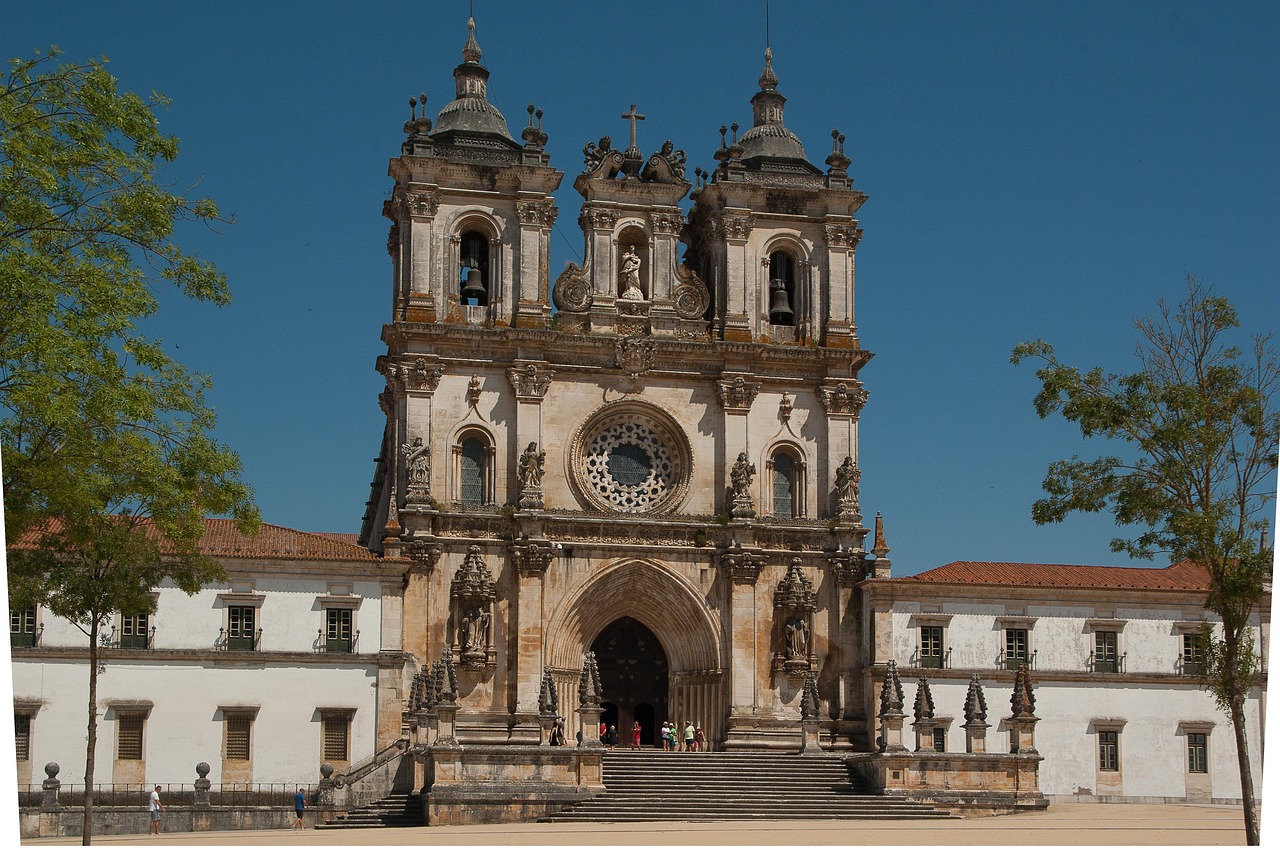
- Mosteiro de Alcobaça (UNESCO World Heritage): the austere Cistercian nave, the tombs of King Pedro I and Inês de Castro, and the huge monastery kitchen with a stream channelled through it.
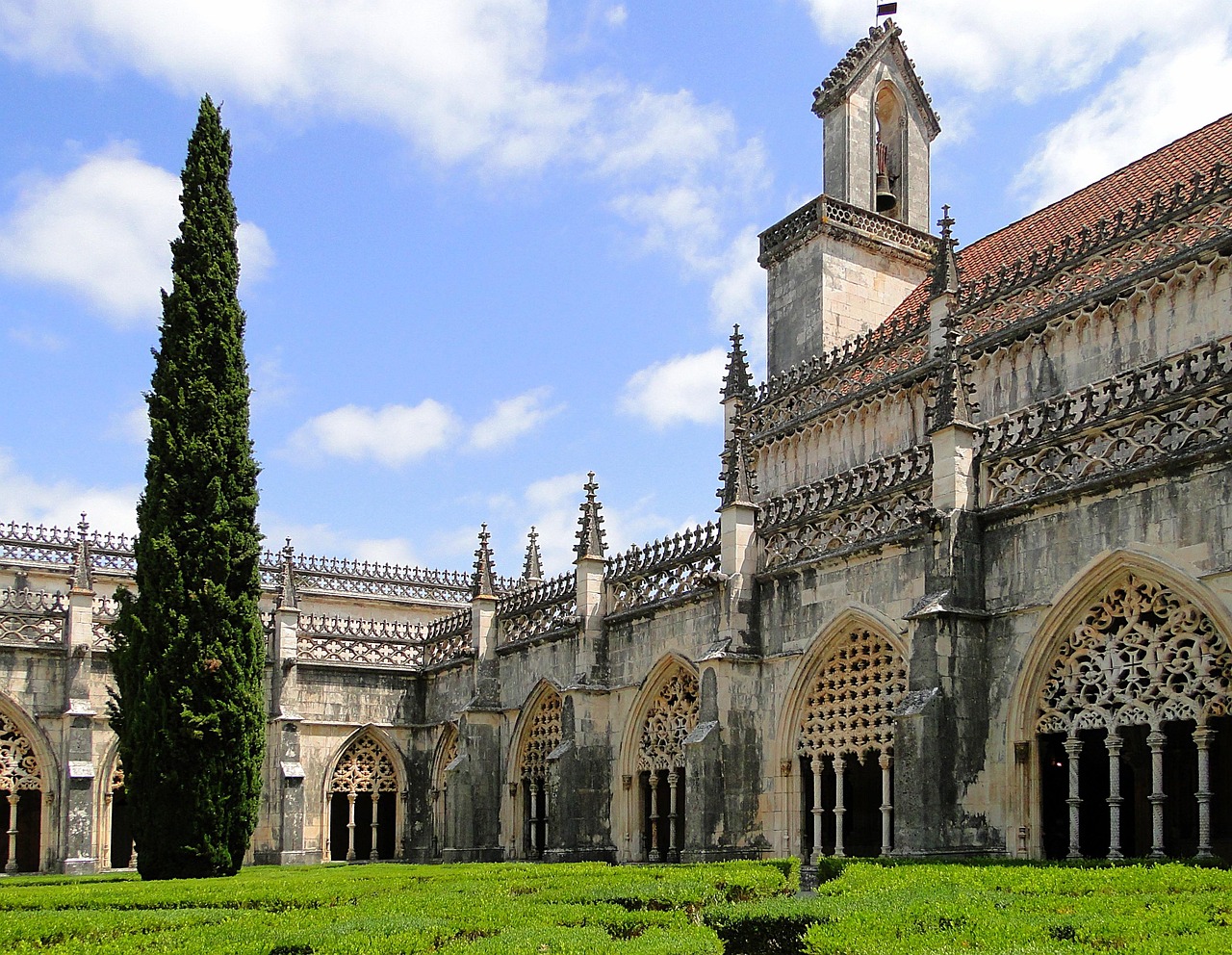
- Mosteiro da Batalha (UNESCO World Heritage): the roofless “Capelas Imperfeitas” with Manueline stone carving and the cloister, best in the warm afternoon light.
- The Aljubarrota battlefield between Alcobaça and Batalha with the CIBA interpretation centre – background on the victory to which Batalha owes its founding.
- CampingSpirit overnight tip
-
Official campsite or RV park: Camping Pelinos lies on a hillside about 7 km north-east of Tomar: a small, quiet site with electric hook-ups and toilets and showers; ask in advance about the season and access for large vehicles. If you want to stay by the water, there are several sites on the Castelo do Bode reservoir south-east of Tomar.
Free camping or nature tip (where legal): Alcobaça has a municipal Área de Serviço com Zona de Pernoita on the edge of the centre with water and waste disposal, a few minutes’ walk from the monastery; near the monastery in Batalha there are designated motorhome parking spaces. The number of spaces is limited, so arrive early in summer; camping behaviour is prohibited there too.
- Insider tip for campers
- Best to fill up and empty in Alcobaça before heading inland. Ask at the first ticket office whether there is currently a combined ticket for Alcobaça, Batalha and the Convento de Cristo in Tomar. Tomar’s old town is narrow and partly traffic-calmed: park by the Nabão river and walk.
3Stage 3: Tomar to Coimbra (approx. 90 km)
- The drive
- Head north on the IC3 and the A13 through the wooded hills of the Pinhal Interior, with a detour to the ruins of Conímbriga near Condeixa, then the last 15 km to Coimbra. A fast route, a good 1.5 hours of pure driving time. In Coimbra it gets tight: the hillside old town is unsuitable for motorhomes.
- Highlights & must-sees
- Convento de Cristo in Tomar in the morning before you leave: the round Templar church, the Charola, and the Manueline chapter house window – by far the most important building of the Templars and the Order of Christ in Portugal.
- Conímbriga: one of the largest Roman town sites in Portugal, with floor mosaics in the Casa dos Repuxos and a museum.
- University of Coimbra (UNESCO World Heritage) with the Paço das Escolas and the Baroque Biblioteca Joanina – entry by fixed time slots, so secure tickets early in the day.
- CampingSpirit overnight tip
-
Official campsite or RV park: Parque de Campismo de Coimbra in the south-east of the city: electric hook-ups, toilets and showers, water and waste disposal; city buses run to the centre. Check opening and reception times in advance.
Free camping or nature tip (where legal): Within Coimbra, overnight stays in public car parks are not prohibited as long as the municipality does not ban them and nothing is set out – but because of car break-ins and noise around the student quarters they are not recommended. The campsite is the better choice here.
- Insider tip for campers
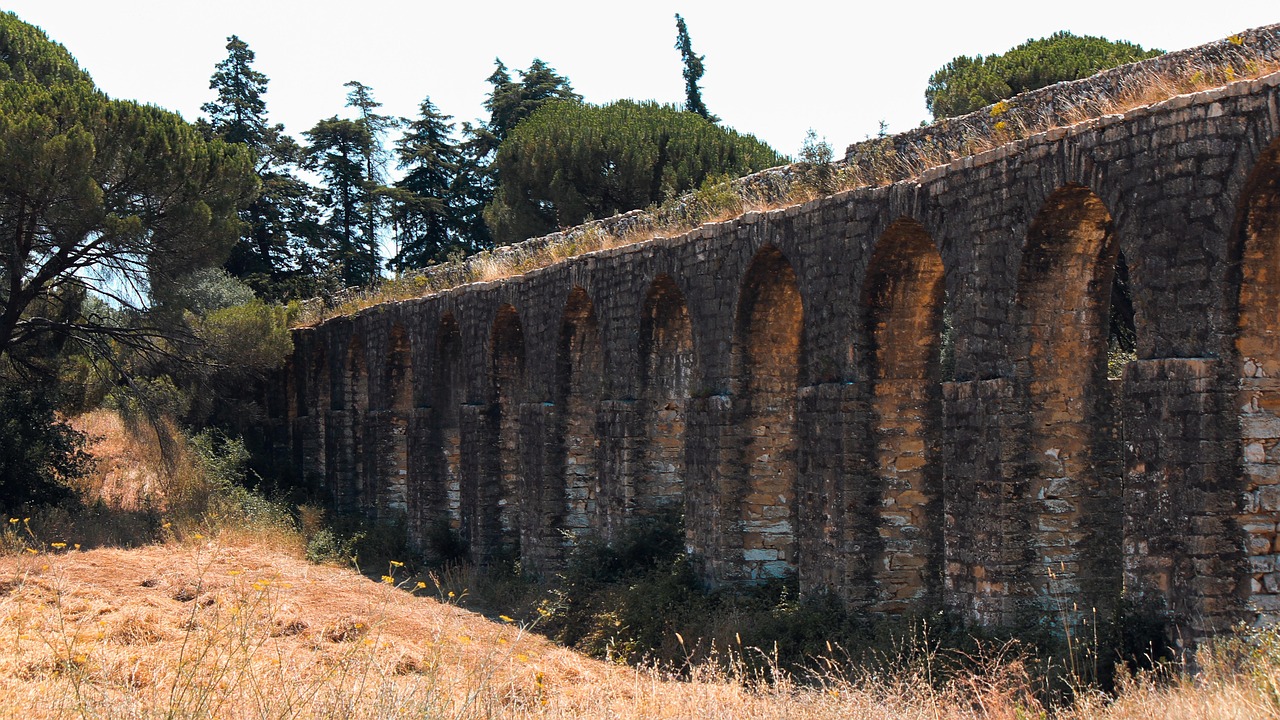
- The Aqueduto dos Pegões, about 2 km north-west of Tomar, is worth a short stop – the car park on the country road is small, so with long vehicles only go outside the lunchtime rush. In Coimbra, park by the river (Parque Verde do Mondego) and walk across the Ponte de Santa Clara into the lower town; from there stairs and lifts lead up to the university.
4Stage 4: Coimbra to Côja (via the schist villages of the Serra da Lousã) (approx. 100 km)
- The drive
- Take the N17 and N342 to Lousã, then climb into the Serra da Lousã to the schist villages and continue via Góis and Arganil into the Alva valley to Côja. From Lousã the road is winding, narrow and steep, often without crash barriers; at the turn-off to the mountain villages of Talasnal and Chiqueiro it becomes single-track. Expect 3 hours of pure driving time.
- Highlights & must-sees
- Candal: the schist village right on the mountain road from Lousã to Castanheira de Pêra, with lay-bys at the roadside – ideal for larger vehicles.
- Talasnal: lanes, steps and wooden balconies on a steep slope; park the motorhome below and walk, as the access road is narrow.
- Góis: the river swimming spot by the bridge over the Ceira and the 16th-century Ponte Real – a place to cool off in summer.
- CampingSpirit overnight tip
-
Official campsite or RV park: Parque de Campismo de Côja lies on the bank of the Alva at the edge of the village: a simple municipal site with electric hook-ups and toilets and showers; check the season in advance. Alternatives: Góis Camping on the Ceira or the Parque de Campismo Municipal de Arganil. At Barril de Alva, a few kilometres upstream, there is an Área de Serviço de Autocaravanas with water and waste disposal.
Free camping or nature tip (where legal): The schist villages cling to the hillside and have hardly any space: staying there overnight makes no sense and is expressly prohibited in many village centres. Good legal stops are the municipal aires in Góis and Barril de Alva – observe the maximum stay and the signs.
- Insider tip for campers
- The Aldeias do Xisto are organised as a network, with aires and hiking trails (Grande Rota and Pequenas Rotas) listed on the network’s official website. Fill up and shop in Lousã before the climb – in the mountain villages there is at most a café.
5Stage 5: Côja to Seia (via Piódão and Loriga) (approx. 80 km)
- The drive
- From Côja via Benfeita up into the Serra do Açor to Piódão, then along a winding high road to Vide and Loriga at the foot of the Serra da Estrela and on to Seia. Narrow mountain roads with hairpins, steep sections and few passing places; for vehicles over 7 m only with experience, and caravan outfits should skip Piódão. Around 2.5 hours of pure driving time.
- Highlights & must-sees
- Piódão: the schist village with blue window frames, built like an amphitheatre into the slope, with the white Igreja Matriz at its foot – look at it from above first, from the viewpoint on the access road.
- Walk from Piódão to Foz d’Égua (about 1 hour one way): stone bridges, a swimming pool in the river and small schist houses at the confluence.
- Fraga da Pena near Benfeita: a waterfall near the Mata da Margaraça, a short walk from the car park – after the 2025 fire, check in advance whether access and the path are open.
- CampingSpirit overnight tip
-
Official campsite or RV park: Around Seia there are several options: the Parque de Campismo Silvestre a few kilometres south-west of the town and Toca da Raposa near Meruge, west of Seia (electricity, toilets and showers, water and waste disposal; check the season and access for both beforehand). Close to the centre of Seia a motorhome car park is also listed – check facilities and rules on site.
Free camping or nature tip (where legal): On 13 August 2025 a fire broke out near Piódão which, according to the ICNF, burned around 64,000 hectares in the municipalities of Arganil, Pampilhosa da Serra, Oliveira do Hospital, Seia, Covilhã, Fundão and Castelo Branco – the largest burnt area ever recorded in Portugal; the upper part of the Mata da Margaraça was also affected. Hiking trails may be damaged or closed, and some slopes are still bare. The Mata da Margaraça and Fraga da Pena belong to the Paisagem Protegida da Serra do Açor, where overnight stays outside designated sites are prohibited. In Piódão itself, only stand in the car park at the village entrance during the day.
- Insider tip for campers
- Arrive in Piódão in the morning, before the day visitors; at weekends cars park on both sides of the short stretch between the car park and the village. Loriga has the typical granite buildings of the Serra in its hillside houses, and is a good place to buy Queijo Serra da Estrela (PDO) and bread.
6Stage 6: Seia to Manteigas (via the Torre) (approx. 60 km)
- The drive
- Take the N339 up via Sabugueiro and the Lagoa Comprida to the Torre (1,993 m), the highest point of mainland Portugal, then east to the Piornos junction and down the N338 into the glacial valley of the Zêzere to Manteigas. Two long, steady climbs and a steep descent with hairpins: low gear, engine braking, breaks to cool the brakes. A good 2 hours of pure driving time, considerably more in fog.
- Highlights & must-sees
- Lagoa Comprida: the largest reservoir in the Serra, at a good 1,600 m, with granite boulders and lakeside trails.
- Torre: summit plateau with views as far as the Cova da Beira, and just below it the granite domes of the Cântaros; less traffic in the morning or late afternoon.
- Vale Glaciar do Zêzere: the U-shaped valley with moraines and roches moutonnées, with the young Zêzere flowing between birches at the Covão da Ametade – part of the Estrela UNESCO Geopark.
- CampingSpirit overnight tip
-
Official campsite or RV park: Parque de Campismo Relva da Reboleira lies a few kilometres down the Zêzere valley from Manteigas towards Sameiro; a little further down the valley is Valhelhas Camping with a river swimming spot (electricity, toilets and showers). Check the season for both sites in advance. The campsite of the Vale do Rossim Ecoresort by the reservoir was provisionally closed by the nature conservation authority ICNF in November 2023 over unresolved wastewater discharges; whether camping will be possible there again in 2026 is open – do not count on it, ask beforehand.
Free camping or nature tip (where legal): Almost the whole route lies within the Parque Natural da Serra da Estrela: overnight stays and parking up outside designated sites are prohibited there, with fines of 120 to 600 €. At the Torre, Lagoa Comprida and Covão da Ametade, park only – do not stay overnight. The car park at the Covão da Ametade is small and hardly suitable for large motorhomes – if in doubt, stop on the N338 where permitted and walk.
- Insider tip for campers
- The N339 is closed by the civil protection authority (Proteção Civil) in snow and ice, typically between Piornos and Lagoa Comprida including the access to the Torre, sometimes changing from hour to hour. Before driving up, check the bulletins from the Proteção Civil and the municipalities; carry snow chains from October to May. Fill up in Seia or Covilhã – there is no filling station at the top.
7Stage 7: Manteigas to Monsanto (via Belmonte) (approx. 105 km)
- The drive
- Down the Zêzere valley via Valhelhas to Belmonte, then on country roads through the Cova da Beira to Penamacor and Penha Garcia and on to Monsanto. Wide bends through cherry orchards, holm oaks and granite outcrops, with little traffic. The approach to Monsanto climbs steeply. A good 2 hours of pure driving time.
- Highlights & must-sees
- Poço do Inferno near Manteigas: a waterfall in the granite, reached by a narrow, steep road – better skipped with large motorhomes, or go by bike.
- Belmonte: a castle overlooking the Cova da Beira, birthplace of Pedro Álvares Cabral, and the Museu Judaico on the history of the crypto-Jews who lived here in secret for centuries.
- Penha Garcia: the “Rota dos Fósseis” with trace fossils of trilobites in the quartzite, below the castle by the reservoir – part of the Naturtejo UNESCO Geopark.
- CampingSpirit overnight tip
-
Official campsite or RV park: The motorhome car park at the entrance to Monsanto (Avenida Fernando Ramos Rocha) offers only around five spaces, drinking water and a toilet, but no waste disposal and no electricity; it is designed for vehicles up to about 7 m, and a fee via a machine is possible. You will be more comfortable at the Parque de Campismo Municipal de Idanha-a-Nova on the Marechal Carmona reservoir, a good 20 km to the south.
Free camping or nature tip (where legal): Between Belmonte and Monsanto, outside protected areas, the general rules apply: overnight stays of up to 48 hours in the same municipality are allowed unless the municipality prohibits them, without awning, table or chairs. Belmonte has an aire for motorhomes at the Parque de Santiago. In summer, no barbecues and no open fires because of the wildfire risk.
- Insider tip for campers
- Fill up and empty before Monsanto, for example in Valhelhas or Belmonte. Do not drive into Monsanto: the lanes between the boulders are too narrow for motorhomes. The climb to the castle (a good 750 m high) is stony – take sturdy shoes and water.
8Stage 8: Monsanto to Castelo Branco (approx. 65 km)
- The drive
- Down to Idanha-a-Velha on the Rio Ponsul, on to Idanha-a-Nova and then south-west on country roads through the wide, dry Beira Baixa to Castelo Branco. Quiet country roads without climbs, a good hour of driving.
- Highlights & must-sees
- Idanha-a-Velha: Roman town walls of the ancient Egitânia, a Visigothic cathedral and a medieval bridge over the Ponsul.
- Monsanto in the early morning: the houses between granite boulders, the Torre de Lucano with the silver cockerel from 1938, and the view from the castle across the plain all the way to Spain.
- Castelo Branco: the Jardim do Paço Episcopal, a Baroque garden with box hedges and stone statues of kings, and the centre for the region’s embroidery.
- CampingSpirit overnight tip
-
Official campsite or RV park: Castelo Branco has an Área de Autocaravanas on the edge of town with water and waste disposal; the Parque de Campismo de Castelo Branco lies about 4 km north of the centre, with electric hook-ups and toilets and showers (check the season).
Free camping or nature tip (where legal): The Beira Baixa is sparsely populated, but large parts around Idanha lie within Natura 2000 areas (Rio Ponsul, Tejo Internacional) – overnight stays outside designated sites are prohibited there and punishable by fines of up to 600 €. The designated aires in Castelo Branco and Idanha are the legal choice.
- Insider tip for campers
- In summer the Beira Baixa gets very hot: do your sightseeing in the morning and rest in the shade at midday. If you are continuing towards Lisbon, take the A23; for Spain, cross via Monfortinho or Segura.
Camping practice & local rules
Wild camping & overnight parking
- Legal position: Art. 50-A of the Código da Estrada, as amended by Lei 66/2021, distinguishes between parking (estacionamento), spending the night with occupants (pernoita) and aparcamento, i.e. occupying more space than the parking bay provides. Outside protected areas, overnight stays of up to 48 hours in the same municipality are allowed unless the municipality prohibits them; this limit does not apply on designated sites.
- Overnight stays and parking up outside authorised sites are prohibited in Natura 2000 areas, protected areas and coastal zones with a coastal management plan (POOC). On this route that affects the coast at Óbidos and Nazaré, the Parque Natural da Serra da Estrela with the Torre and the Zêzere valley, the Serra do Açor and the Natura 2000 areas around Idanha. Fines: overnight stays 60 to 300 €, in Natura 2000 and protected areas 120 to 600 €.
- Camping behaviour is off-limits everywhere outside campsites: awning, table, chairs, barbecue and anything set out count as aparcamento or camping; wastewater may only be emptied at disposal points.
- Wildfires: during the critical fire period set each year (usually 1 July to 30 September, extended if necessary) and when the fire risk is high, open fires, barbecues outside authorised facilities and fireworks are prohibited in rural areas. The Serra da Estrela (2022) and the Serra do Açor (2025) were hit by major fires; check warning levels at the IPMA and trail closures at the ICNF, emergency number 112.
- Legal overnight stays: parques de campismo, municipal Áreas de Serviço de Autocaravanas (ASA) and private aires. park4night, Campercontact and the Portuguese aire directories show the current situation; the Aldeias do Xisto network lists aires near the schist villages.
Waste disposal & supplies
- A service point for water and waste is called an “Área de Serviço de Autocaravanas” (ASA). Good points along the route are Alcobaça, Góis, Barril de Alva, Belmonte and Castelo Branco, plus the campsites; there is no waste disposal in Piódão, at the Torre or in Monsanto.
- Water: tap water in Portugal is generally drinkable (“água potável”). The springs and fountains in the Serra da Estrela are tempting but often carry the notice “água não controlada” – in that case, do not drink.
- Gas: Portuguese exchange cylinders (Galp, Repsol, Rubis and others) are only available in exchange for Portuguese cylinders, which have their own connection. Autogas (GPL Auto) is sold at filling stations on motorways and in towns such as Coimbra, Covilhã and Castelo Branco; for refillable tanks carry an adapter set – in Portugal the Dish adapter is usually needed.
- Shopping and fuel: large supermarkets with car parks without height barriers are found in Caldas da Rainha, Tomar, Coimbra, Seia, Covilhã and Castelo Branco. Between Lousã and Seia and between Manteigas and Monsanto, shops are small and filling stations rare.
- Climate: cool and often foggy on the coast, frequently above 35 °C in the Beira Baixa in summer; on the Serra da Estrela night temperatures drop into single figures even in July. Bring heating and a warm blanket.
Vehicle size & traffic rules
- Speed limits: motorhomes up to 3.5 t 50 in built-up areas, 90 outside, 100 on expressways (vias reservadas a automóveis) and 120 km/h on motorways. Caravan outfits: 70 outside built-up areas, 80 on expressways, 100 on motorways. Motorhomes over 3.5 t are subject to the lower limits for heavy vehicles (usually 80 km/h outside built-up areas); check the vehicle category in your papers. Alcohol 0.5‰ (novice and professional drivers 0.2‰); mobile phone at the wheel only hands-free.
- Tolls: the A8 between Óbidos and Leiria and the A1 are tolled. Since 1 January 2025 several former SCUT routes are toll-free, including the A13/A13-1 (Pinhal Interior), the A23 (Beira Interior) and the A25 (Beiras Litoral e Alta). For foreign vehicles on electronic-only routes: Easytoll at selected border crossings, registration with Via Verde Visitors or a rented Via Verde device.
- Vehicle classes: Class 1 applies to two-axle vehicles less than 1.10 m high above the front axle, Class 2 to two-axle vehicles from 1.10 m, Class 3 to three-axle vehicles. Most motorhomes travel in Class 2; billing as Class 1 with a Via Verde device requires, among other things, a height above the front axle of less than 1.30 m, which most motorhomes do not meet – clarify individual cases with Via Verde in advance.
- Winter: the N339 over the Torre and the N338 from Manteigas are closed by the Proteção Civil in snow and ice, and closures can change from hour to hour. Snow chains are then compulsory where signed; from October to May carry chains that fit your tyre size and check the current bulletins before driving up.
- Low emission zones: there is no sticker-based low emission zone on the route, but the old towns of Óbidos, Tomar and Coimbra are restricted by bollards, cameras or residents-only rules. A warning triangle is compulsory and a hi-vis vest strongly recommended; mark any load overhanging on rear carriers. Emergency number 112.
CampingSpirit packing & preparation checklist
- Snow chains that fit your tyre size – if you want to cross the Torre between October and May, you may otherwise have to turn back in snow.
- Via Verde device or Easytoll/Via Verde Visitors registration – there are no barriers to pay at on the electronic toll routes.
- Levelling ramps for the campsites – several sites in the mountain valleys are on slopes; better not to use ramps in public car parks, as they can be regarded as camping behaviour.
- Sturdy hiking boots with good tread – the schist paths near Piódão, the granite slabs at the Torre and the climb to the castle in Monsanto are slippery when wet.
- A warm sleeping bag or thick blanket and working heating – in the Serra da Estrela it gets cold at night even in summer.
- Gas adapter (Dish) and two full cylinders when you enter the country – Portuguese exchange cylinders do not fit.
As of 2026-09. Closures, fees and booking rules change: check official sources before you go.