

In-depth guide · CampingSpirit
From Mytilini via Agiasos and Plomari, the bird bays near Kalloni, Petra and Molyvos to the petrified forest of Sigri: a good 380 kilometres around the island between olive trees, ouzo distilleries and Genoese castles.
The spirit of the route
Lesbos is the third-largest island in Greece, yet it feels like a small continent. In the east, olive groves roll over the slopes, said to hold eleven million trees; in the south, the scent of aniseed drifts out of the distilleries of Plomari; in the north, the Genoese castle towers over the tiled roofs of Molyvos; and in the west lies a volcanic moonscape from which silicified tree trunks protrude. The roads are twisty, the villages narrow, the tavernas slow – and that is deliberate. From your sliding door you will see turquoise bays, flamingos in the salt lagoons near Kalloni in spring, and in the evening the coast of Turkey, which seems close enough to touch. This loop thrives on short stages, breakfast by the harbour, a glass of ouzo with meze, and a willingness to fit your plans around the ferry, the wind and the village streets.
Stage-by-stage plan
1Stage 1: Mytilini (ferry port) to Agiasos (approx. 35 km)
- The drive
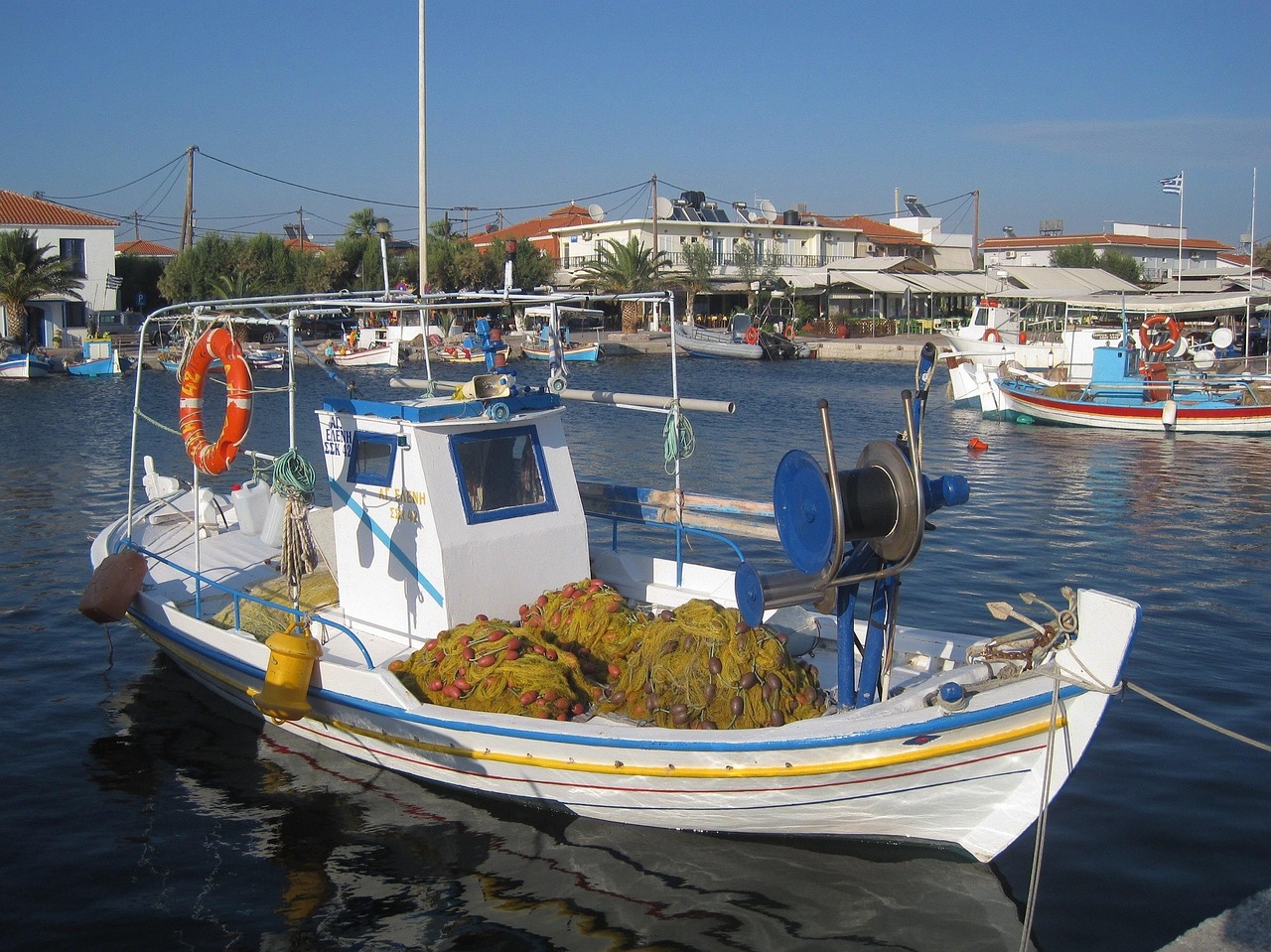
- The ferries from Piraeus (stopping at Chios on some sailings) and from the north (Kavala, stopping at Limnos on some sailings) dock at Mytilini; timetables and sailing days vary widely with the season, and the crossing takes roughly 9 to 12 hours from Piraeus depending on stops, and about 8 to 10 hours from Kavala. Book your vehicle and cabin early. From the port, the coast road leads through Mytilini, then the road south-west into the hills: well built as far as Keramia, then bends through chestnut and pine forest at the foot of Olympus (around 970 m). A good hour of pure driving time, without sightseeing in town.
- Highlights & must-sees
- Mytilini Kastro: the sprawling Genoese fortress on the peninsula north of the harbour, with walls, cisterns and views over the harbour bay.
- The suburb of Varia, about 4 km south of Mytilini near the road to the airport, with the Theophilos Museum and the Tériade Museum – two small houses devoted to naive painting and book illustration; check opening times in advance.
- Agiasos: the Church of the Panagia in the heart of the village, cobbled lanes with potters, woodcarvers and coffee houses.
- CampingSpirit overnight tip
-
Official campsite or RV park: Campsites are rare on the east side of the island. The OpenStreetMap data lists a site called “Roma camp” on the edge of Mytilini, but we have no reliable information on its facilities or opening – clarify by phone beforehand. We know of no campsite at Agiasos itself.
Free camping or nature tip (where legal): In 2025 Greece banned camping by law 5170/2025 (€300 per person): anything outside the outline of the vehicle counts as camping – awning, table, chairs, grill, levelling jacks, washing line. Parking under the road traffic code is allowed; according to the police, you may also sleep in a correctly parked motorhome. Parking in Agiasos is limited; a spot at the entrance to the village, below the centre, works for a visit. Local bans take precedence – follow the signs.
- Insider tip for campers
- Mytilini has narrow, busy harbour streets: do your shopping, refuelling and cash withdrawals on the outskirts rather than in the centre. In Agiasos, do not drive into the old-town lanes; park at the bottom and walk. Top up water and check the tank before heading into the hills – petrol stations are few and far between in the interior of the island.
2Stage 2: Agiasos to Plomari (approx. 27 km)
- The drive
- From Agiasos continue south on the country road through olive groves and over a low saddle to Plomari on the south coast. The road is paved throughout, but narrow and twisty, with hairpins at the end and village streets where buses and motorhomes only just squeeze past each other. Around 45 minutes.
- Highlights & must-sees
- Plomari: the ouzo capital of the island – the Barbayanni and Arvanitis distilleries lie on the access road from Mytilini, both with a small museum; plus several meze tavernas by the harbour.
- Agios Isidoros beach on the edge of Plomari: sand, rock slabs and open sea, busy in summer.
- Vatera (west of Plomari): a beach many kilometres long on the south coast, much quieter in the shoulder seasons.
- CampingSpirit overnight tip
-
Official campsite or RV park: Campsites are rare on the south coast too; we know of no confirmed campsite in Plomari or Vatera, and the OpenStreetMap data lists none there. Before you travel, ask the municipalities or check platforms such as park4night, Campercontact or campsaround for the current situation. If necessary, ask the owners of rooms to let (“Rooms to let”) about a spot in their yard.
Free camping or nature tip (where legal): See stage 1: parking is allowed, camping is not. There are short stretches of parking at the harbour of Plomari and along the beach road, which fill up in high season; on the beach, anyone who sets out chairs and a table is checked under the coastal law. A 30 km/h limit has applied in built-up areas since 2026, and in Plomari it is partly enforced.
- Insider tip for campers
- The distillery museums have varying opening times depending on the time of year and are often closed on Sundays and public holidays – call ahead or check the distillery’s website. If you are still driving in the evening: here ouzo means a tasting, not a target; the drink-drive limit in Greece is 0.5 ‰.
3Stage 3: Plomari to Skala Kallonis (Gulf of Kalloni) (approx. 62 km)
- The drive
- From Plomari back along the coast road to the west, via Vatera or the hinterland to Polichnitos and on along the well-built north–south connection to the Gulf of Kalloni. The scenery alternates between olive groves, pine forest and salt meadows; in places the road is narrow and has no hard shoulder. A good 1.5 hours.
- Highlights & must-sees
- Hot springs near Polichnitos: very hot springs from volcanic rock with simple bathhouses, whose opening and access change – check in advance.
- Salt pans and lagoons of Kalloni: flamingos, little egrets, avocets and many other migratory birds in spring and autumn; observation hides on the edge of the protected area (Natura 2000).
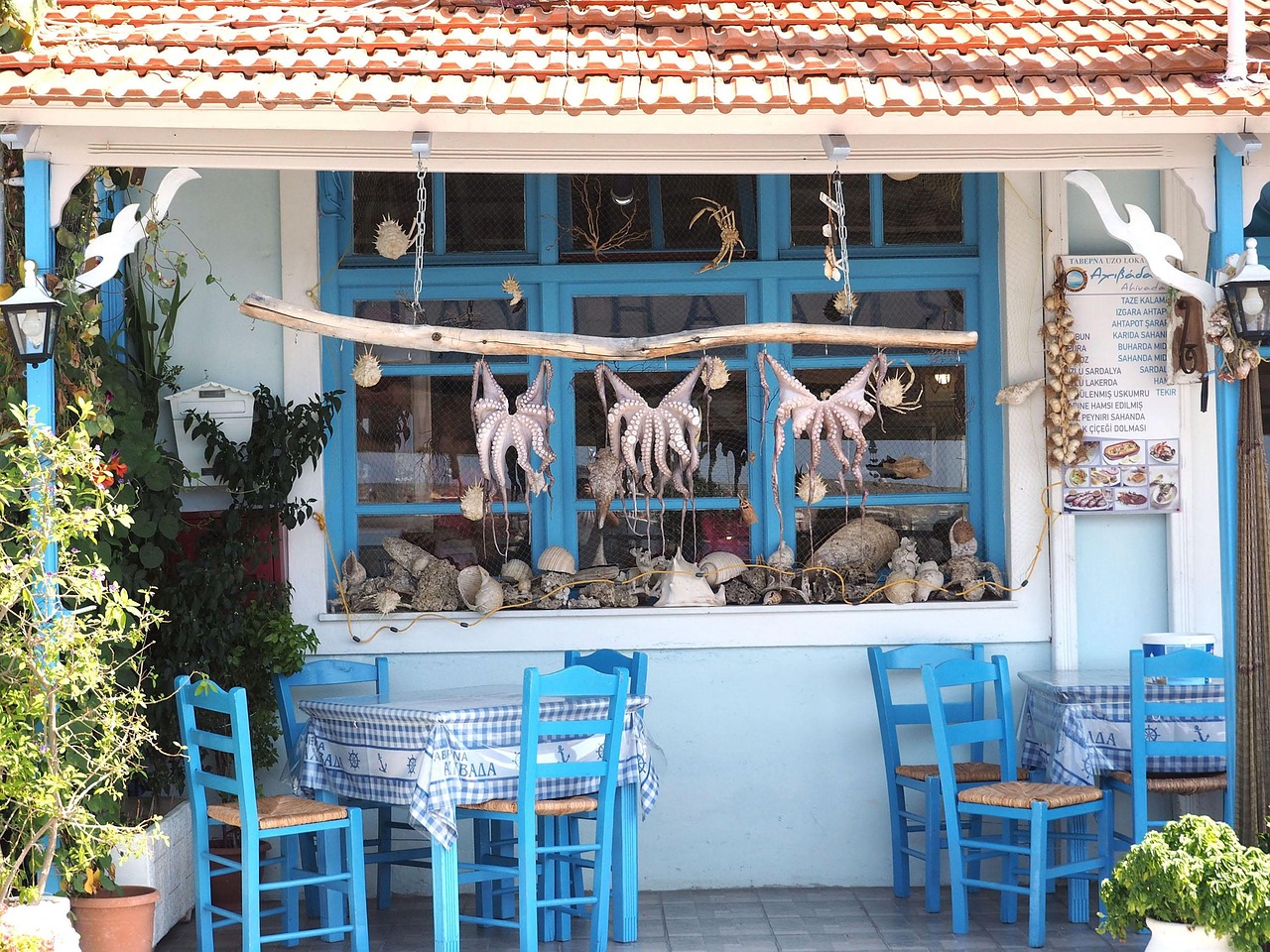
- Skala Kallonis: a fishing harbour where fresh sardines from the gulf go straight into the pan.
- CampingSpirit overnight tip
-
Official campsite or RV park: Kalloni is the hub of the island, but we know of no reliable campsite here. Accommodation is available at the harbour of Skala Kallonis and in the villages around the gulf; the car parks at the harbour can be used for a night in a correctly parked vehicle, as long as no ban is signposted.
Free camping or nature tip (where legal): Restrictions apply in the protected area of the salt lagoons: do not drive into the lagoons, stay on the paths, do not disturb the birds, and drones are problematic. On field tracks around the gulf, driving is sometimes prevented by barriers.
- Insider tip for campers
- A pair of binoculars weighs little and adds a lot. Early morning and evening are especially rewarding; in high summer the lagoons are often dry and almost empty of birds. Stock up in Kalloni: supermarkets, petrol stations; check gas bottle refills before the island loop.
4Stage 4: Skala Kallonis to Molyvos (Mithymna) (approx. 33 km)
- The drive
- From Kalloni head north over a ridge to Petra, then continue along the coast road to Molyvos. A short but partly narrow stretch with bends through the olive groves; before Molyvos the road drops in loops to the harbour. About 40 minutes of pure driving time.
- Highlights & must-sees
- Petra: the Panagia Glykofilousa, a church on a rock with 114 steps by the beach, the landmark of the town.
- Molyvos: Genoese castle on the hill, cobbled lanes with wooden balconies and views to the Turkish mainland.
- Eftalou (near Molyvos): a hot spring on the beach with baths in an old bathhouse; check opening times in advance.
- CampingSpirit overnight tip
-
Official campsite or RV park: The former campsite near Molyvos, listed in the OpenStreetMap data as “Molivos Camping (CLOSED)”, is closed according to the entry. We know of no current campsite here; check the situation on the spot. Approved motorhome pitches are almost non-existent on Lesbos.
Free camping or nature tip (where legal): Molyvos lies on a slope; there are only a few parking spaces in the village centre. The car park below the centre works for vehicles up to about 7 m; larger motorhomes are better parked at the harbour or on the edge of the village. There is no room for overnight parking in the village; plan your night outside.
- Insider tip for campers
- Do not drive into the lanes of the old town – the road to the castle is meant for buses and taxis, not motorhomes. Park at the bottom and climb on foot; take water and a sun hat, especially in summer.
5Stage 5: Molyvos to Skala Eresou (approx. 85 km)
- The drive
- Back towards Kalloni, then west on the main road along the gulf to Filia and Eresos. Good at first, then narrower with bends and climbs; the landscape becomes drier, rockier and more volcanic with every kilometre. Allow around 2 hours for the whole stretch.
- Highlights & must-sees
- Skala Eresou: Sappho’s birthplace, with a sandy beach several kilometres long and tavernas by the water.
- Old Eresos in the hinterland: stone houses, defensive towers and churches above the village.
- The beach west of the town centre, the best place to wait for a sunset over the Aegean.
- CampingSpirit overnight tip
-
Official campsite or RV park: Skala Eresou is the destination for beach days, mainly with rooms and apartments. We could find no confirmed campsite or pitch either there or in the OpenStreetMap data; ask by phone or email beforehand whether motorhomes are accepted.
Free camping or nature tip (where legal): In summer many vehicles stand in the beach car park above the promenade; the same rule applies to campers as everywhere: parking yes, spreading out no. Use the beach showers and toilets at the edge of the promenade for day use only.
- Insider tip for campers
- The town is full in July and August but much quieter in May, June and September – and then it is also the best time for the island. Buy water and food in Eresos or Skala; after that you head into a barren area.
6Stage 6: Skala Eresou to Kalloni (via Sigri and Ypsilou Monastery) (approx. 95 km)
- The drive
- From Eresos north to the coast near Sigri. On the way back, the access to Ypsilou Monastery lies on the Sigri–Antissa road, then it is back to Kalloni via Antissa. Scenically the wildest stage: bare volcanic slopes, dry-stone walls, herds of goats. The roads are paved but narrow, in places with potholes; motorhomes over 7 m should avoid minor roads. A good 2.5 hours without sightseeing.
- Highlights & must-sees
- Petrified Forest of Lesbos: the Natural History Museum in Sigri displays finds; in the open-air area stand silicified trunks that turned to stone in volcanic ash, for example in the Bali-Alonia park (about 5 km of paved road from the Antissa–Sigri road) and in the Sigri park. There is an admission charge; check times and prices in advance on the museum’s website.
- Sigri: a small fishing village with an Ottoman fortress and the offshore island of Nisiopi.
- Ypsilou Monastery: on an extinct volcanic cone west of Antissa, with a wide view; observe the dress code (covered shoulders and knees).
- CampingSpirit overnight tip
-
Official campsite or RV park: There are no campsites known to us along the way. Sigri has rooms and tavernas at the harbour, and the owners will often accept a motorhome in their yard if you ask. At the end of the day, Kalloni is the most reliable base with supplies.
Free camping or nature tip (where legal): The petrified forest is a protected area and part of the Lesbos UNESCO Geopark: fossils may neither be collected nor taken away – this is a punishable offence. Stay on the paths in the open-air area, and no tables or grills among the trunks. In the wildfire season, access to forest and mountain roads may be closed.
- Insider tip for campers
- The museum and the parks have opening times that change with the season – check online on the website of the Natural History Museum of Lesbos. Fill up before the drive, because between Eresos and Kalloni the network of petrol stations is thin.
7Stage 7: Kalloni to Mytilini (ferry port) (approx. 48 km)
- The drive
- From Kalloni on the main road south-east over the hills to Mytilini; a detour to Mantamados in the north-east costs extra kilometres and time. The road is mostly well built, narrower only in the hills; before the city the traffic gets denser. Around 1 hour to the port.
- Highlights & must-sees
- Mantamados (detour): a village with a pottery and the Monastery of the Archangel Taxiarchis.
- Mytilini: an evening in the harbour district, a stroll beneath the Kastro and fish in a taverna by the water.
- Shopping for typical island products: olive oil, ouzo, anchovies from Kalloni, feta – also to take home.
- CampingSpirit overnight tip
-
Official campsite or RV park: You spend the last night before the crossing in or near Mytilini; for details on “Roma camp”, see stage 1. Alternatively, accommodation with parking is an option if the ferry leaves early in the morning.
Free camping or nature tip (where legal): Parking in the port area of Mytilini is heavily regulated. If you drive into town without a pitch, you should be at the port early; departure ports often require check-in two hours before departure and check the height and length of the vehicle.
- Insider tip for campers
- Check your ferry booking: state the vehicle length and height exactly, ask the shipping company about the rules for gas bottles, and note that departure times change with the season. Allow a reserve in case wind or strikes postpone sailings.
Camping practice & local rules
Wild camping & overnight parking
- Wild camping is banned in Greece (law 5170/2025, €300 per person). Anything outside the outline of the vehicle counts as camping: awning, table, chairs, grill, extended levelling jacks, washing line.
- Parking is governed by the road traffic code (law 5209/2025, Art. 38, clarified by a police circular of 2026): in built-up areas, motorhomes up to 7.5 m may stand without a time limit, while longer motorhomes and caravans may stay at most 24 hours at a stretch; outside built-up areas, on designated areas or at the right-hand edge of the carriageway, unless a ban applies. According to the police, staying in a correctly parked motorhome, including at night, is not an offence. Local bans take precedence.
- Nature conservation: the Lesbos Geopark, the salt lagoons of Kalloni and many coastal strips are protected areas; driving off the paths, collecting fossils and flying drones may be prohibited.
- There are only a few campsites on Lesbos, and the number changes. Use park4night, Campercontact or campsaround for orientation and ask by phone before you arrive.
Waste disposal & supplies
- Waste disposal: official disposal stations are almost non-existent on the island. Ask campsites, petrol stations or municipalities about options; never discharge grey or black water into the countryside or the sea.
- Water: tap water is usually usable in the towns and villages but tastes brackish in places; drinking water can be bought in jerrycans. Fill up in Kalloni and Mytilini; petrol stations are few and far between in between.
- Gas: Greece uses LPG (autogas) at petrol stations and gas bottles with their own connections. Bring enough full bottles and an adapter; exchange on the island is possible, but not everywhere.
Vehicle size & traffic rules
- Speed: in built-up areas, 30 km/h in general since January 2026 (50 on multi-lane or divided main roads); 90 km/h outside built-up areas for vehicles up to 3.5 t, with lower limits above 3.5 t. There is no motorway on Lesbos.
- Tolls: there is no toll on the island. Fees apply on the way across the mainland (Egnatia Odos, Patras–Pyrgos, Athens–Piraeus); vehicles over 2.20 m in height on two-axle motorhomes usually pay class 3 (roughly double the car rate). Since 2026 the Egnatia Odos has been privately operated.
- Ferry: fares depend on the length and height of the vehicle; state these exactly when booking. Book high-season crossings (July, August) as early as possible.
- Wildfire: in the season, depending on the danger level, access bans and a fire ban apply; warnings arrive by 112 SMS. Open fires, grills and stoves outdoors only in designated areas.
- Alcohol: limit 0.5 ‰; mobile phone at the wheel only with a hands-free kit. A warning triangle, first-aid kit and fire extinguisher are compulsory in Greece; a high-visibility vest belongs in your luggage anyway.
CampingSpirit packing & preparation checklist
- Binoculars with 8x to 10x magnification for the birdlife in the lagoons of Kalloni – flamingos and avocets mostly stay far out.
- Long trousers and a scarf for your shoulders, so that you are allowed into Ypsilou Monastery and the Taxiarchis Monastery in Mantamados.
- Wheel levelling ramps for sloping yard and hillside parking spots, for example in Molyvos and Agiasos.
- At least 20 litres of water in spare canisters, plus a hat and sun protection: in the west of the island there is hardly any shade and few supplies.
- Offline maps for your sat nav: in the mountains around Ypsilou and in the west, reception drops out.
- A gas adapter and full bottles for the length of your stay, in case exchange on the island does not work out.
As of 2026-10. Closures, fees and booking rules change: check official sources before you go.