



In-depth guide · CampingSpirit
From Aarhus via Kalø, the Mols Bjerge and Ebeltoft to Grenaa, then upstream along the Gudenå from Randers to Silkeborg and back via Himmelbjerget: around 350 kilometres through Denmark's hilliest corner, with more lake views than climbs.
The spirit of the route
East Jutland is the counterpart to the wind-battered west coast: here the land lies in folds, shaped by the last ice age. Beyond Aarhus the road rolls over the moraine hills of the Mols Bjerge, the Kattegat glitters on your left, grazing animals roam the heath on your right, and from the sliding door you see beech woods, ruins in the water and half-timbered gables. On Djursland, beaches and lighthouses alternate with fields and castle parks. Then the Gudenå, Denmark's longest river, leads you inland: through meadows, mill weirs and forests all the way to Silkeborg, where peat bogs have preserved people from the Iron Age. The lakes from Langsø to Julsø are long and narrow, the slopes wooded, and Himmelbjerget is little more than a big swell – but one with a view. The stages are short, the evenings long, and a bike on the back is worth more than any extra kilometre of driving.
Stage-by-stage plan
1Stage 1: Aarhus to Kaløvig (Rønde) (approx. 30 km)
- The drive
- From Aarhus north along the coast towards Rønde and the Kalø area. Mostly well-built country road with an 80 limit and 50 through villages; the route is flat to gently rolling, and the driving time is under an hour. On the edge of Aarhus it is worth avoiding rush hour.
- Highlights & must-sees
- Aarhus: the cathedral (Domkirke) with Denmark's longest nave, the Latin Quarter (Latinerkvarteret) with small shops and cafés, and the harbour library Dokk1 – best explored on foot or by bike in the morning, for example from Blommehaven or Marselisborg.
- Marselisborg Dyrehave south of the city centre: deer park and beech wood on the coast, a quiet start before you move on.
- Kalø Slotsruin: castle ruin on a small island in Kaløvig, reached on foot along a paved causeway about 500 metres long; walking trail through the Kalø woods.
- CampingSpirit overnight tip
-
Official campsite or RV park: Kaløvig Strandgård Camping (Strandvejen, Rønde) with an area for motorhomes and a beach about 100 metres away, a good base for the Mols Bjerge; check facilities and opening times with the operator before you arrive. In Aarhus itself, DCU-Camping Aarhus Blommehaven in the coastal woods south of the city is an option (according to OSM: electricity, sanitary facilities, internet).
Free camping or nature tip (where legal): Wild camping is banned throughout Denmark, motorhomes included. In Aarhus, motorhomes may stay at Aarhus Ø (Autocamperplads, Sverigesgade) for up to 24 hours with a parking disc, according to Visit Aarhus; no further conditions are given there, so check on site. Marselisborg Havn (Østpladsen) has about seven motorhome pitches with a view of the bay, according to Visit Aarhus; you pay at the harbour office or at the parking machine. Resting in your vehicle is allowed in ordinary car parks, but a table, chairs and an awning are not.
- Insider tip for campers
- Aarhus has a low-emission zone: diesel cars below Euro 5 without an approved particulate filter may not enter; for motorhomes over 3.5 t, the classification in the registration document counts, and if in doubt, check on miljoezoner.dk. Leave the camper at the site and take the bus or a bike into the city – city-centre car parks are tight for motorhomes, and multi-storey car parks are often too low.
2Stage 2: Kaløvig (Rønde) to Ebeltoft (approx. 50 km)
- The drive
- From Rønde into the Mols Bjerge: small country roads through moraine hills, heath and beech wood, with short climbs and a few narrow villages (such as Knebel and Agri). Then on towards Ebeltoft. The roads are narrow and oncoming traffic is frequent in summer; plan half a day with walks, as the driving time alone is a good hour.
- Highlights & must-sees
- Mols Bjerge National Park (opened 2009): viewpoint hills such as Agri Bavnehøj and Trehøje with views over the Kattegat, heath and woods; signposted walking trails, grazing animals on the slopes.
- Øvre Strandkær visitor centre (Strandkærvej near Ebeltoft): exhibition on nature and cultural history, maps and trail information, open year-round and free of charge according to VisitDenmark; check opening times briefly before you visit.
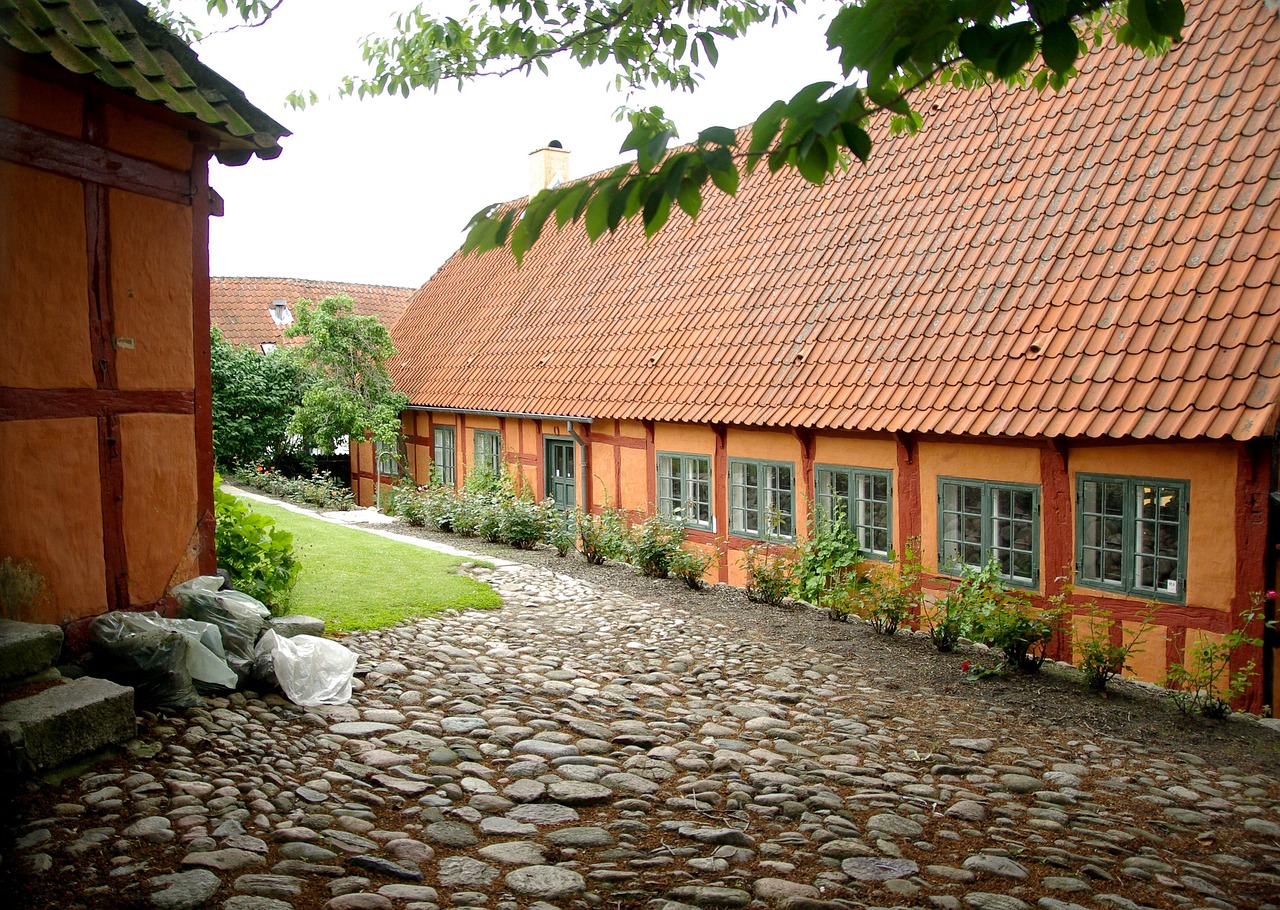
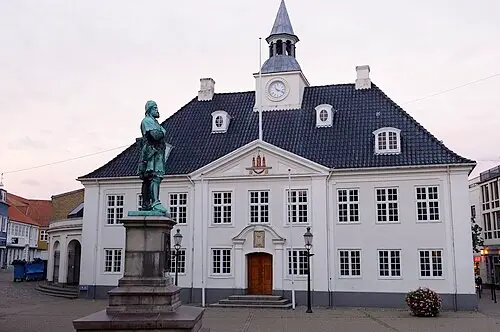
- Ebeltoft: half-timbered lanes in the old town, the Old Town Hall (Ebeltoft Gamle Rådhus), the frigate Jylland in the harbour and the glass museum (Glasmuseet Ebeltoft).
- CampingSpirit overnight tip
-
Official campsite or RV park: Ebeltoft Skudehavn as a motorhome site in the harbour (according to OSM with electricity, sanitary facilities, internet); check site conditions, prices and reservations with the operator. Outside the centre, Ebeltoft Strand Camping and Mols Camping are options (according to OSM electricity, water, sanitary facilities); check opening times before you arrive.
Free camping or nature tip (where legal): In the national park and in the Naturstyrelsen areas, camping with a vehicle is strictly prohibited. The shelter and tent sites (for example at Ørnbjerg Mølle, Dragsmur on Helgenæs) are meant for tents and hammocks and can be found via udinaturen.dk; motorhomes are not provided for there. Drive only on public roads and designated car parks.
- Insider tip for campers
- For the Mols Bjerge, leave the camper in a car park on the edge and explore the area on foot or by bike; the narrow side roads are a chore with a 7-metre vehicle. Binoculars are worth bringing for birds of prey and grazing animals, and sturdy shoes are a must on the heath paths.
3Stage 3: Ebeltoft to Grenaa (approx. 60 km)
- The drive
- On country roads straight across the Djursland peninsula, past fields, woods and villages to the north and east, to the port town of Grenaa. Hardly any climbs, moderate traffic; 50 through villages, 80 outside built-up areas. About an hour and a quarter of driving, more with detours.
- Highlights & must-sees
- Rosenholm Slot near Hornslet: Renaissance castle with moats, rose garden and park. The castle lies to the west, off the route (a detour of about 20 to 30 kilometres); according to the operator, tours and access are only at certain times, so check the castle website beforehand.
- Kattegatcentret in Grenaa: aquarium with Nordic marine life, seals and sharks, a good choice in rainy weather too.
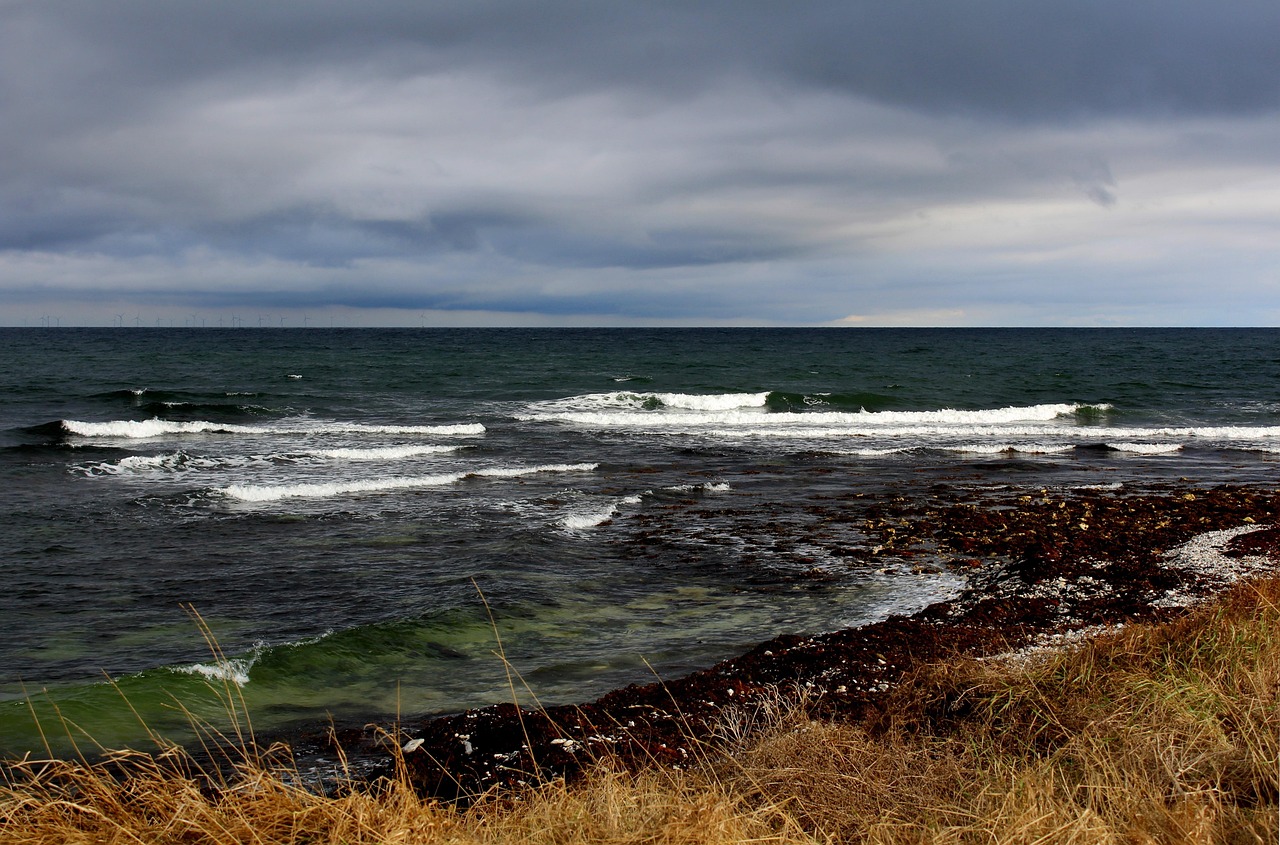
- Fornæs Fyr and the coast at Fornæs north of Grenaa: lighthouse, coastal meadows and wide views over the Kattegat.
- CampingSpirit overnight tip
-
Official campsite or RV park: Grenaa Strand Camping on the beach south of the town; Fornæs Camping near Fornæs Fyr as a quieter alternative on the north coast (check facilities and opening with the operator in each case). Grenaa Marina harbour also has motorhome pitches (according to OSM including electricity, water, sanitary facilities); check terms with the harbour.
Free camping or nature tip (where legal): On Djursland too: camping only on campsites. Beach car parks at Grenaa and Fornæs are meant for day visitors; where no ban is signposted you may rest, but not set up with awnings or furniture. Driving on beaches and dunes is taboo.
- Insider tip for campers
- A ferry runs from Grenaa to the island of Anholt in the Kattegat (crossing about three hours). According to Visit Aarhus, vehicle spaces are scarce, cannot be booked and are reserved primarily for supplies; whether motorhomes are taken is not documented – do not count on it. On Anholt you do not need a car, and there is no return trip on the same day; plan at least one overnight stay and clarify parking in Grenaa with the ferry company. Fill up in Grenaa or Ebeltoft before heading further inland.
4Stage 4: Grenaa to Randers (approx. 60 km)
- The drive
- From Grenaa on well-built country roads west to Randers, past Allingåbro and the Randers Fjord. Mostly flat with wide views, a few villages to pass through; driving time a good hour. On the edge of Randers there may be queues at peak times.
- Highlights & must-sees
- Randers Regnskov: tropical halls with waterfalls, monkeys, butterflies and crocodiles – an air-conditioned alternative to summer rain.
- Randers Fjord and the mouth of the Gudenå: birdwatching on the riverside meadows, walks along the quays.
- Old town of Randers: half-timbered houses in the lanes around the church, the Gudenå promenade and small shops.
- CampingSpirit overnight tip
-
Official campsite or RV park: Randers City Camping near the town (according to OSM electricity, water, sanitary facilities; check opening times with the operator). For motorhomes there is a pitch in the harbour at Randers Lystbådehavn (Randers Sejlklub, according to OSM with electricity and water); check the conditions on the club's website.
Free camping or nature tip (where legal): Naturstyrelsen and municipal shelter sites in the area (such as Fladbroskov, Hollandsbjerg) are available to tents and hammocks, not to motorhomes. Parking and resting in the vehicle are allowed in municipal car parks unless signposted otherwise; camping with awnings or furniture is not.
- Insider tip for campers
- Randers has numerous one-way streets and low underpasses in the centre; use the harbour site or the campsite as a base and go on foot. The Gudenå is a popular paddling river: if you want to paddle from here, check rental and route lengths in advance.
5Stage 5: Randers to Silkeborg (approx. 75 km)
- The drive
- From Randers follow the Gudenå upstream: via Langå and Ulstrup to Bjerringbro and on to Tange Sø, then by country road to Silkeborg. Scenically the quietest section, with river meadows, mill weirs and woods. Mostly well-built, a few narrow villages; driving time a good hour and a half.
- Highlights & must-sees
- Langå on the Gudenå: riverside paths and meadows, a good place for a coffee break.
- Tange Sø and Gudenåcentralen: reservoir from the years 1918 to 1921 with the Gudenå hydroelectric power station; walking path and view at the dam.
- Silkeborg: Museum Silkeborg with the Tollund Man, a body preserved from the Iron Age.
- CampingSpirit overnight tip
-
Official campsite or RV park: Silkeborg Sø Camping on Silkeborg Langsø (according to OSM electricity and internet; check facilities with the operator). Alternatively DCU-Camping Hesselhus on Bølling Sø north of the town, open year-round according to VisitDenmark and with an area for motorhomes. Both lie in Silkeborg's lake country with cycling and walking trails; check opening and facilities beforehand.
Free camping or nature tip (where legal): It is best to ask the tourist information office about parking options for motorhomes in Silkeborg; camping outside sites is not allowed. The shelter and tent sites along the Gudenå and the lakes (such as Skeldalen, Sminge Sø, Hampenknold) are reserved for tents and hammocks.
- Insider tip for campers
- Silkeborg's town centre has narrow lanes and several roundabouts; the motorhome stays at the site. On a short stay in Silkeborg, cycling or taking the bus into the centre makes sense. The Gudenå route between Randers and Silkeborg can also be cycled in several stages.
6Stage 6: Silkeborg to Ry (approx. 25 km)
- The drive
- From Silkeborg along the Langsø on small roads through woods and lake country to Himmelbjerget and on to Ry. Winding, narrow side roads with short climbs; at the hill itself there are parking areas with a short footpath to the summit (check fee and time limit on site). Driving time about half an hour, a whole day with walking breaks.
- Highlights & must-sees
- Himmelbjerget (about 147 m): viewpoint hill above Julsø and woodland with a monument and tower (built in 1874 in honour of King Frederik VII); it was long considered the highest point in Denmark, but the highest point, at about 171 m, is actually Møllehøj near Ejer Bavnehøj west of Skanderborg.
- Paddle steamer “Hjejlen” (built 1861) between Silkeborg and Himmelbjerget – still in service today; check timetable and season with the operator.
- Ry and Mossø: lakeside paths and cycle routes around one of Denmark's largest lakes; swimming in summer.
- CampingSpirit overnight tip
-
Official campsite or RV park: Holmens Camping near Ry (according to OSM electricity, water, sanitary facilities); clarify opening times and pitch sizes with the operator. Bryrup Camping & Resort in the lake country south-west of Ry is an alternative (according to OSM electricity, internet).
Free camping or nature tip (where legal): Around Himmelbjerget you park in the designated areas; camping in forest and lake car parks is not allowed, so observe the signs. Shelter sites around Julsø and the Gudenå are meant for tents and hammocks.
- Insider tip for campers
- Drive the small roads at Himmelbjerget early in the day, as walkers and cyclists have priority and the car parks fill up quickly in summer. From Ry you can travel the Gudenå by canoe; rental and return transport are available at several points in the lake country.
7Stage 7: Ry to Aarhus (approx. 45 km)
- The drive
- From Ry via Skanderborg back to Aarhus: mostly well-built country road, finishing briskly on the motorway. Heavy commuter traffic on the last stretch; driving time about three quarters of an hour. If you have time, take a break by the lake in Skanderborg.
- Highlights & must-sees
- Skanderborg: castle and castle garden on Skanderborg Sø, with walking trails along the shore.
- Moesgaard Museum south of Aarhus: archaeological exhibition with the Grauballe Man, another bog body – a good complement to the Tollund Man in Silkeborg.
- Marselisborg Havn and the beach promenade south of the city centre for your final evening.
- CampingSpirit overnight tip
-
Official campsite or RV park: Marselisborg Havn with about seven motorhome pitches in the harbour (according to Visit Aarhus with electricity, internet, shower and WC); alternatively DCU Aarhus Blommehaven or First Camp Aarhus – Jylland on the edge of the city. Check terms and opening times beforehand.
Free camping or nature tip (where legal): Wild camping is banned; motorhome set-ups are also prohibited at motorway rest areas. A rest break at state rest areas is allowed, with a maximum parking time of 25 hours.
- Insider tip for campers
- The low-emission zone in Aarhus also applies on the way back – notes on it are in the first stage. If you are planning the journey home to the south, you reach the German border at Padborg via the E45 in a good two hours.
Camping practice & local rules
Wild camping & overnight parking
- Denmark has no right of public access for motorhomes: camping with furniture, an awning or levelling supports is only allowed on campsites, and resting in the vehicle only in regular car parks without a ban. The general Denmark rules (beaches, motorway rest areas, fines) are in the CampingSpirit guide to the Jutland west coast from Rømø to Skagen.
- In Mols Bjerge National Park, in Naturstyrelsen woods and moors, and at the lakes and rivers of the Gudenå, additional access restrictions apply; beaches and dunes must not be driven on. Naturstyrelsen shelter and tent sites (found via udinaturen.dk) are meant for tents and hammocks, not for motorhomes.
- You can stay overnight legally on campsites and at the Autocamperpladser of harbours and municipalities (Aarhus Ø, Marselisborg, Ebeltoft, Grenaa, Randers). Useful apps and directories: park4night, Campercontact and the platforms of the Dansk Camping Union. Check the conditions on site each time.
Waste disposal & supplies
- Water and waste: campsites and many harbours have service stations for cassette toilets, grey water and fresh water; some take coins or cards. Never dispose of anything in street drains or ditches.
- Tap water is drinkable throughout Denmark; you can fill tanks at taps on campsites and in harbours.
- Gas: German cylinders are generally not exchanged in Denmark. Carry refillable cylinders with a suitable adapter or two full bottles; autogas (LPG) has become rare.
- Petrol stations and supermarkets are plentiful; card payment works almost everywhere. Alcohol is sold in ordinary supermarkets: beer and wine from age 16, spirits from age 18.
Vehicle size & traffic rules
- Speed limits: up to 3.5 t, 80 km/h outside built-up areas, motorways mostly 130 km/h (in places 110 or 90), 50 km/h in built-up areas. Motorhomes between 3.5 and 7.5 t with a corresponding 100 km/h approval may drive 100 km/h on motorways and 80 km/h on country roads; without this approval lower limits apply. Vehicles with trailers generally drive at 80 km/h at most; signs and the registration document are decisive. Dipped headlights are compulsory all year round, including by day.
- Low-emission zones: like some other Danish cities, Aarhus has a low-emission zone for diesel vehicles; diesel cars below Euro 5 need an approved particulate filter. Foreign vehicles that meet the requirements and were first registered before 1 January 2011 register in advance at miljoezoner.dk; according to the information there, no sticker is issued. Details on the zones are in the CampingSpirit guide to the Jutland west coast.
- Tolls: there is no toll on this route; in Denmark only the Storebælt and Øresund bridges are toll roads. Dimensions for single vehicles: width up to 2.55 m, height up to 4.00 m, length up to 12 m. Alcohol limit 0.5 per mille, phone calls at the wheel only with a hands-free system.
CampingSpirit packing & preparation checklist
- Bike or e-bike on the rear rack – in the Mols Bjerge area, around the lakes and along the Gudenå you reach viewpoints and places on quiet back roads where the camper only gets in the way.
- Sturdy walking shoes and a rain jacket – the heath and moraine paths of the Mols Bjerge and the slopes at Himmelbjerget are slippery when wet, and the weather changes quickly on the coast.
- Canoe or a booked paddling tour – the Gudenå and the lakes near Silkeborg are at their best from the water; return transport can be arranged in advance.
- Binoculars – birds of prey, coastal birds on the Randers Fjord and grazing animals in the Mols Bjerge become highlights.
- Tick remover and insect repellent – in heath and woods and on the river meadows in summer, annoying to problematic.
- Gas adapter for refillable cylinders and cash in small notes – for parking machines, showers and harbour pitches.
As of 2026-10. Closures, fees and booking rules change: check official sources before you go.