

In-depth guide · CampingSpirit
From Andersen’s birthplace Odense via Kerteminde, Egeskov and Faaborg by ferry to Ærø, then over Svendborg and Tåsinge to Langeland and back: around 455 kilometres through Denmark’s gentlest landscape, with two ferry crossings and more harbour pitches than bends in the road.
The spirit of the route
Funen is the part of Denmark where you slow down without trying. The roads wind through hedgerow country, past thatched farmhouses, orchards and farm shops with an honesty box on the fence. On the hills of the “Funen Alps” the air smells of rapeseed and salt, and the water of the archipelago glints between the trees. Where the land ends, a ferry waits: you roll up the ramp at walking pace in the morning, drink your coffee on deck and berth in Marstal or Ærøskøbing among hollyhocks and sailing masts. From your sliding door in the evening you watch the harbour, gulls on the mooring posts and a light that refuses to fade for hours in the north. The route is short, the days are not – because behind every bridge and every harbour basin there is a place where you will stay longer than planned.
Stage-by-stage plan
1Stage 1: Odense to Kerteminde (approx. 35 km)
- The drive
- The day belongs to Odense first, on foot or by city bus from the campsite. Then north-east on road 165 through flat farmland to Kerteminde on Funen’s east coast. Well surfaced, hardly any climbs, around 40 minutes of pure driving time.
- Highlights & must-sees
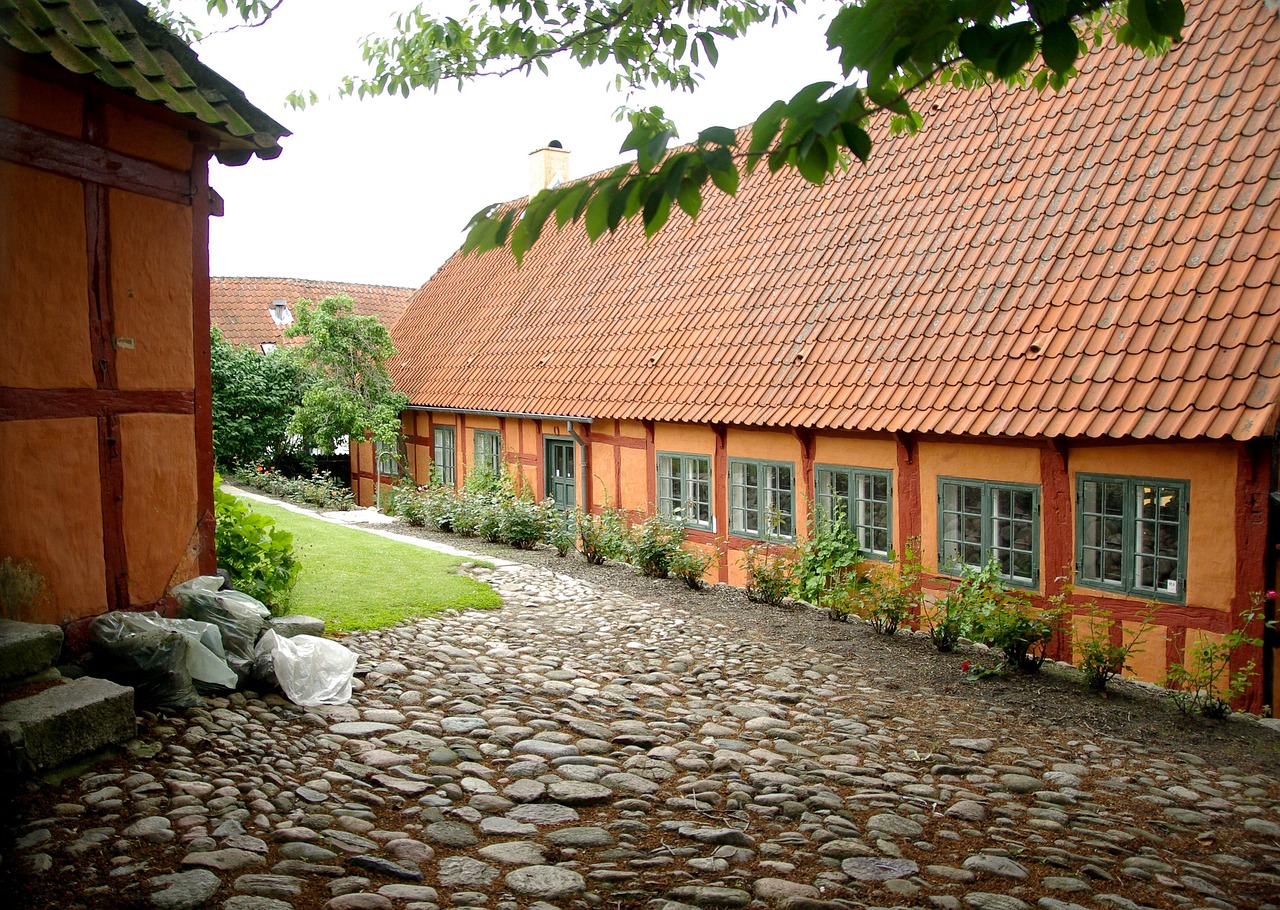
- Odense: H. C. Andersens Hus in the birthplace quarter with its cobbles and yellow houses, plus the Møntergården city museum and a walk along the Odense Å to Munke Mølle.
- Brandts, the former cloth mill, now an art and photography museum, a rainy-day tip in the middle of town.
- Kerteminde: the Johannes Larsen Museum in the painter’s former home with garden and studio, one of the best-known painters of the Funen School.
- CampingSpirit overnight tip
-
Official campsite or RV park: In Odense, DCU Odense City Camp lies on the edge of town with electricity, sanitary facilities and a link to city transport; check season and opening times in advance. In Kerteminde the harbour runs the Autocamperplads at the marina (according to OpenStreetMap about a dozen pitches with electricity, water and waste disposal, fee payable, prices on the harbour website), or alternatively Kerteminde Camping on the beach.
Free camping or nature tip (where legal): Camping on streets and town car parks in Odense and Kerteminde is not intended. The marina site in Kerteminde is an official pitch and therefore the easy solution – in summer arrive early in the afternoon.
- Insider tip for campers
- Don’t drive through Odense in the camper: take the bus or bike from the campsite to the old town, as the lanes around Andersen’s house are narrow. Do your shopping for the island days in Odense – on Ærø and Langeland the supermarkets are small and the choice is limited. If you arrive from Jutland over the Little Belt Bridge, or have already driven the west coast in the guide “Sand, wind and lighthouses”, this is where you join.
2Stage 2: Kerteminde to Egeskov (Kværndrup) (approx. 95 km)
- The drive
- From Kerteminde north onto the Hindsholm peninsula: narrow but well-surfaced roads through fields and coastal woodland to Fyns Hoved at the northern tip. Back via Kerteminde and on along country roads through the Funen hills to Kværndrup and Egeskov. Many village centres, little traffic, just under two hours of pure driving time in total.
- Highlights & must-sees
- Fyns Hoved: coastal walk at the northern tip of Hindsholm with views across the water towards the Kattegat and the Great Belt, a nature reserve.
- Hindsholm itself with Stone Age graves and lonely stretches of beach – a region where bicycles are the best complement to the camper.
- Egeskov Slot: the moated castle with park and mazes; more on it in the guide “Chalk cliffs, bridges and island ferries”. Allow half a day.
- CampingSpirit overnight tip
-
Official campsite or RV park: On Hindsholm, Fyns Hoved Camping at the northern tip offers electricity and sanitary facilities (check the season in advance), as does Camp Hverringe on the east side. In the south, Midtfyns Camping near Ringe, with electricity, sanitary facilities, service point and many pitches, makes a good base for Egeskov, about 15 minutes away.
Free camping or nature tip (where legal): On Hindsholm and along the peninsula’s coastal roads, beach and forest car parks are often closed at night or restricted to day use by signs. The protected areas of Fyns Hoved are off limits to vehicles outside the car parks. In the visitor car park at Egeskov, one night in the marked area is possible, only with a valid overnight parking ticket (evening to morning, fee payable, suspended during large events); check current conditions at the castle.
- Insider tip for campers
- Head for Fyns Hoved in the morning, while the access road is clear and the car parks are not full. There are hardly any shops on Hindsholm: fill up and shop beforehand. The roads in the hill country are twisty; if you want to visit Egeskov in the afternoon, you should bypass Odense on the ring road.
3Stage 3: Egeskov (Kværndrup) to Faaborg (approx. 30 km)
- The drive
- South-west along country roads through the Funen Alps, a hill landscape with wide views over the archipelago, down to the coast at Svanninge and on to Faaborg. A short day, around 40 minutes of pure driving time – plenty of room for walks and the harbour quarter.
- Highlights & must-sees
- Svanninge Bakker: hill landscape with walking trails and views over the archipelago, a morning walk before you move on.
- Faaborg: Klokketårnet, the old town’s free-standing bell tower, and the Faaborg Museum with paintings by the Funen painters.
- Brahetrolleborg: manor house and former monastery complex north-west of Faaborg, a small detour for photos.
- CampingSpirit overnight tip
-
Official campsite or RV park: Faaborg Havn Autocamperplads at the harbour (according to OpenStreetMap about 14 pitches with electricity, water and waste disposal), a short walk to the old town and the ferry quay. Alternatively Faaborg Camping on the edge of town or Sinebjerg Camping near the beach; check facilities and season in advance.
Free camping or nature tip (where legal): In the town area of Faaborg, camping outside the designated sites is not allowed; the harbour site is the easy solution. The region’s nature camp sites are reserved for tents, not motorhomes.
- Insider tip for campers
- If you cross to Ærø the next morning, book the vehicle ticket online in advance, stating the exact length including rear carrier. Avoid the old-town lanes of Faaborg with the motorhome and explore the town on foot. Smoked fish and bread for the crossing can be bought at the harbour.
4Stage 4: Faaborg to Marstal (Ærø) (approx. 50 km)
- The drive
- Ferry from Faaborg to Søby on Ærø, 55 to 75 minutes depending on the line; tickets must be booked and paid for in advance, timetable and tariff by length from the operator. On the island first to the western tip Skjoldnæs, then along narrow, flat island roads eastwards through wheat fields and past wind turbines to Marstal. Many cyclists, village centres narrow; together a good hour and a half of driving time.
- Highlights & must-sees
- Skjoldnæs Fyr: the lighthouse at the western end of the island, sunset over the Belt.
- Marstal: harbour with shipyards and sailing ships, plus the church with seven votive ships as testimony to the seafaring town.
- Cycle tour across the island: Ærø is around 30 kilometres long, flat and well suited to an e-bike day.
- CampingSpirit overnight tip
-
Official campsite or RV park: Marstal Havn Autocamperplads at the harbour (according to OpenStreetMap about eight pitches with electricity) or Marstal Camping on the southern edge with electricity and sanitary facilities. At the Skjoldnæs lighthouse there is, according to OpenStreetMap, a motorhome site near the Ærø Golfklub; conditions and status should be clarified in advance.
Free camping or nature tip (where legal): On Ærø, nature camp sites remain reserved for tents; beach and cliff car parks are not overnight spots, and the harbour sites are small. No camping at Skjoldnæs or on the beaches outside designated sites.
- Insider tip for campers
- State the actual vehicle length when booking, because the tariff and the allocation of space on the ferry depend on it. On Ærø the choice of petrol stations and shops is thin: fill up completely before the crossing. Cyclists take priority over hurry – the island demands calm at the wheel.
5Stage 5: Marstal to Svendborg (approx. 35 km)
- The drive
- From Marstal to Ærøskøbing, around 15 kilometres through the middle of the island, and by ferry across to Svendborg (55 to 75 minutes depending on the line, book in advance). Once on Funen, continue through Svendborg and over the Svendborgsund Bridge to Thurø or Tåsinge for a first look at the sound’s shores. Around one hour of pure driving time in total, the rest is ferry.
- Highlights & must-sees
- Ærøskøbing: hollyhocks and cobblestones, loveliest in the morning (more in the guide “Chalk cliffs, bridges and island ferries”).
- Svendborg: harbour with wooden ships, plus Skovsbostrand, where Bertolt Brecht lived in Danish exile from 1933 to 1939; the house is privately owned, so check in advance whether it can be visited.
- Thurø: small island south of Svendborg, with orchards and views over the water.
- CampingSpirit overnight tip
-
Official campsite or RV park: Svendborgsund Camping on the Funen side of the sound with a view of Tåsinge (electricity, sanitary facilities; check season). Thurø Camping on the neighbouring island, quiet and suitable for shorter stays. Near Ærøskøbing lies Ærø Strandcamping on the beach, should you plan the second night on the island.
Free camping or nature tip (where legal): Svendborg often signs its harbour and beach car parks with night-time bans; overnighting by the roadside is not advisable. The harbour site at Rantzausminde (according to OpenStreetMap about a dozen pitches) is the plannable alternative.
- Insider tip for campers
- Book the Ærøskøbing–Svendborg ferry in advance and be at the quay in good time before departure; the ferry rules are the same as in the guide “Chalk cliffs, bridges and island ferries”. Svendborg is best explored by bike from the campsite.
6Stage 6: Svendborg to Rudkøbing (Langeland) (approx. 35 km)
- The drive
- Over the Svendborgsund Bridge to Tåsinge, through Troense and on over the Siø Bridge and the Langelandsbroen to Rudkøbing. Well surfaced, without notable climbs; around 45 minutes of pure driving time, but with many reasons to stop.
- Highlights & must-sees
- Troense: captains’ houses with hollyhocks and the castle Valdemars Slot on the sound, a walk through the harbour quarter.
- Landet Kirke on Tåsinge: in the churchyard the graves of Elvira Madigan and Sixten Sparre, a quiet place with a Danish love story.
- Rudkøbing: harbour with old town and sailing boats at the quay.
- CampingSpirit overnight tip
-
Official campsite or RV park: Rudkøbing Lystbådehavn Autocamperplads at the marina (according to OpenStreetMap eight pitches with electricity, water and waste disposal, fee payable). Rudkøbing Camping offers electricity, sanitary facilities and waste disposal. On Tåsinge there is also Tåsinge Camping on the beach.
Free camping or nature tip (where legal): On Langeland too: camping only on campsites or designated pitches; car parks at beaches and harbours are partly closed at night. The island’s tent and shelter sites are not meant for vehicles.
- Insider tip for campers
- The bridges to Tåsinge and Langeland are toll-free. In Troense and Rudkøbing it is best to park on the edge of the village and walk in. Fill up before moving on: petrol stations are rare on Langeland.
7Stage 7: Rudkøbing to Rudkøbing (Langeland loop) (approx. 85 km)
- The drive
- The long, narrow island once along its length: from Rudkøbing south via Humble to Ristinge and Bagenkop at the southern tip, back along the east coast via Tranekær and the estates, then again to Rudkøbing. Mostly level, quiet country roads, narrower in the south. A whole day with stops.
- Highlights & must-sees
- Ristinge Klint: low cliffs with a wide sandy beach, a walk along the water.
- Bagenkop: small harbour at the southern end of the island, fishermen and sailors, sunset on the mole.
- Tranekær Slot: castle on a hill in the north of the island; the main building is accessible only on a guided tour, the paths around the moats are freely walkable.
- CampingSpirit overnight tip
-
Official campsite or RV park: Second night in Rudkøbing, unless you want to move the vehicle. Alternatively in Bagenkop: Strandgårdens Camping near the harbour or the motorhome site at Bagenkop Havn (according to OpenStreetMap with electricity, water and waste disposal; check status). On the east coast lies Langelands Camping near Spodsbjerg.
Free camping or nature tip (where legal): On Langeland, beach and cliff car parks are often closed at night; camping in the dunes and protected areas near Ristinge is prohibited. Rest periods in car parks apply only where parking without a time limit is allowed and nothing looks like camping.
- Insider tip for campers
- Langeland can also be reached by ferry from Lolland (Tårs–Spodsbjerg), should you turn the journey around later. The island is a cyclists’ paradise: take the bikes off the carrier, leave the camper in Rudkøbing and spend the day in the saddle. Shop beforehand in Rudkøbing, not only in Bagenkop.
8Stage 8: Rudkøbing to Odense (approx. 90 km)
- The drive
- Back over Tåsinge to Svendborg, then north along country roads to Odense, with a detour to the Hesselagerstenen. Flat to rolling country, little traffic; a good hour and a half of pure driving time.
- Highlights & must-sees
- Hesselagerstenen (also called Damestenen): Denmark’s largest erratic boulder, an Ice Age relic in a field near Hesselager.
- Fruens Bøge: beech forest south of Odense, a forest walk before you enter the city.
- CampingSpirit overnight tip
-
Official campsite or RV park: To finish, DCU Odense City Camp again. Midtfyns Camping near Ringe is well placed for an intermediate night.
Free camping or nature tip (where legal): On lay-bys along the main roads, resting is possible to a limited extent, but they are not meant for overnight stays with camping set-up. The forests are not pitches.
- Insider tip for campers
- Mind the low-emission zone before Odense (rules in the driving tips below). If you want to continue over the Great Belt to Zealand, you can pick up the journey in the guide “Chalk cliffs, bridges and island ferries”; if you want to reach the Baltic, you will find the island of Bornholm in the guide “Granite cliffs, smokehouse chimneys and round churches”, which however needs its own ferry routes.
Camping practice & local rules
Wild camping & overnight parking
- Denmark has no everyman’s right for vehicles. Resting in a motorhome is tolerated where parking is allowed without a time or night-time ban, as long as nothing looks like camping: no awning, chairs, tables, grills or extended stabilisers. Beach, harbour and forest car parks on Funen and the islands are often closed at night.
- The nature camp sites, shelters and “fri teltning” areas run by Naturstyrelsen and the municipalities (directory: udinaturen.dk) are for tents, hammocks and hikers, not for vehicles. This also applies on Ærø, Langeland and in Funen’s forests.
- Nature reserves and cliffs such as Fyns Hoved, Ristinge Klint and the coast of Hindsholm are off limits to vehicles away from the car parks; fines are threatened for violations.
- You are legally safe on campsites and at the harbour Autocamperpladser in Kerteminde, Faaborg, Marstal, Rudkøbing and Bagenkop, which are paid for by machine, app or at the harbour master’s. Useful: park4night, Campercontact and the site directories of Dansk Camping Union. In summer arrive early in the afternoon.
Waste disposal & supplies
- Danish campsites almost always have service stations for cassette, grey water and fresh water, in some cases also for passers-through for a fee. Harbour sites are equipped differently: electricity is usual, water and waste disposal not everywhere – check in the apps beforehand.
- Tap water is drinking water everywhere. Never empty grey water into drains, harbour basins or onto meadows.
- Gas: Danish cylinders (Kosan) are issued against a deposit and have their own connections; foreign cylinders are generally not exchanged. Arrive with two full cylinders or carry a refillable tank cylinder with an adapter. LPG pumps are rare, look up locations beforehand.
- On Ærø, Langeland and Hindsholm the network of petrol stations and shops is thin; fill up and shop before the ferries and island loops. Card payment works almost everywhere, some harbour machines take only coins or Danish apps.
Vehicle size & traffic rules
- Speed limits: cars and motorhomes up to 3.5 t 50 in built-up areas, 80 outside (some stretches 90), motorway 130 km/h (in sections 110). For motorhomes over 3.5 t lower limits apply depending on the classification in the vehicle registration document; if in doubt 70 outside built-up areas and 80 km/h on the motorway. Combinations with trailers: 80 km/h outside built-up areas and on motorways; a release for 100 km/h requires a 100 km/h approval under Danish rules – if in doubt, drive 80. Dipped headlights are compulsory in daytime too.
- Low-emission zones exist in Odense (as well as Copenhagen/Frederiksberg, Aarhus, Aalborg). They apply to older diesel lorries, buses and vans, which may enter only with a particulate filter; for motorhomes registered as cars they generally do not apply. The classification in the vehicle registration document decides; if in doubt, check beforehand at miljoezoner.dk. There is no sticker, control is by camera.
- Tolls: on this route all bridges (Svendborgsund, Siø, Langelandsbroen, Little Belt) are free of charge. Only those arriving from Zealand over the Great Belt pay at the Storebælt Bridge by vehicle type and length; ferries to the islands also charge by length and should be booked in advance.
- Dimensions: max. 2.55 m wide, 4 m high, single vehicle 12 m long. Bicycles on the rear carrier must not cover lights and number plate; projecting loads must be marked.
- Alcohol limit 0.5 per mille; mobile phone at the wheel only with hands-free equipment. A warning vest and warning triangle are recommended to carry. Never park or unload on cycle paths.
CampingSpirit packing & preparation checklist
- Bicycles with lock, better e-bikes: Ærø, Langeland and Hindsholm are flat and criss-crossed by cycle routes, and Odense and Svendborg can be explored by bike from the campsite.
- Tape measure and vehicle data (length including rear carrier, height, weight) to hand: the ferries charge by length, and the booking asks precisely.
- Power cable with CEE adapter and extension: harbour sites often have only bollards with CEE sockets, and the sockets are rarely where the camper stands.
- Windproof jacket and fleece: on the ferries and on the coast a fresh wind usually blows even in high summer, and in the evening it gets cool quickly by the water.
- Binoculars for migratory birds, white-tailed eagles and porpoises on the Belt and in the archipelago.
As of 2026-10. Closures, fees and booking rules change: check official sources before you go.