




In-depth guide · CampingSpirit
From Pamplona into the green Baztán valley, to Zugarramurdi, over Roncesvalles into the Irati forest and up to Isaba: a loop of around 545 kilometres through misty meadows, pilgrim paths and stone villages, best driven in short stages by camper.
The spirit of the route
In the Navarre Pyrenees it is greener than Spain usually allows. Beyond the Belate Pass lies the Baztán valley, with its whitewashed houses, coats of arms above the doors and mist that hangs between the orchards in the morning. Further east come Roncesvalles, where pilgrims have set off towards Santiago for centuries, and the Irati, one of the largest continuous beech and fir forests in Europe. In autumn it glows copper; in summer it smells of damp moss. From your sliding door you will see sheep, pottoks and vultures on the thermals; in the Roncal valley stone houses with wooden balconies stand in front of limestone walls. In between lie witches’ caves, passes at a good thousand metres and roads that shine after rain. This route rewards calm: short stages, breaks by the river and the willingness to leave the camper at the edge of the forest now and then.
Stage-by-stage plan
1Stage 1: Pamplona to Elizondo (Baztán) (approx. 60 km)
- The drive
- From Pamplona take the N-121-A north over the Belate Pass (around 850 m) into the upper Baztán, then down through forests and hamlets to Elizondo. Well built with moderate gradients, often fog and rain on the pass, and in places narrow in the villages. A good 1 hour of driving.
- Highlights & must-sees
- Belate Pass with beech forests on both sides of the road; especially colourful in autumn, in fog more atmospheric than panoramic.
- Elizondo, main town of the Baztán: Bidasoa riverbank, stone bridge and manor houses with coats of arms, the Palacio Arizkunenea in town.
- A walk along the Bidasoa through the orchards on the edge of town, quiet in the early morning.
- CampingSpirit overnight tip
-
Official campsite or RV park: Baztan Camping in the lower Baztán near Amaiur (according to OpenStreetMap), a short drive east of Elizondo. OpenStreetMap also lists the Parque de Autocaravanas Arizkun-Ordoki in Arizkun in the valley; check facilities, fee and opening beforehand. Ask the operator about season and pitches for motorhomes before you arrive.
Free camping or nature tip (where legal): There is no tradition of free camping for campers in the Baztán: the Spanish rule applies, “sleeping in the vehicle yes, camping no”, and many municipalities and all protected areas forbid overnighting outside approved sites. Car parks at trailheads can be used during the day; signs and municipal bylaws take precedence.
- Insider tip for campers
- Fill up and shop in Pamplona or Elizondo; the villages beyond are poorly supplied. On the route there are a few villages where stone walls stand right at the edge of the road – fold in your mirrors and slow down.
2Stage 2: Elizondo to Elizondo (via Amaiur and Zugarramurdi) (approx. 65 km)
- The drive
- From Elizondo down the valley via Arizkun and Amaiur, on to Dantxarinea at the border and to Urdazubi/Urdax, then the short link to Zugarramurdi. A narrow, winding country road with lovely views and little traffic outside peak times. Return by the same route. About 1.5 hours of pure driving time.
- Highlights & must-sees
- Amaiur/Maya: ruins of the castle that fell in 1522 as the last bastion of the Kingdom of Navarre, with wide views over the Baztán.
- Monastery and village centre of Urdazubi/Urdax, only a few kilometres from the border.
- Cuevas de Zugarramurdi: the large karst cave with a stream where, according to tradition, the witches met; in 1610 the Inquisition in Logroño condemned people from the area as witches, which made the village famous.
- CampingSpirit overnight tip
-
Official campsite or RV park: Back to the site of the first night (Baztan Camping or Arizkun-Ordoki). If you want to stay in the north: for Dantxarinea OpenStreetMap lists an Área de autocaravanas with around 12 pitches; check facilities, fee and access beforehand.
Free camping or nature tip (where legal): At the caves in Zugarramurdi, according to user reports (park4night), the car park is treated as a day-visit car park, not for overnighting. The same applies in the other places along the way: parking yes, camping no; follow the signs on site.
- Insider tip for campers
- There are petrol stations at Dantxarinea on the border; comparing prices is worthwhile. The caves are best visited in the morning; in summer and on public holidays it can get crowded. Plan for a rain jacket and shoes with good grip: the path through the cave is wet.
3Stage 3: Elizondo to Auritz/Burguete and Roncesvalles (approx. 105 km)
- The drive
- Back over the Belate Pass towards Pamplona, then around the city (PA-30 ring road) and on the N-135 north-east through the pilgrim villages of Larrasoaña and Zubiri to Espinal, Burguete and Roncesvalles. A fast road, climbing steadily from Zubiri; Roncesvalles lies at around 950 m. A good 2 hours of driving.
- Highlights & must-sees
- Roncesvalles/Orreaga: collegiate church, pilgrim hostel and Santiago chapel – the starting point of the Navarre stage of the Way of St James.
- Silo de Carlomagno (Sancti Spiritus chapel) next to the collegiate church, said by legend to be Charlemagne’s funeral chapel.
- Burguete/Auritz: a main-street village where Ernest Hemingway stayed while writing “Fiesta”.
- CampingSpirit overnight tip
-
Official campsite or RV park: Camping Urrobi near Espinal (Auritz), on the Urrobi river, with electricity and sanitary facilities according to OpenStreetMap; check season and pitches for motorhomes with the operator before arriving. There is no campsite in Roncesvalles itself.
Free camping or nature tip (where legal): Roncesvalles is a pilgrimage and heritage site: the car park at the village entrance serves day visitors; whether overnighting in a vehicle is tolerated is not documented, so do not count on it and follow the signs. On the passes above, as everywhere in Navarre: no camping outside approved sites, respect nature protection rules.
- Insider tip for campers
- Fill up in Pamplona before the climb: beyond Zubiri petrol stations become rare. The Ibañeta Pass above Roncesvalles is often windy and foggy; snow can fall in winter, so carry snow chains.
4Stage 4: Roncesvalles to Ochagavía (Salazar valley) (approx. 50 km)
- The drive
- From Burguete through the Aezkoa valley via Aribe and Garralda and on over a pass at around 1,000 m near Abaurrea Alta (the village lies at about 1,040 m) into the Salazar valley to Ochagavía. A mountain road that can be narrow and winding in places; oncoming forestry and farm vehicles are possible. Around 1.5 hours.
- Highlights & must-sees
- Aribe and Garralda: small Aezkoa villages with stone houses, pastures and forestry.
- Summit of the pass near Abaurrea Alta with a view over beech forests towards the Irati.
- Ochagavía/Otsagabia: medieval bridge over the Salazar, old town with houses bearing coats of arms and the Muskilda pilgrimage chapel on the hill.
- CampingSpirit overnight tip
-
Official campsite or RV park: Camping Osate (Osate Kanpina) in Ochagavía, according to OpenStreetMap for tents and caravans. Alternatively Camping Murkuzuria in the Salazar valley south of Ochagavía (according to OpenStreetMap); check season and pitches for motorhomes in advance.
Free camping or nature tip (where legal): Camping is not allowed in the Irati nature area or in the villages of the Salazar valley; car parks at hiking trails are day-visit car parks. In autumn there is hunting in the forests – wear bright clothing and avoid marked areas.
- Insider tip for campers
- For large motorhomes, check the width and condition of the mountain road beforehand; the alternative is the much longer valley route via Lumbier and Navascués into the Salazar valley. Fill up with fuel and water in Ochagavía before heading into the forest the next day.
5Stage 5: Ochagavía to Ochagavía (Selva de Irati) (approx. 30 km)
- The drive
- From Ochagavía on a narrow road north into the Irati forest as far as the car park on the Carretera de Abodi and back. The access road is narrow in places, and oncoming traffic calls for patience. A good dozen kilometres each way (figures vary depending on the starting point); with a walking break, a full day.
- Highlights & must-sees
- Selva de Irati: one of the largest beech and fir forests in Europe, copper-red in autumn, shady and cool in summer.
- Embalse de Irabia, a reservoir with a circular path through the forest, good as a half-day walk.
- Casas de Irati: a small hamlet with old forestry houses, starting point of several hiking trails.
- CampingSpirit overnight tip
-
Official campsite or RV park: Second night in Ochagavía at the same site (Osate Kanpina or Murkuzuria). In the forest itself there is nowhere for motorhomes to stay overnight.
Free camping or nature tip (where legal): At the Irati access point near Abodi, according to user reports, the car park is treated as a day-visit car park with only a few spaces; overnighting is not allowed there. The forest is a protected area: stay on the paths, no fires, keep dogs on a lead. In snow or when overcrowded, access may be restricted or closed.
- Insider tip for campers
- Set off early: on autumn weekends during the leaf colour the Irati is very busy; the car parks are often full by late morning, access is restricted when crowded, and on some days access points close as early as late afternoon – check the current situation beforehand with Turismo Navarra. During the week and outside peak season the forest is much quieter. Leave the camper behind and walk with provisions.
6Stage 6: Ochagavía to Isaba (Valle de Roncal) (approx. 45 km)
- The drive
- Between the Salazar and Roncal valleys there is a winding mountain road over a pass; the mountain link is narrow and winding, and whether large vehicles can use it is not documented. Safer is the much longer valley route via Navascués and Burgui. Beyond Burgui the road follows the Esca river through narrow gorges to Roncal and Isaba. Check road conditions and the pass link before setting off; the km figure applies to the mountain route.
- Highlights & must-sees
- Roncal: mausoleum of the tenor Julián Gayarre and the valley’s cheese tradition (Queso Roncal DOP).
- Burgui: bridge over the Esca and a reminder of the raftsmen (Almadías) who used to carry timber down to the Ebro.
- Isaba: stone houses, church and balconies; starting point for hikes into the Belagua mountains.
- CampingSpirit overnight tip
-
Official campsite or RV park: Área de autocaravanas Isaba on the edge of the village (according to OpenStreetMap, with water); check facilities, fee and length of stay beforehand with the Ayuntamiento. In the middle of the valley, according to OpenStreetMap, Camping Urrutea lies between Roncal and Garde; check the season beforehand.
Free camping or nature tip (where legal): In the Roncal valley the same rules apply as everywhere in Navarre: parking yes, camping no, protected areas (Larra-Belagua) off limits. On the high pastures of Belagua and Larra, protected-area rules apply (no overnighting in vehicles, no fires); respect signs, grazing animals and dogs.
- Insider tip for campers
- Every year on 13 July the ceremony of the “Three Cows” takes place in the morning at the Piedra de San Martín at around 1,760 m (about 12 km from Isaba); the car parks at the pass are limited, so come early, ideally before 10 o’clock. It is best to buy cheese directly from the producer in the valley, not in the supermarket – ask for a tasting.
7Stage 7: Isaba to Pamplona (Eusa) (approx. 110 km)
- The drive
- Down the Roncal valley via Burgui, then via Navascués to Lumbier and on along the A-21 autovía to Pamplona. The valley road is winding, and fast from Lumbier. A good 2 hours of driving; check road numbers in the sat nav beforehand.
- Highlights & must-sees
- Foz de Lumbier: a short walk along the river through the gorge (details in the CampingSpirit guide to Navarre, Urbasa and the Bardenas Reales).
- Navascués, a quiet stone village on the way.
- Arrival in Pamplona in the afternoon, so there is time for a stroll through the old town.
- CampingSpirit overnight tip
-
Official campsite or RV park: Camping Ezcaba in Eusa north of the city, according to OpenStreetMap for tents and caravans; check facilities, season and pitches for motorhomes beforehand. Pamplona’s municipal Área de Autocaravanas is described in the guide to Navarre, Urbasa and the Bardenas Reales.
Free camping or nature tip (where legal): Pamplona prohibits free camping within the city; deliberately discharging waste water outside the service point is punishable by a fine. Use a campsite or the Área.
- Insider tip for campers
- Pamplona’s Zona de Bajas Emisiones covers the old town area (Casco Antiguo); with the camper you stay outside and park elsewhere. Check the current situation beforehand on pamplona.es. During the Sanfermines (6–14 July) pitches and streets are under heavy pressure – book early for this period or go elsewhere.
8Stage 8: Pamplona to Pamplona (via Lekunberri and Aralar) (approx. 80 km)
- The drive
- Pamplona on foot in the morning, then on the A-15 north to Lekunberri (Larraun valley) and optionally into the Aralar nature park; back to Pamplona. Motorway and well-built country road; the approach to the Santuario de San Miguel in Excelsis is narrow. Around 1.5 hours of pure driving time.
- Highlights & must-sees
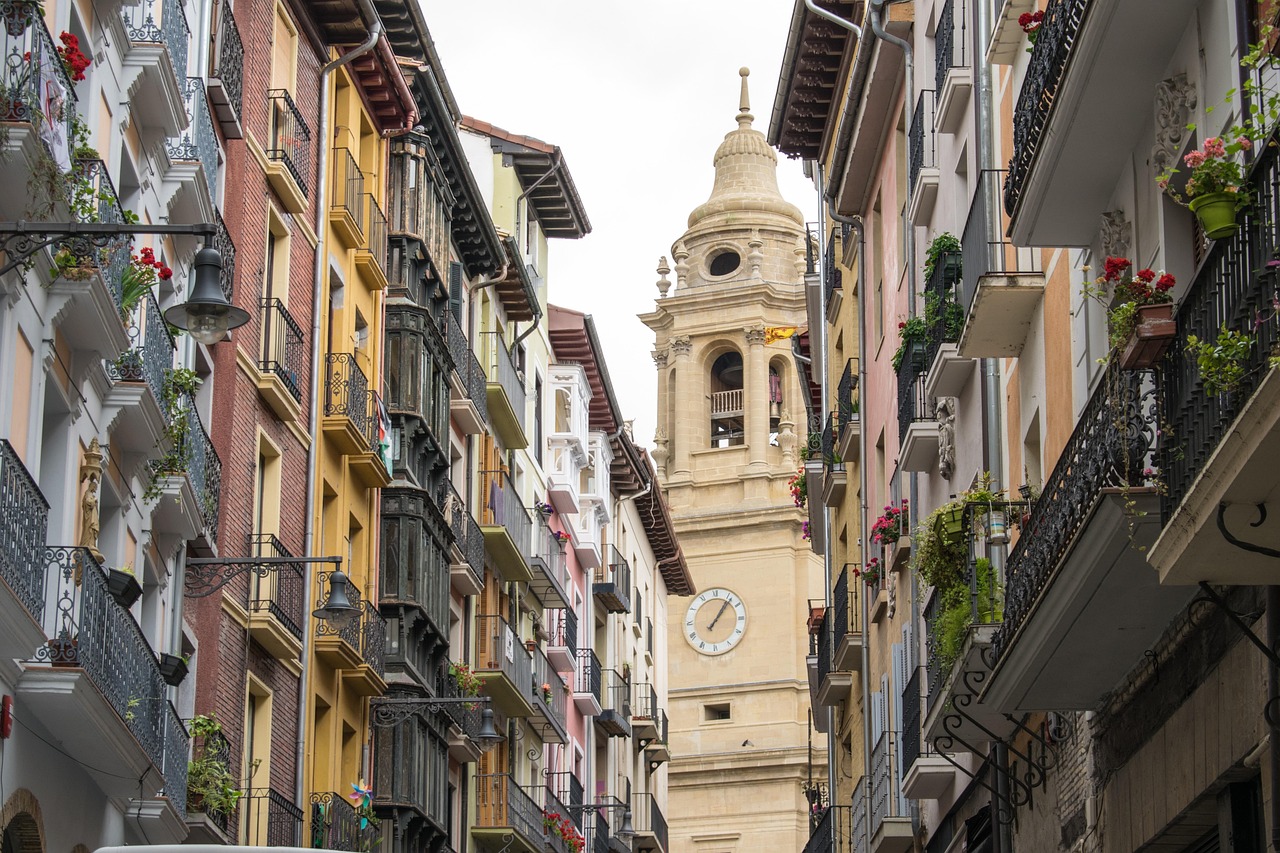
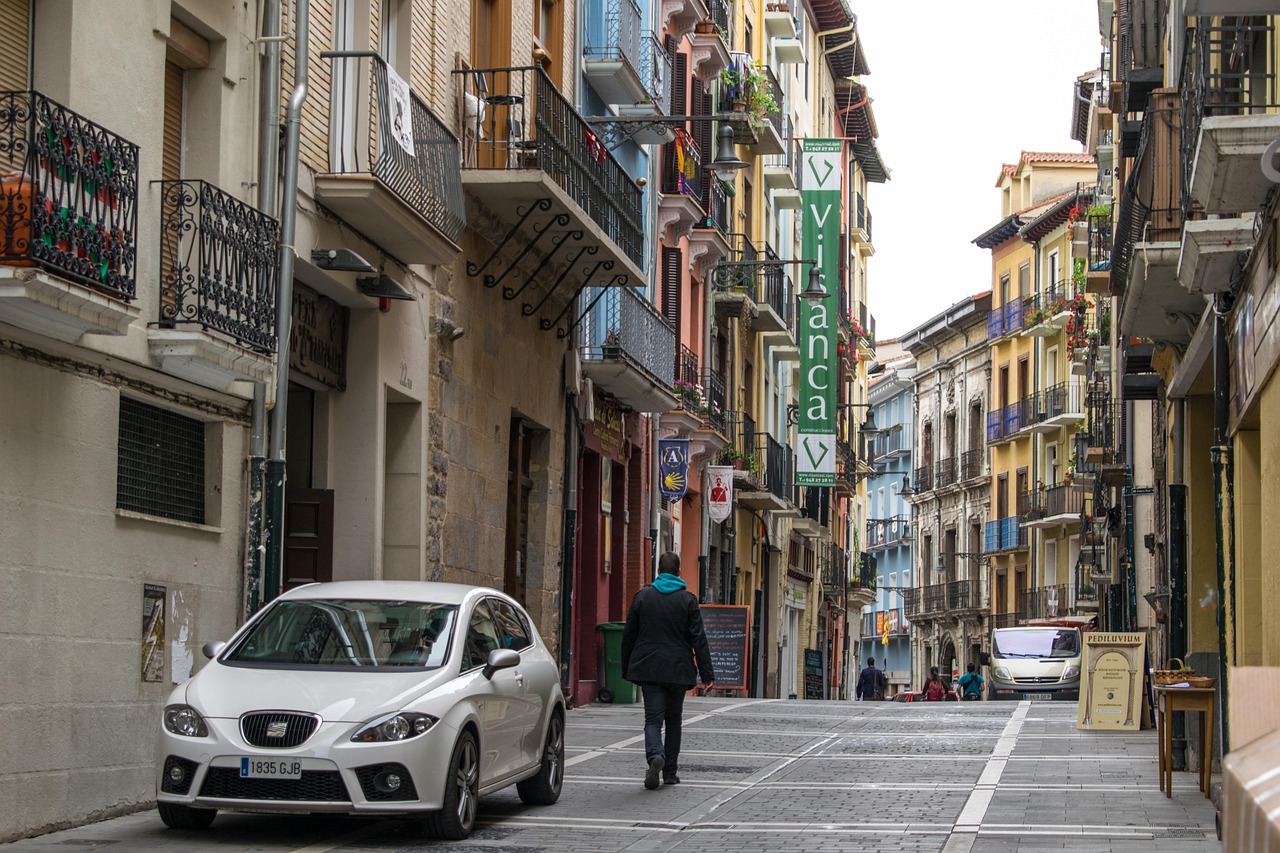
- Pamplona: old town with the town hall square and the cathedral with its Gothic cloister; the bull-run street of the Sanfermines from Santo Domingo to the bullring.
- Cueva de Mendukilo near Astitz in the Larraun valley, a stalactite cave; guided visits only, check times and reservations beforehand.
- Aralar nature park with the Santuario de San Miguel in Excelsis and wide alpine meadows.
- CampingSpirit overnight tip
-
Official campsite or RV park: Second night in Pamplona (Camping Ezcaba or the municipal Área). In the Larraun valley OpenStreetMap lists the campsite Aralar Kanpina; check season and pitches for motorhomes beforehand.
Free camping or nature tip (where legal): In the Aralar nature park camping, fires and overnighting outside approved sites are forbidden; car parks at trailheads are day-visit car parks.
- Insider tip for campers
- Before you leave Navarre: sort out gas, water and waste disposal in Pamplona, then start the journey home. The best way to reach the shrine on Aralar is by car or on foot; motorhomes can be left parked below.
Camping practice & local rules
Wild camping & overnight parking
- Basic Spanish principle: sleeping in a legally parked vehicle is allowed, but camping with anything that goes beyond the outline of the vehicle is not. Since 1 October 2026 Real Decreto 518/2026 (new Art. 92.4 of the Reglamento General de Circulación) expressly regulates when a motorhome is correctly parked: no parts extending beyond the vehicle outline, resting only on its tyres (levelling wedges allowed), no discharging of liquids. Municipalities may still regulate parking times, zones and maximum duration, but according to the DGT may not penalise solely because of the vehicle type; rules for protected areas and coasts apply regardless. Implementation on the ground may take time – follow the signs.
- Navarre: camping outside approved facilities is not provided for, and many municipalities and all protected areas expressly forbid it. The áreas de pernocta for motorhomes are regulated by the region’s Decreto Foral 22/2024.
- Protected areas take precedence over the parking rule: Selva de Irati, Reserva Natural Larra-Belagua, Aralar nature park and the nature reserves of the Roncal valley. There you stay on the paths, make no fires and keep dogs on a lead; drones only with permission.
- Car parks at trailheads (Irati/Abodi, Zugarramurdi, Aralar) are, according to user reports, day-visit car parks, some with a fee. You can legally stay overnight on campsites and in the municipal áreas. Useful apps: park4night, Campercontact and the websites of Turismo Navarra and the municipalities.
Waste disposal & supplies
- Service and waste disposal is called “vaciado” or “punto de reciclaje”; municipal áreas in Navarre often offer water and waste disposal, some free of charge or for coins. Electricity is usually only available on campsites. In the valleys of Baztán, Salazar and Roncal service points are rare – fill up with fuel and water before heading into the mountains.
- Empty grey water and the cassette only at the service point; Art. 92.4 RGC prohibits any discharge of liquids while parked, and in Pamplona discharging outside the service point is punishable by a fine.
- Tap water in Navarre is drinkable. Springs on pastures and in the forest are untreated and, because of grazing animals, should not be drunk without a filter.
- Gas: Spanish butane cylinders (Repsol) are exchanged in the country, foreign cylinders are not; Campingaz cylinders are widespread. For autogas (LPG) you need the right adapter; filling points are rare in the Pyrenean valleys and easier to find in and around Pamplona. At altitude night temperatures drop even in summer – propane rather than butane.
Vehicle size & traffic rules
- Speed limits: motorhomes up to 3.5 t motorway and autovía 120 km/h, country roads 90 km/h, built-up areas 50 km/h (generally 30 km/h where there is only one lane in each direction). Above 3.5 t lower limits apply, for combinations usually 80–90 km/h; signs take precedence.
- Tolls and low-emission zone: to the best of our knowledge the country roads on this loop and the A-15 and A-21 autovías are toll-free; you do not need the toll motorway AP-15 towards the south. Pamplona’s Zona de Bajas Emisiones is limited to the old town.
- Vehicle: a high-visibility vest (compulsory) and two warning triangles on board. If a load extends beyond the rear, for example bikes on a carrier, the V-20 plate (50 × 50 cm) is compulsory. Carry snow chains in winter for passes such as Belate, Ibañeta or Abaurrea.
- Using a mobile phone while driving is forbidden, the alcohol limit is 0.5 per mille (lower for professional drivers and novice drivers). Fines are also imposed on tourists.
CampingSpirit packing & preparation checklist
- Levelling ramps (step 2–3) – pitches in the valleys are uneven; under Real Decreto 518/2026 levelling wedges are allowed when parking, but stabilisers or steps are not.
- Rain jacket, hat and waterproof shoes – it rains often in the Baztán and in the Irati, and fog comes in quickly.
- Reflective or brightly coloured vest for autumn hikes, when hunting takes place in the forests.
- Head torch and rubber boots or trekking shoes with tread for the wet cave at Zugarramurdi.
- Offline map or printed map of the region – reception is patchy in the Irati and in the Salazar valley.
- Snow chains for the passes between October and April; in winter they may also be needed at Belate and Ibañeta.
As of 2026-10. Closures, fees and booking rules change: check official sources before you go.