
In-depth guide · CampingSpirit
About 135 kilometres through the largest continuous hop-growing region in the world: from Pfaffenhofen an der Ilm via Wolnzach, Au and Mainburg to Siegenburg and Abensberg, on to the Danube at Bad Gögging and back – a route of short stages between hop frames, breweries and cycle paths.
The spirit of the route
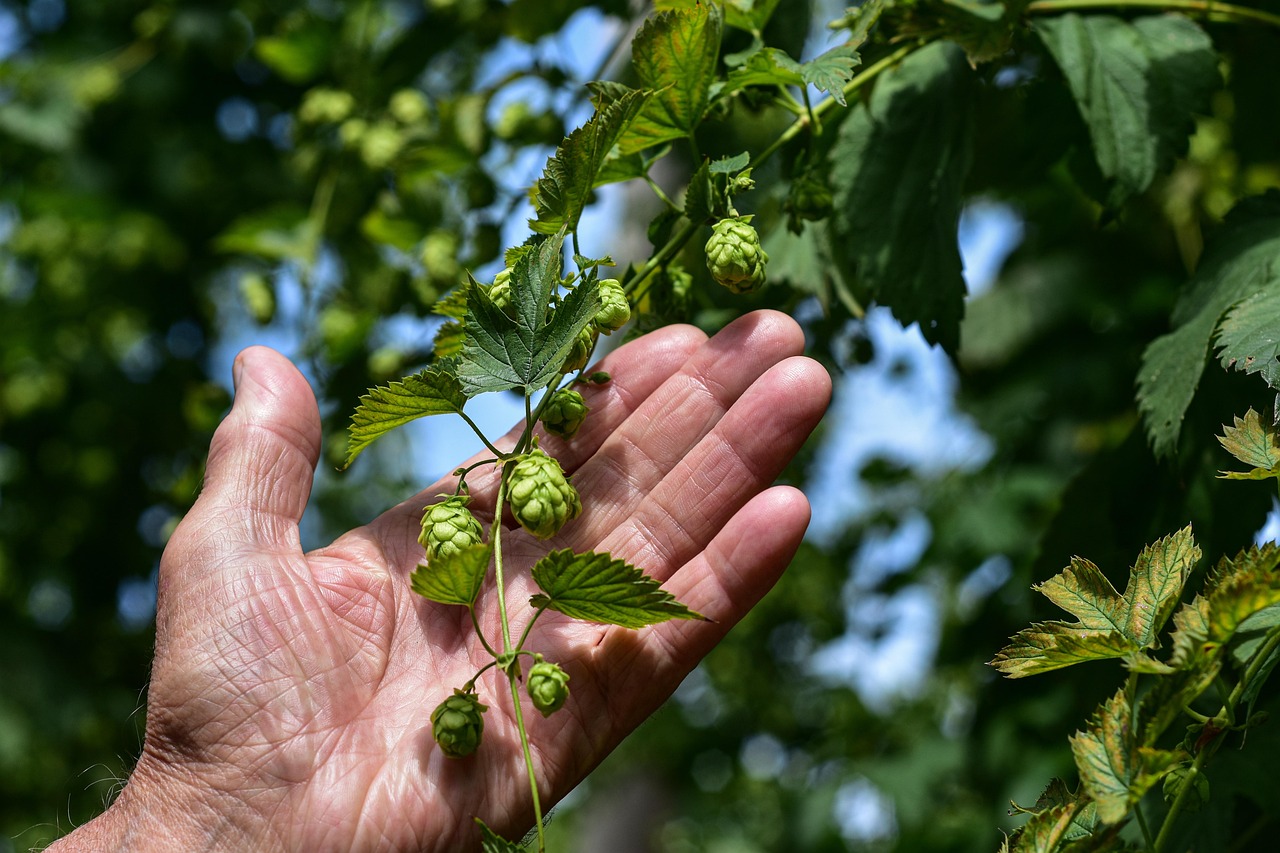
The Hallertau is neither mountains nor coast, and that is exactly what makes it so distinctive. Between Munich, Ingolstadt and Regensburg the land rolls in gentle waves, and above it the hop gardens stand like green halls: poles, wires and bines, seven metres high, row after row to the edge of the forest. In early summer the hops visibly climb the wire, in late summer the air smells resinous and bitter, and from your open sliding door you see hop kilns with tall roofs, onion-domed church towers and tractors on narrow farm tracks. In between lie market towns with a brewery, an inn and a beer garden, the Hop Museum in Wolnzach and, in Abensberg, a tower that looks as if someone had built it out of paint. This route asks for no hairpins and no heavy braking, only time: for cycle paths, a Brotzeit snack and evenings when the camper stands next to a hop field.
Stage-by-stage plan
1Stage 1: Pfaffenhofen an der Ilm to Wolnzach (approx. 15 km)
- The drive
- From Pfaffenhofen, take well-built district roads east through the first hop gardens to Wolnzach, the hop town of the Hallertau. Rolling terrain with no narrow spots apart from the village streets. About 25 minutes of driving; the rest of the day belongs to the stops.
- Highlights & must-sees
- Pfaffenhofen: main square with the town hall, remains of the town wall and the Ilm, plus the Müllerbräu brewery – ask in advance whether and when brewery tours take place.
- German Hop Museum in Wolnzach: the history of hop growing, hop harvesting technology and brewing. The Hallertau hop educational trail is about 4 kilometres long and has around 24 information boards. Ask beforehand about opening hours and guided tours.
- Hüll near Wolnzach is home to the hop research of the Bavarian State Research Center for Agriculture; ask in advance if you want to visit, as the test plots are not a public attraction.
- CampingSpirit overnight tip
-
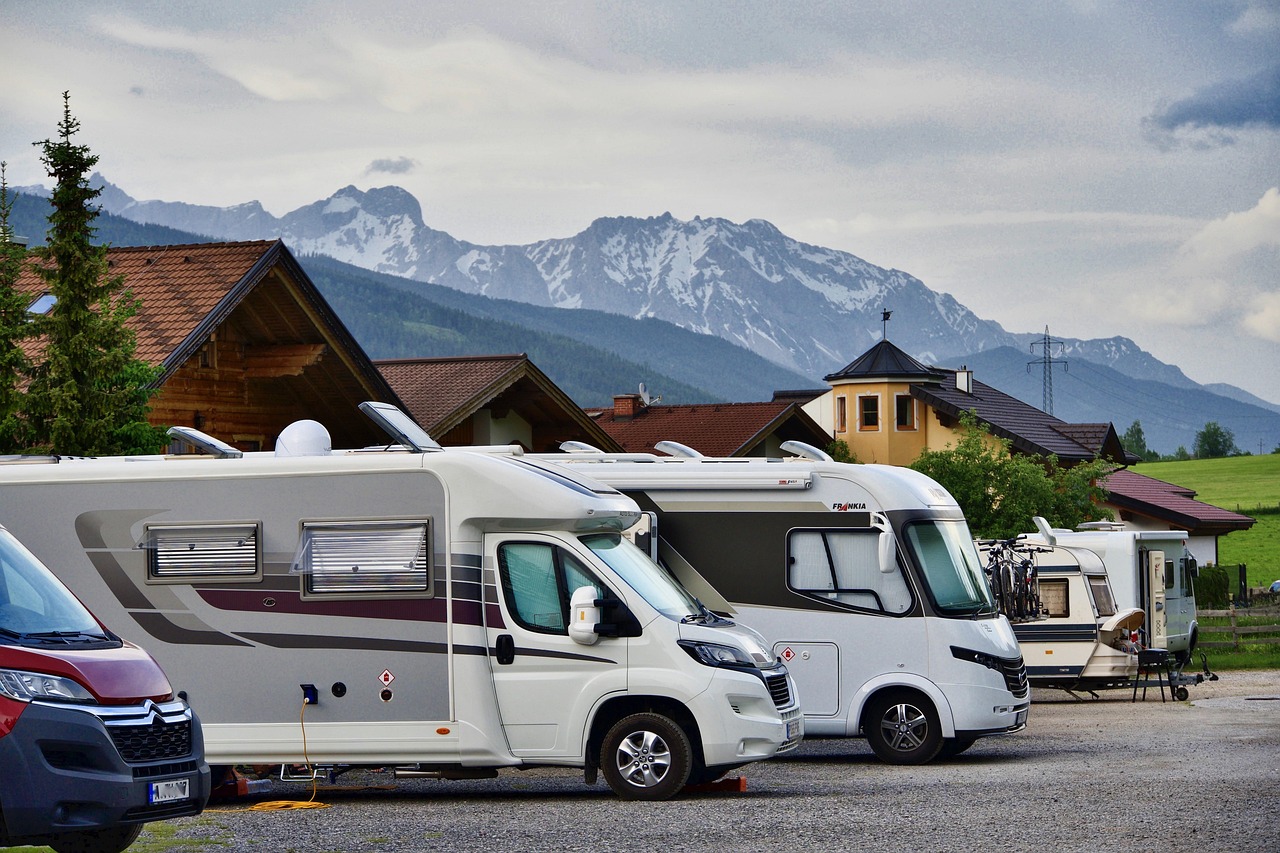
Official campsite or RV park: In Pfaffenhofen itself, the OpenStreetMap data lists no motorhome pitch; check in advance whether the town operates one. A motorhome pitch is located in Hohenwart, about 10 kilometres west of Pfaffenhofen: Schulstraße opposite the school, fresh water (not in frost) and waste disposal, free of charge according to the municipality of Hohenwart, with voluntary donations; the town centre is about a 10-minute walk away. Around Wolnzach there are a few private farm pitches (bookable via Alpacacamping, for example); ask the operator about facilities, access (partly suitable only for off-road vehicles) and length limit.
Free camping or nature tip (where legal): Wild camping is not allowed in Bavaria, as in the rest of Germany. You may stay one night on public car parks to restore fitness to drive, where not expressly prohibited – without awning, chairs or barbecue. The hop gardens, farm tracks and forest edges are agricultural land or private woodland: do not park there and do not block tracks.
- Insider tip for campers
- In Wolnzach, expect scarce parking around the Hop Museum; a car park on the edge of town with a short walk is more relaxed in a motorhome. Farm tracks between the hop gardens are built for tractors – only drive on them in a motorhome where they are signed as public roads.
2Stage 2: Wolnzach to Au in der Hallertau (approx. 22 km)
- The drive
- From Wolnzach through the heart of the growing area to the south-east, via small villages and ridges to Au in der Hallertau. Narrow, winding district roads with varying surfaces and little traffic; tractors and hop trailers appear behind the crests. About 40 minutes.
- Highlights & must-sees
- The hop gardens near Au: depending on the season, bines on the wire, green walls or harvested poles – stop for photos only at lay-bys, never on the farm tracks.
- Parish churches with onion-domed towers serve as landmarks above the hills: you can explore the Hallertau villages by bike on short loops.
- Hop educational trails and signposted cycle routes: maps are available from the tourist information offices in Pfaffenhofen, Wolnzach and Mainburg.
- CampingSpirit overnight tip
-
Official campsite or RV park: In Au in der Hallertau we did not find a motorhome pitch or campsite that could be reliably confirmed. In the evening, drive the good 15 kilometres on to Mainburg: there OpenStreetMap lists the small motorhome pitch “Köglmühle” (details under stage 3).
Free camping or nature tip (where legal): On village squares and festival meadows, parking is usually allowed but not camping; at harvest time every metre is needed for trailers and machinery. The hop harvest usually falls in late August and September. This is part of the landscape but restricts use of the tracks – where possible, visit farm shops and farm festivals and do not walk between the rows.
- Insider tip for campers
- Fill up with fuel and shop in Pfaffenhofen, Wolnzach or Mainburg; petrol stations are rare between the small villages of the Hallertau. Your sat nav likes to send you along farm tracks – stick to district and federal roads and check the signs for height and weight restrictions.
3Stage 3: Au in der Hallertau to Mainburg (approx. 16 km)
- The drive
- Along the B301 federal road and district roads past hop gardens, north to Mainburg. A well-built route with lorry traffic and tractors; half an hour of driving. Mainburg is a traditional centre of the region’s hop trade.
- Highlights & must-sees
- Mainburg: town of the hop trade; the market square and merchants’ houses in the townscape are a reminder of it. Ask the tourist information office about town tours and information material.
- Circular walks and cycle loops from Mainburg through the hop gardens: maps and suggested tours are available from the tourist information office.
- Beer gardens and inns: in the Hallertau, hops, malt and brewing water belong together – ask for beers from breweries in the area.
- CampingSpirit overnight tip
-
Official campsite or RV park: Motorhome pitch “Köglmühle” in Mainburg, just under 1 km north of the centre: according to OpenStreetMap a small site for about three vehicles, up to roughly 8 m in length according to pitch listings. Electricity, water and waste disposal are not available there according to the information available; the town of Mainburg can tell you about terms of use and fees – check beforehand, and do not count on it with larger vehicles.
Free camping or nature tip (where legal): Pitch provision in the region is small, and municipalities do not tolerate camping behaviour on car parks. If you arrive too late and find no space, move on to the sites near Bad Gögging on the Danube (see stage 6).
- Insider tip for campers
- It is better to fill up with fresh water and empty grey water beforehand or at a campsite – there is no service station at the Köglmühle. With long vehicles, park on the edge of town rather than in the centre of Mainburg.
4Stage 4: Mainburg to Siegenburg (approx. 18 km)
- The drive
- From Mainburg north-east on country roads through hop gardens into the Abens valley to Siegenburg. Slightly rolling, with several village streets; allow for tractor traffic. About 30 minutes.
- Highlights & must-sees
- Siegenburg in the Abens valley: a small market town with a parish church and market square, a quiet counterpart to the hop-trading towns.
- The Abens flows out of the Hallertau towards the Danube; the Abens valley is good for half-day bike rides (ask the tourist information office about the route and signposting).
- Beer culture of the area: inns and beer gardens can be found in almost every market town – check opening times in advance, as they are often limited to weekends.
- CampingSpirit overnight tip
-
Official campsite or RV park: We could not reliably confirm a motorhome pitch in Siegenburg itself. In the evening, continue to Abensberg, to the Spargelhof Kügel north of the town (details under stage 5), or to the Felbermühle campsite near Bad Gögging (stage 6).
Free camping or nature tip (where legal): Along the Abens, banks and water meadows are partly a landscape protection area; parking on farm tracks is prohibited, and camping even more so. Keep to designated car parks on the edge of the village.
- Insider tip for campers
- Plan bike tours with luggage and water: the Hallertau has little shade, and in high summer it gets warm between the walls of hops. E-bikes make sense here – the hills are short, but there are many of them.
5Stage 5: Siegenburg to Abensberg (approx. 12 km)
- The drive
- A short run along the Abens valley to Abensberg on district roads; in Abensberg the A93 and B301 meet, and traffic increases there. Flat and well-built, about 20 minutes of driving. Abensberg is the destination of the route: brewery, town wall and art.
- Highlights & must-sees
- Kuchlbauer brewery with the roughly 35 m tower designed by Friedensreich Hundertwasser: the complex with brewery, beer garden and tower is a day’s programme in itself. The tower is accessible only as part of the Bierwelt and tower tour; tour times change with the season, so ask in advance. The KunstHausAbensberg shows a permanent Hundertwasser exhibition.
- Old town with town wall, towers and market square; birthplace of the historian Johannes Aventinus, commemorated by a monument.
- Arnhofen flint mine near Abensberg: site of Neolithic flint mining. The excavation area itself is not open to the public; there is an exhibition on the subject in the Herzogskasten town museum in Abensberg (check opening times in advance).
- CampingSpirit overnight tip
-
Official campsite or RV park: Spargelhof Kügel north of Abensberg: camping and motorhome pitches on a farm, according to OpenStreetMap about 12 pitches with electricity and water; ask the operator about season, reservations and current conditions. Kelheim, the Weltenburg Gorge and the Altmühl are covered by the CampingSpirit guide to Franconian Switzerland and the Altmühl Valley – here we stay with the Hallertau.
Free camping or nature tip (where legal): In the old town of Abensberg, parking is time-limited in places; campers are better off on larger car parks at the edge. Sleeping in the vehicle on public car parks is permitted at most once, to restore fitness to drive, unless prohibited.
- Insider tip for campers
- Book brewery tours and the tower early, especially for weekends. Beer in the beer garden, camper at the farm: if you drive, you don’t drink – the alcohol limit is 0.5 per mille, and zero for novice drivers.
6Stage 6: Abensberg to Bad Gögging and Eining on the Danube (approx. 14 km)
- The drive
- From Abensberg north and west on district roads into the Danube valley near Neustadt an der Donau with the spa town of Bad Gögging. Flat, well-built, a short drive. The transition from the hop hills to the broad Danube plain is clearly visible.
- Highlights & must-sees
- Roman fort Abusina in Eining, about 500 m south of the village on the road to Bad Gögging and part of the Limes World Heritage Site, close to the Danube; the site is freely accessible, and guided tours take place seasonally.
- Danube Cycle Path: flat and good for family tours, downstream towards Kelheim or upstream towards Ingolstadt.
- Limes-Therme in Bad Gögging: a thermal spa with a Roman theme, just right after a day on the bike.
- CampingSpirit overnight tip
-
Official campsite or RV park: Motorhome pitch at the Limes-Therme in Bad Gögging: according to OpenStreetMap with electricity and water; check facilities, fees and season with the operator. Felbermühle campsite nearby: ask in advance about season and facilities.
Free camping or nature tip (where legal): In the Danube valley and the floodplain woods, nature reserves and landscape protection areas apply; parking on dyke paths and riverbank strips is prohibited. Use the designated pitches and campsites.
- Insider tip for campers
- Fill up with fuel in Abensberg or Neustadt before Bad Gögging. At the Roman fort, daytime parking for motorhomes is not reliably confirmed; staying overnight there is not considered permitted – use the pitches in Bad Gögging.
7Stage 7: Bad Gögging to Pfaffenhofen an der Ilm (via Geisenfeld) (approx. 38 km)
- The drive
- From Bad Gögging via Neustadt and Geisenfeld back south through the western Hallertau to Pfaffenhofen. Well-built roads, several village streets. About 50 minutes.
- Highlights & must-sees
- Geisenfeld: a small town with a former monastery complex, a stopover on the way back.
- Cycle paths in the Pfaffenhofen district, also along the Ilm: maps from the tourist information office, easy half-day tours from Pfaffenhofen.
- Müllerbräu brewery and beer gardens in Pfaffenhofen as a finale, in case you had no time at the start.
- CampingSpirit overnight tip
-
Official campsite or RV park: Motorhome pitch Geisenfeld: according to OpenStreetMap with electricity and water; check the operator, facilities and season with the town. Slightly off the route there is also the campsite at the Donaulände in Vohburg an der Donau, with a motorhome pitch next door.
Free camping or nature tip (where legal): On the return journey the same applies as on the whole route: stay overnight only on designated pitches. The Hallertau is intensively farmed, and wild pitches are hard to find.
- Insider tip for campers
- If you are driving back to Munich, note the city’s low-emission zone (green sticker). Traffic jams are frequent on the A9; a time buffer helps.
Camping practice & local rules
Wild camping & overnight parking
- Legal situation in Bavaria: wild camping is not allowed. Staying one night to restore fitness to drive on public car parks is permitted, unless prohibited – without camping behaviour such as awning, chairs or barbecue. In nature reserves and on private land even that is not permitted; fines may be imposed depending on the municipality.
- Hop gardens are private land and commercial areas: do not enter them, do not pick hop cones, and do not block farm tracks. At harvest time trailers and harvesting machines are on the move – leave enough room.
- In the core of the Hallertau (Pfaffenhofen, Wolnzach, Au, Siegenburg) we could not find a confirmed pitch; what is available are small municipal and farm pitches with limited capacity. Useful apps: park4night, Campercontact and Alpacacamping – always double-check the details there with the operator.
- The hop harvest takes place in late summer; some farms and municipalities hold farm festivals. Dates change every year – ask municipalities or tourist information offices.
Waste disposal & supplies
- Services and disposal: you will find equipped sites near Bad Gögging (Limes-Therme, Felbermühle) and partly on farm pitches; ask in advance about the extent of disposal facilities. On small municipal pitches such as the one in Mainburg, services may be missing – fill and empty your tanks beforehand.
- Empty grey water and the cassette only at disposal stations; drains and field edges are off limits.
- Tap water in Bavaria is drinkable throughout; at pitches, follow the signs at the tap. It makes sense to fill up with fresh water before entering the Hallertau.
- Gas: German exchange cylinders are available at DIY stores and petrol stations; for autogas (LPG) you need an adapter, depending on your system. It is best to fill refillable cylinders at larger petrol stations in Pfaffenhofen, Mainburg or Abensberg.
Vehicle size & traffic rules
- Speed limits: motorhomes up to 3.5 t count as cars – 50 km/h in built-up areas, 100 km/h on country roads, and the recommended speed of 130 km/h on motorways. Over 3.5 t up to 7.5 t: 80 km/h outside built-up areas and 100 km/h on motorways. Caravan combinations may drive at most 80 km/h; 100 km/h on motorways is permitted only with a 100 km/h approval.
- Low-emission zones: we found none on the route itself. Munich has a low-emission zone with a green sticker; for other cities such as Augsburg or Regensburg, check the current status with the Federal Environment Agency or the city.
- Tolls: there is no vignette for motorhomes in Germany. The lorry toll applies to goods vehicles over 3.5 t; vehicles registered as motorhomes are generally exempt – clarify in advance if your vehicle is registered as a lorry.
- Dimensions and narrow spots: old towns such as Abensberg and Pfaffenhofen and the centres of the hop villages have narrow passages and multi-storey car parks with height limits. On farm tracks between the hop gardens, passage is often permitted only for residents or agriculture.
- Winter and traffic: in snow, ice or slippery conditions, tyres with the Alpine symbol are mandatory. Drink-driving: 0.5 per mille, zero for novice drivers and under-21s. Mobile phones only with a hands-free kit. Bike racks must not cover the number plate or lights.
CampingSpirit packing & preparation checklist
- E-bikes or good touring bikes with a rear carrier that holds securely: the route thrives on cycle paths through the hop gardens, the Abens valley and the Danube plain.
- Sun hat, sun protection and water bottles: there is little shade between the hop rows and on cycle paths.
- Cycling map or offline maps for the Hallertau: the network of paths is dense, and many paths are open only to agricultural traffic.
- CEE adapter and a 25 m power cable: on farm pitches the sockets are sometimes far away.
- Cool bag for brewery and farm shop purchases: hop beer, asparagus (in season), sausage and cheese can be taken home safely this way.
- Sturdy frame lock with chain: on bike tours with a stop at a beer garden, bikes are often out of sight, and e-bikes are in demand.
As of 2026-10. Closures, fees and booking rules change: check official sources before you go.