



In-depth guide · CampingSpirit
From Munich to Lake Starnberg and the Ammersee, across the Lech to Landsberg, through the church villages of the Pfaffenwinkel and the Murnauer Moos to the Staffelsee and the Kochelsee: around 340 kilometres of Alpine foothills, where the overnight pitch needs more planning than the route.
The spirit of the route
The Five Lakes region begins where Munich residents want to be on a Friday afternoon – and that is exactly what makes this loop both appealing and hard work. In the morning, haze lies over Lake Starnberg, sailing boats bob off Tutzing, and beyond the water the Zugspitze range stands out as if cut from paper. At the Ammersee it smells of fish from the smokehouse; up on the Holy Mountain, of malt from the monastery brewery. Then it gets quieter: moraine hills, pastures, onion domes rising above every other village, and the Hoher Peißenberg, from where the whole Alpine panorama fits into the sliding door. In the Murnauer Moos, where Gabriele Münter and Wassily Kandinsky found the colours of the Blue Land, crickets chirp over the litter meadows in the evening. If you travel midweek, get to the bathing spot early and know your pitch in advance, you will experience Upper Bavaria without the day-tripper traffic – with lake water that gets surprisingly warm in high summer.
Stage-by-stage plan
1Stage 1: Munich to Bernried am Starnberger See (approx. 52 km)
- The drive
- Munich is only the starting point: the low emission zone covers the Mittlerer Ring and everything inside it. Take the A95, which begins at the Mittlerer Ring (Luise-Kiesselbach-Platz) and therefore at the low emission zone, or – without a green sticker – go around the city to Starnberg, then follow the state road along the west shore via Possenhofen, Feldafing and Tutzing to Bernried. Along the shore, busy village through-roads with 30 km/h limits and cyclists, with short stretches of forest and lake views in between. A good 1.5 hours' driving, considerably more on summer weekends.
- Highlights & must-sees
- Possenhofen: the place where Empress Elisabeth (“Sisi”) spent her summers; the Kaiserin-Elisabeth-Museum in the old Possenhofen/Pöcking railway station and the “Paradies” bathing spot on the shore. The palace itself is privately owned and not open to the public.
- Tutzing: lakeside promenade and the climb to the Ilkahöhe above the town, with views over the whole lake to the Benediktenwand and the Wetterstein.
- Bernried: the Buchheim Museum der Phantasie on the lakeshore with Lothar-Günther Buchheim's collection of Expressionist art, plus the monastery park with old trees and quiet shore paths.
- CampingSpirit overnight tip
-
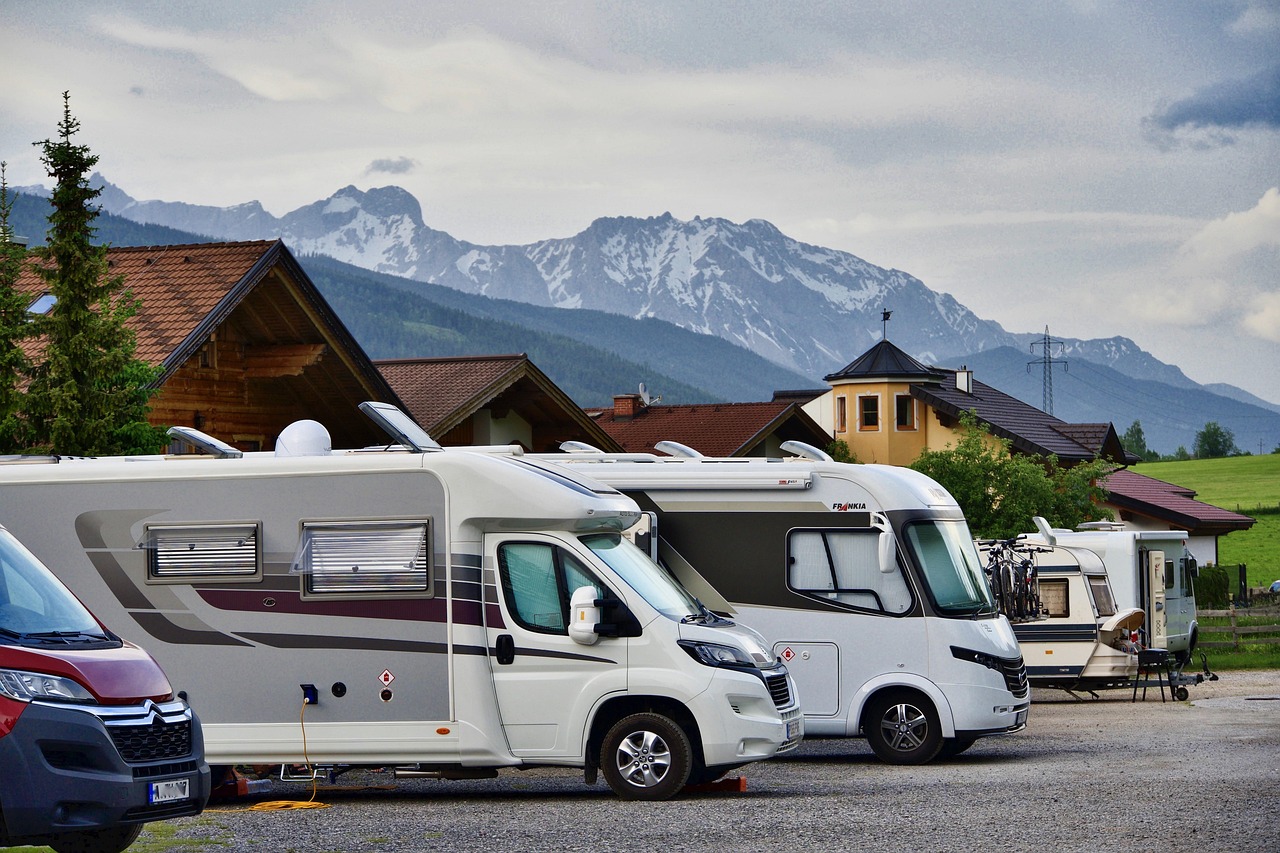
Official campsite or RV park: On the west shore the choice is small: in Starnberg-Percha there is a small motorhome pitch at the tennis courts near the north shore (six pitches at most, vehicles up to about 10 m, season roughly April to October); the pitch at the golf course near Tutzing is reserved for golfers. If you want a campsite, drive a few kilometres on from Bernried to Campingplatz Seeshaupt at the southern end or to Camping beim Fischer in St. Heinrich (Münsing municipality) on the south-east shore; both have electricity and sanitary facilities – enquire in advance in summer.
Free camping or nature tip (where legal): At Lake Starnberg almost all shore and bathing car parks turn away motorhomes or ban parking at night; the municipalities check regularly on warm weekends. In Bavaria a single overnight stay to restore fitness to drive is generally tolerated in public car parks without a prohibition sign, but camping behaviour is not – and signs are the rule here. Plan your pitch firmly in advance.
- Insider tip for campers
- Without a green sticker, give the Munich low emission zone a wide berth and approach the lakes from the west via the A99 and A96. The through-road in Starnberg on the B2 is often congested at rush hour and on day-trip days. The boats of the Bayerische Seenschifffahrt link Possenhofen, Tutzing and Bernried without any hunting for parking; leave the camper on its pitch for this.
2Stage 2: Bernried am Starnberger See to Herrsching am Ammersee (with a detour to the Pilsensee and Wörthsee) (approx. 47 km)
- The drive
- From Bernried back towards Tutzing and via Traubing through moraine hills, meadows and forest up to Andechs, then downhill to Herrsching. Short detour north via Seefeld to the Pilsensee and the Wörthsee, then back to Herrsching. Narrow district roads with crests, a steep section near Andechs; pure driving time a good hour.
- Highlights & must-sees
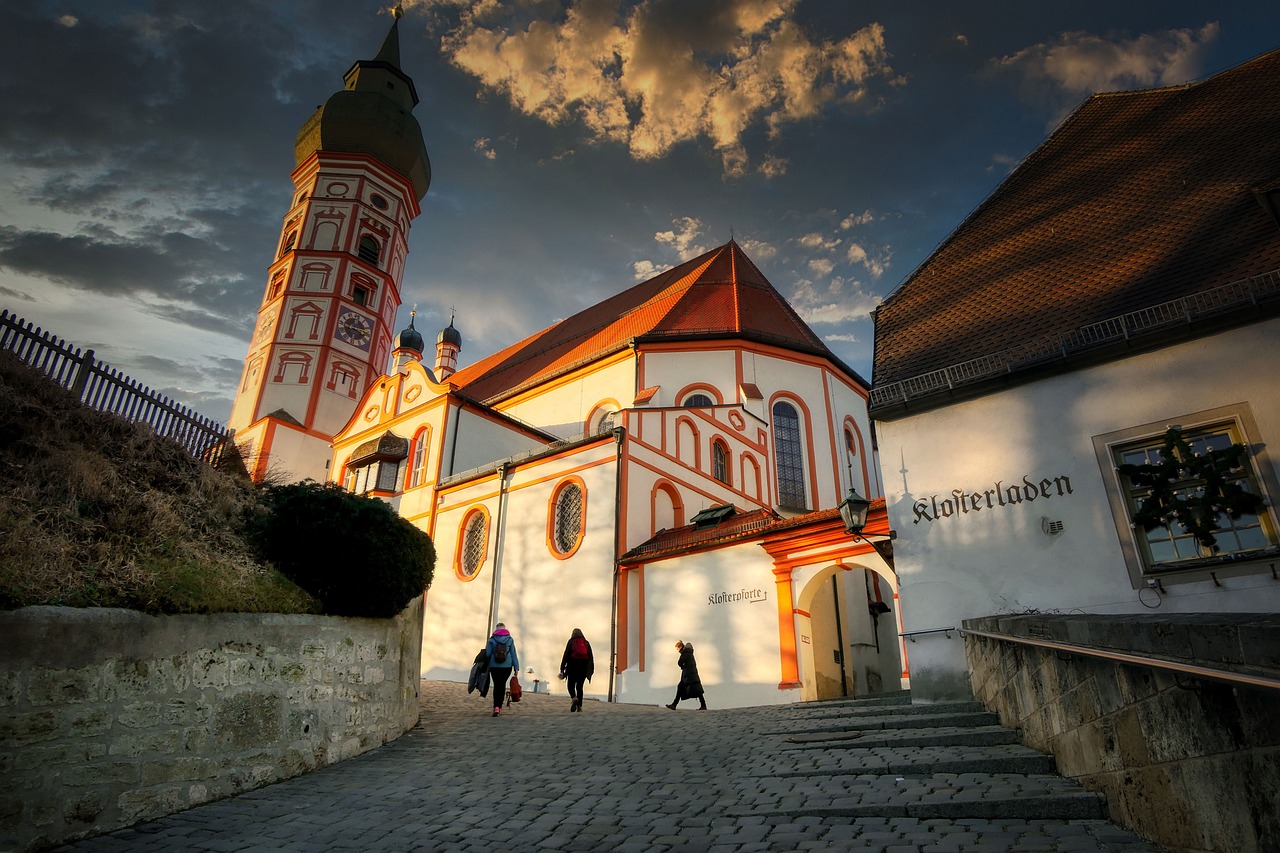
- Andechs Monastery on the Holy Mountain: pilgrimage church with Rococo interior, Bräustüberl with beer garden and views over the Ammersee area. On foot from Herrsching through the Kiental in about an hour – a better plan than looking for parking at the top.
- Herrsching: lakeside promenade with spa gardens and the Kurparkschlösschen, landing stage for the Ammersee boats.
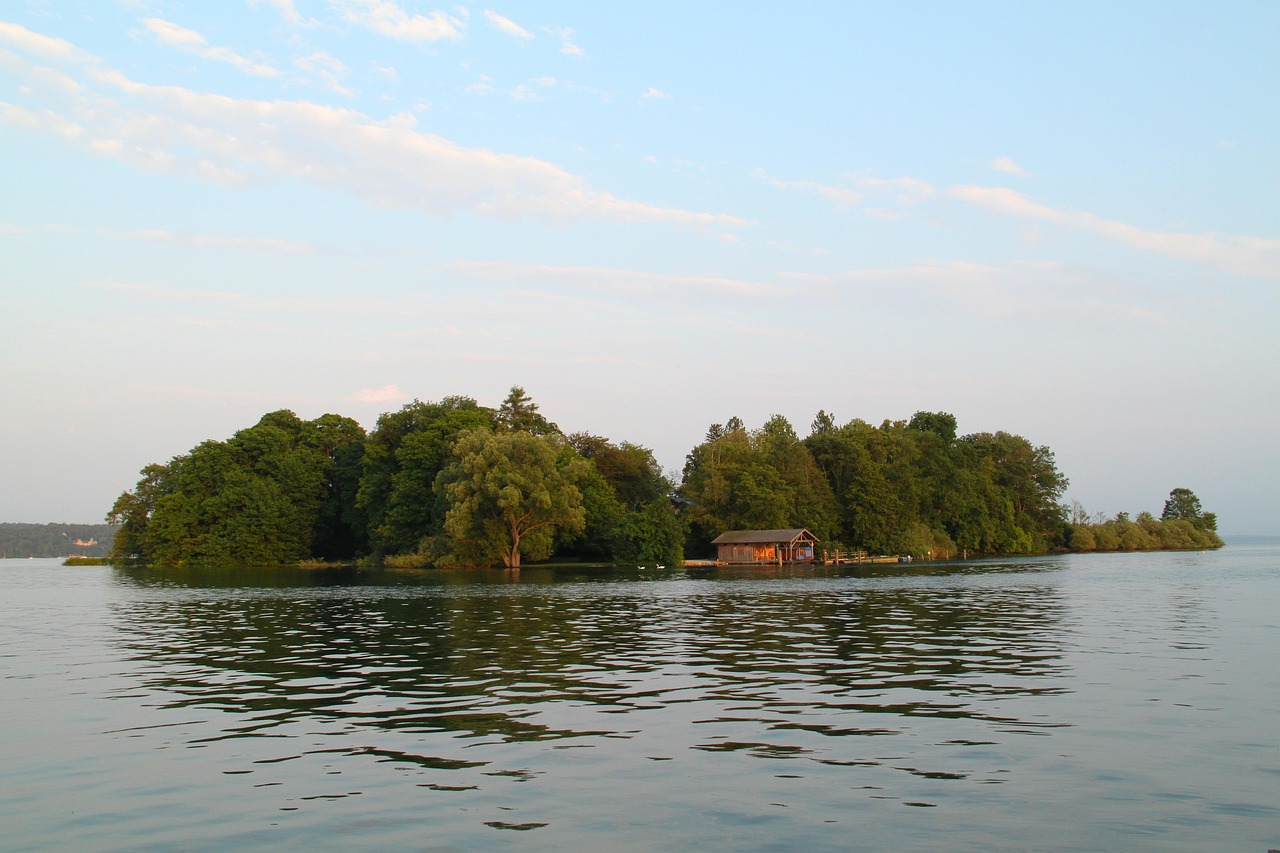
- Pilsensee and Wörthsee: two smaller bathing lakes that warm up in summer; the tiny Mausinsel lies just off the shore of the Wörthsee. A morning is enough for a swimming stop.
- CampingSpirit overnight tip
-
Official campsite or RV park: The Herrsching motorhome pitch is on the southern edge of town near the lake, a good 1.5 km from the S-Bahn station: electricity, water and waste disposal. A quieter alternative: the Andechs motorhome pitch below the monastery, with electricity. At the Pilsensee and the Wörthsee there are campsites mostly occupied by seasonal campers; enquire about touring pitches in advance.
Free camping or nature tip (where legal): At the Pilsensee and the Wörthsee the bathing car parks are small, often charge a fee and are partly closed to motorhomes; overnight stays are not intended there. In the car parks at Andechs Monastery: park by day, use the motorhome pitch at night.
- Insider tip for campers
- Avoid Andechs on Sundays and public holidays in good weather: car parks and beer garden are full from midday and the access roads back up. Come on a weekday morning. If you hike from the Herrsching pitch, you can take the bus back.
3Stage 3: Herrsching am Ammersee to Landsberg am Lech (approx. 43 km)
- The drive
- Along the southern end of the Ammersee via Fischen to Dießen, then along the west shore via Utting to Schondorf and inland across the Lechrain plateau to Landsberg. The south shore is flat and silted up, and the road keeps its distance from the water; on the west shore, brief lake views between villas and the railway line. Just under an hour's driving.
- Highlights & must-sees
- Dießen: the Marienmünster, one of the great Baroque churches of Upper Bavaria by Johann Michael Fischer, high above the town; down on the shore, fish smokehouses and potteries.
- Schondorf: the Romanesque church of St. Jakob right on the shore, with a lido and steamer pier next to it.
- Landsberg: the Lech weir below the old town, the steep Alte Bergstraße and the former Jesuit church of Heilig Kreuz – at its best in the early evening, when the light falls across the Lech.
- CampingSpirit overnight tip
-
Official campsite or RV park: In Landsberg, the municipal Waitzinger Wiese motorhome pitch on the Lech, a few minutes' walk from the old town, or the Campingplatz Landsberg am Lech in the Pössinger Au by the river. On the Ammersee itself: the pitch in Dießen next to the station and the shore, with electricity, as well as campsites in Dießen-St. Alban and Utting, both with many seasonal campers.
Free camping or nature tip (where legal): The south shore of the Ammersee with the Ammer estuary is a nature reserve; paths and shore zones are partly closed, and car parks there are not places to spend the night. Lakeside car parks in Utting, Schondorf and Herrsching often carry motorhome bans or overnight parking bans.
- Insider tip for campers
- The Ammersee boats link Herrsching, Dießen, Utting and Schondorf – ideal for leaving the camper in Dießen for a day. In Landsberg the old town is tight and the multi-storey car parks have height restrictions: walk from the pitch across the Lech. Do your big shop outside the old town in the commercial areas along the B17.
4Stage 4: Landsberg am Lech to Schongau via Wessobrunn and the Hoher Peißenberg (approx. 54 km)
- The drive
- From Landsberg south-east on small roads through moraine country to Wessobrunn, on to Hohenpeißenberg and over the ridge down to Peiting and Schongau. Rolling back roads with farms and patches of forest; the roughly 4 km access road to the summit of the Hoher Peißenberg is winding and climbs noticeably. Around 1.25 hours' pure driving time.
- Highlights & must-sees
- Wessobrunn: the former Benedictine monastery that gave its name to the Wessobrunn stuccoists, who decorated churches across half of Europe in the 17th and 18th centuries; plus the ancient Tassilo lime tree.
- Hoher Peißenberg (988 m): pilgrimage church on the summit and the Meteorological Observatory of the Deutscher Wetterdienst, which has kept measurement records since the late 18th century. When the föhn blows, the view reaches from the Allgäu to the Wendelstein; the observatory is a working facility and not open to the public.
- Peiting: the parish church of St. Michael with its Romanesque tower and the Schlossberg, once the seat of the Welf dynasty.
- CampingSpirit overnight tip
-
Official campsite or RV park: In Schongau, the municipal motorhome site in the Lechau by the river, with electricity and water/waste disposal. As a campsite, Terrassen-Camping am Richterbichl in Rottenbuch is a good choice, already on the next day's route: electricity, sanitary facilities, water/waste disposal, terraced with views into the Ammer valley.
Free camping or nature tip (where legal): Overnight stays are not intended in the summit car park on the Hoher Peißenberg; day-trippers come up for the sunset in the evening, and it gets crowded at night. In Peiting and Peißenberg the municipalities designate individual car parks for motorhomes – check the current situation and signage.
- Insider tip for campers
- Drive up the Hoher Peißenberg in the late afternoon or early morning: that is when the long-distance views are best and the car park at the top is free. If you drive a long vehicle, park down in the village and walk the last stretch. Peiting and Schongau are the better choice for fuel and shopping than the villages of the Pfaffenwinkel.
5Stage 5: Schongau to Weilheim in Oberbayern (via Rottenbuch and Steingaden) (approx. 65 km)
- The drive
- Via Peiting to Rottenbuch on the Ammer, a short detour via Wildsteig to Steingaden and back, then via Böbing and Peißenberg into the Ammer valley to Weilheim. Hilly Pfaffenwinkel roads with crests, bends and tractor traffic, flatter towards Weilheim. Around 1.5 hours' pure driving time.
- Highlights & must-sees
- Rottenbuch: the former Augustinian canons' collegiate church with lavish Rococo decoration, plus hiking trails into the Ammer gorge below the village.
- Steingaden, just briefly: the Welfenmünster with its Romanesque cloister. The Wieskirche close by is covered in detail in the CampingSpirit guide to the Romantic Road.
- Weilheim: Marienplatz and the parish church of Mariä Himmelfahrt; before reaching the town, the short detour to the collegiate church of Polling is worthwhile.
- CampingSpirit overnight tip
-
Official campsite or RV park: Municipal motorhome pitch in Weilheim (few pitches) with electricity, water and waste disposal, within walking distance of the old town. Quieter alternative: Campingplatz Ammertal near Peißenberg on the Ammer – check facilities and season in advance.
Free camping or nature tip (where legal): The Ammer gorge and many moors in the Pfaffenwinkel are protected areas; hikers' car parks there are not overnight spots. At the car park in Steingaden and at church car parks, park only during the day.
- Insider tip for campers
- In the Pfaffenwinkel, farm vehicles and cyclists on narrow roads are the norm – only overtake when you can see ahead. Weilheim's old town is tight for large vehicles, even more so on market days; walk from the pitch.
6Stage 6: Weilheim in Oberbayern to Staffelsee (Uffing / Seehausen) via Murnau (approx. 35 km)
- The drive
- South on the B2 through the Ammer and Loisach foreland to Murnau, then via Seehausen on the east shore and along the north shore to Uffing. Well-built federal road, from Murnau onwards local roads with a 30 km/h limit. Just under 45 minutes' driving – plenty of time for the Moos on foot or by bike.
- Highlights & must-sees
- Murnauer Moos: one of the largest continuous moorland areas in Central Europe; circular trail from the little church of St. Georg (“Ähndl”) south of Murnau with views of the Wetterstein and the Estergebirge.
- Münter-Haus in Murnau: home of Gabriele Münter and Wassily Kandinsky, with its original painted decoration and works from the Blue Rider period; the Schlossmuseum in the town centre complements the collection.
- Staffelsee: moorland lake with several islands, in summer one of the warmest bathing lakes in the region; bathing spots in Uffing and Seehausen, boat hire for the trip to the island of Wörth.
- CampingSpirit overnight tip
-
Official campsite or RV park: On the Staffelsee: Campingplatz Aichalehof in Uffing and Camping Halbinsel Burg near Seehausen, both with electricity and sanitary facilities, well booked during school holidays. In Uffing there is a small motorhome pitch at the Back- und Brau-Stüberl (few pitches, electricity, no water or waste disposal). In Murnau, motorhomes can stay at the railway station (four pitches, three nights at most, electricity, water and waste disposal) and on the Kemmelallee; check fees and conditions in advance.
Free camping or nature tip (where legal): The Murnauer Moos is a nature reserve: you must not leave the paths, and parking on farm tracks is prohibited. At the bathing spots on the Staffelsee, no motorhome use is allowed at night; the car parks are small and fill up early in summer.
- Insider tip for campers
- Walk the Moos early in the morning or in the evening; at midday it is exposed and hot. Pack insect repellent. Check the current opening times of the Münter-Haus in advance, as it is not open every day. In Murnau everything is within walking distance of the motorhome pitches.
7Stage 7: Staffelsee to Kochel am See and Walchensee (approx. 45 km)
- The drive
- Via Murnau and Großweil to the Kochelsee, along the west shore via Schlehdorf to Kochel, then up the Kesselbergstraße to the Walchensee at Urfeld and along the shore to Einsiedl. The Kesselberg is winding with tight hairpins and gradients, a speed limit and no overtaking; hard work for large motorhomes and caravan combinations, but passable. Around an hour's driving. Back to Munich via the A95 in a good hour.
- Highlights & must-sees
- Schlehdorf: monastery church above the Kochelsee and views across the water to the Herzogstand and the Jochberg.
- Jochberg (1,565 m): hike from the car park at the top of the Kesselberg with views of the Walchensee and the Kochelsee, around 2 to 2.5 hours' ascent.
- Urfeld: the shore that Lovis Corinth painted again and again in his Walchensee pictures.
- CampingSpirit overnight tip
-
Official campsite or RV park: On the Kochelsee, Campingplatz Kesselberg and Campingplatz Renken lie on the south shore near Altjoch, at the foot of the Kesselberg, both with electricity, sanitary facilities and lake access. On the Walchensee, the overnight motorhome car park in Einsiedl is the legal solution for campers: around 80 pitches without reservation, stays limited to three nights at most, payment at the machine in coins only (no change given), electricity and water for a fee. Camping Walchensee is not far away.
Free camping or nature tip (where legal): At the Walchensee, overnight stays are prohibited in all other car parks; the car parks charge a fee and are checked, especially in summer, partly because of illegal campfires. On the toll road to Niedernach, parking is only permitted until late evening and overnight stays are prohibited.
- Insider tip for campers
- On the Kesselberg a temporary ban applies to motorcycles in season, not to campers – still, drive downhill in a low gear and set off early at weekends. More on Kochel, the Walchensee and the onward route towards Mittenwald and the Tegernsee can be found in the CampingSpirit guide to the German Alpine Road. Keep coins ready for the Einsiedl overnight car park.
Camping practice & local rules
Wild camping & overnight parking
- In Germany a single overnight stay in your vehicle to restore fitness to drive is generally permitted in public car parks unless a ban is signposted; camping behaviour – chairs, table, awning, levelling jacks – is not allowed there.
- Around the Upper Bavarian lakes, municipalities restrict this right heavily: lakeside car parks carry motorhome bans, overnight parking bans or height restrictions, and checks are frequent on summer weekends. The Bavarian nature conservation law prohibits camping and overnight stays with vehicles in open countryside without the landowner's permission.
- Nature reserves such as the Murnauer Moos, the south shore of the Ammersee and the Ammer gorge are off-limits for overnight stops; at the Walchensee, the Einsiedl overnight car park is the only legal place for campers outside the campsites.
- Motorhome pitches at the lakes are few and fill up early in summer. Useful apps: park4night, Campercontact, promobil-Stellplatzführer; in Munich itself, use campsites or designated motorhome pitches instead.
Waste disposal & supplies
- Several municipal motorhome pitches (for example Herrsching, Schongau, Weilheim, Murnau station) and all campsites offer water and waste disposal; electricity and water are often paid for with coins or via an app.
- Empty grey water and cassettes only at disposal stations – unauthorised dumping is particularly sensitive on lakeshores and is penalised.
- Tap water is drinkable everywhere; fill up at stations with your own hose and from a drinking-water tap.
- Gas: grey 11 kg exchange cylinders are available at DIY stores, many petrol stations and dealers in the medium-sized towns (Landsberg, Weilheim, Schongau). LPG stations for refillable cylinders can be found along the federal roads; German connections, no adapter needed.
Vehicle size & traffic rules
- Speed limits: motorhomes up to 3.5 t as for cars – 50 km/h in built-up areas, 100 km/h outside, recommended speed of 130 km/h on the motorway. Over 3.5 t up to 7.5 t: 80 km/h outside built-up areas, 100 km/h on the motorway. Caravan combinations 80 km/h, or 100 km/h on the motorway with Tempo 100 approval. Often 30 km/h in the lakeside towns.
- Munich low emission zone: it covers the Mittlerer Ring itself and everything inside it. A green sticker is compulsory, including for foreign vehicles; diesel vehicles of Euro 4 and below may not enter the zone until further notice, with exemptions only under the city's rules. Violations cost 100 euros plus fees. Outside Munich there is no low emission zone on this route.
- Tolls: German motorways and federal roads are toll-free for motorhomes. Charges apply only on individual private toll roads, such as the one towards Niedernach at the Walchensee.
- Weekend traffic: in good weather on weekends and public holidays, the A95, A96 and the roads to the lakes back up as early as the morning; avoid heading back towards Munich from the afternoon onwards.
- Bikes on a rear rack: number plate and lights must be visible; if the load projects more than one metre beyond the rear, it must be marked. Winter tyres depending on conditions (black ice, snow, ice) – take this seriously on the Kesselberg and the Hoher Peißenberg in winter. Alcohol limit 0.5 per mille, 0.0 for novice drivers and under-21s; phones at the wheel only with a hands-free system.
CampingSpirit packing & preparation checklist
- Green emissions sticker, obtained in good time from a vehicle registration office or testing organisation – otherwise your route cannot cross the Mittlerer Ring.
- A supply of coins for pitch ticket machines and electricity and water points, for example at the Einsiedl overnight car park.
- Folding bike or e-bike: the lakeside towns, the Murnauer Moos and Andechs are much more relaxed by bike than by camper, and there's no hunting for parking.
- Water shoes and a neoprene top: the bathing spots are often gravelly or stony, and Lake Starnberg stays cool at depth even in July.
- Insect repellent and long clothing for evenings on the Staffelsee and in the Moos.
- Binoculars for the Alpine range from the Hoher Peißenberg and the birdlife on the south shore of the Ammersee.
As of 2026-10. Closures, fees and booking rules change: check official sources before you go.