

In-depth guide · CampingSpirit
From Honfleur via Lisieux, the Route du Cidre and the cheese villages of Livarot and Camembert down to the beaches from Cabourg to Deauville: about 325 kilometres through half-timbered farms, apple orchards and sunken lanes, where cheese, tides and parking rules set the pace.
The spirit of the route
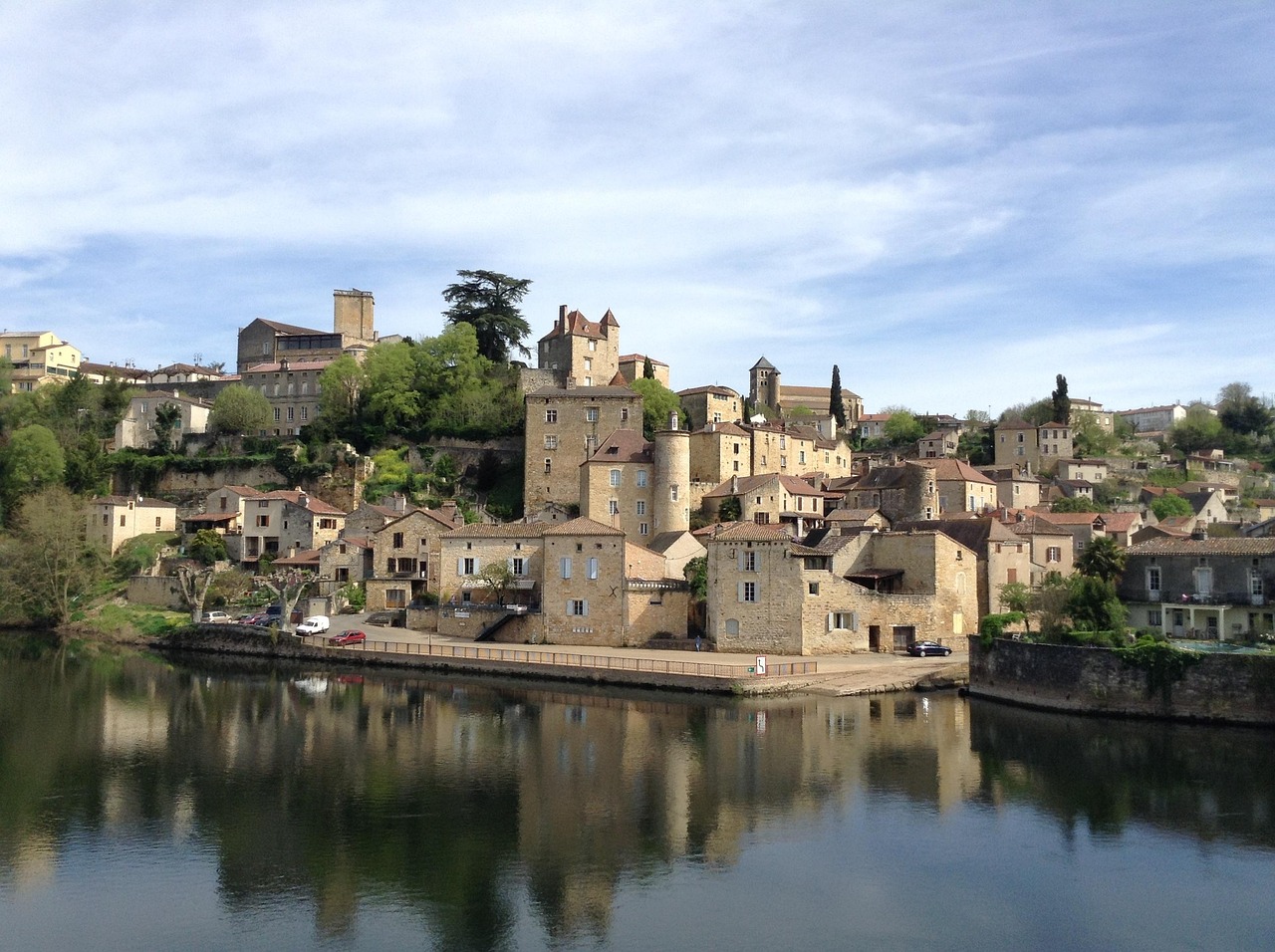
The Pays d’Auge looks like a postcard that someone has folded once too often: gentle hills, hedgerows, half-timbered farmhouses with tiled roofs and cows grazing right up to the roadside fence. In autumn the apples lie beneath the standard trees, the air smells of must and damp grass, and from the farm cellars comes the sweet scent of Calvados resting in oak barrels. Behind the sliding door the scene changes every twenty kilometres: first cheese dairies and markets inland, then the wide light of the coast, where at low tide the beach at Cabourg stretches to the horizon and the clay cliffs of the Vaches Noires stand dark above the sand. This loop calls for a relaxed pace: narrow country roads, short stages, farm visits with a tasting, and a look at the tide table before you head to the beach.
Stage-by-stage plan
1Stage 1: Honfleur to Lisieux (approx. 45 km)
- The drive
- Honfleur itself is only a short opener – the harbour, the Vieux Bassin and the coast further west and east are covered in the CampingSpirit guide to the Normandy coast, “Chalk cliffs, cider and quiet beaches – by motorhome along the Normandy coast to Mont-Saint-Michel”. From Honfleur you head inland on the well-built D579 via Pont-l’Évêque to Lisieux. The road is wide enough for motorhomes; Pont-l’Évêque and Lisieux have town traffic with roundabouts. Driving time is about one hour.
- Highlights & must-sees
- Honfleur: the Vieux Bassin and the wooden church of Sainte-Catherine, best seen in an hour early in the morning before the coaches arrive.
- Pont-l’Évêque: the town that gave the cheese its name, with half-timbered houses in the centre; stop at a cheese specialist for Pont-l’Évêque cheese.
- Lisieux: the Basilica of Sainte-Thérèse above the town, a large 20th-century pilgrimage church with parking for coaches.
- CampingSpirit overnight tip
-
Official campsite or RV park: In Lisieux you will find the Camping de la Vallée (Rue de la Vallée, with motorhome pitches according to the tourist office, season roughly spring to October). There are also the small private Aire du Bowling and the municipal aire in Lisieux-Hauteville. Check facilities, season and access in advance; in high summer and on public holidays the sites fill up quickly.
Free camping or nature tip (where legal): In France motorhomes may park wherever parking is allowed – setting up a table, chairs, awning and levelling jacks counts as camping and is prohibited outside designated sites. Around the basilica and in the historic centre of Lisieux, parking rules and in places height restrictions apply. Staying overnight in the town is not usual and may be banned by municipal bylaw.
- Insider tip for campers
- Do not drive the motorhome into the old towns of Honfleur and Pont-l’Évêque; use the large car parks on the edge instead. The A13 near Pont-l’Évêque and Lisieux is toll-based with free flow – if you use it, pay online by licence plate within 72 hours, otherwise there is a €90 surcharge. On the D579 you drive without a toll.
2Stage 2: Lisieux to Beuvron-en-Auge (via Cambremer) (approx. 40 km)
- The drive
- From Lisieux on departmental roads north-west through the heart of the Route du Cidre: via Saint-Désir and Cambremer to Beuvron-en-Auge. Narrow, winding D roads with hedges at the edge of the carriageway, and repeated sunken lanes where two wide vehicles can only pass each other at walking pace. Driving time is a good hour and a half; with farm visits, allow half a day.
- Highlights & must-sees
- Cambremer: a village with cider farms, the starting point of the Route du Cidre.
- Farm cellars with tastings: cider, pommeau, perry and Calvados straight from the producer – usually with a short farm tour.
- Beuvron-en-Auge: one of the “Plus beaux villages de France”, with half-timbered houses around the market hall.
- CampingSpirit overnight tip
-
Official campsite or RV park: Beuvron-en-Auge has a municipal aire de camping-cars right by the village, a few minutes’ walk from the market hall; Cambremer also has a small municipal aire (Place de l’Europe, water, waste disposal, electricity for coins). Facilities are basic, so check service points and electricity in advance. If you want peace in the countryside, you will find camping à la ferme and small aires naturelles in the area.
Free camping or nature tip (where legal): Through the France Passion network, motorhomes can stay free of charge overnight at some farms in the area (membership required, buying farm products is customary). In the village centre of Beuvron and on farm tracks free camping is not allowed; the land between the pastures is private property.
- Insider tip for campers
- Reverse into farm entrances before you taste, and decide on the driver beforehand – the limit in France is 0.5 per mille. On the sunken lanes of the Route du Cidre, follow the signs rather than the satnav: where you see “Impasse” or a height gantry, turn off. Farm shops often close for lunch between 12 and 2 pm.
3Stage 3: Beuvron-en-Auge to Pont-l’Évêque (via Bonnebosq and Beaufour-Druval) (approx. 45 km)
- The drive
- Onwards through the northern Pays d’Auge to Bonnebosq and Beaufour-Druval, then down into the Touques valley to Pont-l’Évêque. The roads are as narrow as the day before, but somewhat more open; there are many turnings to farms. About an hour and a half of pure driving time.
- Highlights & must-sees
- Bonnebosq: a small village on the Route du Cidre with several farm producers.
- Beaufour-Druval: a hill village on the Route du Cidre with cider and Calvados producers and wide views over the orchards.
- Pont-l’Évêque: a Calvados distillery with tours (Calvados Père Magloire l’Expérience) and cheese from a specialist shop in the centre.
- CampingSpirit overnight tip
-
Official campsite or RV park: The Camping du Lac Terre d’Auge is near Pont-l’Évêque (about two kilometres south-east of the centre) by a lake; check facilities and season in advance. In Pont-l’Évêque itself the tourist office lists no motorhome aire. Alternatively, farms in the area offer camping à la ferme. The Camping les Haras de Deauville is about ten kilometres away towards the coast.
Free camping or nature tip (where legal): Parking is allowed in the car parks of Pont-l’Évêque, but overnight stays are often not expressly regulated; there may be signs banning motorhomes on the edges of town. The safest options are a spot on a farm (France Passion) or a campsite.
- Insider tip for campers
- Buy Pont-l’Évêque cheese (AOP) from the producer or a cheese specialist and store it in the fridge in its original box – it is soft and smells strong. Wrap it airtight in the motorhome, otherwise the smell lingers for days. Take care of filling and emptying before you move on; smaller villages follow along the route.
4Stage 4: Pont-l’Évêque to Vimoutiers (via Livarot and Camembert) (approx. 70 km)
- The drive
- From Pont-l’Évêque south via Lisieux and through the Vie valley to Livarot, then on along the D579 and minor roads to Vimoutiers; a detour leads to Camembert (Orne). A mix of main road and narrow bends with valley and hill driving, a good hour and a half of driving time plus sightseeing. On the minor roads to Camembert, allow for oncoming traffic and tractors.
- Highlights & must-sees
- Livarot: a cheese village with a dairy where you can watch Livarot being made (the “Colonel”, with its rush bands); ask about visiting times in advance.
- Camembert: the village in the Orne that gave the cheese its name, with the Maison du Camembert (museum on the history of the cheese, dairy viewing through glass windows, tasting and shop).
- Vimoutiers: a monument to Marie Harel, to whom the invention of Camembert is attributed, with a market and walking trails.
- CampingSpirit overnight tip
-
Official campsite or RV park: In Vimoutiers the Camping La Campière lies on the Boulevard du Docteur Dentu, close to the centre, with an aire de service for motorhomes next to it. Livarot also has a campsite with motorhome pitches (April to September according to the tourist office). Check season and access in advance.
Free camping or nature tip (where legal): In the Orne and in Calvados the same rules apply: parking yes, camping no. Around the dairies the car parks are mostly reserved for visitors; staying there overnight is not intended.
- Insider tip for campers
- Opening hours at the dairies vary by season (often a lunch break); ask by phone in advance about tours. In Camembert there are only a few parking spaces – if in doubt, park in Vimoutiers and cover the few kilometres by bike or with a second vehicle. A high-visibility vest and warning triangle are compulsory in France.
5Stage 5: Vimoutiers to Saint-Pierre-sur-Dives (approx. 40 km)
- The drive
- From Vimoutiers north-west along quiet country roads to Saint-Pierre-sur-Dives. Open hill country with meadows and little traffic; the road is easy to drive throughout. About one hour of driving time.
- Highlights & must-sees
- Saint-Pierre-sur-Dives: a medieval market hall with a timber roof frame, the abbey church next to it – a town centre with a cheese trade.
- Dairies in the area: Livarot, Pont-l’Évêque and Camembert are made in this region; farm shops and specialist shops in the town sell them.
- A stroll along the Dives and through the old town.
- CampingSpirit overnight tip
-
Official campsite or RV park: In the centre, on the Place du Marché next to the hall, there is a municipal aire for motorhomes (water and waste disposal free of charge); simple campsites can be found in the surrounding area. Check facilities and rules on site.
Free camping or nature tip (where legal): Around the market hall, expect closures and a shortage of space on market day; follow the signs. Otherwise parking is allowed, camping is not.
- Insider tip for campers
- The big weekly market under the hall in Saint-Pierre-sur-Dives takes place on Monday mornings; if you want to see it, arrive the evening before and move early on market day. You can pick up fresh fruit, cheese and bread straight from the stallholder.
6Stage 6: Saint-Pierre-sur-Dives to Houlgate (via Cabourg) (approx. 55 km)
- The drive
- From Saint-Pierre-sur-Dives north through the Dives valleys to Cabourg and on along the coast to Houlgate. Country roads at first, then the coastal road D513 with villages, roundabouts and, in summer, slow traffic. About an hour and a half.
- Highlights & must-sees
- Cabourg: the Promenade Marcel Proust and the long sandy beach with a wide tidal flat.
- Dives-sur-Mer: a half-timbered market hall and harbour, a quieter alternative to Cabourg.
- Houlgate: a seafront promenade and Belle Époque villas; starting point for walks to the Vaches Noires.
- CampingSpirit overnight tip
-
Official campsite or RV park: In Merville-Franceville-Plage, a few kilometres west of Cabourg, there are campsites such as Les Peupliers and Camping Oasis; in Cabourg itself there is, among others, the Oasis de Cabourg. OpenStreetMap also lists motorhome stopovers in Cabourg and Dives-sur-Mer; check facilities and access in advance. In Houlgate you will find the Camping Les Falaises; in summer, book early.
Free camping or nature tip (where legal): On the Côte Fleurie, beach car parks and promenades are often regulated: height barriers at beach access roads, local parking rules and checks in summer are possible. Overnighting on the beach and in the dunes is prohibited.
- Insider tip for campers
- Mind the tides: the tidal range on the Côte Fleurie is several metres, and the water comes in fast. Only start beach walks on a falling tide and check the tide table (horaires des marées) beforehand. Park at the beach only in designated spaces with sufficient height clearance.
7Stage 7: Houlgate to Deauville / Trouville-sur-Mer (via Villers-sur-Mer) (approx. 30 km)
- The drive
- From Houlgate along the coastal road D513 to Villers-sur-Mer and on via Bénerville to Deauville and Trouville-sur-Mer. Well built but busy in season; in Deauville and Trouville there are numerous traffic lights and roundabouts. Just under an hour of driving time.
- Highlights & must-sees
- Falaises des Vaches Noires: clay cliffs with fossils between Houlgate and Villers-sur-Mer; walk at the foot of the cliffs only at low tide. Fossils may be observed but not collected or removed from the cliff face.
- Villers-sur-Mer: a seafront promenade and the Paléospace, a museum of earth history and the fossils of the coast.
- Deauville and Trouville: the Planches and fish market, casino and Belle Époque villas.
- CampingSpirit overnight tip
-
Official campsite or RV park: In Villers-sur-Mer there is the Aire Camping-cars Villers-sur-Mer on the coast, as well as campsites such as Camping de la Plage. Near Deauville is the Camping les Haras de Deauville.
Free camping or nature tip (where legal): In Deauville and Trouville, municipal bylaws may restrict motorhome parking in the town centre and along the promenades; height restrictions are common. You can find out which rules currently apply from the Mairie or the Office de Tourisme; if in doubt, use the designated spaces on the edge of town and campsites.
- Insider tip for campers
- The racecourses in and around Deauville shape the summer: during race and auction weeks the town is full and pitches fill up quickly; check dates with the organiser. For the Falaises des Vaches Noires the rule is: never rest at the foot of the cliffs, landslides can happen at any time, and the incoming tide cuts off the path.
Camping practice & local rules
Wild camping & overnight parking
- French law allows motorhomes to park wherever parking is allowed, including overnight and for up to seven days in the same place – as long as no municipal bylaw says otherwise. Camping behaviour such as using levelling jacks, awning, table and chairs, or draining grey water is prohibited outside campsites and aires.
- On the Côte Fleurie and in the coastal towns, many car parks have height barriers or prohibition signs; in Deauville and Trouville, local bylaws may restrict motorhome parking in the town centre. Blanket bans across a whole municipality are legally open to challenge, but in practice you should follow the signs, because they are enforced.
- Wild camping is prohibited in Sites classés, within 500 metres of Monuments historiques, at drinking-water sources and on the seashore. The beaches and dunes of the Côte Fleurie are off limits for overnight stays.
- Inland, the France Passion network helps with overnight stays on farms; also use apps such as park4night and Campercontact and read current reviews.
Waste disposal & supplies
- Filling and emptying facilities (fresh water, waste water, chemical toilet) are available at municipal aires and at most campsites; municipal aires can be found in Cambremer, Beuvron-en-Auge, Saint-Pierre-sur-Dives and Villers-sur-Mer, among others, and an aire de service in Vimoutiers. Check facilities and season in advance.
- The Camping-Car Park network runs sites in the region, for example near Honfleur; access is usually with the network’s card.
- Gas: French exchange cylinders (butane/propane) are available everywhere; foreign cylinders are not exchanged. LPG pumps are thin on the ground in the region, and an adapter (Dish/Euronozzle) may be needed.
Vehicle size & traffic rules
- Speed limits: motorhomes and combinations up to 3.5 t as for cars (130 on motorways, 110 on expressways, 80 or 90 where signposted, 50 in built-up areas; in rain 110/100/80). Motorhomes over 3.5 t up to 12 t: motorway 110, expressways 100, other roads 80, built-up areas 50, with a speed disc on the rear. Combinations over 3.5 t: 90 on motorways and expressways, 80 on other roads.
- Blind-spot stickers (“angles morts”) are compulsory for vehicles over 3.5 t, including motorhomes; fine €135.
- Tolls: the A13 and A14 are free flow – payment online by licence plate within 72 hours, otherwise a €90 surcharge. Péage class 2 applies to vehicles over 2 m and under 3 m in height, up to 3.5 t.
- Low-emission zones: the Crit’Air sticker also applies to foreign vehicles. No ZFE are known on the route; for detours to Caen or other cities, check with the Métropole beforehand.
- Carry a high-visibility vest (compulsory for the driver) and a warning triangle. The alcohol limit is 0.5 per mille; using a mobile phone at the wheel is prohibited.
CampingSpirit packing & preparation checklist
- A tide table as an app or a notice – essential for the tidal beaches and the walk along the Vaches Noires.
- Wellies or waterproof walking boots for clay soil and farm tracks after rain.
- A cool box or a fridge compartment with a seal for Camembert, Livarot and Pont-l’Évêque, so the smell does not stay in the vehicle.
- A walking stick and a windproof jacket for the coast: the wind blows hard even in summer.
- Wheel chocks for sloping farm pitches; fold in the wing mirrors for the narrow sunken lanes if necessary.
As of 2026-10. Closures, fees and booking rules change: check official sources before you go.