


In-depth guide · CampingSpirit
From Chantilly via Compiègne, the First World War heights and the cathedral hill of Laon into the Thiérache and back to Noyon: around 535 kilometres through quiet Picardy, which begins at the gates of Paris yet feels like deep provinces.
The spirit of the route
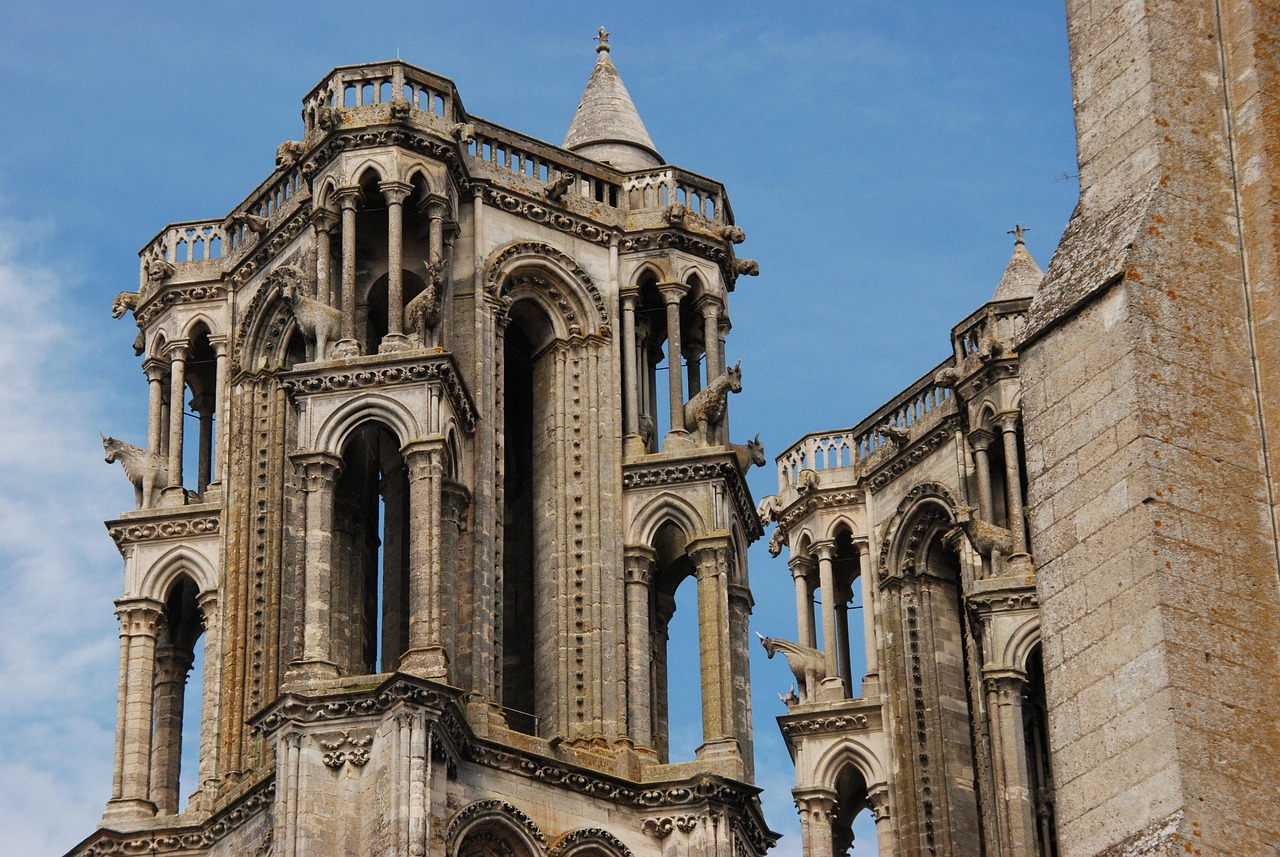
Just an hour beyond the Périphérique, things go quiet. The Oise flows between poplars, beech forests where kings once hunted close over the road, and behind every rise a tower appears: château, abbey, cathedral. From the sliding door you see mist over the ponds of Compiègne in the morning, and in the evening the oxen on the towers of Laon against the sky. In between lies the Chemin des Dames, a ridge where tens of thousands died in 1917 and where larks now sing over beet fields – a stretch you drive more slowly. Further north the land turns greener, hedges frame pastures, brick churches with arrow slits stand in the villages of the Thiérache, and there is a smell of Maroilles. This route thrives on short stages, small municipal aires and a willingness to stop more than you drive.
Stage-by-stage plan
1Stage 1: Paris to Chantilly (Saint-Leu-d’Esserent) (approx. 50 km)
- The drive
- Paris is only the starting point: take the A1 north, past Charles de Gaulle Airport, and leave at the Survilliers/Chantilly exit; the section up to here is toll-free, the Sanef toll station at Chamant lies further north near Senlis. Follow departmental roads through the Forest of Chantilly into town and on into the Oise valley to Saint-Leu-d’Esserent. One hour depending on traffic, considerably more at rush hour; if you start in the Greater Paris area, you must observe the low-emission zone (see country practicalities).
- Highlights & must-sees
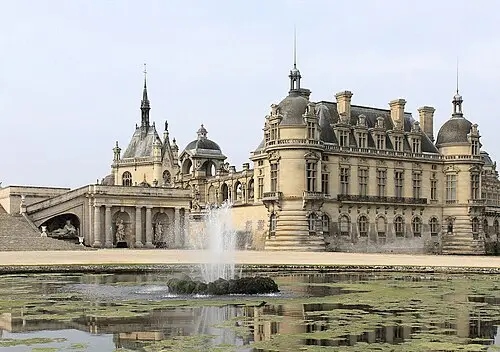
- Château de Chantilly with the Musée Condé: the Duke of Aumale’s painting collection, after the Louvre one of the most important collections of old master paintings in France, plus the park laid out by Le Nôtre with its Grand Canal.
- Grandes Écuries: the 18th-century stables, built for a Prince of Condé who, legend has it, believed he would be reincarnated as a horse – today home to the Musée du Cheval and equestrian shows.
- The church of Saint-Leu-d’Esserent, an early Gothic building high above the Oise, lovely in the evening from the towpath.
- CampingSpirit overnight tip
-
Official campsite or RV park: Camping Campix in Saint-Leu-d’Esserent, around ten minutes from Chantilly: laid out in a former quarry, terraced and tree-lined, with electric hook-ups and sanitary facilities. There are other campsites in the area, such as Le Pré des Moines. Check opening seasons and access for large vehicles in advance – some of the terraces are steep.
Free camping or nature tip (where legal): Around Chantilly, the château, stables and large parts of the forest are protected (Monument historique, Site classé) – spending the night in the car parks by the château or on forest tracks is not an option. During the day, park in the large parking areas by the château; observe the areas marked for motorhomes on site.
- Insider tip for campers
- Fill up before leaving the Greater Paris area: the hypermarkets north of the city are cheaper than the motorway service stations. On major race days at the Chantilly racecourse, especially in June, roads and car parks are overcrowded – visit the château on another day then. You can try crème Chantilly in the restaurants at the château and in the stables.
2Stage 2: Saint-Leu-d’Esserent to Pierrefonds via Senlis and Ermenonville (approx. 70 km)
- The drive
- Via Chantilly to Senlis, then on departmental roads through woodland to Ermenonville and on via Crépy-en-Valois and Morienval to the southern edge of the Forest of Compiègne at Pierrefonds. Quiet, well-surfaced country roads, narrow and cobbled in the old towns of Senlis and Crépy. Just under 1.5 hours of pure driving time.
- Highlights & must-sees
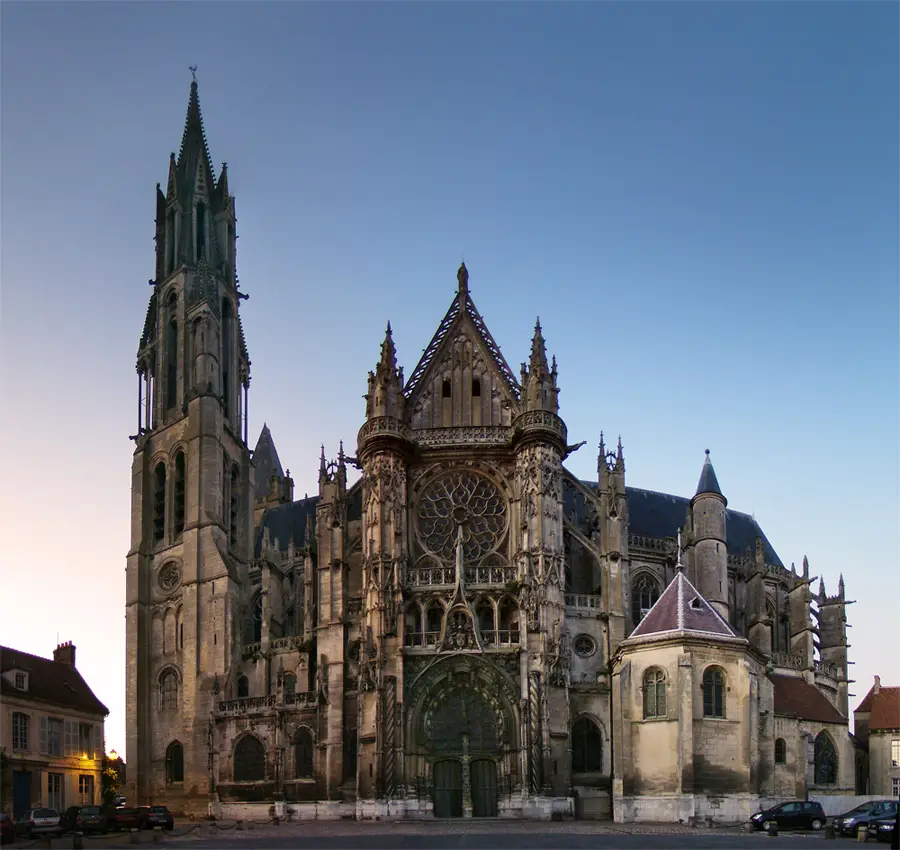
- Senlis: the well-preserved old town with its Gallo-Roman wall and the early Gothic Cathedral of Notre-Dame, begun in the mid-12th century; Hugh Capet was elected king in Senlis in 987.
- Parc Jean-Jacques Rousseau in Ermenonville: an 18th-century landscape garden where Rousseau died in 1778; his tomb on the Isle of Poplars has survived, even after his remains were moved to the Panthéon in 1794. An hour is enough.
- Abbey church of Morienval: a Romanesque building with one of the earliest rib vaults in France, in the ambulatory.
- CampingSpirit overnight tip
-
Official campsite or RV park: Camping Cœur de la Forêt in Pierrefonds, near the village on the edge of the forest, with electric hook-ups and sanitary facilities; ask about the season and pitch sizes in advance. Alternative with water and waste services: the Aire de camping-cars in Morienval, a few kilometres south, with around two dozen spaces.
Free camping or nature tip (where legal): The castle of Pierrefonds and the old town of Senlis are Monuments historiques; camping is prohibited within a 500-metre radius, and the state forest of Compiègne (forêt domaniale) is no place to spend the night – the ONF walkers’ car parks are for day visits. Between the forest and the villages, the official sites are entirely sufficient.
- Insider tip for campers
- Don’t drive into the old town of Senlis: the lanes are narrow and winding, so park on the boulevards at the edge. Crépy-en-Valois has supermarkets for shopping before the forest, as Pierrefonds itself is small.
3Stage 3: Pierrefonds to Soissons via Compiègne and Rethondes (approx. 60 km)
- The drive
- Straight through the Forest of Compiègne on dead-straight avenues to Compiègne, then east along the Aisne to the Rethondes clearing and on via the N31, partly dual carriageway, through the Aisne valley to Soissons. A good hour’s driving; the forest roads sometimes have cyclists and riders.
- Highlights & must-sees
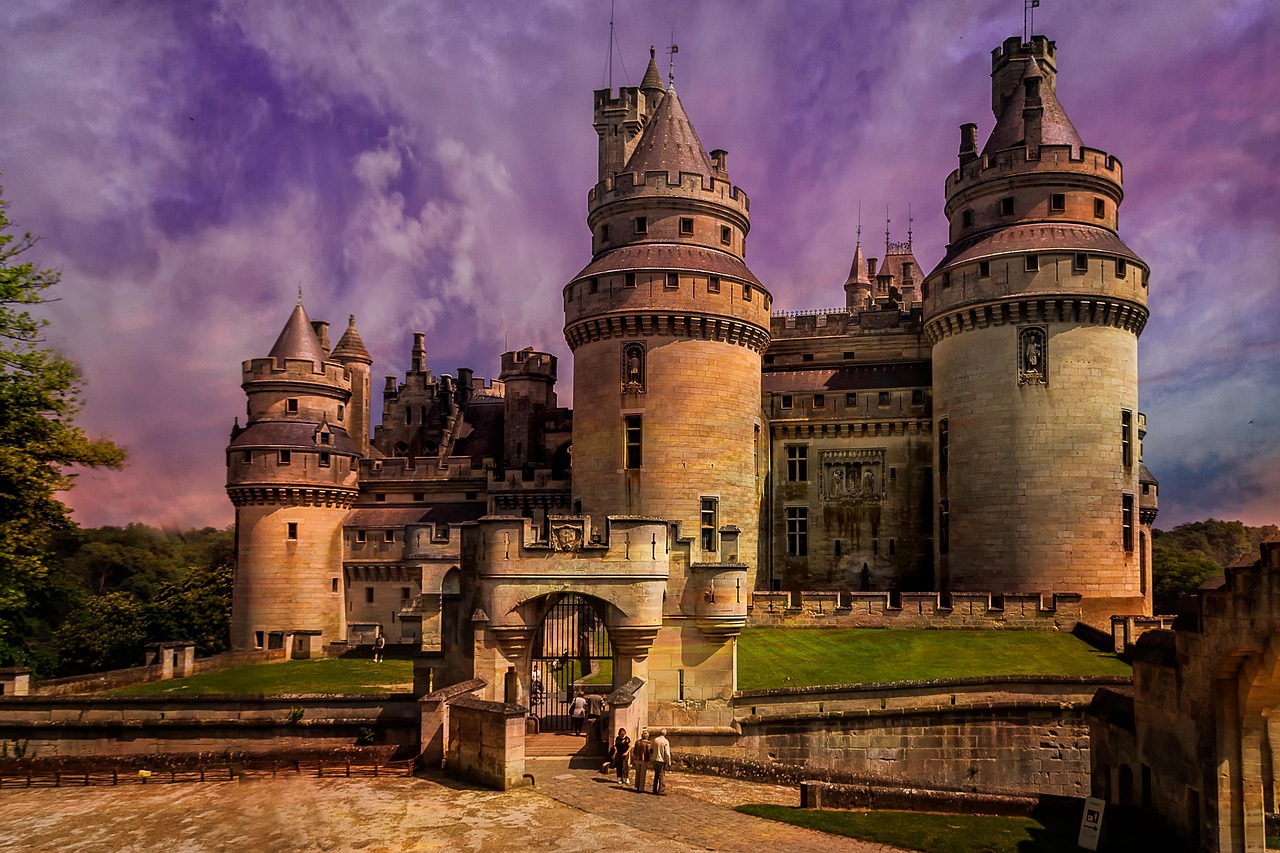
- Château de Pierrefonds: built around 1400 for Louis of Orléans, rebuilt from 1857 for Napoleon III by Eugène Viollet-le-Duc as an idealised image of a medieval castle – best photographed from the lake below.
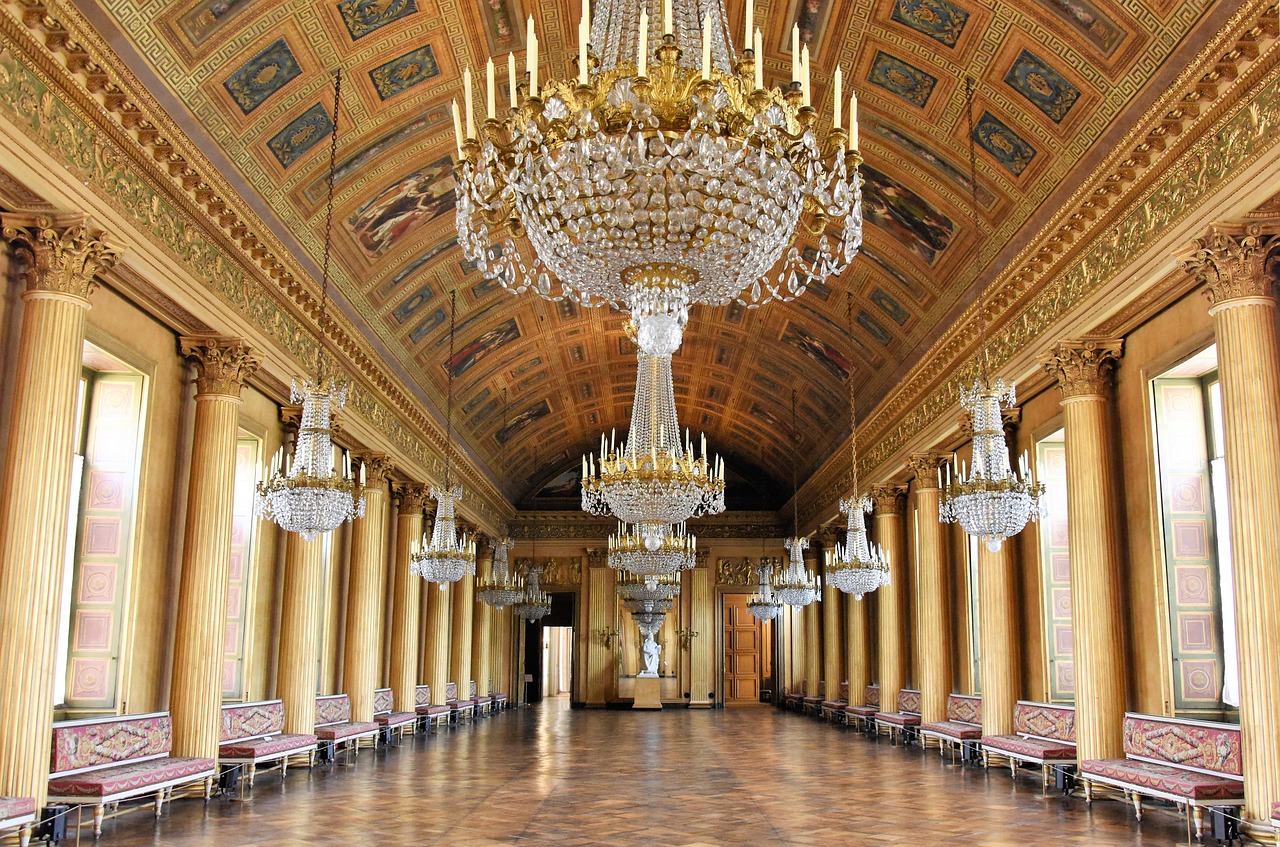
- Palais de Compiègne: residence of the French kings and of both emperors, with the apartments of Napoleon III and the Musée national de la Voiture; in the old town, the statue of Joan of Arc recalls that she was captured outside Compiègne in 1430.
- Clairière de l’Armistice near Rethondes: the clearing where the Armistice was signed on 11 November 1918 and the Franco-German armistice on 22 June 1940; the museum houses a carriage of the same series as the original carriage destroyed in 1945.
- CampingSpirit overnight tip
-
Official campsite or RV park: Camping municipal Le Mail in Soissons, on the Aisne within walking distance of the centre: electric hook-ups, sanitary facilities, water and waste services, open in season. On the way, the Aire de camping-cars in Berneuil-sur-Aisne, with water and waste services, makes a good intermediate stop.
Free camping or nature tip (where legal): The Rethondes clearing is a memorial site; the car park is for visits, not overnight stays. Compiègne itself has no campsite in town; for city visits, use the large car parks on the edge of the centre – check current motorhome rules on Campercontact or park4night.
- Insider tip for campers
- Explore the old town of Compiègne with the palace on foot; the palace park has a kilometre-long arbour walk and merges seamlessly into the forest. The forest has a dense network of cycle paths and paved forest roads closed to cars – bicycles are worth it here like almost nowhere else on the route.
4Stage 4: Soissons to Laon via the Chemin des Dames (approx. 75 km)
- The drive
- From Soissons up onto the ridge between the Aisne and the Ailette and along the D18CD, the Chemin des Dames, for around 30 kilometres east via Cerny-en-Laonnois to the Caverne du Dragon and Craonne; then down to the north and via departmental roads to Laon. The ridge road is narrow but easy to drive, with many lay-bys at the memorial sites. Just under 1.5 hours without stops; plan it as a day’s programme.
- Highlights & must-sees
- Caverne du Dragon near Oulches-la-Vallée-Foulon: an old quarry beneath the ridge, fought over by German and French troops in the First World War, today the museum of the Chemin des Dames – guided tours only, cool inside.
- Cerny-en-Laonnois: a French national cemetery and a German war cemetery side by side, plus the memorial chapel; please keep quiet and keep your distance from the graves.
- Craonne: the old village destroyed in 1917, today an arboretum among the craters, above it the Plateau de Californie with views over the plain; the “Chanson de Craonne” tells of the mutinies after the Nivelle Offensive of April 1917.
- CampingSpirit overnight tip
-
Official campsite or RV park: Camping municipal La Chênaie on the western edge of Laon, quietly located by a pond, with electric hook-ups and sanitary facilities; check opening seasons in advance. In the upper town, on the Promenade de la Couloire, there is a small car park for a few motorhomes up to about 7 metres, without water and waste services, a few minutes’ walk from the cathedral; another motorhome car park is in the lower town on Rue du Maréchal Juin.
Free camping or nature tip (where legal): Along the Chemin des Dames, cemeteries, memorials and their car parks are places of remembrance – don’t spend the night there, don’t picnic in the burial grounds, no music. The small Aire municipale in Corbeny at the eastern end of the ridge is a legal alternative if you want to spend the evening above the battlefield; spaces are limited.
- Insider tip for campers
- Drive the Chemin des Dames from west to east, the way the offensive ran; for the Caverne du Dragon, check tour times in advance and arrive early in the holidays – groups are often about. Take a jacket: even in high summer it is only around 12 degrees in the quarry. With large vehicles, avoid the narrow village through-roads in the valleys and stay on the ridge.
5Stage 5: Laon to Coucy-le-Château (approx. 40 km)
- The drive
- A morning in the upper town of Laon, then west through the forests of Saint-Gobain, past Prémontré Abbey, to Coucy-le-Château-Auffrique. A short stage on quiet, winding forest roads, a good 45 minutes’ driving.
- Highlights & must-sees
- Cathedral of Notre-Dame de Laon, one of the earliest great Gothic cathedrals: 16 stone oxen stand on its towers, according to tradition in gratitude to the animals that hauled the stones up the hill – binoculars are worth it.
- A walk on the ramparts of the upper town, with town gates such as the Porte d’Ardon and wide views over the plain as far as the Chemin des Dames; plus the 12th-century Templar chapel.
- Ruins of Coucy castle: once the mightiest keep in medieval Europe, it was blown up by the German army in 1917; the curtain wall, towers and town fortifications with the Porte de Laon survive.
- CampingSpirit overnight tip
-
Official campsite or RV park: The Aire de camping-cars of the municipality of Coucy-le-Château-Auffrique, with a good ten spaces, a few minutes from the ruins; check fees, electricity and services on the municipality’s website or on site. Fallback option: the Aire “Le Port en Forêt” in Saint-Gobain, with water and waste services.
Free camping or nature tip (where legal): The upper town of Laon and Coucy castle are Monuments historiques, and camping is prohibited within a 500-metre radius; the Forest of Saint-Gobain is a state forest, so don’t park there overnight. The aires in Coucy and Saint-Gobain make wild camping unnecessary.
- Insider tip for campers
- The Poma automated cable car that once linked the station with the upper town has been closed since 2016 – if you park below, take the steps or the bus. In a motorhome, approach the upper town only via the signposted ramps, not through the lanes; the town gate in Coucy is narrow, and large vehicles are better off staying below.
6Stage 6: Coucy-le-Château to Guise via Saint-Quentin (approx. 75 km)
- The drive
- Via La Fère up the Oise valley to Saint-Quentin, then east across open upland into the upper Oise valley to Guise. Wide country roads through beet country, with town traffic only in Saint-Quentin. About 1.5 hours’ driving.
- Highlights & must-sees
- Basilica of Saint-Quentin, one of the largest Gothic buildings in northern France, with a labyrinth in the nave floor; next to it, the late Gothic town hall with its carillon on the Grand-Place.
- Musée Antoine-Lécuyer with the pastel portraits of Maurice-Quentin de La Tour, the 18th-century portraitist born in Saint-Quentin; check opening times and how the collection is displayed in advance.
- Familistère de Guise: from 1859, the stove manufacturer Jean-Baptiste André Godin built a “social palace” next to his factory, with flats, a school, a theatre and a bathhouse for his workers – today a large museum that fills half a day.
- CampingSpirit overnight tip
-
Official campsite or RV park: Camping de la Vallée de l’Oise in Guise, a small site in the valley below the castle and within walking distance of the Familistère; ask about electricity and the season in advance. Saint-Quentin has the Camping municipal on the canal and the Aire du Saint-Quentinois with water and waste services.
Free camping or nature tip (where legal): Saint-Quentin and Guise offer official sites; overnight stays in the car parks by the Familistère or the basilica are not intended. In the countryside between the towns, single vehicles on village squares are usually tolerated, provided there is no sign to the contrary and no camping behaviour is visible.
- Insider tip for campers
- If you are interested in canals, make a detour from Saint-Quentin to Riqueval: there the Canal de Saint-Quentin disappears into a tunnel more than five kilometres long, through which boats are pulled by an electric chain tug; the aire at Riqueval has water and waste services. In Saint-Quentin, avoid the centre with your motorhome and park on the edge.
7Stage 7: Guise to Parfondeval (Thiérache) (approx. 60 km)
- The drive
- A loop through the Thiérache: from Guise up the Oise valley, then on narrow country roads from village to village to Vervins and on south-east via Plomion to Parfondeval. Hilly hedgerow country, with many narrow village through-roads. With stops at the churches a whole day; pure driving time a good hour.
- Highlights & must-sees
- The fortified churches of the Thiérache: brick buildings with defensive towers, arrow slits and refuge rooms from the wars of the 16th and 17th centuries – easily accessible ones include Plomion, Burelles and Prisces.
- Jeantes, with the murals by Charles Eyck from the 1960s inside the fortified church.
- Parfondeval, one of the “Plus Beaux Villages de France”: brick and half-timbered farmsteads around the fortified church, surrounded by cows in the evening.
- CampingSpirit overnight tip
-
Official campsite or RV park: The small campsite in Parfondeval with sanitary facilities; check facilities and season in advance. With water and waste services: the Aire de camping-car in Rozoy-sur-Serre, a few kilometres south. In Vervins, the municipality tolerates motorhome parking on Place Sohier – without camping behaviour; check on site whether the water and waste services there are working.
Free camping or nature tip (where legal): The Thiérache is one of the most relaxed areas on the route: parking overnight on village squares and farm tracks is rarely checked, but wild camping in the true sense remains prohibited, and the churches are Monuments historiques. Ask farmers – many farms in the Thiérache welcome motorhomes through France Passion.
- Insider tip for campers
- The Thiérache is the home of Maroilles; you can buy it direct on farms and in village shops, along with local cider. Many churches are only accessible at certain times or with a key from the town hall – the tourist office in Vervins has details. Fill up and shop in Vervins or Hirson; there are hardly any filling stations in the villages.
8Stage 8: Parfondeval to Noyon (approx. 105 km)
- The drive
- Back west via Marle and through the Serre valley to La Fère, then via Chauny to Noyon. Wide, well-surfaced country roads, town traffic in Chauny. Around 1.5 hours’ driving – the longest stage, but without difficulties.
- Highlights & must-sees
- Cathedral of Notre-Dame de Noyon, a key building in the transition from Romanesque to Gothic, from the mid-12th century; Charlemagne was crowned king in Noyon in 768 and Hugh Capet in 987.
- Musée Jean Calvin on the site of his birthplace – the Reformer was born in Noyon in 1509.
- Marle, with its Gothic church and views over the Serre valley.
- CampingSpirit overnight tip
-
Official campsite or RV park: Camping L’Étang du Moulin, a few kilometres east of Noyon, small and quiet by a pond; check electric hook-ups and season in advance. If you are travelling on, Beauvais has an Aire de camping-cars with water and waste services close to town.
Free camping or nature tip (where legal): The 500-metre protection zone applies around Noyon cathedral; in town, only park in public car parks, don’t camp. For a simple overnight stop, the campsites in the surrounding area are the better choice.
- Insider tip for campers
- From Noyon it is around 70 kilometres to Beauvais, with the Cathedral of Saint-Pierre, whose choir is the tallest Gothic choir of all, and its astronomical clock. From there the way continues to the coast – the Opal Coast and the Bay of the Somme are covered in the CampingSpirit travel guide to the Opal Coast and Baie de Somme; to the east, the CampingSpirit travel guide to Champagne from Reims to the Côte des Bar picks up from Laon.
Camping practice & local rules
Wild camping & overnight parking
- Parking is not camping: a motorhome counts as a vehicle and may stand anywhere parking is permitted, including overnight and for a maximum of seven days in the same place, unless a municipal order (arrêté municipal) or a sign says otherwise. Levelling jacks, chocks, awning, table and chairs or emptying water count as camping and are only permitted on campsites and aires. Blanket bans covering an entire municipality are legally contestable, but you should still respect signs.
- Wild camping is prohibited in classified landscapes (Sites classés), within a 500-metre radius of Monuments historiques and near drinking water catchments. On this route that affects practically all the highlights: Chantilly, Senlis, Pierrefonds, Compiègne, the upper town of Laon, Coucy, the cathedrals of Soissons, Saint-Quentin and Noyon, and the fortified churches of the Thiérache.
- The large state forests (Chantilly, Compiègne, Saint-Gobain) are managed by the ONF; car parks there are for day visits, and camping in the forest is prohibited. Cemeteries and memorials on the Chemin des Dames and at Rethondes are not places to spend the night.
- The density of municipal aires is good in the Aisne, lower in the south of the Oise near Paris. France Passion arranges overnight stays with producers, especially in the Thiérache at Maroilles and cider farms (annual membership, call ahead). Apps: park4night, Campercontact, Caramaps; the tourism websites of the Oise and Aisne departments list aires and campsites.
Waste disposal & supplies
- You will find water and waste services in places including Morienval, Berneuil-sur-Aisne, Soissons (campsite), Saint-Gobain, Saint-Quentin, Riqueval, Rozoy-sur-Serre and Beauvais; many service points work with a bank card (AireServices) or tokens, and some aires belong to the Camping-Car Park network with its own access card.
- Simple village aires and plain car parks such as the one in the upper town of Laon have no services, and in Vervins provision is uncertain; the water supply at many aires is turned off in winter. Empty cassettes and grey water only at service points, never into drains or ditches.
- Drinking water from taps marked “eau potable”; at cemeteries you will often see “eau non potable”. In dry summers the prefectures can impose water restrictions, which also affect aires.
- Gas: French exchange cylinders (butane, propane) are available at filling stations and supermarkets; foreign cylinders are not exchanged. LPG pumps for filling refillable cylinders (Dish or Euronozzle adapter) are more likely at supermarkets in the larger towns such as Compiègne, Soissons, Laon or Saint-Quentin; fill up beforehand for the Thiérache.
Vehicle size & traffic rules
- Speed limits: motorhomes up to 3.5 t and car-trailer combinations up to 3.5 t gross combined weight drive like cars – 130 km/h on motorways, 110 on dual carriageways such as parts of the N2 and N31, 80 on country roads (90 where signposted), 50 in built-up areas, in rain 110/100/80. Motorhomes over 3.5 t up to 12 t: 110 on motorways, 100 on dual carriageways, 80 on all other roads, even where cars may do 90, with a speed limit disc on the rear. Combinations over 3.5 t: 90 on motorways and dual carriageways, 80 on other roads.
- Paris low-emission zone: on 21 May 2026 the Conseil constitutionnel struck down the nationwide abolition of the ZFE, so the zones remain in place. The Greater Paris ZFE (Paris and the municipalities inside the A86, the A86 itself excepted) excludes not only vehicles without a sticker but also Crit’Air 5, 4 and 3 – for cars and light vehicles Monday to Friday from 8 am to 8 pm except on public holidays, for buses and lorries daily; check in advance which of the two rules applies to a motorhome over 3.5 t. Every vehicle needs the Crit’Air sticker, including those with foreign plates – order it only via the official website certificat-air.gouv.fr. Older diesel motorhomes are best advised to give Paris a wide berth and join the route north of the A86; check times and exemptions with the Métropole du Grand Paris before travelling. There is no low-emission zone on the route itself. If you are continuing to Reims: the ZFE in the city centre there excludes Crit’Air 4, 5 and vehicles without a sticker around the clock.
- Tolls: the A1 Paris–Lille and the A26 (Calais–Saint-Quentin–Laon–Reims) are Sanef toll motorways with toll stations; the route itself runs largely on toll-free national and departmental roads. Classes: class 2 for vehicles up to 3.5 t over 2 and under 3 metres high, class 3 for two-axle vehicles from 3 metres high or over 3.5 t, class 4 for three or more axles over 3.5 t or from 3 metres. If you are coming from Normandy: the A13 and A14 are “Flux libre” without barriers – pay online by number plate within 72 hours, otherwise a flat surcharge of €90 applies.
- Vehicles over 3.5 t, explicitly including motorhomes, need “Angles morts” (blind spot) stickers on the sides and rear; not having them costs €135. A high-visibility vest for the driver is compulsory and must be within reach, and a warning triangle must be on board.
- Blood alcohol limit 0.5, 0.2 for novice drivers; mobile phones and headphones at the wheel are prohibited. A bike rack must not obscure the number plate or lights; otherwise use a light board with a repeater plate.
CampingSpirit packing & preparation checklist
- Crit’Air sticker, ordered in good time via certificat-air.gouv.fr – without it, even the approach via Paris is a risk.
- Bicycles: the forests of Compiègne and Chantilly have long, car-free forest roads, and towpaths run along the Oise and the Saint-Quentin canal.
- A warm jacket and sturdy shoes for the guided tour of the Caverne du Dragon and the memorial sites on the Chemin des Dames, where it is windy even in summer.
- Binoculars for the oxen on the towers of Laon, the cathedral sculptures and the defensive towers of the Thiérache churches.
- Chip-and-PIN bank card for toll stations and service points – foreign credit cards without a PIN fail at some machines.
- Cool box or a well-chilled compartment for Maroilles and Brie: the cheese of the Thiérache has a strong smell and needs to be well wrapped.
As of 2026-10. Closures, fees and booking rules change: check official sources before you go.