


In-depth guide · CampingSpirit
Around 580 km from Riga through the Ķemeri bog, the Abava valley and the old town of Kuldīga to the open Baltic, over gravel to Cape Kolka, where two seas meet, and back along the Gulf of Riga.
The spirit of the route
Courland is the Latvia of long forest roads. Beyond Tukums the villages get smaller, the pines taller, and at some point the asphalt ends and the drive continues on pale gravel that throws up a plume of dust behind the camper. On the west coast, sandy cliffs break away towards the beach. Lighthouses stand in clearings the sea gave up long ago, and in the Livonian villages nets hang on grey wooden sheds. In the morning, on the boardwalks in the bog, you hear nothing but cranes and the creak of the planks; in the evening you sit at a forestry-service fire pit with no other vehicle in sight. At Cape Kolka the Baltic Sea and the Gulf of Riga run together in a single line of surf, and in spring and autumn tens of thousands of birds pass overhead. Through the sliding door you see forest, dune grass, water. A route for people who want quiet and accept that the next dump station is half a day away.
Stage-by-stage plan
1Stage 1: Rīga to Kandava via Ķemeri and Tukums (approx. 105 km)
- The drive
- Out of Riga on the A10 (E22) towards Ventspils, four lanes and slow in rush hour. Turn off at Ķemeri into the national park, then continue on the A10 to Tukums and on regional roads through rolling farmland to Kandava in the Abava valley. Well surfaced; only the access roads to the car parks in the national park are narrow. Pure driving time about 1.5 hours.
- Highlights & must-sees
- Boardwalk across the Great Ķemeri Bog (Lielais Ķemeru tīrelis): a short and a longer loop over raised bog, hollows and bog lakes, with a viewing tower. Quietest early in the morning when mist lies over the bog.
- Dunduri meadows and Lake Kaņieris in the national park: semi-wild horses and cattle graze the pastures, and there are bird-watching towers for waterfowl at the lake. The “Meža māja” visitor centre in Ķemeri provides information.
- Jaunmoku pils between Ķemeri and Tukums: an early-20th-century hunting lodge with a forestry museum and park, right on the A10.
- CampingSpirit overnight tip
-
Official campsite or RV park: In the Abava valley around Kandava and Sabile there are several small kempingi and guest farms by the river that take motorhomes on the meadow. Most have electricity and sanitary facilities, but not all have cassette disposal. Because these small businesses change often, check names, season and facilities beforehand on Campercontact or park4night and give them a quick call. Otherwise, for the first night with full water and waste services, a campsite in Riga is the option.
Free camping or nature tip (where legal): In Ķemeri National Park overnighting is allowed only at designated sites; the car park at the bog trail is for daytime parking. Outside protected areas, between Tukums and Kandava, there are rest sites run by the state forestry service LVM (“Mammadaba” map). A quiet night in the vehicle is usually tolerated there if you set nothing up and leave no rubbish.
- Insider tip for campers
- Administratively, Ķemeri belongs to the town of Jūrmala, and Jūrmala charges an entry fee with number-plate recognition (current rate and details in the CampingSpirit guide “Amber, castles and shifting dunes – by camper from Riga across the Curonian Spit to Vilnius”). The fee zone is marked with “Maksas zona” signs; check on the zone map at Visit Jūrmala before you drive whether your approach to the bog trail falls inside it. The day pass can be bought retrospectively online or via the app until 23:59 the same day. If you want to avoid the zone, stay on the A10 until your exit. Long sleeves help against mosquitoes in the bog; insect repellent adds a little more.
2Stage 2: Kandava to Kuldīga via Sabile and Pedvāle (approx. 60 km)
- The drive
- Downstream through the Abava valley to Sabile, then west via Renda and through forest and pasture to Kuldīga. Quiet, partly narrow country roads with crests and blind bends; some sections may be gravel. A good hour without stops.
- Highlights & must-sees
- Kandava: old stone bridge over the Abava, castle hill with a view over the small town’s red roofs.
- Pedvāle open-air art museum opposite Sabile: sculptures and installations spread across hills, meadows and farm buildings; allow two to three hours for the walk round. From the vineyard in Sabile you look down into the valley.
- Abavas rumba between Sabile and Renda: a wide, low rock step in the Abava, a foretaste of Kuldīga’s great waterfall.
- CampingSpirit overnight tip
-
Official campsite or RV park: In Kuldīga there are camping and motorhome pitches on the bank of the Venta, near the waterfall. Because names and operators have changed recently, check the current situation with the tourist information office or on Campercontact. Longer vehicles are better parked on the edge of town than in the old-town lanes.
Free camping or nature tip (where legal): In the forests between Renda and Kuldīga there are LVM rest sites with tables, fire pits and dry toilets. You may not drive into the forest off the forest tracks, and barriers on forest roads apply. In Kuldīga itself you should not overnight in the old-town car parks.
- Insider tip for campers
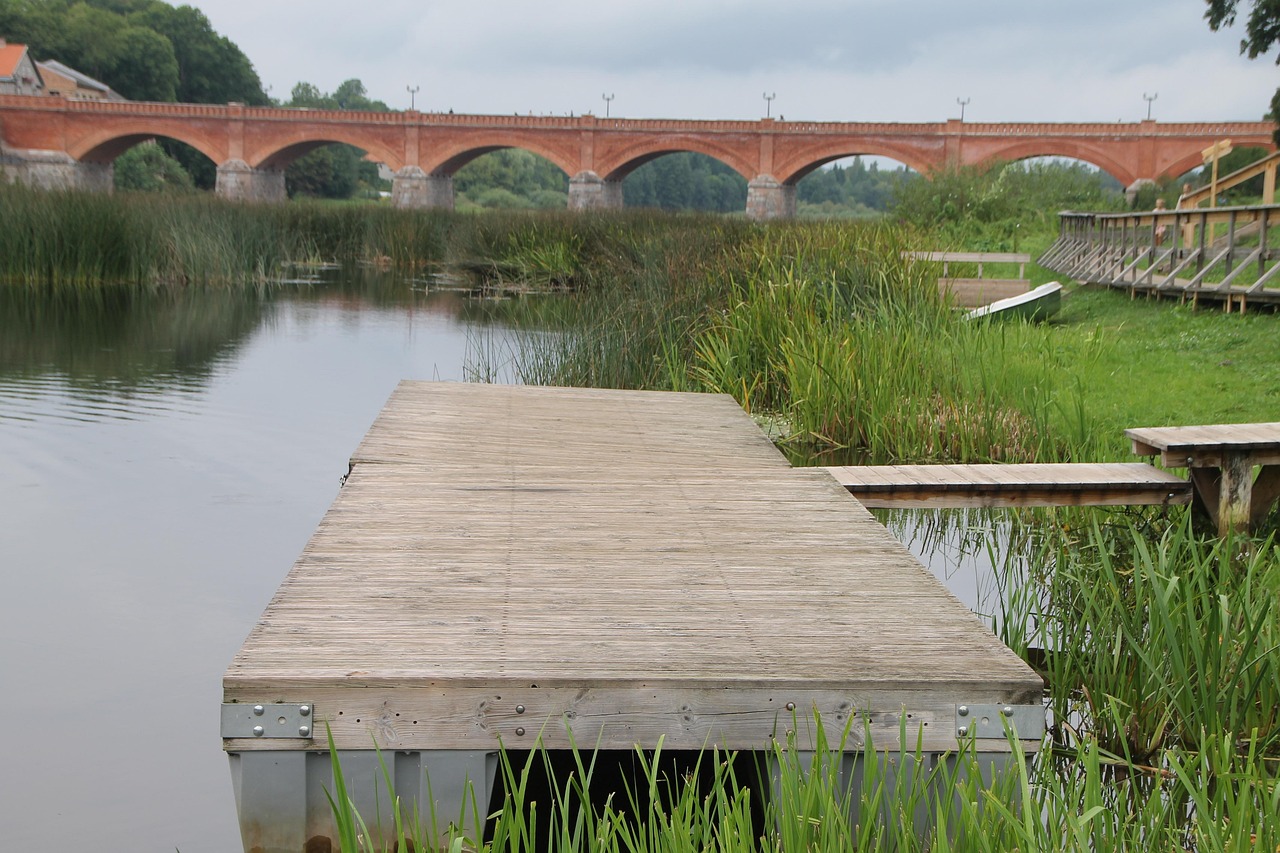
- Ventas rumba, the long brick bridge and the UNESCO old town are covered in detail in the other CampingSpirit guide to Latvia and Lithuania. Here it is worth walking to the waterfall of the Alekšupīte, which drops over a sandstone step in the middle of town, and through the wooden-house lanes along Baznīcas iela. The old town’s cobbles are no place for a motorhome: park on the edge of town and walk.
3Stage 3: Kuldīga to Jūrkalne via Ēdole and Alsunga (approx. 55 km)
- The drive
- From Kuldīga north-west to Ēdole Castle, then on minor roads to Alsunga and on to the coast at Jūrkalne. Flat, lightly trafficked route through fields and pine forest, partly on gravel. Around an hour of pure driving, so plenty of time for a morning in Kuldīga.
- Highlights & must-sees
- Ēdole Castle: a castle of the Livonian Order rebuilt in neo-Gothic style above a small reservoir, with a park.
- Alsunga, centre of the Catholic Suiti: their cultural space, with the women’s polyphonic drone singing, is on the UNESCO list of intangible cultural heritage in need of urgent safeguarding. In the village stand Alsunga Castle and the baroque church. The local museum shows traditional dress and customs.
- Jūrkalne: beyond the village, sand and clay cliffs break off to the Baltic. A wooden staircase takes you down to a wide beach that is almost empty.
- CampingSpirit overnight tip
-
Official campsite or RV park: Around 5 km south of Jūrkalne, just past the Rīva bridge, the “Sīļi” campsite sits right on top of the cliff, with cabins and WC/shower; ask in advance whether and how motorhomes can stand with electricity. Guest farms in the village, for instance on the Rīva, also take campers in some cases but have no disposal facilities. If you want to go further south, there are pitches at the marina in Pāvilosta; Pāvilosta and Liepāja are described in the CampingSpirit guide “Amber, castles and shifting dunes – by camper from Riga across the Curonian Spit to Vilnius”.
Free camping or nature tip (where legal): The coast is especially lonely here, so the temptation is great. Nevertheless the dune protection zone applies along the entire Baltic coast: driving and parking away from roads and car parks is prohibited on dunes, beach and the forest tracks behind them. Use the signposted beach car parks and the LVM rest sites in the coastal forest, and respect barriers.
- Insider tip for campers
- The cliffs are constantly collapsing. Keep your distance from the edge at the top and do not walk directly beneath the faces at the bottom, especially after rain or storms. Alsunga has only small shops. Bigger shopping trips and water are better done in Kuldīga.
4Stage 4: Jūrkalne to Ventspils via Užava (approx. 55 km)
- The drive
- North on the coast road: long straights through pine forest, the sea mostly only sensed. At Užava a spur road leads to the lighthouse, gravel and narrow at the end. Then on to the port city of Ventspils. Around an hour without stops.
- Highlights & must-sees
- Užava lighthouse on a dune above the cliff; check beforehand whether the tower is open. The beach below is almost always empty.
- Brewery in Užava, a family business with a small taproom in the village (check opening in advance).
- Ventspils: castle of the Livonian Order with museum, the walkable south mole at the mouth of the Venta for sunset, and the Blue Flag beach. In season a narrow-gauge railway runs to the coastal open-air museum.
- CampingSpirit overnight tip
-
Official campsite or RV park: Piejūras kempings (Seaside Camping) at Vasarnīcu iela 56 in Ventspils, around 500 m from the beach and about 2 km from the centre, bus stop nearby: meadow pitches with electric hook-up (16 A), fresh water, grey-water and cassette disposal, plus holiday cottages. This is the best place to fill everything up before the gravel stretch to Kolka. Check season and prices in advance.
Free camping or nature tip (where legal): In the urban area of Ventspils there is no reason to wild camp; the campsite is central and inexpensive. The forest car parks between Užava and Ventspils lie in the dune protection zone. Where signs there prohibit overnighting or camping, that applies at night too.
- Insider tip for campers
- Ventspils is the last town with big supermarkets, several filling stations and LPG before the sparsely populated north. Fill the tank here, because between Ventspils and Roja there are very few filling stations and shops. The town is easy to explore by bike; cycle paths run right to the beach.
5Stage 5: Ventspils to Kolka via the Livonian Coast (approx. 100 km)
- The drive
- The coast road north-east runs for long stretches on gravel through pine and dune forest. Depending on maintenance you drive over washboard and potholes, and in dry weather it is very dusty. Spur roads lead to the lighthouses and villages. From Mazirbe the Livonian fishing villages follow one another as far as Kolka. A whole day with stops; pure driving time a good two hours.
- Highlights & must-sees
- Lighthouses of Ovīši (one of the oldest in the Baltics) and Miķeļbāka at Miķeļtornis, one of the tallest in the region. Off in the forest at Irbene stands the Soviet-era radio telescope, now used by the university.
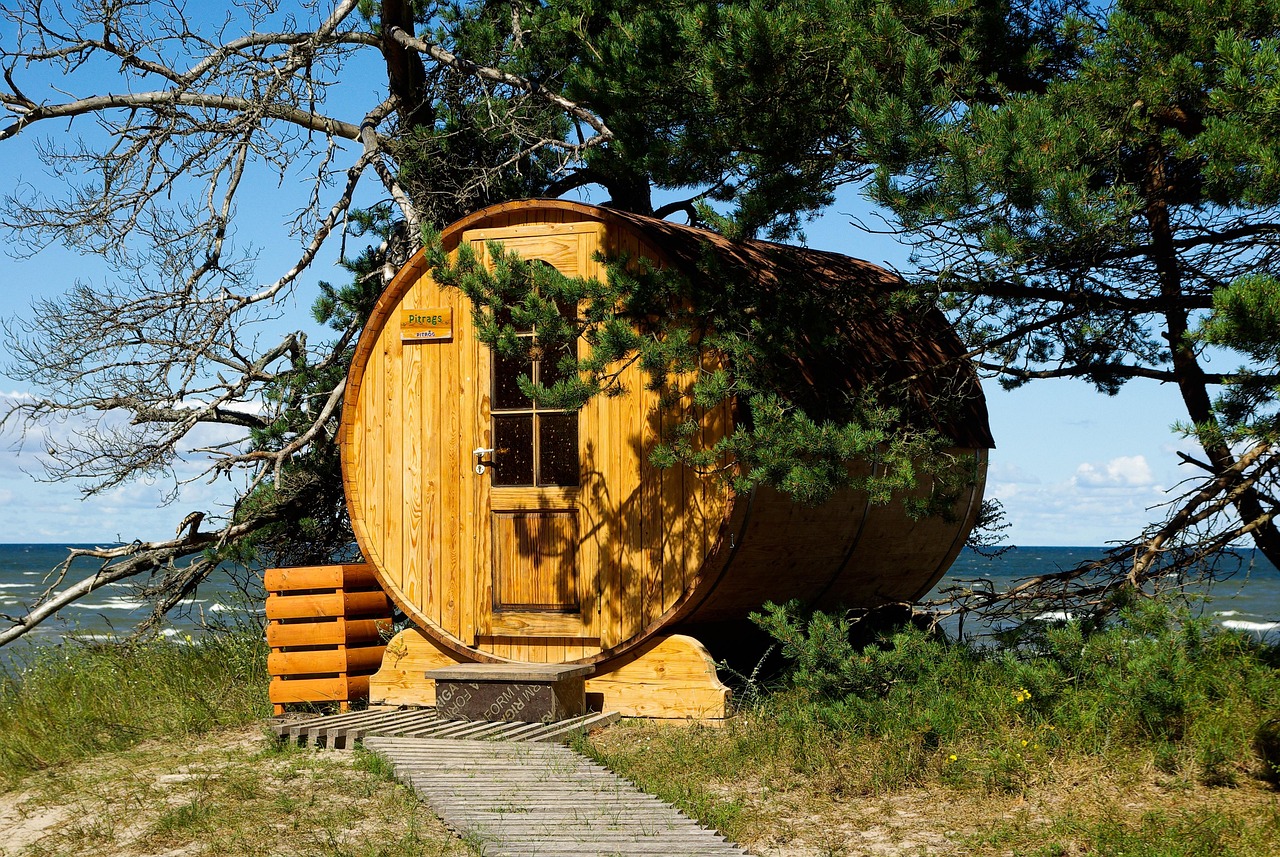
- Mazirbe with the Livonian Community House and the old cemetery, plus Košrags, Pitrags and Vaide with wooden houses, net sheds and gardens. They belong to the cultural space of the Livonians, the small Finno-Ugric people of this coast.
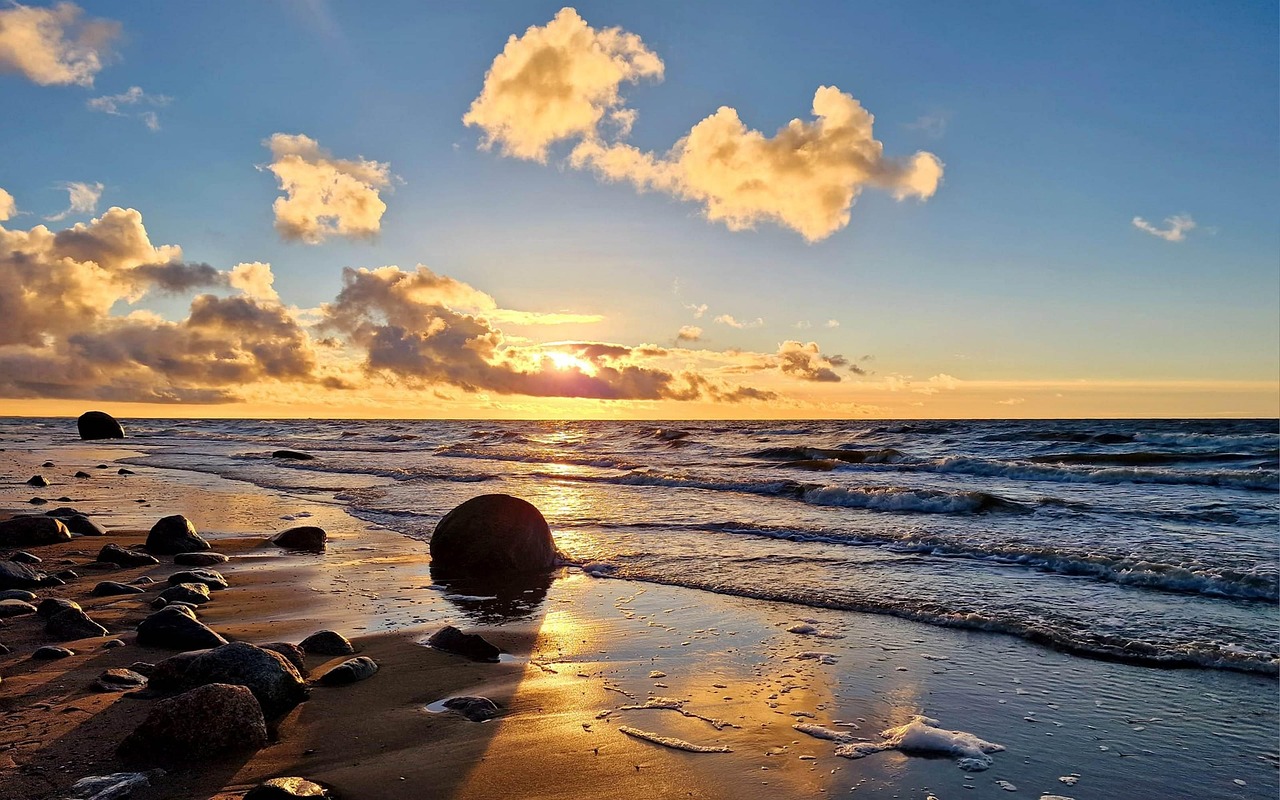
- Cape Kolka (Kolkasrags) in the evening: a path leads through the forest to the point. There the Baltic Sea and the Gulf of Riga meet, lines of surf cross, and fallen trees lie in the sand.
- CampingSpirit overnight tip
-
Official campsite or RV park: Kempings “Ūši” in the area of Slītere National Park, about a quarter of an hour on foot from the tip of the cape: pitches for motorhomes and caravans with electricity and water, grey-water disposal, showers and WC. Check the season in advance. In Pitrags the small “Pie Andra” campsite takes mainly tents and only a few caravans.
Free camping or nature tip (where legal): The coastal strip from Ventspils to Kolka belongs for the most part to Slītere National Park and the dune protection zone. Overnighting outside designated sites is not provided for here, and driving off the roads is prohibited. The car parks at the cape and at the lighthouses are for daytime parking. So plan on a campsite or a guest farm with pitches in one of the villages.
- Insider tip for campers
- On gravel, keep a long distance from the vehicle in front, because flying stones damage the windscreen and awning box. With oncoming traffic, slow down and pull over to the right. Do not lower the tyre pressure; reduce your speed instead. At the tip of the cape swimming is dangerous because of the currents and the sandbanks that extend far out; the supervised bathing spot is in the village. In spring and autumn birdwatchers bring their spotting scopes to the point from sunrise. If you want quiet, come early or late.
6Stage 6: Kolka to Roja via Slītere (approx. 75 km)
- The drive
- In the morning on an asphalt road inland to Slītere lighthouse on the edge of the Blue Hills, then back to the coast. From there south along the Gulf of Riga through small villages to Roja. Well surfaced, little traffic, around 1.5 hours of driving.
- Highlights & must-sees
- Slītere lighthouse, which today stands in the forest: it marks the line of a former Baltic coastline. From the top you look across the wooded Blue Hills (Zilie kalni) to the sea; it is open in season from the beginning of May to mid-October. Nearby, nature trails lead through remnants of primeval forest in the national park.
- Stony coast of Kaltene south of Roja: glacial boulders lie scattered far out into the shallow water. In the evening locals sit here too.
- Roja: fisheries museum on coastal fishing and a harbour where fishing boats tie up. You can often buy smoked fish directly from the smokehouses along the coast road.
- CampingSpirit overnight tip
-
Official campsite or RV park: On the east coast between Kolka and Roja there are several campsites right behind the beach. Kempings “Melnsils”, about 1 km from the village, has meadow pitches for motorhomes up to around 10 m, electricity, fresh water, grey-water and cassette disposal and sanitary facilities, season roughly May to September. Around Roja there are further, mostly simple meadow sites with electricity and sanitary facilities. Whether they have disposal facilities and how long the season lasts varies a lot, so check beforehand.
Free camping or nature tip (where legal): The dune protection zone applies on the east coast too. Outside protected areas the ban on tents and fires applies to the vegetated dune strip, not to the bare sandy beach; the environmental inspectors usually tolerate a tent close to the waterline there. That applies to tents, not to vehicles, and in Slītere National Park camping on the beach is prohibited. Local rules differ from municipality to municipality. So take the signs at the beach access points seriously and leave the motorhome in the car park.
- Insider tip for campers
- Slītere National Park is managed by the Nature Conservation Agency. Its “Dabas tūrisms” app shows trails, car parks and protected-area boundaries, and LVM GEO shows the forest areas and rest sites. Roja is the place for the next big shop, and also the next reliable filling station since Ventspils.
7Stage 7: Roja to Rīga via Mērsrags and Lake Engure (approx. 130 km)
- The drive
- South on the coast road via Mērsrags and Engure, with detours to Lake Engure, then on via Ķesterciems and the fishing villages on the gulf to Jūrmala and Riga. Quiet and well surfaced as far as Engure; it gets busy before Riga. A good two hours of pure driving.
- Highlights & must-sees
- Mērsrags lighthouse, a cast-iron tower right on the beach, plus the fishing harbour.
- Lake Engure Nature Park: one of the most important breeding sites for waterfowl in Latvia, with observation towers on the reedy shore and the orchid trail at Bērzciems. An ornithological research station has been working on the lakeshore for decades.
- Ragaciems: the old net sheds on the sandbank (Ragaciema sēklis) tell of coastal fishing outside Jūrmala.
- CampingSpirit overnight tip
-
Official campsite or RV park: On the Gulf of Riga between Engure and Lapmežciems there are a few campsites, most of which open only in the summer season. In Riga, Riga City Camping at Ķīpsalas iela 8 on Ķīpsala island has electricity, sanitary facilities and a service point, for motorhomes up to about 7 m long, a good 1 km on foot across the bridge to the old town. Season roughly mid-May to mid-September; check opening times in advance.
Free camping or nature tip (where legal): In Lake Engure Nature Park you may drive only on the tracks and car parks and may not pitch tents. Birds breed on the shore in spring and early summer, so the observation towers remain the places to watch from. In Jūrmala and at the beach car parks on the gulf there are checks; overnighting in the vehicle is not provided for there.
- Insider tip for campers
- The coast road reaches Riga through the urban area of Jūrmala. If you want to avoid the entry fee, switch to the A10 in good time (the satnav shows the options) or watch for the “Maksas zona” signs and, if necessary, buy the day pass online the same day. Best to empty tanks at a campsite before Riga, as public stations are rare in Latvia. Take binoculars for Lake Engure. The best times to watch are early morning and the migration in April and May and in September.
Camping practice & local rules
Wild camping & overnight parking
- Latvia has no right to roam like Scandinavia. Under the Forest Law you may enter forests freely where no signs prohibit it. For private land you need the owner’s permission, and the owner can send you away.
- In state forests outside protected areas the forestry service LVM allows overnighting in a tent or hammock. Anyone staying longer than a week in the same place must report it in writing. For vehicles: you may drive only on tracks and stand only on parking areas. A night in the camper at an LVM rest site is usually tolerated, but it is not expressly permitted.
- A motorhome may park wherever parking is allowed. Table, chairs, awning or barbecue count as camping, though, and that is allowed only where the owner, operator or site rules permit it. In national parks and nature parks such as Ķemeri, Slītere and Lake Engure, overnighting outside designated sites is not provided for. An oak-leaf sign marks the boundary, and ignorance is no defence against a fine.
- The dune protection zone applies along the entire coast: no driving or parking on dunes, beach or the forest tracks behind them. Tents are allowed there only at designated sites or with the owner’s consent, as far as local rules permit. Damage and litter in nature carry heavy fines.
- Together with the Nature Conservation Agency, the forestry service LVM runs a dense network of free rest sites with fire pits, tables and toilets. You find them on the “Mammadaba” map and in the LVM GEO and “Dabas tūrisms” apps. Then there are park4night and Campercontact. Light fires only at the designated spots. When there is a risk of forest fire the authorities impose restrictions, and then even these spots often stay cold.
Waste disposal & supplies
- Water and waste services are available almost only at campsites. Public stations are rare, and many LVM rest sites have only dry toilets. The most reliable places to empty tanks are Ventspils, Kolka and Riga; ask smaller sites along the way beforehand.
- Grey water and the cassette never go into the forest, a ditch or the dunes. In protected areas that gets expensive, and on the sandy ground of the coast it seeps straight into the groundwater.
- Tap water in Riga, Ventspils and the towns is drinkable. In the countryside water often comes from private wells. So fill up with fresh water at campsites and carry a reserve for the national park stretch.
- LPG (Latvian “autogāze”) is available at many filling stations in the towns, hardly at all along the coast. Foreign gas bottles are not exchanged. Arrive with full bottles and bring an adapter set for refillable bottles or a gas tank.
Vehicle size & traffic rules
- Speed limits: 50 km/h in built-up areas, 90 km/h outside, 100 or 110 km/h on certain signposted sections in the warm season. The 90 km/h outside built-up areas applies to all vehicles, including car-caravan combinations and heavy motorhomes; the higher values on signposted sections do not apply to combinations and lorries over 7.5 t. There is no separate limit for gravel roads, only signposted limits; in a motorhome you drive considerably slower there anyway. Fixed speed cameras and average-speed checks are common.
- Road-use charge (vinjete): a vehicle registered as a car (M1) pays no charge, even as a motorhome over 3.5 t. Vehicles in the lorry classes N1 to N3 from 3,001 kg permissible gross mass need a vignette on the main roads, so also on the A10. What counts is the vehicle class in the registration document (field J), because van conversions registered as lorries are affected. The e-vignette is bought online, before the journey.
- Jūrmala charges an entry fee with number-plate recognition (daily fee – check the current rate; zone marked with “Maksas zona” signs), and Ķemeri belongs to the town. There are no other charges or toll roads on this route.
- Dipped headlights are compulsory all year round, including in daytime, as are winter tyres in the winter season. The blood-alcohol limit is 0.5, lower for new drivers. You may use the phone at the wheel only with a hands-free system.
- The forests of Courland hold a lot of game. Roe deer, red deer, wild boar and elk cross the forest roads especially at dusk, and on gravel the braking distance is longer too. Forest roads are sometimes closed to heavy vehicles in spring during the thaw. Observe weight signs.
CampingSpirit packing & preparation checklist
- Binoculars or spotting scope: Kolkasrags and Lake Engure are among the best bird-migration sites in the Baltic region, as are the towers in Ķemeri National Park.
- Tick protection, tick card and mosquito repellent. In Latvian forests the risk of TBE and Lyme disease is high, so think about vaccination before the trip. In the bog and at the lakes the mosquitoes bite.
- Stone-chip film or protective mesh for windscreen and headlights, plus a repair kit for small windscreen damage, because the coast road to Kolka runs on gravel for long stretches.
- At least 20 litres of reserve water in jerrycans and a full buffer in the waste-water tank, because between Ventspils and Roja there are hardly any water and waste services.
- Solar panel or power station. LVM rest sites and small guest farms often offer no electricity.
- Offline maps with the LVM and national park layers. In the pine forest on the north coast mobile reception is patchy in places.
As of 2026-10. Closures, fees and booking rules change: check official sources before you go.