

In-depth guide · CampingSpirit
Around 1,040 km through Latvia and Lithuania: from Riga's Art Nouveau to the Gauja valley, past Kuldīga's wide waterfall to the Courland coast and by ferry onto the spit, where the dunes drift and the road ends at the border.
The spirit of the route
The Baltics drive quietly. The roads are straight, the villages far apart, and between pine forest and rye field there is often nothing but a stork's nest on a power pole. In the Gauja valley the river cuts red sandstone cliffs into the forest, Order castles stand on the hills, and in Kuldīga the Venta rushes over a rock ledge that is wider than it is high. Then comes the coast: hundreds of kilometres of pale sand, driftwood, crumbs of amber in the wash line and sunsets that in June don't end until around eleven o'clock. Through the sliding door you smell resin, salt and smoked fish. On the Curonian Spit it grows quiet: elk in the undergrowth, cormorant colonies, dunes that over the centuries have pushed across entire villages. At the end you stand on the Parnidis and see the border to the south – and drive back, to Trakai and Vilnius.
Stage-by-stage plan
1Stage 1: Riga to Sigulda (Gauja National Park) (approx. 55 km)
- The drive
- Out of Riga on the A2 (E77) heading north-east; beyond the city limits it is a well-built, mostly two-lane trunk road through forest and fields. At Sigulda turn off into the small town, which sits on a plateau above the Gauja's ancient glacial valley; short, steep streets lead down to the river. Just under an hour's driving; in Riga itself expect congestion on the arterial roads.
- Highlights & must-sees
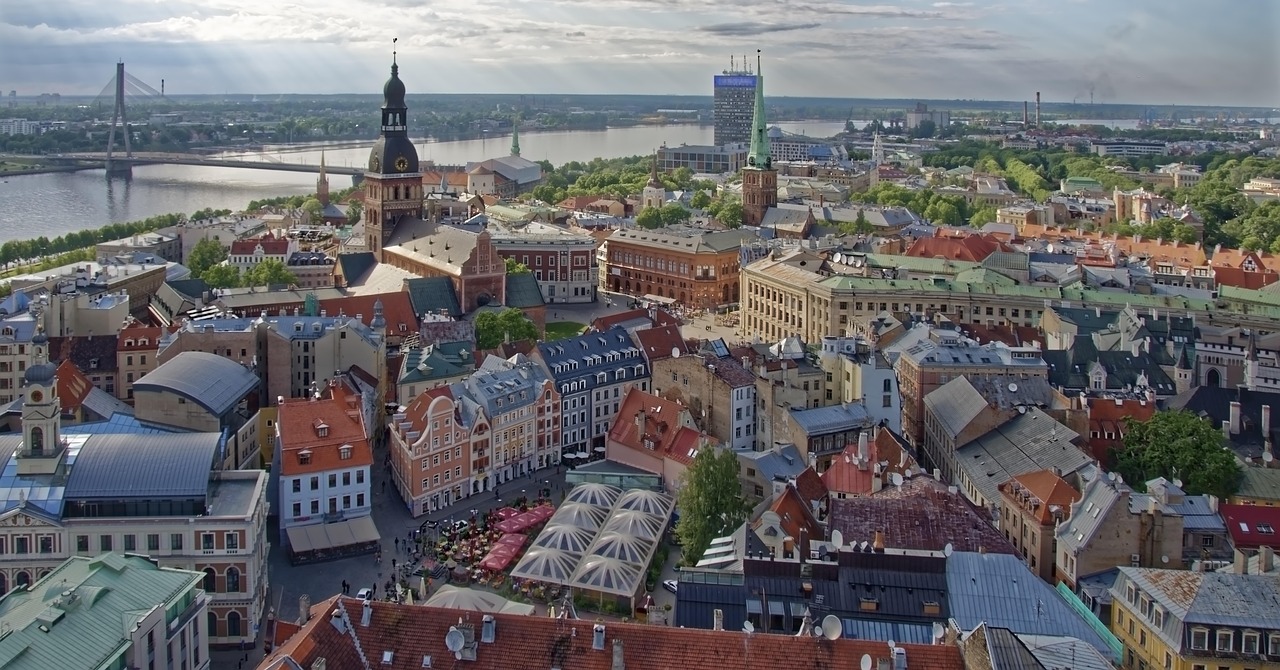
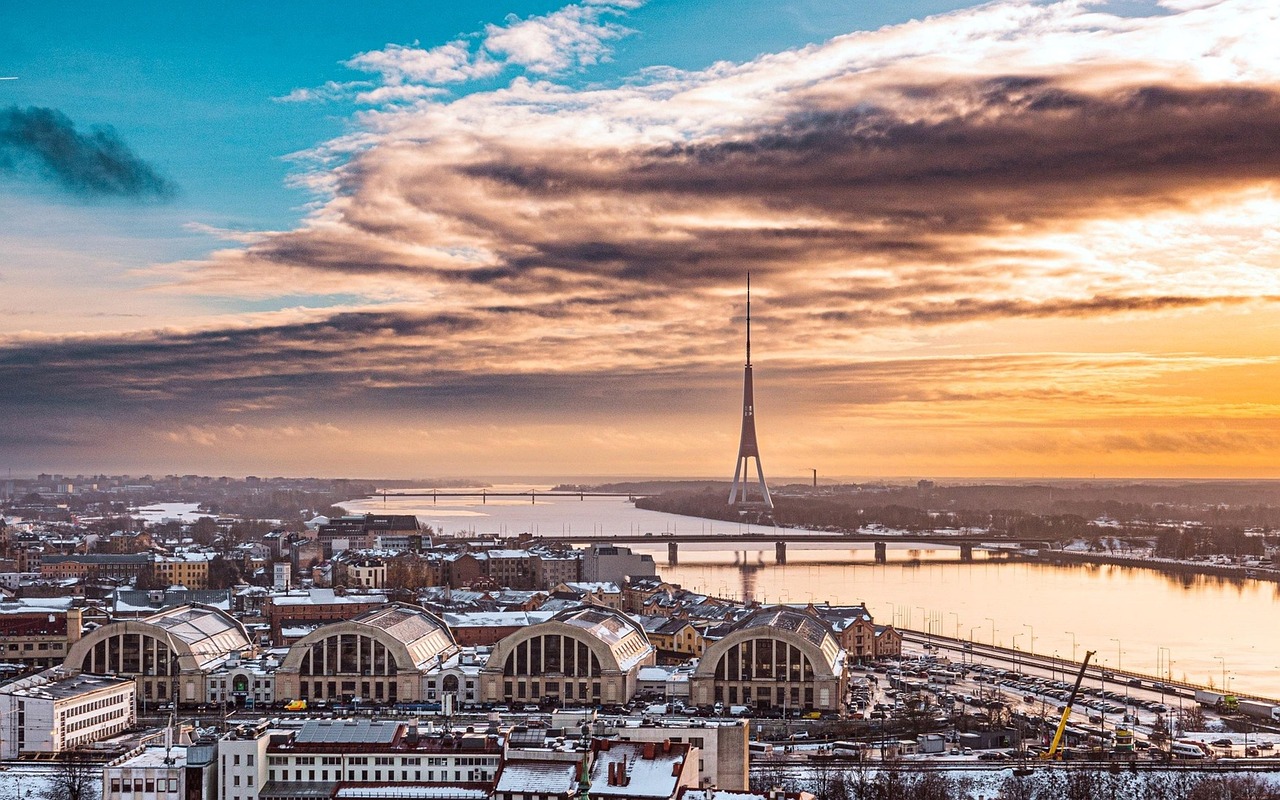
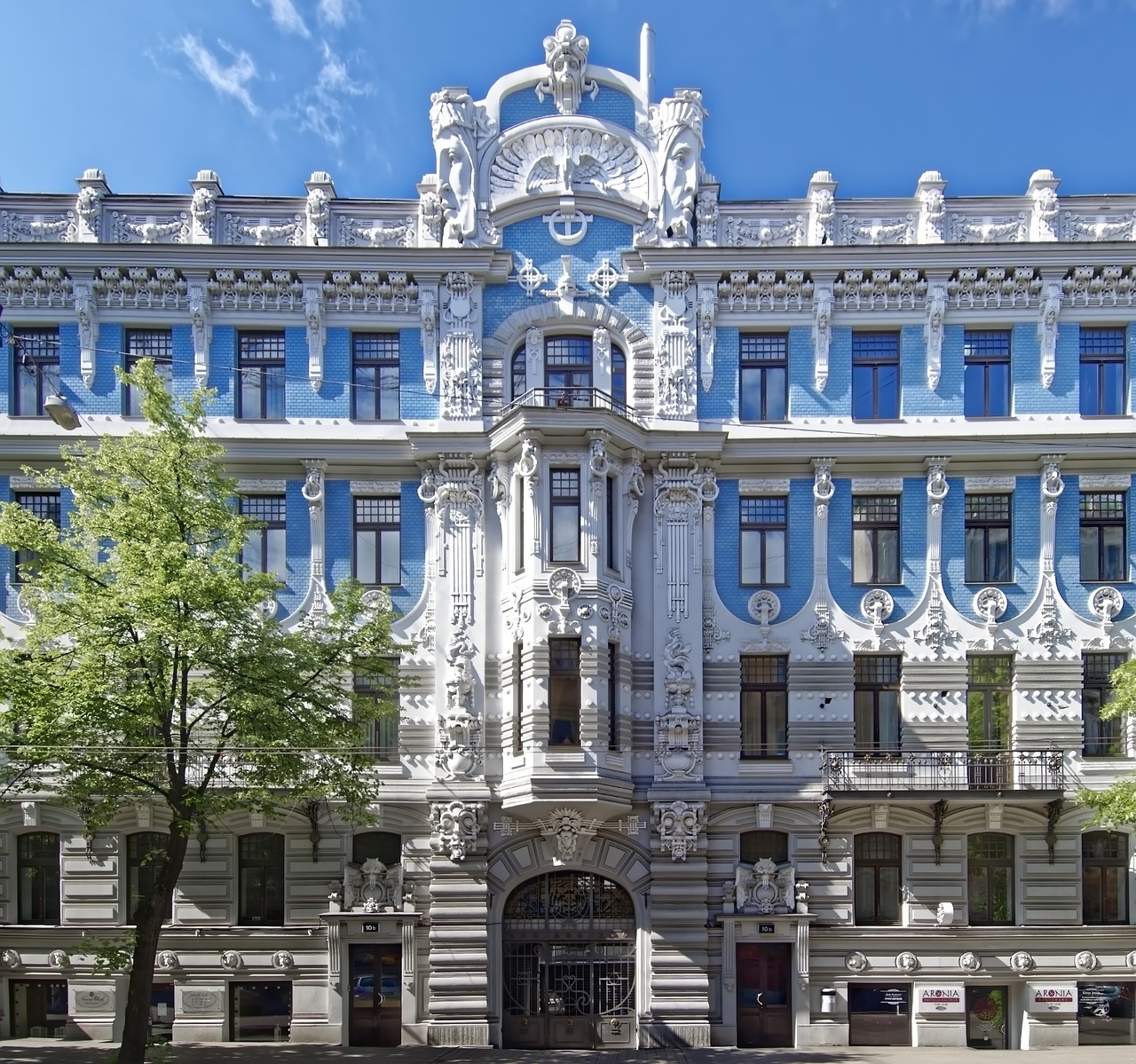
- Riga before you set off: the Old Town, the Art Nouveau district around Alberta iela and the Central Market in the old Zeppelin hangars.
- Turaida Museum Reserve with the brick tower of the bishop's castle above the Gauja valley.
- Gūtmaņa Cave, the largest sandstone grotto in the Baltics, and the cable car across the Gauja to Krimulda.
- CampingSpirit overnight tip
-
Official campsite or RV park: On the riverbank below the town, the campsite “Siguldas Pludmale” sits at the Gauja bathing spot, with pitches on grass, sanitary facilities and electric hook-ups; check the season and service point in advance. If you are spending the first night in Riga: Riga City Camping on Ķīpsala island next to the exhibition grounds, open seasonally, with a walk across the bridge into the Old Town.
Free camping or nature tip (where legal): Gauja National Park is a protected area: camping and overnight stays are only permitted at designated sites, not by the cliffs or on the riverside paths. The state forestry company (LVM) runs free rest areas with fire pits across the country under the “Mammadaba” brand, where overnight stays are often tolerated – read the signs on site.
- Insider tip for campers
- Don't drive into Riga's Old Town with a motorhome: narrow lanes, access restrictions and hardly any parking. Leave the camper at the campsite and walk or take the tram. In Sigulda there are large car parks at Turaida and at the cable car; at weekends get there early.
2Stage 2: Sigulda to Cēsis (approx. 45 km)
- The drive
- Rather than taking the A2 directly, the detour through the valley is worthwhile: on minor roads to Līgatne with its old paper-mill houses, then back to the A2 and on to Cēsis. Some narrow tarmac and gravel sections in the forest, nothing difficult, but slow. A good hour's driving.
- Highlights & must-sees
- Līgatne nature trails (Līgatnes dabas takas) with enclosures for elk, European bison and lynx in the forest above the Gauja.
- Former Soviet secret bunker beneath the Līgatne rehabilitation centre, open to visitors on guided tours only.
- Cēsis Castle: ruins of the Livonian Order's castle, which you explore through the towers with a candle lantern, alongside the New Castle and the castle park.
- CampingSpirit overnight tip
-
Official campsite or RV park: Cēsis itself has only a few places to stay for motorhomes; in the surrounding area there are campsites by the lakes, for example at Lake Āraiši or near Rāmuļi. Check facilities, season and size limits in advance on Campercontact and book in July if the weather is good.
Free camping or nature tip (where legal): Outside the national park, sleeping in a motorhome in public car parks in Latvia is not prohibited across the board, as long as no signs forbid it and you don't set up camp. On private land – including farm tracks and meadows – you need the owner's permission.
- Insider tip for campers
- Āraiši Lake Fortress – a reconstructed lake-dwelling settlement from the 9th and 10th centuries – lies just a few kilometres south of Cēsis and fits in well along the way. In Cēsis there are cobbles around the castle hill; look for motorhome parking on the edge of the Old Town instead.
3Stage 3: Cēsis to Jūrmala (approx. 130 km)
- The drive
- Back on the A2 to the Riga bypass, round the capital on the ring road to the south and west and onto the A10 (E22) towards Ventspils. A busy four-lane road, slow-moving at rush hour. Take the Jūrmala exit over the bridge at Priedaine. Around 1.5 to 2 hours.
- Highlights & must-sees
- Jūrmala's 33-kilometre sandy beach with the wooden villas of the spa era in Dzintari and Majori.
- Jomas iela pedestrian street in Majori with cafés, just behind the dunes.
- Boardwalk across the Great Ķemeri Bog (Lielais Ķemeru tīrelis) in Ķemeri National Park, with an observation tower.
- CampingSpirit overnight tip
-
Official campsite or RV park: Campsites and motorhome pitches in Jūrmala are scarce and change often; you'll find current options with electricity and a service point on Campercontact and park4night. If everything is full, fall back on a site in Riga, from where the suburban train takes half an hour to Majori.
Free camping or nature tip (where legal): The dunes along the beach are in the coastal protection zone: driving and parking off roads and car parks is prohibited there. Overnight stays in Jūrmala's beach car parks are not allowed, and the municipal police carry out checks in season. In Ķemeri National Park the same applies as in the Gauja valley: designated sites only.
- Insider tip for campers
- Jūrmala is a charging zone: since 1 January 2026 entry costs €5 per day, and the day pass is valid until 23:59. Number plates are recorded by camera; you can pay online at Visit Jūrmala, via apps such as Mobilly, at machines or at the tourist information centre, even on the same day after entering. If you are only passing through, stay on the A10 outside the zone. Electric vehicles are exempt.
4Stage 4: Jūrmala to Kuldīga (approx. 150 km)
- The drive
- On the A10 to Tukums, then on regional roads westwards through the Abava valley via Kandava and Sabile to Kuldīga. Quiet, partly narrow country roads with hills and stretches of forest; some sections may be gravel, so check the surface in your navigation before you set off. Around 2.5 hours.
- Highlights & must-sees
- Ventas Rumba in Kuldīga: Europe's widest waterfall, a ledge about 250 m wide, where fish leap in spring.
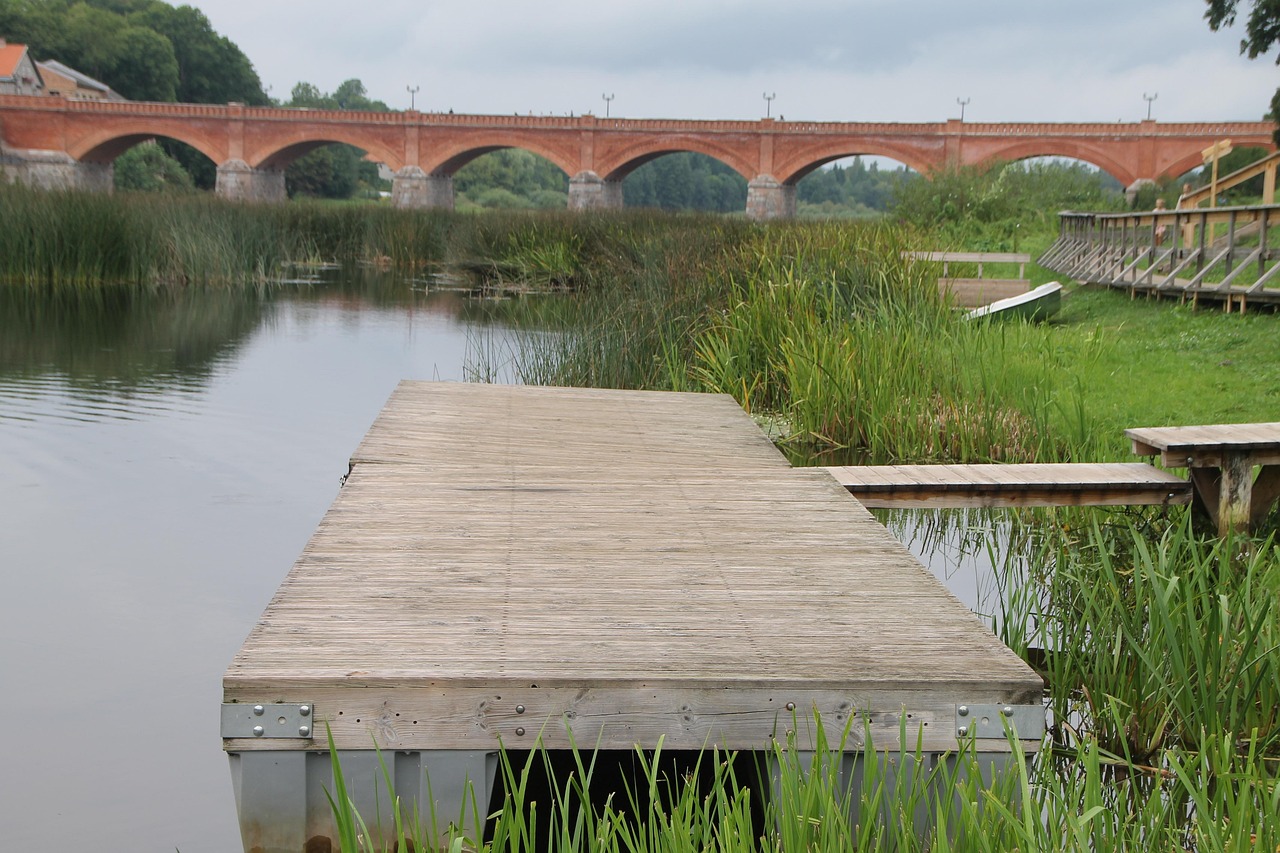
- The old brick bridge over the Venta, one of the longest of its kind in Europe, and the Old Town, a UNESCO World Heritage Site since 2023, with the Alekšupīte stream running between the houses.
- Sabile vineyard, one of the northernmost open-air vineyards in Europe, with views over the Abava valley.
- CampingSpirit overnight tip
-
Official campsite or RV park: In Kuldīga there are camping and motorhome options on the bank of the Venta near the waterfall; names, seasons and facilities have changed in recent years, so check the current situation on Campercontact or with the tourist information centre. For longer vehicles the sites on the edge of town are easier to reach than the Old Town streets.
Free camping or nature tip (where legal): Around Kuldīga there are several LVM rest areas in the forest; overnight stays there are not explicitly regulated and are usually tolerated if you leave the place clean and only light fires in the fire pits. In dry spells Latvia often declares a forest fire risk period with a ban on fires.
- Insider tip for campers
- When the water is low in summer, many visitors wade across the ledge of Ventas Rumba – it is slippery, so wear water shoes. A little way out of town are the Riežupe sand caves, with candlelit guided tours. Kuldīga's Old Town is cobbled; only drive through the centre in a motorhome if you have to.
5Stage 5: Kuldīga to Liepāja via Jūrkalne and Pāvilosta (approx. 135 km)
- The drive
- Via Alsunga to the coast at Jūrkalne, then south on the coast road via Pāvilosta to Liepāja. A flat, quiet route through pine forest, heath and small fishing villages; road quality varies. Around 2 hours without breaks.
- Highlights & must-sees
- Jūrkalne cliffs: sand and clay walls up to about 20 m high, directly above the beach.
- Pāvilosta with its harbour, breakwater and wide beach at the mouth of the Saka – popular with windsurfers.
- Karosta in Liepāja: the Northern Forts on the beach, the Orthodox St Nicholas Naval Cathedral and the former naval prison.
- CampingSpirit overnight tip
-
Official campsite or RV park: In and around Liepāja there are several campsites, including some on the coast north of the town, plus basic motorhome pitches near the harbour. On the way, it is worth looking at the options around the marina in Pāvilosta. Check current facilities and prices in the apps.
Free camping or nature tip (where legal): The Courland coast is long and empty, but the dune protection zone applies here too: no driving or parking on the dunes, the beach or the forest tracks behind the dunes. Designated beach car parks and LVM rest areas in the coastal forest are the legal choice; take barriers and no-entry signs seriously.
- Insider tip for campers
- Liepāja's Northern Breakwater (Ziemeļu mols) is the place for sunset over the sea. Fill up and do your shopping in Liepāja before the border – there is little on offer until Palanga. You are most likely to find amber in the wash line after westerly storms, early in the morning.
6Stage 6: Liepāja to Nida via Palanga, Klaipėda and the Smiltynė ferry (approx. 155 km)
- The drive
- South on the A11 to the border at Rucava/Būtingė (Schengen, no checks, but spot checks are possible), then in Lithuania on the A13 via Šventoji to Palanga and Klaipėda. In Klaipėda head for the New Ferry (Naujoji perkėla) on Nemuno g.; the crossing to Smiltynė takes a few minutes, then follow the spit road for about 50 km through forest and dunes to Nida. With the ferry and waiting time, 3 to 4 hours.
- Highlights & must-sees
- Palanga: the Amber Museum in the Tiškevičius Palace in the Botanical Park, and the long pier at sunset.
- Hill of Witches (Raganų kalnas) in Juodkrantė with wooden sculptures from Lithuanian legends, plus the grey heron and cormorant colony in the forest north of the village.
- Parnidis Dune near Nida with its sundial and views across the drifting dunes to the border.
- CampingSpirit overnight tip
-
Official campsite or RV park: Nidos kempingas on Taikos g., in the pine forest at the foot of the Parnidis Dune, is the place for motorhomes in Nida: electric hook-ups, sanitary facilities, fresh water and waste disposal, and a footpath into the village and to the dune. Book early in the summer holidays.
Free camping or nature tip (where legal): Wild camping is off limits on the Curonian Spit: it is a national park and UNESCO World Heritage Site, and overnight stays are only allowed at the campsite. Parking is restricted to designated areas and charged in many places, and you may only walk on the dunes along marked paths.
- Insider tip for campers
- Only the New Ferry in the south of Klaipėda carries vehicles; the Old Ferry in the Old Town is for pedestrians and cyclists. The fare depends on vehicle size. At the Alksnynė checkpoint south of Smiltynė the Neringa municipality entry fee is due; it is considerably higher in summer than in the off-season and higher for motorhomes than for cars, so check current rates with Neringa municipality in advance. Best visit the Lithuanian Sea Museum in Smiltynė on the way back.
7Stage 7: Nida to Trakai (approx. 340 km)
- The drive
- Early back along the spit to Smiltynė and by ferry to Klaipėda, then on the A1 (E85) east across Lithuania to Kaunas and on towards Vilnius, turning off for Trakai. The A1 is four-lane throughout; expect speed limits on roadworks sections. Driving time around 4.5 hours plus the ferry. If you prefer a gentler pace, stay overnight in Kaunas.
- Highlights & must-sees
- In the morning, the Dead Dunes (Mirusios kopos) in the Nagliai nature reserve between Pervalka and Juodkrantė – nature trail from the car park on the spit road.
- Kaunas: the Old Town at the confluence of the Neman and the Neris, and the castle ruins right on the riverbank.
- Trakai Island Castle on its island in Lake Galvė, reached by wooden bridges.
- CampingSpirit overnight tip
-
Official campsite or RV park: Slėnis campsite (Camping Slėnyje) near Trakai lies on the shore of Lake Galvė, a few kilometres from the castle area: pitches on grass and gravel, electricity, sanitary facilities, its own bathing spot. Check facilities and season in advance.
Free camping or nature tip (where legal): In Lithuania, camping and overnight stays in the forest are only permitted at designated campsites (stovyklavietės); the state forestry service runs many of them free of charge, with a fire pit and firewood. Trakai Historical National Park only allows overnight stays at campsites and such designated sites.
- Insider tip for campers
- Navigation on the spit may suggest routes through the Russian Kaliningrad region – switch off the option for border crossings and force the route via the ferry. In Trakai try kibinai, the filled pastries of the Karaim, who have lived by the lake since the Middle Ages. The car parks at the castle are tight; with a motorhome it is better to walk from the campsite.
8Stage 8: Trakai to Vilnius (approx. 30 km)
- The drive
- A short stretch on the country road to the A1 and into the capital. Vilnius has heavy city-centre traffic and an Old Town of narrow, cobbled lanes; half an hour's driving, more into the centre depending on traffic.
- Highlights & must-sees
- Vilnius Old Town, a UNESCO World Heritage Site, with Cathedral Square, the university and the Baroque churches.
- The Užupis district across the Vilnia, with its self-declared “republic” and constitution on the wall.
- Gediminas Tower on Castle Hill, with views over rooftops and church spires.
- CampingSpirit overnight tip
-
Official campsite or RV park: For Vilnius, Trakai is the most relaxed base: the regional train from Trakai reaches the centre in around half an hour. In Vilnius itself there are only a few options for motorhomes, and they change frequently; check the current situation on Campercontact.
Free camping or nature tip (where legal): Within the city, overnight stays in public car parks are not explicitly prohibited, but the parking zones are charged and many spaces are too small for long vehicles. For a night in the city, use only guarded or designated car parks.
- Insider tip for campers
- Vilnius's city-centre parking zones are graded by colour; you pay by app (such as m.Parking) or at a machine. Leave the camper outside the centre and take the bus or train. Before heading home via Poland: aim for the Via Baltica (A5) at Kaunas or Marijampolė, as Vilnius has no direct motorway link to the south for this.
Camping practice & local rules
Wild camping & overnight parking
- Latvia: sleeping in a motorhome in public car parks is not generally prohibited, as long as no signs forbid it and you don't camp (table, chairs, awning). Prohibited are driving and parking off roads in the dune and coastal protection zone, and overnight stays outside designated sites in national parks such as Gauja and Ķemeri. In Jūrmala and on town beaches the police carry out checks.
- Latvia's state forestry company LVM runs a dense network of free rest areas with fire pits, tables and toilets under the “Mammadaba” brand; the map is available online and in the app. Observe the forest fire season with its fire bans.
- Lithuania: camping and overnight stays in forests are only permitted at designated campsites; the state forestry service provides many of them free of charge. In national parks, on the Curonian Spit and in nature reserves, overnight stays outside campsites are prohibited, and the rangers on the spit enforce this consistently.
- On private land – meadows, farm tracks, farm driveways – ask the owner in both countries. Useful apps: park4night, Campercontact, plus the forestry services' maps.
Waste disposal & supplies
- Fresh water and waste disposal are available almost only at campsites; public service points are rare. Plan to call at a campsite every two to three days and top up with water there.
- Never empty grey water or the cassette in the forest or a drain – fines apply in protected areas, and many rest areas only have pit toilets with no disposal point.
- Tap water in Riga, Vilnius and the larger towns is drinkable; in the countryside and at rest areas only use water from marked drinking-water points, or boil it.
- Autogas (LPG) is available at many filling stations in both countries. German exchange cylinders are not swapped; arrive with full cylinders and bring an adapter set for refillable cylinders or a gas tank, as the connections can vary.
Vehicle size & traffic rules
- Latvia: 50 km/h in built-up areas, 90 km/h outside. In the warmer months 100 or 110 km/h are permitted on some signposted sections (for example on the A2 between Langstiņi and Sigulda, depending on the variable signs), and 120 km/h for vehicles up to 7.5 t on the Ķekava bypass, which is signposted as an expressway. Vehicles with trailers and lorries over 7.5 t are limited to 90 km/h outside built-up areas. Numerous fixed speed cameras and average speed checks.
- Lithuania: 50 km/h in built-up areas, 90 km/h on paved rural roads, 70 km/h on gravel, up to 110–120 km/h on expressways, 130 km/h on motorways in the summer season and 110 km/h in winter. Vehicles with trailers are limited to 90 km/h on motorways, expressways and paved rural roads, otherwise 70 km/h; lower limits also apply to vehicles over 3.5 t. Average speed checks are common.
- Road user charges: cars and motorhomes registered as cars (M1) pay no vignette in either country. In Latvia, goods vehicle classes from 3.001 t (N1–N3) need an e-vignette; in Lithuania in 2026 classes N1–N3 and M2/M3 require a vignette, annual vignettes have no longer been available since 1 July 2026, and from 1 January 2027 a distance-based e-toll is to replace the vignette. What counts is the vehicle class in the registration document (field J) – van conversions registered as goods vehicles are affected.
- Entry fees: Jūrmala €5 per day (camera enforcement, payment online or by app), Curonian Spit at the Alksnynė checkpoint with seasonally graded rates that are higher for motorhomes than for cars.
- Border on the spit: a few kilometres south of Nida lies the border with the Russian Kaliningrad region – an external EU border; do not drive on, do not enter the border zone and do not fly drones. GPS interference is possible in the border area.
- Dipped headlights are compulsory in both countries all year round, including during the day. Winter tyres: Latvia from 1 December to 1 March, Lithuania from 10 November to 31 March. Blood alcohol limit Latvia 0.5, Lithuania 0.4 (stricter for new drivers in both); phones at the wheel only with a hands-free kit.
CampingSpirit packing & preparation checklist
- Insect repellent and mosquito screens for windows and roof vent: by lakes, bogs and in the coastal forest, mosquitoes and horseflies are plentiful in June and July.
- Water shoes for the ledge of Ventas Rumba and stony bathing spots at the lakes.
- Smartphone with apps for the Jūrmala entry fee (such as Mobilly) and the Vilnius parking zones, plus the forestry services' maps for the free rest areas.
- Gas adapter set and two full cylinders: German exchange cylinders are not swapped in the Baltics.
- Windproof clothing and a windbreak for the beach: on the open Baltic coast it blows hard even in summer, and evenings turn cool quickly.
- Offline maps and a paper map: in the border area of the spit GPS signals may be disrupted, and some satnavs route via Kaliningrad.
As of 2026-10. Closures, fees and booking rules change: check official sources before you go.