


In-depth guide · CampingSpirit
Around 340 kilometres through Portugal's Beira Litoral: from Porto past tiled façades, moliceiro boats and striped fishermen's houses on the Ria de Aveiro, up into the monastery forest of Buçaco and down the Mondego valley to the wide beach of Figueira da Foz.
The spirit of the route
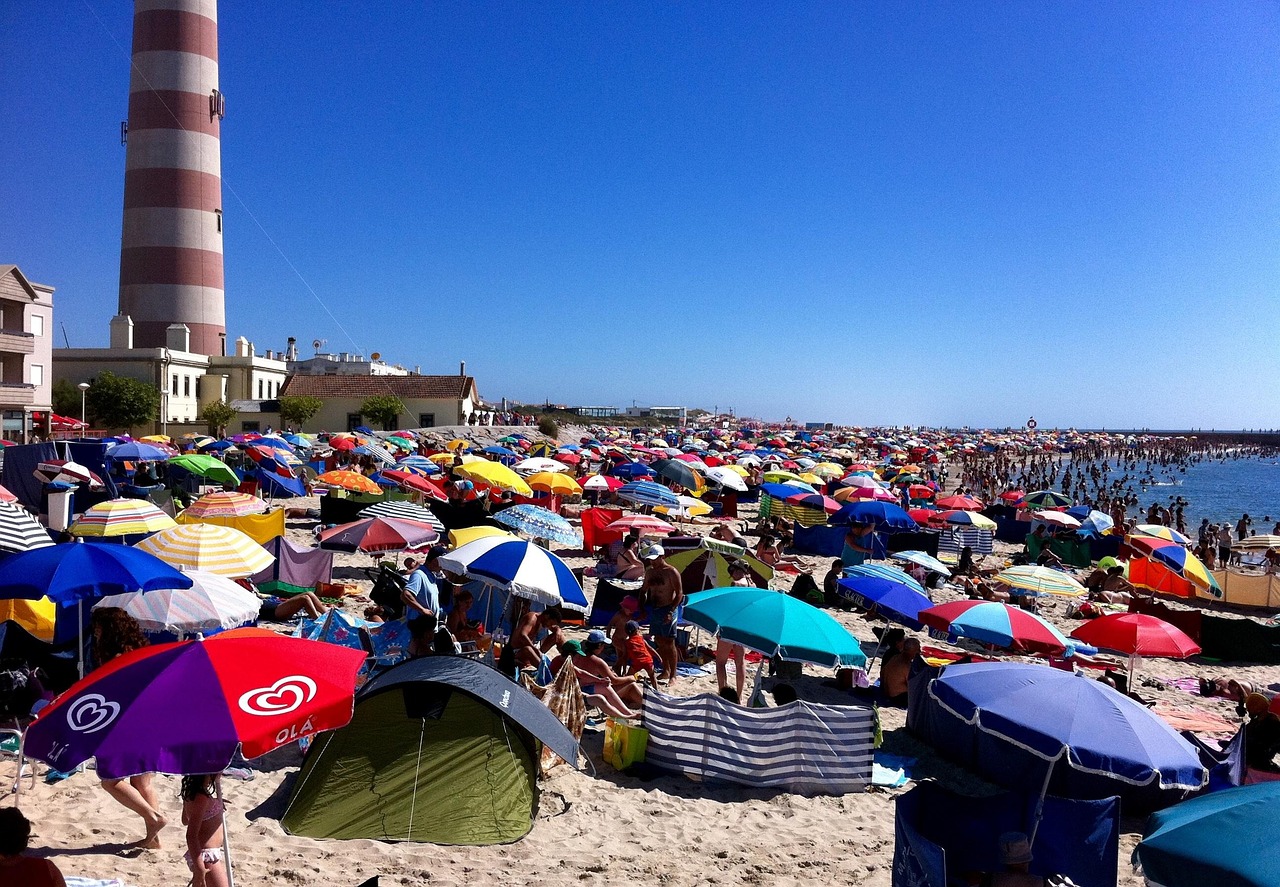
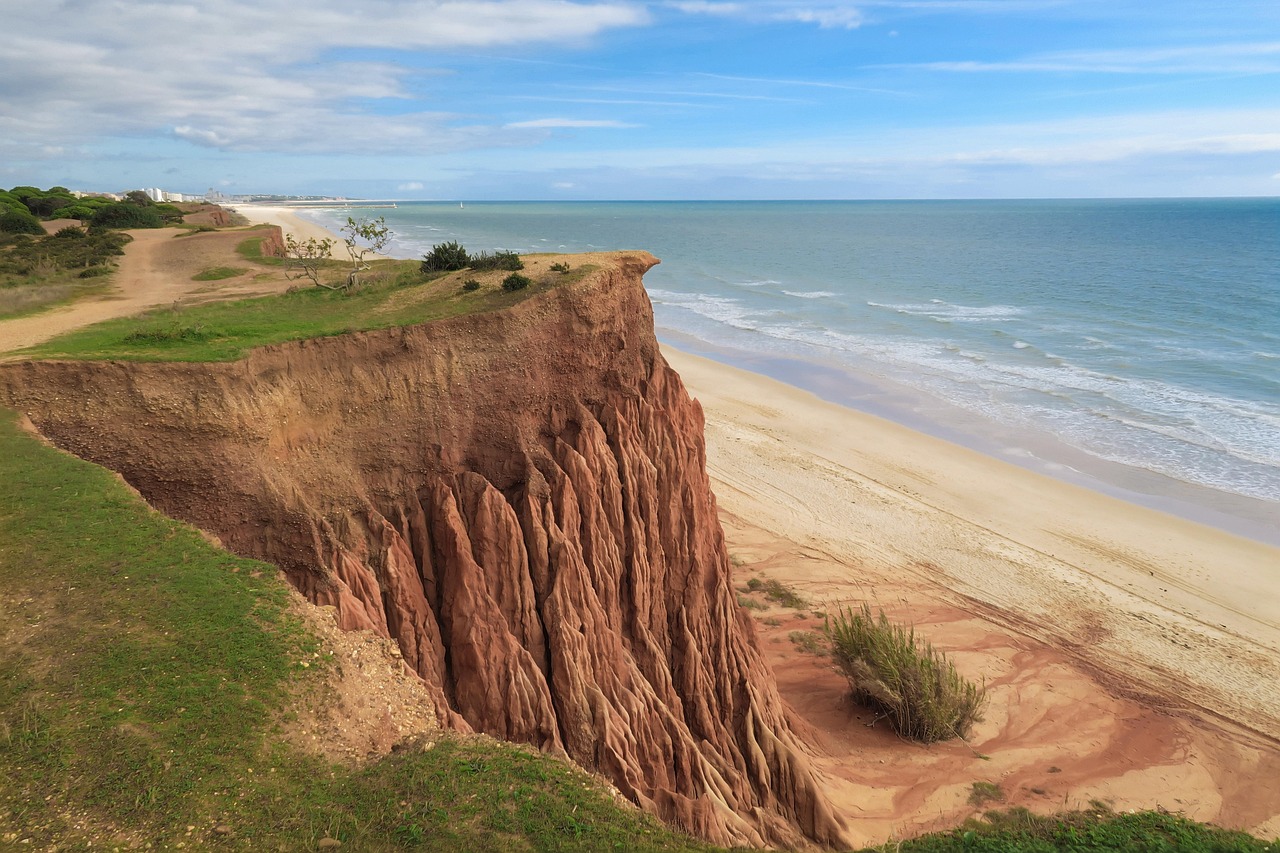
South of Porto, Portugal turns flat, wet and bright. Between the Atlantic and the Ria de Aveiro runs a narrow spit of dunes and pines: on one side the surf rolls in, on the other salt pans, herons and the painted prows of the moliceiros are mirrored in the still water. In Ovar and Aveiro whole streets wear dresses of tiles, and in Costa Nova the palheiros stand in red, blue and green stripes like beach towels in the sun. Through the sliding door you smell seaweed, resin and, in the evening, grilled sardines. Then the route changes element: inland, Baga grapes ripen for Bairrada sparkling wine, in Mealhada the suckling pig turns on the spit, and on the Buçaco ridge cedars, ferns and monks' chapels stand in the mist. At the end the Mondego flows through rice fields into the sea – and you are standing in the wind by the Atlantic once more.
Stage-by-stage plan
1Stage 1: Porto to Ovar (Praia do Furadouro) (approx. 45 km)
- The drive
- Porto is just the starting point: cross the Ponte da Arrábida or take the A44 to Vila Nova de Gaia, then follow the coastal N109 or the local roads via Granja to Espinho. Continue via Esmoriz and Cortegaça to Ovar and out to the beach at Furadouro. Flat country, lots of roundabouts, heavy commuter and lorry traffic on the N109; if you want to cover ground, take the tolled A29. Pure driving time a good hour.
- Highlights & must-sees
- Espinho: beach promenade in a grid street plan and the big weekly market, traditionally held on Mondays – arrive early then, as parking is scarce.
- Barrinha de Esmoriz: lagoon behind the dunes with boardwalks and birdwatching between Esmoriz and Paramos.
- Ovar: tiled façades in the old town, the Igreja Matriz and Pão-de-Ló de Ovar, a moist sponge cake, fresh from the pastry shops.
- CampingSpirit overnight tip
-
Official campsite or RV park: Parque de Campismo do Furadouro on Ovar's beach in the pine forest, a few minutes' walk to the sea; electric hook-ups and sanitary facilities – check the season and service point in advance. Alternatives further north: the Parque de Campismo de Esmoriz of the Clube de Campismo do Porto and the site in Cortegaça, both close to beach and dunes.
Free camping or nature tip (where legal): Portugal allows pernoita (overnighting in the vehicle without camping behaviour) outside protected areas for up to 48 hours per municipality, unless the municipality rules otherwise. The dune strips of Esmoriz, Cortegaça and Furadouro, however, lie in coastal protection zones where overnighting outside authorised sites is prohibited; beach car parks are also checked at night in summer. Better to use a campsite or aire.
- Insider tip for campers
- Avoid Porto city traffic: if you are coming from the north, bypass the city via the A28/VCI/A44 and spare yourself steep lanes and tram rails. In Ovar, do not drive into the narrow centre – park on the edge and see the tiled houses on foot. Furadouro is battling coastal erosion; parts of the beach promenade are protected by rock walls, so respect any barriers.
2Stage 2: Ovar (Furadouro) to Torreira (approx. 25 km)
- The drive
- From Furadouro head inland to Ovar and take the N327 south onto the spit between the Ria and the Atlantic. The road runs dead straight through pine and eucalyptus forest, with the lagoon shimmering on the left and the dunes on the right. Detour to Murtosa and the harbour at Bico. A very short stage with plenty of time for bike and boat; driving time under an hour.
- Highlights & must-sees
- Cais do Bico (Murtosa): small lagoon harbour where moliceiros with their raised, painted prows are moored – they once gathered seaweed for fertiliser.
- Torreira: Ria shore with moliceiro jetties and sunsets over the water, and a wide Atlantic beach on the other side.
- Cycle path along the Ria: flat stretches on shoreline paths between Murtosa and Torreira, ideal with a folding bike or e-bike.
- CampingSpirit overnight tip
-
Official campsite or RV park: Parque de Campismo da Torreira on the edge of town between the Ria and the dunes in the pine forest, with sanitary facilities and electric hook-ups; check the season, service point and access for large vehicles with the operator in advance. Torreira also has a designated parking area for motorhomes near the village; check facilities and current rules of use on site.
Free camping or nature tip (where legal): The whole Ria de Aveiro is a bird protection area in the Natura 2000 network. Pernoita and aparcamento outside authorised sites are prohibited there, and the fines are considerably higher than outside protected areas. Car parks on the Ria and at the beach accesses on the spit are fine by day, but not at night.
- Insider tip for campers
- The N327 is narrow with no hard shoulder, and in summer there are lots of cyclists – overtake with space (at least 1.5 m is mandatory in Portugal). Buy groceries beforehand in Ovar; there are only small shops on the spit. Moliceiro trips are mainly offered in Aveiro; in Torreira and Bico you are more likely to see the boats at their moorings and at regattas.
3Stage 3: Torreira to Costa Nova (via São Jacinto and Aveiro) (approx. 35 km)
- The drive
- Continue on the N327 through forest to the tip of the spit at São Jacinto. From there the municipal car ferry crosses the lagoon mouth to Forte da Barra on the Gafanha; then around 10 km on the A25/N109 to Aveiro and afterwards over the bridge to Costa Nova. Without the ferry, go back via Murtosa and Estarreja, which makes it around 75 km. Driving time without ferry and breaks a good hour.
- Highlights & must-sees
- Reserva Natural das Dunas de São Jacinto: waymarked loop with observation hides across dunes, pine forest and ponds; maps and opening times at the information centre of the nature conservation authority ICNF.
- Aveiro: canal trip on a moliceiro, Art Nouveau façades on the Canal Central and the blue-and-white tile panels on the old railway station building.
- Ovos moles: sweet egg-yolk cream in wafer shells shaped like shells and fish, a protected designation of origin, in Aveiro's pastry shops.
- CampingSpirit overnight tip
-
Official campsite or RV park: Costa Nova Camping (Parque de Campismo da Costa Nova do Prado) between the Ria and the ocean south of the palheiros: a large site with electricity, sanitary facilities and service point. A little further north by the lighthouse lies the Parque de Campismo da Barra in the pine forest. In Aveiro itself there is a motorhome car park on the edge of the city centre; check facilities and rules in aire apps. On the spit north of São Jacinto there is an Orbitur site in the pine forest; the municipal campsite in São Jacinto, by contrast, was recently closed for renovation – check the current status in advance.
Free camping or nature tip (where legal): The dunes of São Jacinto are a nature reserve and the Ria a Natura 2000 site – overnighting outside authorised sites is not permitted here and is enforced. At Costa Nova and in Barra, too, motorhomes on the beach promenade are not welcome in season; observe the signs of the municipality of Ílhavo.
- Insider tip for campers
- The car ferry between São Jacinto and Forte da Barra (an electric vessel) carries vehicles; whether motorhomes may board, and up to what length, height and weight, is not reliably published – ask the city of Aveiro in advance, along with the timetable. It is occasionally cancelled in storms, heavy seas or technical faults; then the only option is the land route. Aveiro's centre is cramped and has few parking spaces for large vehicles – go into town from the campsite by bike over the bridge or by bus.
4Stage 4: Costa Nova to Praia da Vagueira (via Barra and Ílhavo) (approx. 35 km)
- The drive
- A short loop on the south side of the lagoon: to the lighthouse at Barra, then inland to Ílhavo and Vista Alegre, and finally on the N109 and minor roads via Gafanha da Boa Hora south to Praia da Vagueira. Flat country, fields, canals and pine forest; driving time under an hour.
- Highlights & must-sees
- Costa Nova: the striped palheiros, once the fishermen's storehouses, on the Ria promenade – at their most beautiful in the morning light.
- Farol da Barra: Portugal's tallest lighthouse at the harbour entrance of Aveiro; visits only at certain times, so check beforehand.
- Museu Marítimo de Ílhavo on cod fishing, with an aquarium, plus the Vista Alegre porcelain factory with museum and chapel, and the museum ship Santo André in Gafanha da Nazaré.
- CampingSpirit overnight tip
-
Official campsite or RV park: Parque de Campismo da Vagueira (Orbitur) in the pine forest behind Vagueira beach; check electricity, sanitary facilities, season and facilities with the operator in advance. Around 20 km further south in Praia de Mira are the municipal Parque de Campismo Municipal de Mira and a fully equipped Orbitur site.
Free camping or nature tip (where legal): The coastal strip between Vagueira and Mira is part of the Natura 2000 site of the dunes of Mira, Gândara and Gafanhas; overnighting outside authorised sites is prohibited. In Ílhavo, aire apps list a motorhome aire in São Salvador; check facilities and rules there.
- Insider tip for campers
- Best to fill up and empty at the campsite at Costa Nova before you set off. Vista Alegre has a factory outlet selling seconds. The jetties at Barra are dangerous in heavy surf – do not climb onto the breakwaters.
5Stage 5: Praia da Vagueira to Luso (via the Bairrada and Mealhada) (approx. 65 km)
- The drive
- From the coast inland via Vagos and Oliveira do Bairro into the Bairrada wine region with Anadia, Sangalhos and the spa town of Curia, then on the N1 to Mealhada and on the N234 up to Luso at the foot of the Serra do Buçaco. Minor roads through vineyards, villages and eucalyptus hills, with the first climbs at the end. Driving time just under 1.5 hours.
- Highlights & must-sees
- Bairrada wine estates: red wine from the Baga grape and traditional bottle-fermented sparkling wine; many wineries offer tours and tastings, usually by appointment. In Anadia, the Museu do Vinho Bairrada explains the region.
- Curia: spa park with a lake and Belle Époque hotels, good for a walk in the shade.
- Mealhada: leitão à Bairrada – suckling pig roasted in a wood-fired oven with pepper sauce, served with Bairrada sparkling wine; the restaurants line the N1.
- CampingSpirit overnight tip
-
Official campsite or RV park: Parque de Campismo de Luso on the edge of town, close to the spa and the Buçaco forest; check facilities, season and condition in advance. Also in the Bairrada is the Parque de Campismo de Aguada de Baixo. Several wine estates in the region host motorhomes for one night (via host networks for motorhomes or ask directly).
Free camping or nature tip (where legal): Outside protected areas the 48-hour pernoita rule applies, unless the municipality stipulates otherwise. Restaurant car parks in Mealhada are for customers – after your meal, spend the night at a wine estate or aire, not in the restaurant car park. And after wine and sparkling wine, the rule anyway is: no more driving.
- Insider tip for campers
- Go for leitão at lunchtime: in the evening the big restaurants are often full, and on Sundays there are large family groups – book ahead. The N1 through Mealhada is busy; parking long vehicles is usually easier at the big restaurants than in the town centre. Buy wine directly from the estates.
6Stage 6: Luso to Penacova (via the Buçaco forest) (approx. 30 km)
- The drive
- From Luso, enter the walled Mata Nacional do Buçaco through one of the three gates open to motor vehicles (Porta da Rainha, Porta das Ameias or Porta de Serpa) and follow narrow, winding forest roads to the palace and the Cruz Alta. Then descend from the ridge on minor roads to Penacova above the Mondego valley. Tight bends, some cobbles and overhanging branches; pure driving time 45 minutes, half a day with a forest walk.
- Highlights & must-sees
- Buçaco Palace Hotel: neo-Manueline palace from the late 19th century with tile panels and towers, next to the remains of the Carmelite convent of Santa Cruz.
- Via Sacra and Cruz Alta: Stations of the Cross with chapels up through the forest to the highest viewpoint, with views across the Bairrada to the sea; plus Fonte Fria with its water staircase and the fern-filled Vale dos Fetos.
- Luso: healing springs and spa; at the Fonte de São João locals fill canisters with the well-known mineral water free of charge.
- CampingSpirit overnight tip
-
Official campsite or RV park: In Penacova, by the Mondego, there is a municipal Área de Serviço para Autocaravanas with water and waste disposal, plus the Parque de Campismo de Penacova by the river. Check facilities, fees and season in advance.
Free camping or nature tip (where legal): Overnighting is not permitted in the Buçaco forest; the grounds are managed by the Fundação Mata do Bussaco, and vehicles may only enter by day – depending on season and day of the week, roughly from 9 am until 5, 6, 7 or 8 pm. The Mondego riverbank at Penacova has the aire as a legal alternative – riverside meadows and forest tracks are off limits, especially during the wildfire season.
- Insider tip for campers
- The foundation charges an entry fee for vehicles at the gate, considerably higher for motorhomes than for cars; access to the forest on foot and by bike is free. After storm damage, individual paths may be temporarily closed. If you drive a large motorhome, it is best to park in Luso and walk the steep path via the Fonte de São João up into the forest (a good 30 minutes uphill). Fill up with drinking water in Luso before you drive on to Penacova.
7Stage 7: Penacova to Figueira da Foz (via Coimbra and Montemor-o-Velho) (approx. 70 km)
- The drive
- Take the N110 along the Mondego to Coimbra, then minor roads or the N111 through the broad plain of the Baixo Mondego with its rice and maize fields to Montemor-o-Velho and on to Figueira da Foz. Winding in the valley at first, then flat; driving time around 1.5 hours, plus time for a visit to Coimbra.
- Highlights & must-sees
- Penacova: view from the Miradouro Emídio da Silva over the Mondego bends and the windmills of Portela de Oliveira; kayak tours on the river are offered in Penacova.
- Coimbra (briefly): the university on the hill with the Biblioteca Joanina, a UNESCO World Heritage Site – more on Coimbra in the CampingSpirit travel guide through central Portugal to the Serra da Estrela.
- Montemor-o-Velho: medieval castle overlooking the Mondego rice fields; nearby, the Paul de Arzila reserve with wet meadows and birdwatching.
- CampingSpirit overnight tip
-
Official campsite or RV park: Parque de Campismo Municipal da Figueira da Foz on the northern edge of town towards Buarcos, with sanitary facilities and electric hook-ups; south of the Mondego estuary lies the Orbitur site in Gala in the pine forest. For both, check the season and service point in advance.
Free camping or nature tip (where legal): In the Paul de Arzila (nature reserve) overnighting outside authorised sites is prohibited. In Figueira da Foz the large beach car parks are closely checked in season; motorhomes should use campsites or aires instead.
- Insider tip for campers
- Coimbra only as a day visit: the old town and university sit on a steep slope with narrow lanes – leave the motorhome down by the river and go up on foot or by bus. University visits use timed tickets; book ahead in season. In Montemor-o-Velho a narrow road leads up to the castle – park large vehicles down in the village.
8Stage 8: Figueira da Foz to Figueira da Foz (Serra da Boa Viagem) (approx. 35 km)
- The drive
- A round trip from Figueira via Buarcos to Cabo Mondego, up into the Serra da Boa Viagem and back via Quiaios. Short, partly steep mountain roads with forest sections, then flat dune country with lakes. Driving time under an hour.
- Highlights & must-sees
- Praia da Claridade: one of Portugal's widest beaches, with a long boardwalk promenade to Buarcos.
- Cabo Mondego: limestone cliffs with fossils, protected as a natural monument, plus a lighthouse and views over the bay.
- Serra da Boa Viagem and Lagoas de Quiaios: viewpoints over the coast and the Mondego estuary, and dune lakes such as the Lagoa da Vela.
- CampingSpirit overnight tip
-
Official campsite or RV park: A second night at the site in Figueira da Foz, or move to Quiaios, where the Parque de Campismo de Quiaios lies near beach and dunes; check the season and facilities in advance.
Free camping or nature tip (where legal): The Serra da Boa Viagem is a forested area with a high wildfire risk; in summer, fires and barbecues are banned and forest tracks are often closed. Overnighting in the forest and at the dune lakes is not permitted; use car parks at viewpoints by day only.
- Insider tip for campers
- Before heading home, fill up and empty and top up your gas: around Figueira there are several filling stations with autogas. The Lagoas de Quiaios are good places to swim when the surf on the sea is too high. From here the road continues south – if you want to carry on along the coast, you will find the next stage in the CampingSpirit travel guide to the Silver Coast and Lisbon.
Camping practice & local rules
Wild camping & overnight parking
- The legal basis is Art. 50.º-A of the Código da Estrada as amended by Lei n.º 66/2021: parking a motorhome is permitted wherever its vehicle class may park. Pernoita – staying in the motorhome with occupants between 10 pm and 7 am – is permitted outside protected areas for up to 48 hours in the same municipality, unless the municipality rules otherwise. Aparcamento, meaning an awning, chairs, table or levelling jacks that occupy more space than the vehicle, is prohibited outside authorised sites.
- In Natura 2000 sites, protected areas and within the scope of the coastal management plans (orla costeira), pernoita and aparcamento outside authorised sites are prohibited. On this route that affects almost the entire coast: the Ria de Aveiro, the São Jacinto dune reserve, the dunes of Mira, Gândara and Gafanhas, the Paul de Arzila and large parts of the beaches from Espinho to Figueira da Foz.
- You can overnight legally and without fuss at campsites (parques de campismo) and at Áreas de Serviço para Autocaravanas (ASA), where pernoita is expressly permitted – for example in Penacova. Enforcement is carried out by the GNR, Polícia Marítima and municipal police; fines in protected areas are twice as high as for breaches of the 48-hour rule. Camping in tents outside licensed sites is not permitted.
- Apps: park4night and Campercontact show aires and service points; user comments about quiet beach car parks do not change the legal position. Wine estates in the Bairrada host guests for one night via host networks for motorhomes.
Waste disposal & supplies
- Fresh water and waste disposal: the large campsites at Costa Nova, in Mira and Figueira da Foz have service points; there are also municipal ASAs such as in Penacova and aires around Aveiro and Ílhavo. In the Bairrada hinterland public service points are rarer – fill up and empty on the coast beforehand.
- Only empty grey water and cassettes at service points; draining in car parks or into drains is an offence and expensive in protected areas.
- Tap water is drinkable. Luso and other spa towns have public springs; filling bottles with mineral water is common, but fill your fresh-water tank at a service point, not at the fountain.
- Gas: German exchange cylinders are not swapped; Portuguese cylinders (Galp, Repsol, Rubis and others) have their own connections and are issued against a deposit. Autogas (GPL Auto) is available at many filling stations along the N109, the A1 and around Aveiro and Figueira da Foz; carry an adapter set for refillable tanks.
Vehicle size & traffic rules
- Speed limits: motorhomes up to 3.5 t as for cars – 50 km/h in built-up areas, 90 km/h outside built-up areas, 100 km/h on expressways, 120 km/h on motorways. Above 3.5 t lower limits apply (generally 80 km/h outside built-up areas and 90 to 100 km/h on motorways, depending on classification). Vehicles with trailers: 70 km/h outside built-up areas, 80 km/h on expressways, 100 km/h on motorways.
- Tolls: the A29 (Porto–Aveiro) and the A17 (Aveiro–Mira–Figueira da Foz) are electronic-only routes with no toll booths – number plates are recorded at gantries. Foreign vehicles need Easytoll for this (number plate linked to a credit card at the border), a registration with Via Verde Visitors or a rented Via Verde device; without registration you risk back charges with fees. On the A1 and A14 (Figueira–Coimbra) you pay conventionally at toll plazas; the lanes marked “V” are only for Via Verde devices. As a former SCUT motorway, the A25 is toll-free inland from Albergaria-a-Velha; on some sections between Aveiro and Albergaria-a-Velha tolls are still charged at gantries.
- Vehicle classes: two-axle vehicles less than 1.10 m high above the front axle are Class 1, from 1.10 m Class 2 – which in practice covers all high-roof panel vans and all motorhomes. Three-axle vehicles are Class 3. Classification as Class 1 with a Via Verde device is only possible under certain conditions; clarify individual cases with Via Verde in advance.
- Wildfires: during the critical period (generally July to September, extended in dry spells), open fires, barbecues outside designated places and driving on forest tracks in rural areas are prohibited; the weather service IPMA publishes the danger level daily. At high levels, forest areas such as Buçaco or the Serra da Boa Viagem may be closed. Large wildfires have left visible scars in the hinterland of the Aveiro district, and storms have cut swathes through the coastal forests.
- Atlantic: the Beira Litoral has strong surf and rip currents (agueiros), especially at high tide and near groynes and jetties. Only swim at lifeguarded beaches and observe the flags (red: no bathing, yellow: no swimming). Even in August the water is often only around 18 °C; in summer the north wind (nortada) picks up strongly in the afternoon, and coastal fog is common.
- Alcohol limit 0.5 ‰, 0.2 ‰ for new drivers and professional drivers – take this seriously after wine tastings in the Bairrada. Mobile phones only hands-free. Overtake cyclists with at least 1.5 m of space. Carry a warning triangle; a hi-vis vest is strongly recommended; bike racks must not obscure number plates or lights.
CampingSpirit packing & preparation checklist
- Via Verde device or an Easytoll account set up in advance – the A29 and A17 have no toll booths, only gantries.
- Bikes or e-bikes: the Ria shore, the spit and the canal city of Aveiro are flat, and in Aveiro and at Costa Nova you will get around better by bike than by motorhome.
- Windbreak and windproof jacket: in summer the nortada blows strongly on the coast almost every afternoon, and coastal fog makes the evenings cool.
- Empty canisters or water bottles for the spring water in Luso, and a cool box for ovos moles, Pão-de-Ló and Bairrada sparkling wine.
- Fire extinguisher and fire blanket on board, plus the IPMA app for wildfire warnings – Buçaco and the Serra da Boa Viagem are densely forested.
- Sturdy shoes for the steep paths in the Buçaco forest and the dune trails at São Jacinto.
As of 2026-10. Closures, fees and booking rules change: check official sources before you go.