

In-depth guide · CampingSpirit
From Padua through the Monti Berici to Palladio’s Vicenza, up the hairpins of the Costo onto the plateau of the Seven Communes and down to Marostica, Bassano, up Monte Grappa and on to Canova, Giorgione and Veronese: around 340 kilometres between villas, alpine pastures and places of remembrance.
The spirit of the route
This route changes altitude twice a day and changes era every time. Down in the lowlands, Palladio’s villas stand like temples between maize fields and vineyards, and in Vicenza’s Teatro Olimpico you look down wooden streets that feign a whole city. Then the Costo carries you upwards in hairpins, and at a thousand metres the air smells of hay, spruce and aged cheese. The plateau of the Seven Communes is wide, quiet and full of traces of the First World War: trenches in the forest, memorial columns on the summits, ossuaries where people fall silent. From the sliding door you see cows in front of a malga in the morning, and in the evening, in Bassano, the lights on the Brenta beneath the wooden bridge. At the end come Asolo on its hill, Canova’s white plaster casts and Veronese’s frescoes – a region best discovered in short stages.
Stage-by-stage plan
1Stage 1: Padua to Monti Berici (Arcugnano, Lago di Fimon) (approx. 50 km)
- The drive
- Padua serves only as the starting point: take the A4 to the Vicenza Est exit, or more leisurely the country road via Camisano, then skirt south around Vicenza to the Riviera Berica. The Villa Rotonda lies right on the road at the edge of town; after that, narrow, winding minor roads climb into the Monti Berici to Arcugnano and the Lago di Fimon. Around an hour of pure driving time; the hill lanes are narrow in places, so expect oncoming traffic on bends.
- Highlights & must-sees
- Villa Almerico Capra, “La Rotonda”: Palladio’s centrally planned building with four identical columned fronts; the garden and interiors are open only on certain days, so check times in advance.
- Villa Valmarana “ai Nani” right next door, with frescoes by Giambattista and Giandomenico Tiepolo; reachable on foot via a short connecting path.
- Lago di Fimon: a small, reed-fringed lake with a circular path, the starting point for walks across the wooded Berici hilltops.
- CampingSpirit overnight tip
-
Official campsite or RV park: In Padua, north of the centre, is the “Area Sosta Camper Padova” run by the car park operator Parcheggi Padova – check facilities and rates in advance; north-west of the city there is AgriCamping Padova, an agricampeggio. In the Monti Berici, the Agriturismo Il Lago at the Lago di Fimon offers pitches on the farm – ask the business directly about facilities, hook-ups and season. A more comfortable alternative for the first night is Camping Vicenza (see stage 2).
Free camping or nature tip (where legal): In the Monti Berici many minor roads are too narrow for overnight stops at the roadside, and the car parks at the villas are visitor car parks. Under Italian law, sleeping in the vehicle in permitted car parks is allowed as long as there is no camping behaviour – but at the Lago di Fimon it is hardly quiet at weekends because of the day-trippers. Better to choose a farm or a campsite.
- Insider tip for campers
- Padua’s old town is a ZTL with cameras – if you want to visit the Scrovegni Chapel, park outside and take the tram or bus; the chapel requires a fixed time-slot booking. On the way to the Rotonda, don’t turn into the residential streets around Monte Berico: the access road to the basilica on the hill is narrow, and large motorhomes are better parked down below.
2Stage 2: Monti Berici to Vicenza (approx. 15 km)
- The drive
- A short hop from the hills into the city, best via the Riviera Berica or Viale del Risorgimento to a car park outside the centre. The day belongs to the city on foot. The old town inside the walls is a ZTL monitored by cameras – on no account drive in with the camper.
- Highlights & must-sees
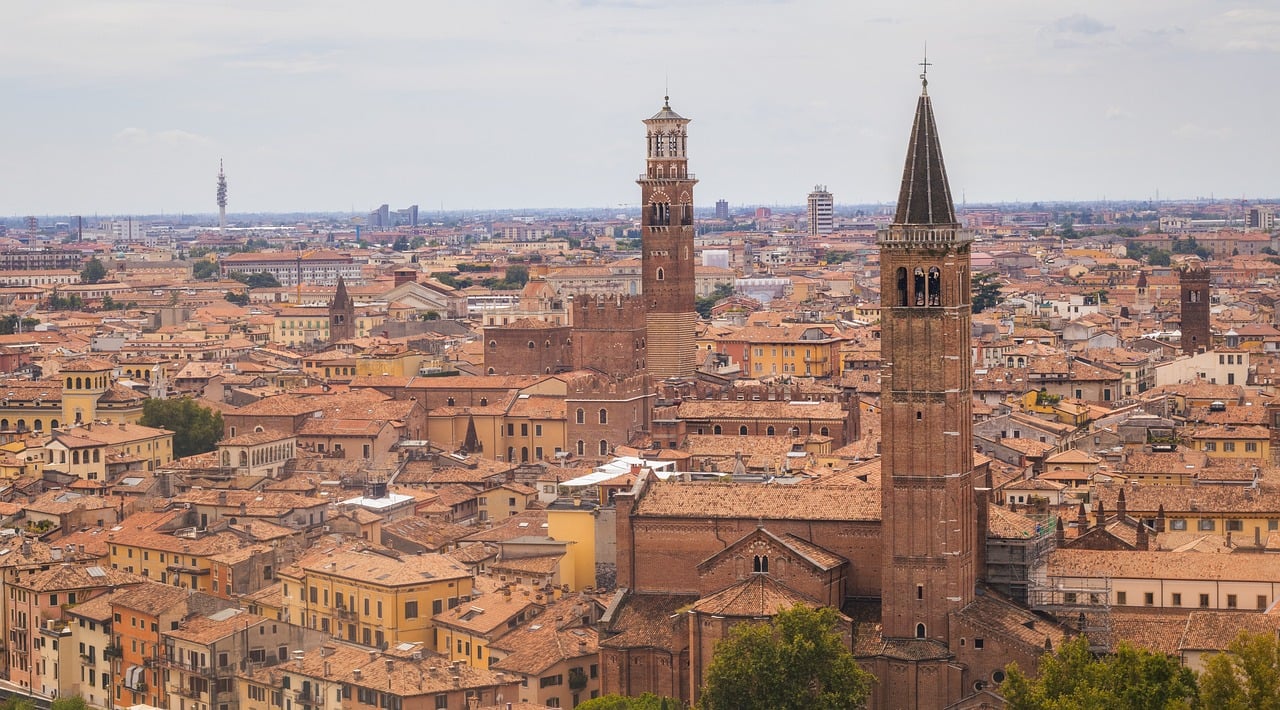
- Teatro Olimpico: Palladio’s last work, completed by Vincenzo Scamozzi, with the wooden stage architecture of the seven streets of Thebes – the oldest surviving roofed theatre with a permanent set.
- Basilica Palladiana on Piazza dei Signori with its two-storey loggia and roof terrace, plus Corso Palladio with palazzi by Palladio and his successors.
- Monte Berico: pilgrimage basilica on the hill with views over the city and the Pre-Alps; walk up from the city through the arcades of the Portici.
- CampingSpirit overnight tip
-
Official campsite or RV park: Camping Vicenza lies in Torri di Quartesolo near the Vicenza Est motorway exit, with hook-ups, sanitary facilities and a service point; you reach the centre by bus. As a city aire, camping guides list the fenced area on Via Pforzheim (Cricoli) with disposal; older entries mention a shuttle bus to the centre. Reviews are mixed and mostly not current – check its condition in the apps beforehand. A camper area is also listed at the Parco della Pace in the north of the city; check facilities and rules on site.
Free camping or nature tip (where legal): Within Vicenza, sleeping in regular car parks outside the ZTL is legally possible but not advisable – the designated areas are safer and hardly more expensive. No camping behaviour, no chairs, no awning.
- Insider tip for campers
- The UNESCO World Heritage Site “City of Vicenza and the Palladian Villas of the Veneto” includes not only the old town but also the Rotonda and Villa Barbaro in Maser at the end of the route; the combined ticket for the civic museums covers the Teatro Olimpico and other sites. Verona, Valpolicella and Lessinia to the west are covered in the CampingSpirit guide “Amarone, alpine pastures and fossil fish”.
3Stage 3: Vicenza to Asiago via Thiene and the Costo (approx. 60 km)
- The drive
- Head north on the SP46 or the A31 Valdastico (toll) to Thiene, then via Piovene Rocchette to Cogollo del Cengio. There the Costo (SP349) begins: a well-built mountain road, also used by lorries and buses, with a series of wide hairpins climbing onto the plateau near Treschè Conca, then via Canove to Asiago (around 1,000 m). A good 1.5 hours; later, use low gears on the way down.
- Highlights & must-sees
- Castello di Thiene: a late-Gothic villa with battlements and corner towers, privately owned and open only at certain times on guided tours.
- Viewpoints on the upper hairpins of the Costo, looking across the plain as far as the Euganean Hills on clear days.
- Asiago: main square with the natural-stone town hall and the church of San Matteo, and in the shops Asiago cheese in its “fresco” and “d’allevo” varieties.
- CampingSpirit overnight tip
-
Official campsite or RV park: Camping Ekar lies around 4 km south-east of Asiago’s centre in the forest on the SP72, with sanitary facilities and a camper service point (included for guests, extra for passing vehicles). According to camping guides the site is open roughly from mid-April to the end of September and closed in winter; check dates in advance. Designated, well-equipped municipal aires are rare on the plateau: camper forums mention a few car parks on the edge of Asiago and in Canove di Roana (not on market day there) – rules and fees change, so check the current situation on CamperOnline or park4night.
Free camping or nature tip (where legal): There are many car parks at trailheads and malghe on the plateau; overnight stays without camping behaviour are partly tolerated there, but not on market days or during events. In the Veneto, forestry and pasture tracks are by regional law generally closed to private motor traffic – don’t turn off onto gravel tracks, even if the app shows a lovely spot.
- Insider tip for campers
- Detour note: west of Thiene, valleys lead to Valdagno and Recoaro Terme and the Piccole Dolomiti; the mountain roads there are narrow and steep and only partly suitable for large motorhomes. Avoid the climb to Asiago on the Valstagna road (Valbrenta–Foza) with its tight hairpins – the Costo is the motorhome route. Fill up once more in Piovene Rocchette or Thiene: there are few filling stations on the plateau.
4Stage 4: Asiago to Asiago (loop across the plateau) (approx. 55 km)
- The drive
- A day loop without changing pitch: to the Sacrario on the edge of town, then via Gallio to Campomulo. The onward drive of a good 10 km to Piazzale Lozze, the starting point for the Ortigara area, is reportedly largely unpaved and full of potholes, the last stretch narrow with tight hairpins and in spring often still snowbound or winter-damaged – leave the motorhome in Campomulo and continue by bike, on foot or in an off-road vehicle. Back via Gallio, optionally east to Foza with a view into the Brenta gorge. Around 2 hours of driving in total.
- Highlights & must-sees
- Sacrario Militare di Asiago on the Leiten hill: an ossuary holding the remains of more than 50,000 soldiers who fell in the First World War, including Austro-Hungarian soldiers. A place of remembrance – appropriate clothing, silence.
- Monte Ortigara: the memorial column “Colonna Mozza” on the summit recalls the costly battle of June 1917; from Piazzale Lozze a mountain hike of several hours on wartime paths, requiring sure-footedness and maps.
- Malghe on the plateau: many alpine farms sell cheese and butter directly in summer; respect paths and pastures, close gates.
- CampingSpirit overnight tip
-
Official campsite or RV park: Second night at Camping Ekar in Asiago. If you want to move on, you’ll find the odd agriturismo with pitches in the plateau’s other communes – phone ahead to check whether motorhomes are welcome.
Free camping or nature tip (where legal): Don’t stay overnight around the memorials or in the car parks of the malghe: these are places of remembrance and working areas for the alpine farmers respectively. Piazzale Lozze and Campomulo are busy with hikers in summer; wild camping is not recommended there. Lighting fires in the forest is prohibited.
- Insider tip for campers
- The plateau has a bilingual heritage: the Seven Communes (Sette Comuni) were Cimbrian, and German place and field names appear on signs. Leave finds from the positions – ammunition, barbed wire – where they lie: taking them is prohibited, and unexploded ordnance is still dangerous. You can also get Asiago cheese with the DOP seal at the dairy shop in town, often cheaper than in the souvenir shop.
5Stage 5: Asiago to Bassano del Grappa via Marostica (approx. 50 km)
- The drive
- Via Canove and Lusiana Conco to the southern edge of the plateau, then down through countless hairpins, forest and chestnut groves via Crosara to the plain at Marostica; from there continue on the flat country road to Bassano. Around 1.5 hours; the descent is winding and narrow in places – don’t crowd groups of cyclists, and go easy on the brakes.
- Highlights & must-sees
- Piazza degli Scacchi in Marostica: the square with the inlaid chessboard on which a game with living pieces is played in even-numbered years.
- Castello Inferiore on the square and Castello Superiore up on the slope, linked by the crenellated wall; a footpath leads up.
- Ponte Vecchio in Bassano: the covered wooden bridge over the Brenta built to Palladio’s design, also called “Ponte degli Alpini”, with a small Alpini museum and the Grapperia Nardini at the bridgehead.
- CampingSpirit overnight tip
-
Official campsite or RV park: Area Sosta Camper Bassano on Viale Alcide De Gasperi (Gerosa car park), a little over 1 km from the old town: just under 30 pitches, barrier, service point, electricity, open all year; fee-paying and limited to around 48 hours, check rates on site. In Marostica, campers use the car park at the former hospital (Vecchio Ospedale) near the wall, with water.
Free camping or nature tip (where legal): Bassano and Marostica offer enough legal spaces; wild camping on the banks of the Brenta is frowned upon, and the Brenta also rises quickly in heavy rain. No camping behaviour in public car parks.
- Insider tip for campers
- The old towns of Bassano and Marostica have traffic-restricted zones, and Bassano’s is camera-monitored. Grappa distilleries: besides Nardini, the Poli Grappa Museum at the bridgehead shows the distilling process; distillery tours in the surrounding area often require booking. Don’t drive afterwards – Italy’s limit is 0.5 per mille, 0.0 for new drivers. Marostica is also known for its cherries (IGP), in season in late spring.
6Stage 6: Bassano del Grappa to Asolo via Monte Grappa and Possagno (approx. 80 km)
- The drive
- To Romano d’Ezzelino, then up the Strada Cadorna (SP148): built as a military road in the First World War, it winds through many hairpins for around 25 km to just below the summit (around 1,775 m). Paved and also used by coaches, but narrow in places and without crash barriers; heavy cycle and motorcycle traffic at weekends. Return the same way to the valley, then along the Pedemontana country road via Borso and Crespano to Possagno and Asolo. Around 2.5 hours of driving.
- Highlights & must-sees
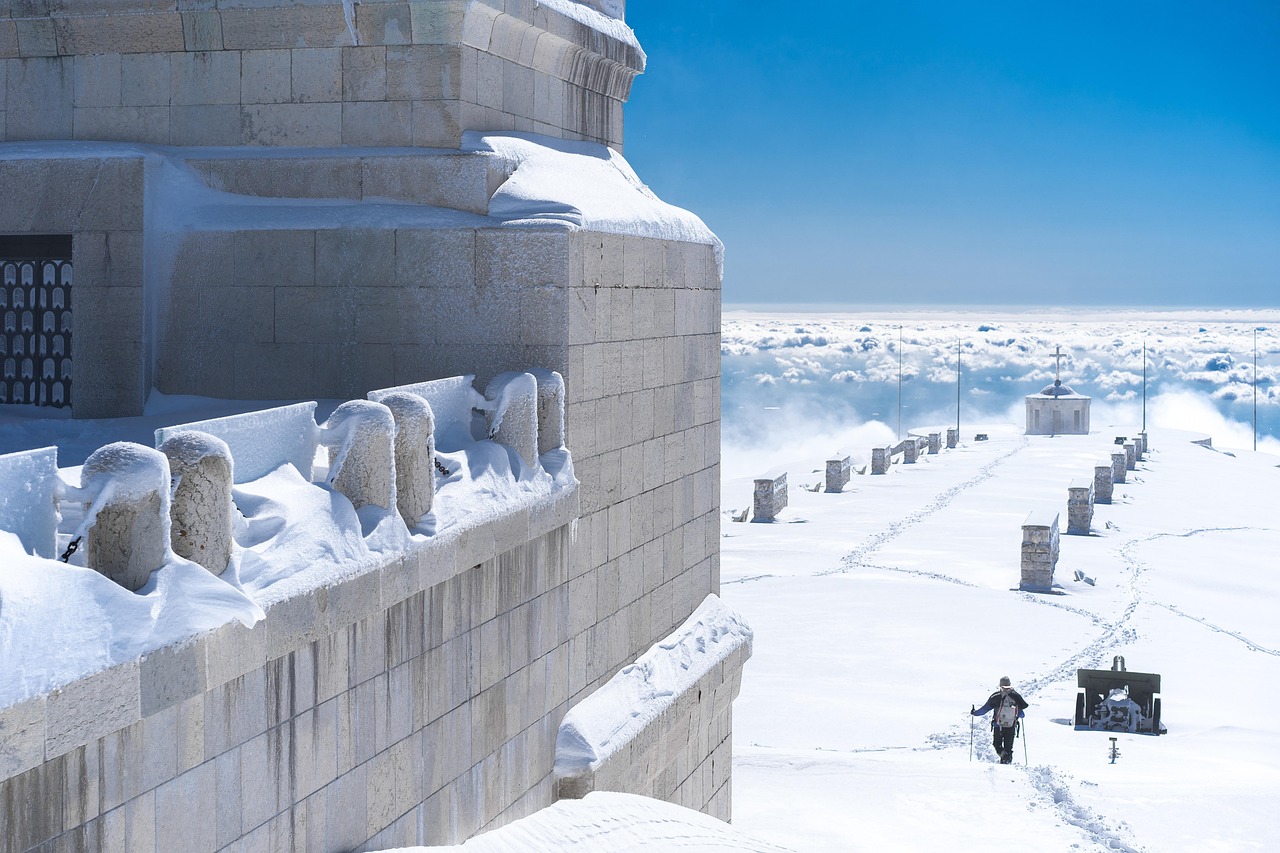
- Sacrario Militare del Monte Grappa at the summit: a terraced memorial holding the remains of Italian and Austro-Hungarian dead, plus the Galleria Vittorio Emanuele, a tunnel system blasted into the rock. Behave respectfully, no picnics in the memorial area.
- Gipsoteca and birthplace of Antonio Canova in Possagno, with the sculptor’s plaster models, displayed in a wing designed by Carlo Scarpa; above it the Tempio Canoviano.
- Panorama from the Grappa summit across the Venetian plain to the lagoon and into the Dolomites – clearest early in the morning.
- CampingSpirit overnight tip
-
Official campsite or RV park: Municipal Area Camper Asolo at the Forestuzzo car park (P2), around 400 m below the old town: about 15 hard-standing pitches, open all year, with water, disposal and electricity, barrier; fee-paying, check rates and access in advance. It’s a steep walk uphill into the town. Alternative at the foot of the Grappa: Camping Santa Felicita (Antica Abbazia) near Romano d’Ezzelino in a wooded valley; ask about facilities and season in advance.
Free camping or nature tip (where legal): Monte Grappa is a UNESCO Biosphere Reserve; there is no overnight parking in the summit car park at the Sacrario, and the pasture car parks along the Strada Cadorna are not pitches either. Better to stay down in the valley.
- Insider tip for campers
- Before the ascent, check brakes and coolant, and drive downhill in second or third gear. Longer motorhomes should take hairpins wide when there is oncoming traffic and wait in passing places. From 15 November to 15 April winter equipment is compulsory on the mountain roads; in snow the Strada Cadorna is closed or passable only with chains. The steep, narrow secondary ascents, such as from Semonzo, are unsuitable for larger motorhomes.
7Stage 7: Asolo to Castelfranco Veneto via Maser (approx. 30 km)
- The drive
- From Asolo head east through vineyards and hills to Maser and the Villa Barbaro, then south on straight country roads via Caerano onto the plain to Castelfranco Veneto. Flat, well built, just under an hour. From there it is around 35 km back to Padua.
- Highlights & must-sees
- Asolo: the Rocca above the town, the Museo Civico with mementoes of Caterina Cornaro, and in the cemetery of Sant’Anna the graves of Eleonora Duse and Freya Stark.
- Villa Barbaro in Maser: Palladio’s villa with frescoes by Paolo Veronese, with the Tempietto Barbaro in front; the family also runs a winery, check visiting times in advance.
- Castelfranco Veneto: castle walls with a moat, Giorgione’s “Pala di Castelfranco” in the cathedral, and next door the Casa Giorgione museum.
- CampingSpirit overnight tip
-
Official campsite or RV park: Area di sosta on Via Valsugana in Castelfranco Veneto, designated by the municipality, a few minutes’ walk from the wall; check facilities and fees on site. Otherwise, for the last night before Padua, the Area camper in Cittadella with its walkable town wall, around 15 km to the west, is a good choice.
Free camping or nature tip (where legal): On the plain around Castelfranco and Maser there are enough legal spaces; overnight stays in winery car parks only with permission. The approaches to the villas are often narrow avenues – don’t occupy visitor car parks overnight.
- Insider tip for campers
- Asolo’s lanes are steep, narrow and traffic-restricted: leave the camper at the area below. The Prosecco hills around Valdobbiadene and the Dolomiti Bellunesi to the north-east are covered in the CampingSpirit guide “Sparkling wine, Renaissance towns and Dolomite walls”, and the Venetian Lagoon and the Po Delta in the guide “Reeds, brackish water and brick abbeys”.
Camping practice & local rules
Wild camping & overnight parking
- Italian law (Codice della Strada, Art. 185) distinguishes between “sosta” and “campeggio”: a motorhome may park, and be slept in, wherever parking is permitted. What is prohibited is camping behaviour – chairs, table, awning, lowered steadies or levelling ramps, grey water on the ground.
- Municipalities can ban motorhomes from certain car parks or limit parking time by ordinance; signs showing a crossed-out motorhome apply. On the Asiago Plateau and on Monte Grappa, nature and memorial areas restrict parking further.
- Forestry and pasture tracks (strade silvo-pastorali) in the Veneto are generally closed to private motor traffic; pitching a tent or camping in the forest and on pastures is prohibited without permission. Don’t stay overnight at the First World War memorials.
- You can stay legally at campsites, municipal “aree di sosta” and agriturismi with pitches. Useful apps: CamperOnline (Italian directory of aires with user reports), park4night, Campercontact.
Waste disposal & supplies
- Fresh-water and waste disposal is called “camper service” or “carico e scarico”; many stations take coins, tokens or cards, and at fenced areas use is included in the parking fee.
- There are only a few disposal points on the Asiago Plateau – empty your tanks and fill up with fresh water in Vicenza or Thiene before the climb.
- Tap water in the Veneto is generally drinkable; don’t use fountains marked “acqua non potabile”. At alpine farms, only draw water after asking.
- Gas: German exchange cylinders are not exchanged in Italy. Fill refillable cylinders and gas tanks at LPG (GPL) stations with the Italian adapter; in many places only staff may refuel, and foreign cylinders are often refused. Arrive with full cylinders.
Vehicle size & traffic rules
- Speed limits: motorhomes up to 3.5 t 90 km/h outside built-up areas, 110 km/h on dual carriageways, 130 km/h on motorways; over 3.5 t 80 km/h outside built-up areas and 100 km/h on motorways. Caravan combinations 70 km/h outside built-up areas, 80 km/h on motorways. Dipped headlights are compulsory during the day outside built-up areas.
- Tolls: the A4 Padua–Vicenza and the A31 Valdastico are tolled by distance; the class depends on the number of axles and the height above the front axle (limit 1.30 m) – most two-axle motorhomes travel in class B. The Superstrada Pedemontana Veneta between Thiene, Bassano and Montebelluna is also tolled. Pay in cash, by card or electronically via Telepass or an EU toll box.
- ZTL: the old towns of Padua, Vicenza and Bassano are camera-monitored zones with restricted access, and Asolo, Marostica and Castelfranco also have traffic-calmed centres. Fines arrive by post, even months later – only drive as far as the car parks on the edge.
- Mountain roads: the Costo, the Strada Cadorna and the descents from the plateau have many hairpins; some minor routes (such as Valbrenta–Foza) are narrow and unsuitable for long vehicles. Local length or weight restrictions are signposted and apply.
- Winter equipment (winter tyres or snow chains on board) is required by provincial ordinance from 15 November to 15 April on the roads to the Asiago Plateau, on Monte Grappa and on many other sections; mountain roads are closed in snow. If a load projects beyond the rear, the red-and-white warning panel (50 × 50 cm) is compulsory. Blood alcohol limit 0.5, mobile phone at the wheel only hands-free.
CampingSpirit packing & preparation checklist
- Sturdy hiking boots and a head torch – on the Ortigara and Monte Grappa, paths lead through positions and short tunnels, and inside the rock it is dark and slippery.
- Cool box or a well-chilled fridge for Asiago cheese from the malga and cherries from Marostica.
- Levelling ramps – not every aire or car park is level, and in Italy ramps belong only on designated pitches.
- Snow chains matching your tyre size for autumn and spring trips onto the plateau or the Grappa, plus gloves for fitting them.
- Red-and-white warning panel to the Italian standard for the rear carrier.
- A light bike or e-bike: the flat cycle path along the Brenta and the tracks on the plateau replace some trips in the motorhome.
As of 2026-10. Closures, fees and booking rules change: check official sources before you go.