

In-depth guide · CampingSpirit
A good 530 kilometres through Brandenburg's quiet north-east: elk and wolves in the Schorfheide, a monastery without a roof, a lift for ships, flooded polders on the Oder and, at the end, Brecht's summer house on Lake Schermützel.
The spirit of the route
North-east of Berlin the countryside quickly falls silent. Beyond Bernau, pines and beeches close ranks to form the Schorfheide, avenues of trees draw green tunnels over cobblestones, and in the mornings mist lies over the reeds and water lilies on the lakes of the Uckermark. From the sliding door you see fieldstone churches, stork nests on barn gables, cranes on harvested fields and, on the Oder, a wide floodplain where water and meadow trade places. The route is flat but not dull: terminal moraines, kettle holes and glacial tunnel-valley lakes give it relief, and the brick Gothic of Chorin, Prenzlau and Angermünde gives it its backdrop. This loop lives at the pace of a bicycle or canoe – short driving days, long evenings on the jetty, fish rolls from the smokehouse and nights as dark as you rarely find any more.
Stage-by-stage plan
1Stage 1: Bernau bei Berlin to Werbellinsee (approx. 70 km)
- The drive
- From Bernau north via Wandlitz past the Liepnitzsee, then on state roads and dead-straight forest rides into the Schorfheide to Groß Schönebeck and on via Joachimsthal to the Werbellinsee. Mostly good, narrow country roads, partly tree-lined avenues without a hard shoulder; watch for deer crossing at dusk. Around 1.5 hours of pure driving time.
- Highlights & must-sees
- Bernau: the town wall with the Steintor gate and the Hungerturm tower, and the former ADGB Trade Union School in the Waldfrieden district, part of the UNESCO World Heritage Site “Bauhaus and its Sites”.
- Wildpark Schorfheide near Groß Schönebeck: forest enclosures with wolves, elk, lynx and Przewalski's horses, reached by a network of paths around seven kilometres long, plus the hunting lodge in the village.
- Joachimsthal: the viewing platform on the water tower (Biorama project) with a panoramic view over the forests of the Schorfheide, right by the historic Kaiserbahnhof station.
- CampingSpirit overnight tip
-
Official campsite or RV park: There are several campsites on the Werbellinsee, including Camping Am Spring and the Ferienparadies am Werbellinsee, as well as the Voigtswiese site; some of the sites are largely taken up by seasonal campers, and touring pitches by the water are scarce in summer. Electricity and sanitary facilities are standard; ask in advance about motorhome service points. The season usually runs from spring to autumn.
Free camping or nature tip (where legal): The Schorfheide is part of the UNESCO Schorfheide-Chorin Biosphere Reserve; forest tracks and game fields are closed to motor vehicles, and under the Brandenburg State Forest Act driving and parking motor vehicles in the forest is permitted only for forestry, hunting and official duties. Walkers' car parks on the lakeshore are not overnight spots – the bathing areas on the Werbellinsee are checked in summer.
- Insider tip for campers
- Fill up and shop in Bernau or Wandlitz: there are hardly any petrol stations in the Schorfheide. Bernau lies outside the Berlin low-emission zone; if you are coming from Berlin, you need the green sticker inside the S-Bahn ring. The loop through the Wildpark takes a good two to three hours – wear sturdy shoes, the paths are sandy.
2Stage 2: Werbellinsee to Oderberg (approx. 55 km)
- The drive
- Via Joachimsthal and country roads through beech forest and terminal-moraine hills to Chorin, then down into the Eberswalde glacial valley to Niederfinow and along the edge of the Oderbruch to Oderberg. A quiet route with cobblestones in some villages; heavy parking traffic at the ship lift on busy excursion days. About 1.25 hours of driving time.
- Highlights & must-sees
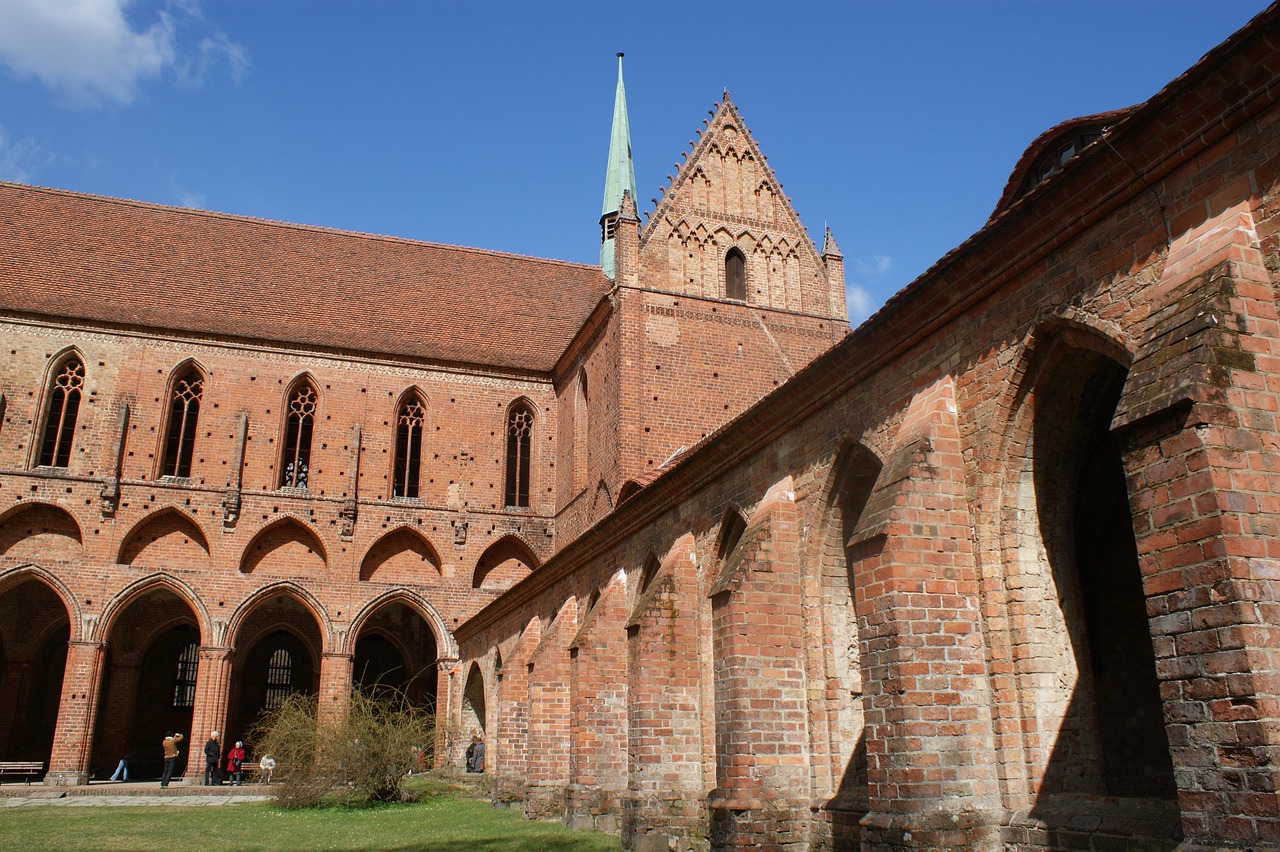
- Chorin Monastery: a brick Cistercian abbey, built on its present site from 1273, with its tall, roofless west front by the Amtssee.
- Niederfinow ship lifts: the old lift of 1934, an industrial monument with a visitor platform, and the new lift next to it, opened in 2022; at the foot, a visitor centre explains both structures.
- Oderberg: the Inland Navigation Museum with the paddle steamer “Riesa”, and the dry slopes of the Pimpinellenberg with steppe grassland.
- CampingSpirit overnight tip
-
Official campsite or RV park: In Oderberg, motorhomes park at the Marina Oderberg, which the Angermünde tourist association lists as a motorhome site with water and electricity. Alternatively, Triangel Camping in Niederfinow, close to the ship lift, or the Natur- und Familiencampingplatz Pehlitzwerder on a peninsula in the Parsteiner See – where the monks of Chorin founded their first monastery. Check facilities and season in advance.
Free camping or nature tip (where legal): The visitor car parks at the ship lift charge a fee and are designed for day visitors. The Oder slopes near Oderberg and Liepe are partly a nature reserve – no parking on farm tracks or at the edge of the slopes.
- Insider tip for campers
- The old ship lift is closed at times for renovation work, and shipping on the Havel-Oder Waterway is suspended when there is ice. If you want to see ships in the trough, check the ship lifts' website beforehand. The finest view is from the upper water above the lift – reachable on foot across the site from the car park.
3Stage 3: Oderberg to Angermünde (approx. 50 km)
- The drive
- Via Liepe and Brodowin through hilly terminal moraines, past the Parsteiner See and the Wesensee, then north to Angermünde. Some village roads are narrow and cobbled; do not drive on farm tracks. Including a detour to the Grumsin Forest, around 1.5 hours of driving time.
- Highlights & must-sees
- Brodowin: an organic village with a Demeter farm and farm shop between the lakes.
- Grumsin Forest: beech forest, part of the UNESCO World Natural Heritage Site “Ancient Beech Forests” since 2011, with a circular trail from Altkünkendorf.
- Angermünde: old town with St Mary's Church, the Franciscan monastery and the Mündesee on the edge of town.
- CampingSpirit overnight tip
-
Official campsite or RV park: According to the tourist association, the Wohnmobil- und Caravanstellplatz Angermünde near the old town has around ten pitches with electricity and service point. Quieter and with a bathing spot: Camping am Wolletzsee west of town. There are also a few motorhome pitches at the NABU Blumberger Mühle nature centre.
Free camping or nature tip (where legal): The Grumsin Forest is a core zone: stay on the paths, park only in the signposted walkers' car park, no overnight stays. In the nature reserves of the biosphere reserve, you must keep to the paths, and driving off designated roads is prohibited.
- Insider tip for campers
- The farm shop in Brodowin and the fishery on the Parsteiner See are good places to stock up. In late summer and autumn, cranes rest on the Parsteiner See and in the fields around Brodowin – keep your distance and bring binoculars. Angermünde's old-town streets are narrow; with a large vehicle, park outside.
4Stage 4: Angermünde to Schwedt/Oder (approx. 40 km)
- The drive
- East to Stolpe and down to the Oder, then along the edge of the valley floodplain via Criewen to Schwedt. A short, level stage on country roads; the dyke tracks in the national park are closed to motor vehicles. Under an hour of pure driving time – the rest of the day belongs to the bike or the canoe.
- Highlights & must-sees
- The “Grützpott” castle tower in Stolpe above the Oder valley, a medieval keep with walls several metres thick.
- Nationalparkhaus Criewen in the Lenné Park, with an exhibition on the Lower Oder Valley National Park, Germany's only floodplain national park.
- Polder tracks between Criewen and Schwedt: by bike on the dyke through wet meadows with white-tailed eagles, cranes, geese and corncrakes.
- CampingSpirit overnight tip
-
Official campsite or RV park: In Schwedt, the small Wohnmobilstellplatz Nationalpark Unteres Odertal on Brunnenstraße (according to the directory, four pitches with electricity and service point, no toilet block, open all year) and the StroamCamp on the Oder with space for motorhomes and tents. There are further motorhome sites on the Oder in Stolzenhagen (around twelve pitches) and in Stolpe.
Free camping or nature tip (where legal): In the national park you must keep to the paths, and dogs must be on a lead; camping, pitching tents and overnight stays outside designated sites are prohibited. The wet polders are flooded in the winter half of the year; paths may then be under water and closed.
- Insider tip for campers
- Here the bike is the better vehicle: the Oder-Neisse Cycle Route runs along the dyke, and the polder roads are closed to cars. Mosquitoes are plentiful in the floodplain in early summer – wear long clothing for evening outings. Schwedt is a refinery town; for fuel and shopping it is the best address on this stage.
5Stage 5: Schwedt/Oder to Prenzlau (approx. 80 km)
- The drive
- North parallel to the Oder via Gartz and Mescherin, then west through the wide, rolling farmland of the Uckermark to Prenzlau. Well-built federal and state roads with little traffic, avenues of trees and long views. About 1.5 hours of driving time.
- Highlights & must-sees
- Gartz (Oder): a small farming town with remains of the town wall and a gate tower above the northern end of the national park.
- Mescherin: a fishing village on the West Oder with views across the river floodplain to Poland.
- Prenzlau: St Mary's Church with its richly articulated east gable, a masterpiece of northern German brick Gothic, and the Seepark on the Unteruckersee.
- CampingSpirit overnight tip
-
Official campsite or RV park: In Prenzlau, Camp Solaris and the Campingplatz Sonnenkap lie right on the Unteruckersee, with electricity, sanitary facilities and swimming. Further south on the Oberuckersee: Camping Oberuckersee near Warnitz. If you want to stay on the Oder, you will find the Campingplatz am Oderstrom in Mescherin.
Free camping or nature tip (where legal): The Ucker lakes are partly landscape and nature reserves; do not use lakeside paths and bathing spots as overnight spots. Parking on field entrances is not allowed and obstructs farm machinery – at harvest time they work through the night too.
- Insider tip for campers
- The Uckermark is sparsely populated: supermarkets and petrol stations are concentrated in Schwedt and Prenzlau. If you are planning to cross the border, you can reach Szczecin from Mescherin in around half an hour – Polish traffic rules apply there.
6Stage 6: Prenzlau to Templin (approx. 75 km)
- The drive
- West to Boitzenburg, on through the forests of the Uckermark Lakes to Lychen and south-east to Templin. Winding country roads through beech forest and chains of lakes, some narrow, cobbled village through-roads. Around 1.5 hours of pure driving time; a detour across the state border into the Feldberg Lake District adds about an hour.
- Highlights & must-sees
- Boitzenburg: the palace above the Schlosssee, the monastery ruins and monastery mill, plus the deer park with its Temple of Apollo.
- Lychen: a rafting town between seven lakes – the drawing pin was invented here at the beginning of the 20th century; bathing spot on the Wurlsee.
- Templin: the almost completely preserved town wall with three gates, which you can walk around on a circuit of just under two kilometres.
- CampingSpirit overnight tip
-
Official campsite or RV park: Motorhome site at the NaturThermeTemplin on the edge of town, with a good 40 pitches, electricity and service point; the thermal baths are next door. In Lychen there are Wurlseecamping and Wildwood Camping Uckermark, and on the Röddelinsee the Naturcampingplatz am Röddelinsee.
Free camping or nature tip (where legal): In the nature reserves of the Uckermark Lakes Nature Park you must keep to the paths, and navigation rules apply to boats. Hikers and paddlers stay overnight at bivouac sites and canoe rest areas – these are intended for boats, not motorhomes.
- Insider tip for campers
- The waters around Templin and the lakes around Lychen are canoe country, with canoe stations and canoe rest areas; a day on the water is worthwhile. The Feldberg Lake District with Carwitz is covered in the CampingSpirit guide to the Mecklenburg Lake District – here only as a detour.
7Stage 7: Templin to Bad Freienwalde (Oder) (approx. 85 km)
- The drive
- South through the Schorfheide via Joachimsthal to Eberswalde, then through the glacial valley to Bad Freienwalde on the edge of the Oderbruch. Town traffic and traffic lights in Eberswalde, otherwise forest roads and avenues. Just under two hours of driving time.
- Highlights & must-sees
- Eberswalde: the university's Forest Botanical Garden and the Finow Canal, the oldest artificial waterway in Germany still navigable.
- Bad Freienwalde: the oldest spa in the Mark, with a tradition of mud baths, Freienwalde Palace and the Oderland Museum.
- Hills above the Oderbruch: the 26-metre observation tower of 1879 on the Galgenberg, with views over the Oderbruch, and the ski jumps in the Papengrund.
- CampingSpirit overnight tip
-
Official campsite or RV park: Wohnmobilstellplatz Bad Freienwalde at Alttornower Ausbau on the edge of town: according to Reiseland Brandenburg, ten pitches on an enclosed plot with electricity, water, waste-water disposal and chemical toilet emptying, open all year, with a bread-roll service. On the Finow Canal there are also the motorhome harbour and the canoe rest area in Finowfurt.
Free camping or nature tip (where legal): On the Finow Canal, the rest areas are designed for canoeists and boaters; with a motorhome, only park where it is expressly permitted. The State Forest Act applies in the forests around Bad Freienwalde – no parking on forest tracks.
- Insider tip for campers
- Eberswalde has service points at several motorhome sites; top up before the Oderbruch. The old town of Bad Freienwalde is steep and narrow – leave the camper at the motorhome site, the centre is within walking distance.
8Stage 8: Bad Freienwalde (Oder) to Buckow (Märkische Schweiz) (approx. 80 km)
- The drive
- Through the Oderbruch via Wriezen and Letschin to the Oder dyke at Kienitz, then via Neuhardenberg and up the Seelow Heights into the Märkische Schweiz to Buckow. Dead-straight roads across the drained marshland, often cobbled and lined with old avenues of trees, then hilly and winding. Around 1.75 hours of driving time; from Buckow it is a good 50 kilometres to Berlin.
- Highlights & must-sees
- Letschin with the monument to Frederick II, under whom the Oderbruch was drained from 1747, and Kienitz on the Oder dyke with views over the river floodplain.
- Neuhardenberg: palace and park with the church designed by Schinkel; nearby, the Seelow Heights Memorial.
- Buckow: the Brecht-Weigel House on Lake Schermützel and the Poetensteig trail through the gullies and ravines of the Märkische Schweiz.
- CampingSpirit overnight tip
-
Official campsite or RV park: Around Buckow: Campingpark Großer Klobichsee near Münchehofe, by the forest with a lake for swimming, and a small motorhome site in Waldsieversdorf. In the Oderbruch, the Naturerlebnishof Uferloos in Kienitz and the Gasthof zum Hafen offer places to stay close to the dyke. Check facilities and season in advance.
Free camping or nature tip (where legal): The Märkische Schweiz Nature Park has several nature reserves where you must keep to the paths; lakeshores and forest car parks are not overnight spots. Driving on the Oder dyke is prohibited. Around the Seelow Heights, munitions from the spring of 1945 still lie in the ground – stay on the paths and do not touch anything you find.
- Insider tip for campers
- The Oderbruch is cobblestone country: secure your crockery and check tyre pressure. Farm shops selling vegetables, fruit and honey line the roads. Before heading back to Berlin, fill up and empty out, and have the green low-emission sticker ready for the city.
Camping practice & local rules
Wild camping & overnight parking
- There is no right to wild camping in Germany. A single overnight stay in a public car park to restore your fitness to drive is tolerated – where there is no prohibition sign and without camping behaviour such as chairs, awning or levelling jacks. Private land only with the owner's permission.
- Brandenburg: under the State Forest Act, motor vehicles may only be driven and parked in the forest for forestry, hunting and official duties; farm and forest tracks are not places to park up. Fires in the forest and less than 50 metres from the forest edge are only allowed at approved fireplaces; when the forest fire risk is high, also do without barbecues and cigarettes – pine forest on sandy soil burns quickly.
- Protected areas: in the Lower Oder Valley National Park, in the core zones of the Schorfheide-Chorin Biosphere Reserve (including the Grumsin Forest) and in the nature reserves of the Uckermark Lakes and Märkische Schweiz nature parks, you must largely keep to the paths; camping and overnight stays outside designated sites are prohibited, and violations are prosecuted as administrative offences.
- Canoe rest areas and bivouac sites are intended for canoeists and boaters; some, for example in Finowfurt, have their own areas for motorhomes – only park there.
- Resources: park4night, Campercontact, the motorhome-site pages of Reiseland Brandenburg and of the Uckermark and Barnim tourist associations, as well as printed motorhome-site guides. User information on prices and seasons is often out of date – ask at the site.
Waste disposal & supplies
- Most motorhome sites in the region have service points, often coin-operated or for a fee; in the sparsely populated Uckermark, however, the stations are far apart. Empty cassettes and grey water only at stations – lakes and ditches are sensitive.
- Tap water in Germany is drinking water; at sites with well water, look out for notices.
- Gas: German exchange cylinders (propane, 5 and 11 kg) are available at petrol stations, DIY stores and gas dealers; LPG filling stations for refillable cylinders are found mainly on federal roads and in the larger towns such as Eberswalde, Schwedt and Prenzlau.
- Shopping and fuel are concentrated in Bernau, Eberswalde, Angermünde, Schwedt, Prenzlau and Templin; villages often have only farm shops or mobile bakery vans.
Vehicle size & traffic rules
- Speed limits: motorhomes up to 3.5 t, 100 km/h outside built-up areas, with a recommended speed of 130 km/h on the motorway; over 3.5 to 7.5 t, 80 km/h outside built-up areas and 100 km/h on the motorway; over 7.5 t, 60 km/h outside built-up areas and 80 km/h on the motorway. Car-and-caravan combinations 80 km/h, or 100 km/h on motorways with Tempo 100 approval.
- Low-emission zones: Berlin requires the green sticker inside the S-Bahn ring; there is no low-emission zone on the route itself.
- Tolls: there are no tolls for motorhomes in Germany; the HGV toll only applies to vehicles used for road haulage.
- Winter equipment depends on conditions: in slippery conditions, snow or ice, winter or all-season tyres with the Alpine symbol are compulsory. Tree-lined avenues are often cleared late in winter.
- Alcohol: 0.5 per mille; 0.0 for novice drivers in their probationary period and drivers under 21. Phones at the wheel only with a hands-free kit. Loads projecting more than 1 m to the rear must be marked; if a rear carrier covers the number plate or lights, an additional number plate and a light board are compulsory.
CampingSpirit packing & preparation checklist
- Bikes or e-bikes – the polder tracks in the national park, the Oder-Neisse Cycle Route and the Uckermark Lakes Cycle Route are closed to cars or too narrow.
- Binoculars: cranes, white-tailed eagles, ospreys and geese are the real stars of the Oder floodplain and the Uckermark.
- Mosquito repellent and long, light clothing for evenings in the floodplain and the Oderbruch.
- A folding canoe or SUP for the lakes around Templin and Lychen, or rent a canoe locally.
- Tick and insect protection for forest and meadow paths; Brandenburg is a tick area.
- A water hose with various adapters and a stock of coins for the service bollards at small motorhome sites.
As of 2026-10. Closures, fees and booking rules change: check official sources before you go.