

In-depth guide · CampingSpirit
From Jönköping via Gränna, Visingsö, Hjo, Vadstena and Omberg to the Berg locks and on to Lake Vänern: around 745 kilometres in eight stages along lakeshores, towpaths and monastery ruins.
The spirit of the route
Lake Vättern is not a lake you simply drive round, it keeps you company. Beyond Jönköping it lies as a steel-grey sheet to the left of the road, at Gränna the landscape tips into steep orchard slopes, and from your sliding door you can watch the island of Visingsö drift in the haze. Further north come the wooden houses of Hjo, the castle at Vadstena and the wooded ridge of Omberg, where on the shore the morning sun runs across cold, clear waves. Then the Göta Canal begins: boats climbing up through locks, cyclists on the towpath, the smell of coffee from canalside cafés. It is a route for slow driving, short distances and long evenings by the water. Allemansrätten gives you a lot of freedom, but a motorhome is best taken where space has been set aside for it – and there is a surprising amount of that in Östergötland and Västergötland.
Stage-by-stage plan
1Stage 1: Jönköping to Gränna (approx. 45 km)
- The drive
- From Jönköping at the southern end of Lake Vättern, head north along the eastern shore on the E4 and the quieter parallel roads. The road is well built; it only gets tight in Gränna itself, where the main street runs along the slope through the town, with traffic and pedestrians. Around 45 minutes of driving time without stops.
- Highlights & must-sees
- Match Museum in Jönköping: the town was long the centre of the Swedish match industry, and the museum is in the former factory district at the southern end of the lake.
- Gränna: the hillside with its wooden houses and the candy canes known as “polkagrisar” – the red-and-white sticks are boiled and pulled in the local workshops.
- Brahehus castle ruin on the heights north of Gränna, with wide views over Lake Vättern and the island of Visingsö.
- CampingSpirit overnight tip
-
Official campsite or RV park: First Camp Gränna – Vättern on the lakeshore, with electricity, sanitary facilities and service points; as an alternative, Gästplats Gränna offers a motorhome pitch with electricity in the town. If you are still starting out in Jönköping or prefer somewhere quieter: Camping Vättersmålen on the eastern shore north of Huskvarna. Book early in July.
Free camping or nature tip (where legal): A legal peculiarity: Allemansrätten allows tent campers one night at the edge of nature, but does not cover the motorhome in the same way. Where parking is allowed, you may stay according to the traffic rules – but in Gränna and at the harbour car parks time limits usually apply. Many spots on the shore between Jönköping and Gränna are private.
- Insider tip for campers
- Fill up and shop in Jönköping, as prices in Gränna are touristy. Drive through Gränna's main street before 10 a.m., while it is still quiet. For the ferry landing to the island the next day, sort out the approach the evening before.
2Stage 2: Gränna to Visingsö (round trip) and back to Gränna (approx. 30 km)
- The drive
- Ferry from Gränna to Visingsö (crossing of around 25 minutes, regular departures all year). On the island, small roads lead from the harbour past Visingsborg, Kumlaby and Näs in the south; the island is about 25 km long, and the distance depends on how far north you drive. Traffic is quiet, with many cyclists.
- Highlights & must-sees
- Visingsborg: ruins of the castle of the Counts Brahe with the Brahe Church, in the south of the island near the harbour.
- Kumlaby kyrka, the medieval village church, and the old oak forests that were once planted for the navy.
- Näs: castle ruin and viewpoint at the southern tip, where a short walk along the water also begins.
- CampingSpirit overnight tip
-
Official campsite or RV park: On Visingsö there is the Visingsö Ställplats at Visingsborg near the harbour; ask the operator beforehand about facilities, opening times and conditions for guests. Returning to Gränna for the night is also an option.
Free camping or nature tip (where legal): On the island Allemansrätten applies to tent campers in certain places, but not to the motorhome. Around the castle ruins of Näs and Visingsborg, separate rules apply because of the monuments. No wild camping at the roadside or in open country.
- Insider tip for campers
- Register your vehicle with the ferry in advance (online or at the harbour office in Gränna, ideally at least 30 minutes before departure): tall vehicles such as motorhomes have their own lanes if booked ahead, while those who turn up without a booking are taken only if there is space. In summer there are waiting times; mornings are usually quieter. Ask the ferry office about your motorhome's dimensions and height. From Hjo there are also excursions on the historic steamer “Trafik” to Visingsö; check the timetable and conditions with the operator beforehand.
3Stage 3: Gränna to Hjo (approx. 115 km)
- The drive
- Back south via Jönköping and Huskvarna, then north on the western side of Lake Vättern via Habo to Hjo. The section is easy to drive; choose to go through Jönköping outside rush hours. Pure driving time around 1 hour 45 minutes.
- Highlights & must-sees
- Hjo: wooden-house town on the lakeshore with the promenade and the lido; the Water Palace (Vattenpalatset) stands right on the water.
- Lakeside promenade in Hjo with old wooden villas and parkland.
- Steamer “Trafik” in Hjo harbour, which offers excursions to Visingsö (check the timetable in advance).
- CampingSpirit overnight tip
-
Official campsite or RV park: Hjo Camping in the middle of town next to the town park on Lake Vättern; ask beforehand about electricity, motorhome pitches and current opening times. Alternative further south: Habo Camping & Stugby.
Free camping or nature tip (where legal): Municipal parking rules apply in Hjo and on the lakeshore; the harbour is checked. Overnighting in public car parks is only fine where it is expressly signposted.
- Insider tip for campers
- The old town of Hjo is only comfortable for smaller vehicles – leave the camper on the site and go on foot or by bike. The coast between Jönköping and Hjo has many lovely swimming spots, but often only small car parks.
4Stage 4: Hjo to Vadstena (via Karlsborg) (approx. 120 km)
- The drive
- From Hjo north via Karlsborg, on towards Motala and from there along the eastern shore of Lake Vättern to Vadstena. The roads are broad and well built throughout; speed limits change often in the towns. About 2 hours of driving time.
- Highlights & must-sees
- Karlsborg Fortress on Lake Vättern: a large 19th-century fortification, built as a refuge in case of war; guided tours and a café on the grounds.
- Vadstena Slott: moated castle from the time of Gustav Vasa, right on the shore.
- Vadstena Abbey and Bridgettine church: the place of Saint Bridget, starting point of the pilgrim routes.
- CampingSpirit overnight tip
-
Official campsite or RV park: Vadstena ParkStop on Södra Vägen: according to the town, 15 pitches with electricity for motorhomes of 7 to 12 m, caravans not allowed, open all year, booking in 24-hour slots (12 noon to 12 noon), about 800 m to the centre. Alternatively the Gästhamn site at Lilla hamnarmen with toilets, showers and waste disposal, or Vadstena Camping about 3 km north-east of the town.
Free camping or nature tip (where legal): In the town area of Vadstena, overnighting is only intended on the designated sites. If you prefer to stay somewhere quiet, head for the car park at naturum Tåkern south of the town; check the overnight rules and service facilities there beforehand.
- Insider tip for campers
- The cobbled old town of Vadstena is best on foot. Karlsborg is a convenient place to fill up and shop before you head into the smaller places along the canal.
5Stage 5: Vadstena to Motala (via Omberg) (approx. 75 km)
- The drive
- South around Omberg: Alvastra Kloster, then the shore road via Borghamn and Stocklycke, back to Vadstena and on to Motala. The roads at Omberg are narrow and winding, partly gravel only in the nature reserve. With breaks, half a day.
- Highlights & must-sees
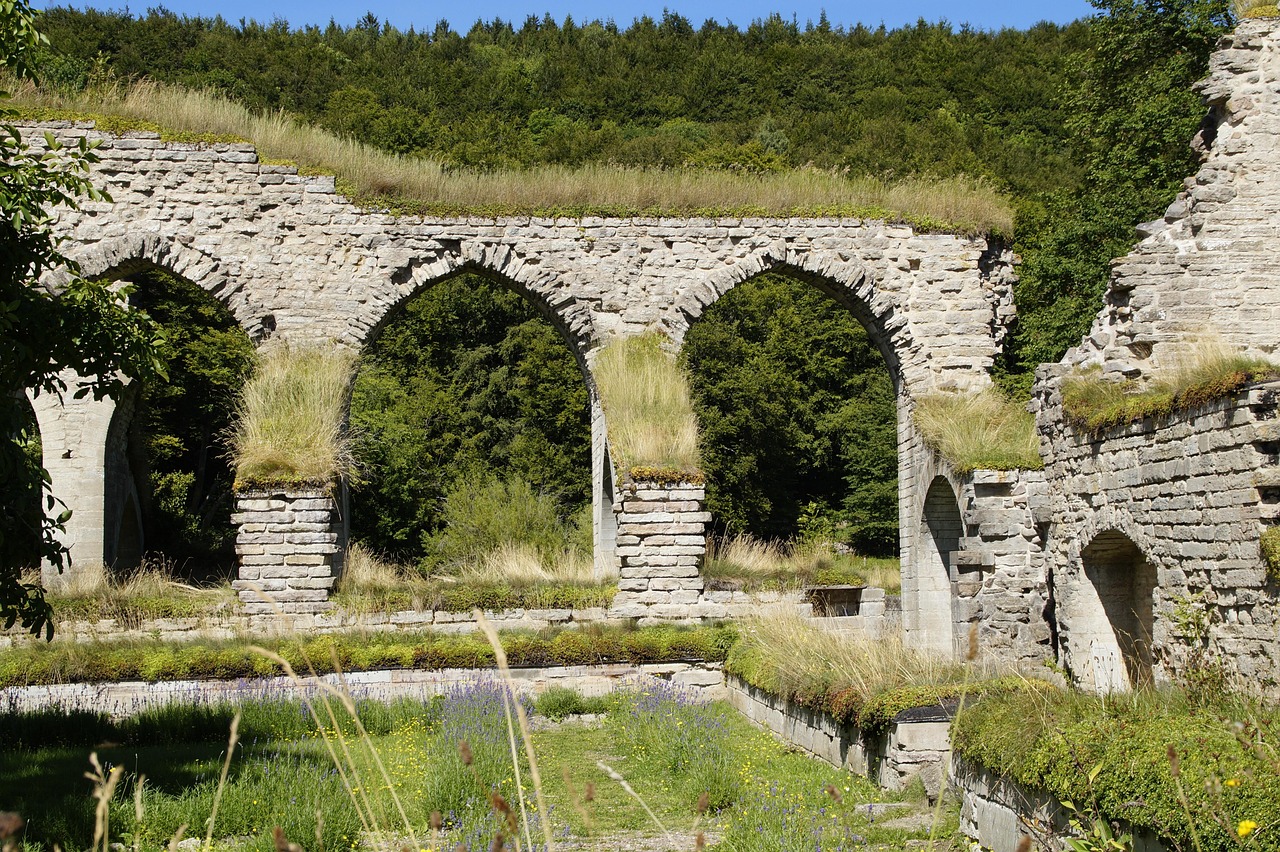
- Alvastra monastery ruin: a Cistercian monastery at the foot of Omberg, the ruins are freely accessible.
- Omberg: wooded ridge above Lake Vättern with viewpoints and walking trails in the nature reserve.
- Tåkern: bird lake, one of the most important resting places for migratory birds in Sweden, with the naturum Tåkern visitor centre.
- CampingSpirit overnight tip
-
Official campsite or RV park: At Omberg, Sveaskog runs motorhome pitches, including at Stocklycke, Almalyckan and Anudden, each with few places and a limited length of stay. Hästholmens Västergård offers pitches with electricity (seasonal), according to the municipality. For the night in Motala: Gästhamn pitches on the water; check availability and opening beforehand.
Free camping or nature tip (where legal): At the Sveaskog sites, the fee, how to book (often no reservation, payment on site by phone) and opening times are posted and depend on the weather; ask beforehand at the Vadstena tourist information. Wild camping in the reserve is not permitted. Fires only at designated places.
- Insider tip for campers
- Arrive early at Omberg, before the pitches are full; on summer weekends they are often taken by mid-morning. Water is not available everywhere: fill up beforehand in Vadstena or Motala.
6Stage 6: Motala to Berg (Göta Canal locks via Borensberg) (approx. 40 km)
- The drive
- From Motala, where the canal leaves Lake Vättern, follow the canal east via Borensberg to the Berg locks on Lake Roxen. Flat, well-built country roads that follow the canal; the towpath usually runs alongside. A good half hour of driving time, but allow time for stops.
- Highlights & must-sees
- Motala Verkstad: workshop founded in 1822, which originally supplied the canal construction, now a museum and industrial site with a café.
- Borensberg: canal village with a lock, cafés and a bridge, very photogenic with boats passing through.
- Bergs slussar: staircase lock between lakes Roxen and Norrbysjön, one of the most visited spots on the Göta Canal.
- CampingSpirit overnight tip
-
Official campsite or RV park: Ställplats Göta kanal at Bergs slussar right on the canal. There are further canal pitches along the canal, such as Ljungs Västra near Ljungsbro; check facilities and opening beforehand.
Free camping or nature tip (where legal): Along the canal, most parking areas are meant for visitors and cyclists; overnighting only makes sense at the designated canal pitches. Parking wild away from the paths is not usual on the canal grounds.
- Insider tip for campers
- The canal pitches can usually be booked online in advance – worth doing in summer. The cycle path on the towpath links Motala, Borensberg and Berg; on short stages bicycles beat the camper. Do not park directly on the approaches to locks.
7Stage 7: Berg to Sjötorp (Göta Canal at Lake Vänern) (approx. 170 km)
- The drive
- Longest driving day: from Berg back to Motala and west towards Töreboda, then to the western end of the Göta Canal at Sjötorp on Lake Vänern. Check the exact route in your sat nav (several variants via Karlsborg or Hova are possible); the main roads are broad and good, and the last section becomes rural. About 2.5 to 3 hours of pure driving time (estimate); if you want to save time, split the day, for instance with a night in Karlsborg or Töreboda.
- Highlights & must-sees
- Töreboda and Hajstorp: locks on the canal with cafés in summer, and the towpath offers short walks.
- Sjötorp: lock at the western end of the Göta Canal with a small harbour and restaurants.
- Vänern: Sweden's largest lake, with a wide view over the water at Sjötorp.
- CampingSpirit overnight tip
-
Official campsite or RV park: In Sjötorp there are pitches at the Gästhamn on the canal and on Lake Vänern, with restaurants and shops within walking distance. Usually bookable through the canal company; reserve beforehand in high summer.
Free camping or nature tip (where legal): Around Lake Vänern the same applies as everywhere in Sweden: park where it is allowed; overnighting by the water on public land only where signs permit it. On private land always ask the landowner.
- Insider tip for campers
- Plan a rest day in Sjötorp: the towpath and the canal are good for a short bike ride. Fill up and shop in Töreboda or Mariestad before Sjötorp; the choice in the village itself is small.
8Stage 8: Sjötorp to Trollhättan (via Lidköping and Vänersborg) (approx. 150 km)
- The drive
- Along Lake Vänern via Mariestad and Lidköping, on to Vänersborg and into the Göta älv valley as far as Trollhättan. Well-built roads, with an optional narrow loop at Kinnekulle. In the towns, watch speed limits and cycle paths. Around 2.5 hours of driving time.
- Highlights & must-sees
- Kinnekulle: flat-topped mountain on Lake Vänern with viewpoints, an optional detour on the way to Lidköping.
- Läckö Slott: baroque castle on a peninsula in Lake Vänern, a detour from Lidköping (around 50 km there and back).
- Trollhättans Slussområde: the locks of the Trollhätte Canal and the water of the Göta älv at the old falls.
- CampingSpirit overnight tip
-
Official campsite or RV park: Ställplatser Trollhättans Slussområde: motorhome pitches with canal views and electricity; water and waste disposal may be switched off in winter because of frost. Clarify reservation and payment with the operator in advance. Alternatives: Stenrösets Camping and Trollhättans Camping Hjulkvarnelund, as well as Hunnebergs Gård at Hunneberg north-east of the town.
Free camping or nature tip (where legal): Around the locks, parking is often time-limited; follow the signs. Nature conservation rules apply at Hunneberg and Lake Vänern, and fires are often banned in summer. Designated sites are the safe way.
- Insider tip for campers
- For the Trollhättan pitch, check the fees and the times for water and waste disposal in advance on the operator's website. If you want to continue south or west, you will find the sequel in the CampingSpirit guide “Granite, herring and archipelago light – by motorhome from Gothenburg through Bohuslän to Strömstad and the Koster Islands”; heading north, “Lake Fryken, rafts and staircase locks – by motorhome through Värmland and Dalsland” takes you on.
Camping practice & local rules
Wild camping & overnight parking
- Allemansrätten (“the right of public access”) allows you in Sweden to enter nature, to camp in a tent for a short time at a proper distance from houses, and to pick berries and mushrooms. It does not apply to motorhomes in the same way: according to Naturvårdsverket, driving and parking off-road (forest, meadows, beaches) is forbidden. You may stay at the roadside and in car parks where parking is allowed; near houses only with the owner's permission. At rest areas a maximum stay of 24 hours usually applies, and municipalities can have their own rules.
- In the countryside you will also find unusual solutions: Gästhamn pitches in the harbour (Vadstena, Motala), canal pitches on the Göta Canal and municipal sites. In summer they are much safer than a car park on the lakeshore.
- Nature reserves such as Omberg have their own rules: fires only at designated places, and in dry summers regional fire bans apply. Anyone who leaves litter goes against the basic idea of the right of public access: take everything away with you.
- Useful directories: park4night, Campercontact, the pitch maps on naturkartan.se, and the websites of the regions and the Göta Canal company. Always check the current status and opening times on the spot.
Waste disposal & supplies
- Service in Sweden is mostly called “tömning” (emptying) of the toilet and grey water; many pitches and campsites offer it, some only for guests or for a small fee. At some pitches waste disposal is chargeable for non-guests.
- Tap water in Sweden is generally drinkable. At canal pitches the water may be switched off in winter because of frost, as in Trollhättan.
- Gas: German exchange cylinders are not exchanged in Sweden. There are Swedish Gasol cylinders with their own connections; many campers bring refillable cylinders or a gas pressure regulator with an adapter set. Pack two full cylinders and suitable adapters.
- Fuel is available almost everywhere by card at pumps round the clock; small places on the canal do not always have a petrol station, so fill up in larger places such as Motala, Karlsborg, Töreboda or Lidköping.
Vehicle size & traffic rules
- Speed limits: motorhomes up to 3.5 t follow the usual car limits (outside built-up areas mostly 70 to 100 km/h depending on signs, on expressways and motorways up to 120 km/h). Lower limits apply to vehicles over 3.5 t and to combinations, usually 80 km/h; on selected, signposted stretches higher limits may apply to approved combinations. Signs take precedence.
- Lights: in Sweden dipped headlights or daytime running lights are required all year. Drink-driving: 0.2 per mille, the limit is very strict. Holding a phone while driving is forbidden.
- Winter equipment: from 1 December to 31 March winter tyres are compulsory in wintry road conditions (winter conditions: snow, ice, slush or frost); studded tyres are generally permitted between 1 October and 15 April, and individual municipalities regulate times and roads differently. In late autumn the route can already bring frost.
- Low-emission zones and city tolls: Sweden has low-emission zones mainly for heavy diesel vehicles in some large cities, such as Gothenburg; none are known on this route, so check the current status beforehand. If you continue to Gothenburg, expect the congestion charge (“trängselskatt”), which foreigners also pay.
- Tolls and vignette: there is no motorway vignette in Sweden for cars and motorhomes; individual bridges such as the Øresund Bridge are subject to tolls, but they are not on this route. Drive carefully on roads with wildlife (elk, roe deer), especially at dusk.
- Dimensions and weights: note bridge heights and ferry capacities, especially on Visingsö and at lock approaches; check length limits at pitches (for example 7 to 12 m in Vadstena) in advance.
CampingSpirit packing & preparation checklist
- Bicycles or e-bikes with a lock – the Göta Canal towpath and the lakeshores are the finest paths of the trip, and from the pitch you can get everywhere without moving the camper.
- Insect repellent and a mosquito net for the sliding door – by the canal and lakes the summer evenings are long and full of mosquitoes.
- Gas pressure regulator and adapter set plus a refillable cylinder for Sweden, in case Gasol exchange cylinders do not fit.
- Rain jacket and wellies for Omberg and the towpaths after rain, plus a thermos flask for cool evenings by Lake Vättern.
- Smartphone with offline maps and the pitch app of your choice, plus cash or a card for parking machines – you pay for many places by QR code or machine.
As of 2026-10. Closures, fees and booking rules change: check official sources before you go.