



In-depth guide · CampingSpirit
From the lakes on the edge of Poznań via Kórnik, Gniezno, Biskupin and Lake Gopło to the steam locomotive shed at Wolsztyn: around 750 km on quiet country roads through the region where the Polish state began.
The spirit of the route
Greater Poland is flat, and that is exactly where its appeal lies. The road runs between rapeseed fields, poplar avenues and pine forests, and every few kilometres a long, narrow tunnel-valley lake left behind by the ice of the last glacial period flashes into view. Here, between Poznań, Gniezno and Lake Gopło, the first Piast ruler was baptised more than a thousand years ago, and the traces of it lie close together: brick cathedrals, castle islands, Romanesque columns, an Iron Age pile-dwelling settlement. From the sliding door you see mist over the reeds in the morning, storks on the barn roofs in the evening and old oaks on the Warta meadows. In between lie magnates’ palaces with parks where you can walk for hours without meeting anyone, and small towns with a market square, a pierogi bar and a church tower. This route is driven slowly and without mountain passes – the work is done by bicycle, ferry and narrow-gauge railway.
Stage-by-stage plan
1Stage 1: Poznań (Lake Malta) to Poznań (Old Town and Cathedral Island) (approx. 10 km)
- The drive
- A city day without moving the van. The journey from Frankfurt (Oder) takes you via the Świecko border crossing and the A2 to Poznań in a little over two hours (around 170 km, tolled); leave the motorway on the east side of the city and head for Lake Malta. From there, cycle along the lakeshore and across the Warta to Cathedral Island and on to the Old Market Square – around 10 km there and back in total, flat and mostly on cycle paths. Driving the motorhome into the city centre is not worth it.
- Highlights & must-sees
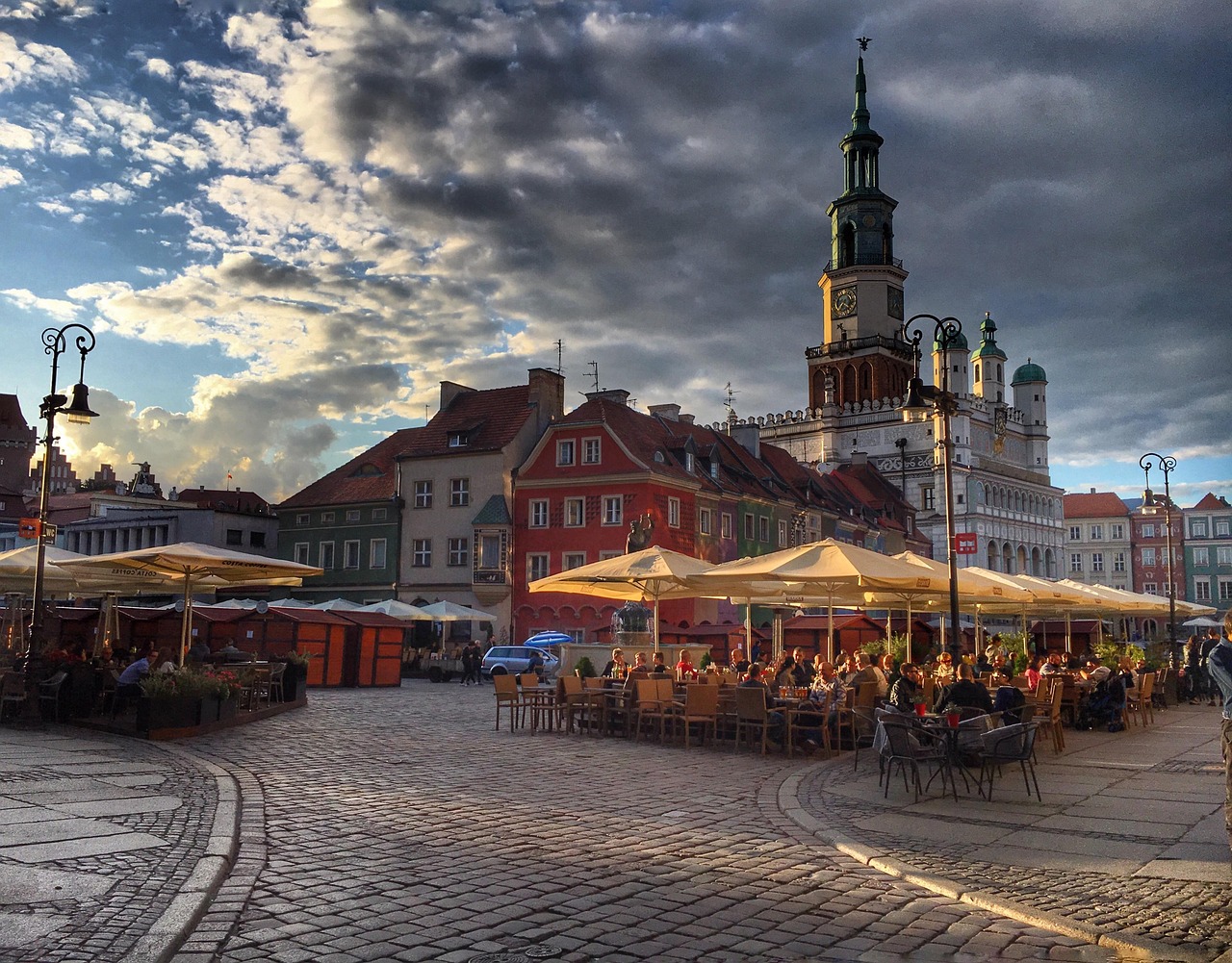
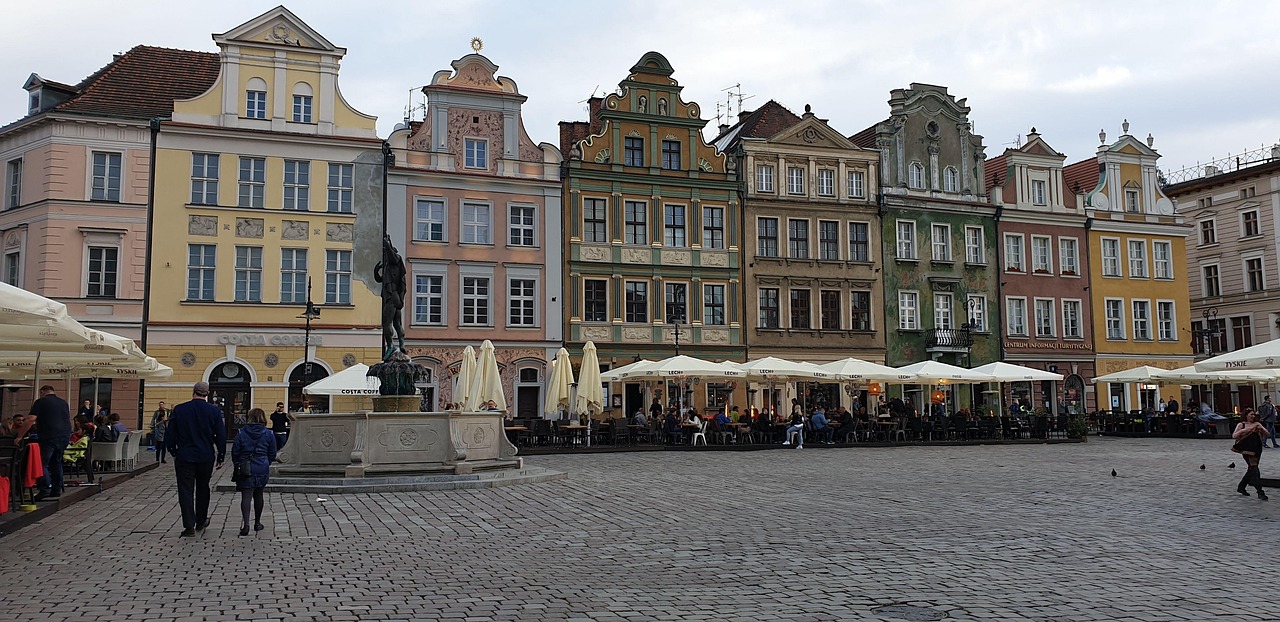
- Old Market Square (Stary Rynek) with the Renaissance town hall: every day at noon two mechanical billy goats emerge at the top of the tower and butt horns – find a spot on the square early.
- Rogalowe Muzeum Poznania (Croissant Museum) in a townhouse on the square: a demonstration of the St Martin’s croissant (rogal świętomarciński), Poznań’s protected pastry with a white poppy-seed filling; places are limited, so book ahead.
- Cathedral Island (Ostrów Tumski): the cathedral with the Golden Chapel and the tombs of the first Piasts, and opposite it the Brama Poznania visitor centre, which tells the story of the Baptism of Poland in 966 through multimedia.
- CampingSpirit overnight tip
-
Official campsite or RV park: Camping Malta at the eastern end of Lake Malta (ul. Krańcowa), near the New Zoo: up to 40 pitches on grass and hardstanding, electric hook-ups, water and waste disposal, rather dated sanitary facilities, plus hotel rooms and cabins. Fairly expensive for city camping, but the Old Town and Cathedral Island are easy to reach by bike. Check the season and current prices in advance.
Free camping or nature tip (where legal): Wild camping in Poznań itself is not a good idea: city-centre car parks charge fees, many multi-storey car parks are too low for motorhomes, and municipal wardens and police regularly patrol the car parks at Lake Malta at night. Leave the camper at the campsite and take the bike, bus or tram.
- Insider tip for campers
- The city centre lies within a paid parking zone (SPP); you pay at the machine or by app, and the Old Market Square itself is pedestrianised. Every bakery sells St Martin’s croissants; the certified ones carry a seal. Before moving on, stock up at one of the large supermarkets on the edge of town and get some złoty in cash – camping fields and small museums along the route do not always take cards.
2Stage 2: Poznań to Kórnik via Wielkopolski National Park and Rogalin (approx. 55 km)
- The drive
- South out of Poznań via Luboń and Puszczykowo along the west bank of the Warta into Wielkopolski National Park, then via Mosina and the Warta bridge to Rogalin and on regional road 431 through fields and forest to Kórnik. Good but partly narrow roads with no climbs, and cobbles through the villages. Pure driving time just over an hour.
- Highlights & must-sees
- Wielkopolski National Park: from the car park in Jeziory, walk to Lake Góreckie, a typical tunnel-valley lake with the small Castle Island and the remains of a 19th-century building; waymarked trails through pine and oak forest, loop 1.5 to 2 hours.
- Rogalin: the Raczyński family palace, now a branch of the National Museum in Poznań, with a picture gallery and coach house; behind it the park with the oaks “Lech”, “Czech” and “Rus”. They are “thousand-year-old” only in legend – in fact they are several centuries old and form one of the largest groups of old oaks in Europe. On the edge of the village stands the Church of St Marcellinus, a replica of the Roman temple Maison Carrée in Nîmes.
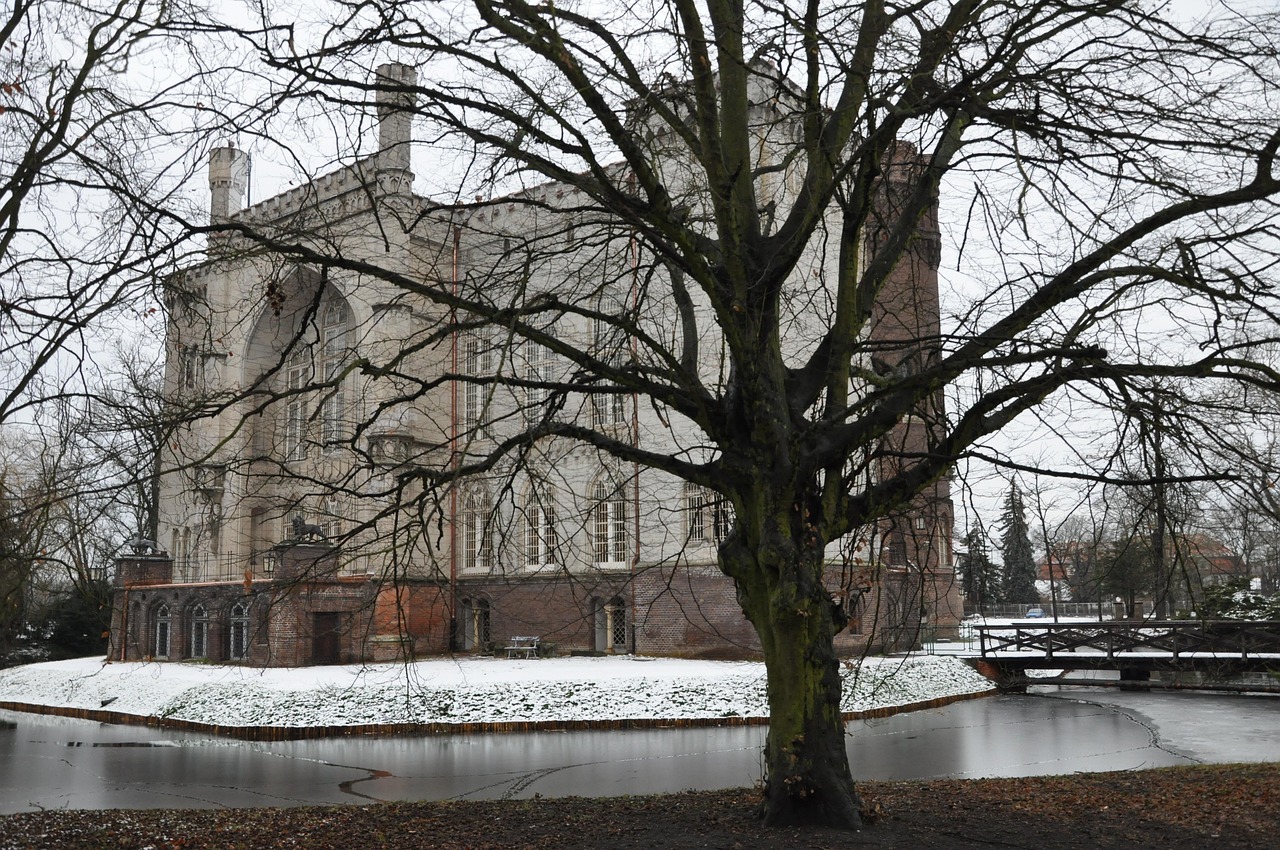
- Kórnik: the Działyński family’s neo-Gothic castle by the lake, with a library and arms collection, and next to it the arboretum of the Polish Academy of Sciences, the oldest and most species-rich in Poland – in May the magnolias and rhododendrons are in bloom.
- CampingSpirit overnight tip
-
Official campsite or RV park: Camping Oaza Błonie on Lake Kórnik, about a kilometre from the castle: part of the municipal leisure complex, with electric hook-ups and sanitary facilities, and swimming in summer. Ask the operator in advance about facilities, water and waste disposal and season dates.
Free camping or nature tip (where legal): In the national park, sleeping in your vehicle, camping and lighting fires are prohibited; vehicles must stay on public roads and in designated car parks. Do not wild camp on the Warta meadows near Rogalin (a landscape park) either – the farm tracks belong to the protected area and some are closed to motor vehicles.
- Insider tip for campers
- Kórnik Castle is closed on Mondays and also from mid-December to the end of February; for Rogalin Palace, too, check the National Museum’s opening times in advance – ideally do not plan this stage for a Monday. Rogalin has a large visitor car park on the road; in Kórnik it is best to park on the lake side and walk to the castle, as the lanes around the market square are narrow.
3Stage 3: Kórnik to Gniezno via Ostrów Lednicki (approx. 70 km)
- The drive
- North-east via Kostrzyn and Pobiedziska through terminal-moraine country with forests and small lakes; from here on you follow the brown signs of the Piast Route (Szlak Piastowski). Near Lednogóra, Lake Lednica lies right by the S5 expressway; from there take minor roads to Gniezno. Around 1.5 hours’ driving, mostly on quiet country roads.
- Highlights & must-sees
- Ostrów Lednicki: an island in Lake Lednica with the foundations of a palatium and chapel from the time of Mieszko I – one of the places where the baptism of 966 is believed to have taken place; you cross on a small ferry that runs only in season. On the shore is the Museum of the First Piasts.
- Greater Poland Ethnographic Park in Dziekanowice, right next door: an open-air museum with a wooden church, windmills and farmsteads from the region.
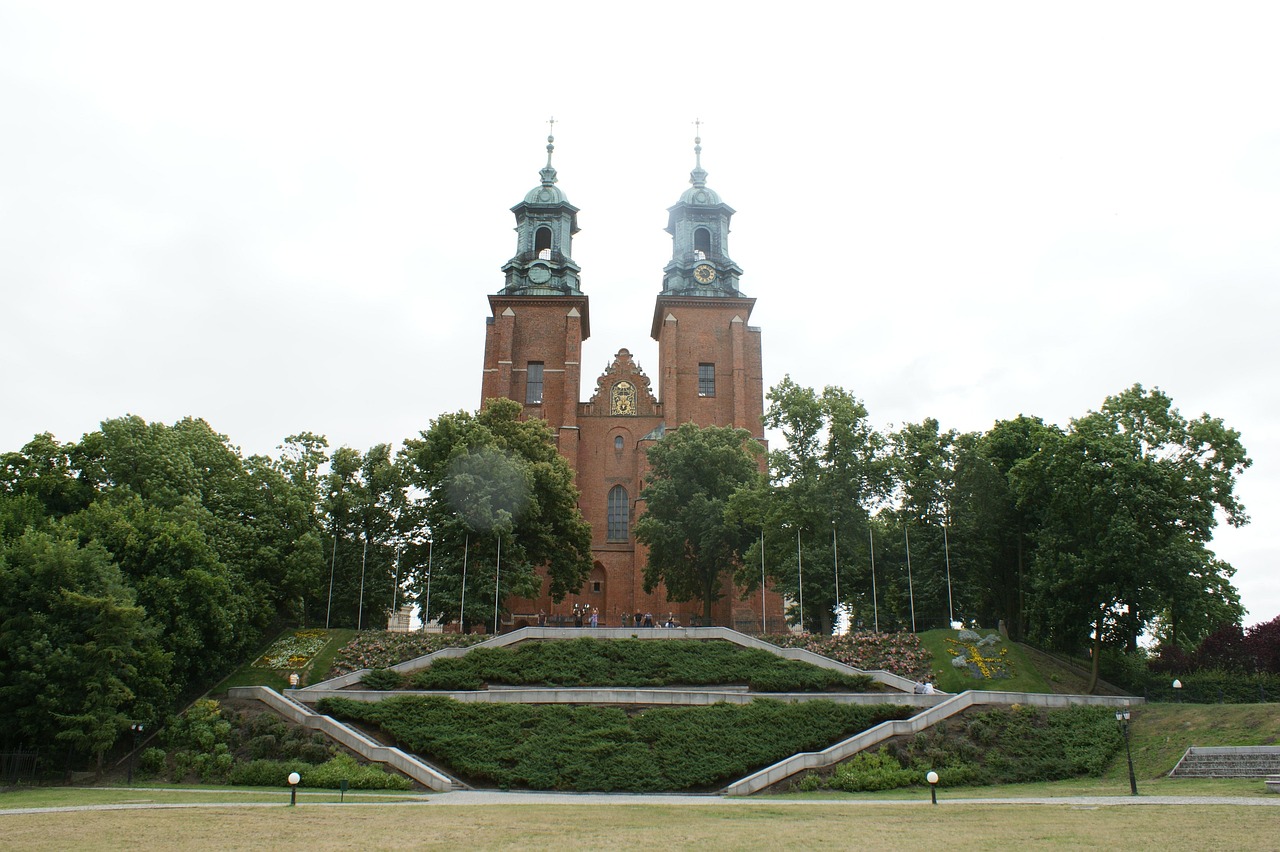
- Gniezno Cathedral: coronation church of the first Polish kings, with the reliquary of St Adalbert and the 12th-century Romanesque bronze door, whose 18 reliefs depict Adalbert’s life and martyrdom.
- CampingSpirit overnight tip
-
Official campsite or RV park: Gniezno has no conventional, fully equipped campsite. At the northern end of Lake Lednica, simple bivouac and camping fields (pole biwakowe) are listed, such as the Lednica bivouac field; whether motorhomes may stay there is not certain, and electricity and waste disposal cannot be taken for granted – phone ahead or check the current situation in the motorhome-site apps. A more reliable option is to continue after your visit to Gąsawa (around 55 km, stage 4) or to look for an agroturystyka farm. Fill up with fresh water in Poznań or Kórnik.
Free camping or nature tip (where legal): The museum car parks at Lednica close in the evening. In Gniezno, overnighting in public car parks is not generally prohibited as long as no signs forbid it and you are only parking – the spots by Lake Jelonek below Cathedral Hill are quieter than those on the arterial roads.
- Insider tip for campers
- The bronze door hangs inside the cathedral and can only be seen as part of a ticketed visit; access is restricted during Mass. The Museum of the Origins of the Polish State by Lake Jelonek provides the background to the whole route. The old-town lanes on Cathedral Hill are steep and cobbled – walk up.
4Stage 4: Gniezno to Biskupin (Gąsawa) (approx. 55 km)
- The drive
- North via Rogowo into the Pałuki, a landscape of arable hills, tunnel-valley lakes and pine forest; quiet country roads, with cobbles and tight bends by the churches in the villages. About an hour’s driving.
- Highlights & must-sees
- Biskupin Archaeological Museum: reconstructed parts of a fortified Lusatian culture settlement from the 8th century BC on a peninsula in Lake Biskupin – a timber rampart, plank streets, longhouses, plus an open-air area with workshops and animals.
- Żnin–Wenecja–Biskupin–Gąsawa narrow-gauge railway: excursion trains in season, and in Wenecja a narrow-gauge railway museum and the ruins of a 14th-century castle.
- St Nicholas’ wooden church in Gąsawa, with uncovered 17th-century wall paintings.
- CampingSpirit overnight tip
-
Official campsite or RV park: On Lake Gąsawskie in Gąsawa, around three kilometres from the museum, are the Tatarak camping field and a municipal bivouac field – basic, with sanitary facilities, by the lake, open essentially in summer. Ask in advance about electricity and waste disposal.
Free camping or nature tip (where legal): The museum car park in Biskupin is for day parking. In the Pałuki forests, motor vehicles are allowed only on public and approved tracks; forest tracks with a barrier or prohibition sign are off limits. Wild camping is not really suitable here – the camping fields are cheap and lie by the water.
- Insider tip for campers
- Combine the museum visit with the narrow-gauge railway: leave the motorhome in Gąsawa or Biskupin and take the train to Wenecja and Żnin. The railway’s timetable and season change every year – check in advance. The museum holds events with re-enactors; on those days the car park fills up early.
5Stage 5: Biskupin to Kruszwica via Strzelno (approx. 60 km)
- The drive
- East via Mogilno to Strzelno and on to Lake Gopło and Kruszwica. Flat Kuyavia, dead-straight sections between sugar-beet fields, noticeable in a headwind. Just under 1.5 hours’ driving.
- Highlights & must-sees
- Mogilno: Benedictine abbey on the hill above the lake, with Romanesque crypts.
- Strzelno: the Romanesque Holy Trinity Church of the Norbertine nuns, with columns carved with figures of the virtues and vices – a masterpiece of Romanesque art in Poland; next to it the Rotunda of St Procopius.
- Kruszwica: the Mouse Tower (Mysia Wieża), the remains of a brick castle where, according to legend, King Popiel was eaten by mice – from the top, a view over Lake Gopło; on the edge of town the Romanesque Collegiate Church of Saints Peter and Paul, built of granite ashlar.
- CampingSpirit overnight tip
-
Official campsite or RV park: In Kruszwica, a motorhome stopover is listed south of the centre on the shore of Lake Gopło; facilities and fees are not confirmed, so check the current situation on park4night or Campercontact. Other sites and agroturystyka farms lie around the shores of Lake Gopło; there is hardly any larger campsite with full water and waste facilities in the area.
Free camping or nature tip (where legal): Lake Gopło is part of the Nadgoplański Park Tysiąclecia (a landscape park) and a bird protection area; overnight only on sites and in car parks, not on lakeside paths or in the reed beds. In the town itself the normal parking rules apply.
- Insider tip for campers
- In season, excursion boats run across the lake from the harbour by the Mouse Tower. Inowrocław, around 15 km north, has graduation towers in its spa park – a good stop when it is hot. Strzelno has a cramped centre with one-way systems; park on the edge and walk the few hundred metres to the church.
6Stage 6: Kruszwica to Gołuchów via Konin and Kalisz (approx. 165 km)
- The drive
- The longest stage: south onto national road 25, via Ślesin and Konin to Kalisz and on along national road 12 to Gołuchów. A well-built trunk road with lorry traffic; around Konin, a landscape of lignite mining and industry. Around three hours’ driving; you only cross the A2 near Konin.
- Highlights & must-sees
- Licheń Stary (a detour of about 10 km near Ślesin): the Basilica of Our Lady, the largest church in Poland, a place of pilgrimage with huge car parks – more of a curiosity than an artistic monument.
- Kalisz, one of the oldest towns in Poland, which already appears in Ptolemy as “Calisia”: town hall square, the town park on the Prosna and the cathedral – good for a short stroll.
- Gołuchów: a castle in the French Renaissance style, which Izabela Działyńska turned into a museum for her art collection, now part of the National Museum in Poznań; plus an extensive landscaped park and a wisent enclosure at the Forest Culture Centre.
- CampingSpirit overnight tip
-
Official campsite or RV park: The Gołuchów Sport and Tourism Centre (GOTiS) runs a camping area on the edge of the village with electric hook-ups and sanitary facilities, close to the castle park and a swimming lake. Ask in advance about the season, facilities and waste disposal.
Free camping or nature tip (where legal): The castle park and the forestry grounds around Gołuchów are not places to spend the night; the car parks at the castle are for day parking. In Licheń many pilgrims with motorhomes stay in the pilgrimage car parks – check the signs at the entrance to see whether this is permitted.
- Insider tip for campers
- Speed checks are frequent on national road 25; in Kalisz avoid the centre and park on the edge of the town park. Konin is a good place to refuel and shop; fuel prices on the trunk road there are usually lower than on the motorway.
7Stage 7: Gołuchów to Wolsztyn via Leszno (approx. 160 km)
- The drive
- West on national road 12 via Pleszew, Jarocin and Gostyń to Leszno, then on country roads across the lake district near Włoszakowice to Wolsztyn. Flat farmland, tree-lined avenues, and from Leszno onwards more forest and lakes. A little over three hours’ driving.
- Highlights & must-sees
- Holy Mountain (Święta Góra) near Gostyń: the Philippine Fathers’ Baroque pilgrimage basilica with its great dome, visible far across the fields.
- Leszno: Baroque market square with town hall. Here Greater Poland meets Silesia – if you want to carry on south, you will find the Churches of Peace and the Giant Mountains in the CampingSpirit guide to Lower Silesia and the Kłodzko Land.
- Wolsztyn: the locomotive shed (Parowozownia Wolsztyn) with turntable and working steam locomotives, for a long time the last place in Europe with scheduled steam services; plus an open-air museum of the region’s wooden houses and the museum dedicated to Robert Koch, who worked here as district physician.
- CampingSpirit overnight tip
-
Official campsite or RV park: Camping Ustronie on Lake Wolsztyn, just under two kilometres north of the centre: electric hook-ups, sanitary facilities, a bathing area, busy in summer. Check facilities, water and waste disposal and the season in advance; there are further small holiday resorts between Wolsztyn and the lake area to the north.
Free camping or nature tip (where legal): The lakes around Wolsztyn and the neighbouring Przemęcki Landscape Park are very busy in summer; municipalities often ban overnighting at bathing spots by signs. Forest and lakeside tracks are generally closed to motor vehicles.
- Insider tip for campers
- Whether steam locomotives run in the regular timetable has changed several times in recent years; special trips and tours of the locomotive shed are offered depending on the season, and usually once a year there is a steam locomotive parade that draws big crowds – check dates and opening times on the locomotive shed’s website beforehand. In Leszno it is best to park outside the old-town ring.
8Stage 8: Wolsztyn to Świecko border via Międzyrzecz (approx. 175 km)
- The drive
- Via Zbąszyń and Trzciel to Międzyrzecz, then south on the S3 to the motorway junction near Świebodzin and west on the A2 to the Świecko border crossing near Frankfurt (Oder). Country roads through forest and lake country as far as Międzyrzecz, then expressway and motorway. Around 2.5 hours’ driving; the A2 is tolled between Świebodzin and the border. If you are heading for northern Berlin or the Baltic, take the toll-free S3 north via Gorzów. The Polish Baltic coast with Gdańsk and Kashubia, as well as Warmia and Masuria, have their own CampingSpirit guides.
- Highlights & must-sees
- Międzyrzecz: castle ruins and museum in the town, plus the option of a detour to the bunker line.
- MRU bunker line (Międzyrzecki Rejon Umocniony) east of the town: armoured works and kilometres of underground tunnels from the 1930s, tours from the Museum of Fortifications and Bats in Pniewo, book ahead; the tunnels are a Natura 2000 site and one of the largest bat hibernation sites in Europe, and during hibernation the underground section is only partly accessible to visitors or not at all – ask the museum for times.
- Lakes and forests in the Lubusz Land between Trzciel and Międzyrzecz – quiet picnic spots at the bathing areas.
- CampingSpirit overnight tip
-
Official campsite or RV park: For a last night before the border: around Lake Głębokie north of Międzyrzecz there are simple holiday resorts and camping fields, basically equipped and mostly open only in summer – phone ahead. Take care of water and waste disposal beforehand at the site in Wolsztyn.
Free camping or nature tip (where legal): The forests around the bunker line are part of the protected area; do not spend the night in the car parks at the tour stations. In the Lubusz forests, wild camping is only possible in public car parks without prohibition signs; forest tracks are closed to motor vehicles.
- Insider tip for campers
- For the underground tours bring sturdy footwear and a warm jacket – it is cool below ground even in summer. Fill up in Poland before the border: diesel and autogas are usually considerably cheaper than in Germany, though more expensive at motorway service areas than in the towns.
Camping practice & local rules
Wild camping & overnight parking
- Legal position: in Poland a motorhome may stay overnight wherever parking is permitted and no sign prohibits it – sleeping in the vehicle counts as parking. Camping behaviour such as awnings, tables and chairs, levelling jacks or barbecues belongs on campsites (kempingi), camping and bivouac fields (pola namiotowe, pola biwakowe) and agroturystyka farms.
- Forests: under the Forest Act, motor vehicles may only drive and park on public tracks and those expressly approved; barriers and signs of the State Forests are binding, and violations are fined. The “Zanocuj w lesie” programme allows overnight stays on foot with a tent or hammock in marked forest areas, but not in a vehicle.
- Protected areas: in Wielkopolski National Park, overnighting, camping and fires outside designated places are prohibited. Additional bans apply in landscape parks (Rogalin, Gopło, Przemęcki) and Natura 2000 sites such as the bunker line near Międzyrzecz, especially on shores and in reed beds.
- Finding sites: Greater Poland has few large campsites but many small camping fields, lakeside holiday resorts (ośrodki wypoczynkowe) and farms; many open only from May to September. park4night and Campercontact also show municipal motorhome stopovers, and the reviews often reflect the current situation better than the operators’ websites.
Waste disposal & supplies
- Water and waste disposal are available almost only at campsites and a few motorhome stopovers – Poznań, Kórnik and Wolsztyn are the most reliable points on the route; plan ahead between Gniezno and Kalisz.
- Never empty grey water or the cassette into ditches, lakes or drains: the tunnel-valley lakes are shallow and sensitive, and the police and Straż Miejska (municipal wardens) impose fines.
- Drinking water: tap water in the towns is considered drinkable; at taps look for “woda pitna”. On camping fields and farms the water often comes from private wells – if in doubt, filter or boil it.
- Gas: German exchange cylinders are neither exchanged nor refilled. Autogas (LPG, “autogaz”) is available at a great many filling stations and is usually cheaper than in Germany; refillable cylinders and gas tanks can be filled there with the right adapter – carry an adapter set and arrive with full cylinders.
- Money: payment is in złoty. Supermarkets and filling stations take cards; camping fields, ferries and small museums are often cash only.
Vehicle size & traffic rules
- Speed limits for motorhomes up to 3.5 t: 50 km/h in built-up areas, 90 km/h outside built-up areas, 100 km/h on single-carriageway expressways and 120 km/h on dual-carriageway expressways, 140 km/h on motorways. Over 3.5 t and vehicle-trailer combinations: 70 km/h outside built-up areas, 80 km/h on expressways and motorways. Dipped headlights are compulsory around the clock all year, the alcohol limit is 0.2 per mille, phones only hands-free, and an emergency corridor is required on multi-lane roads.
- Tolls up to 3.5 t: on the A2, only the concession section between the border at Świecko and Konin is tolled; it is divided into sub-sections. Between the border and Poznań you pay at the toll plazas in cash or by card; on the Poznań–Konin section you can also pay automatically via number-plate recognition if the vehicle has been registered in advance in the Autopay app. Konin–Stryków is free for vehicles and combinations up to 3.5 t, as are the S3, S5 and S11 expressways and all country roads on the route. Rates rise regularly, and vehicle-trailer combinations fall into a higher toll class on the A2 – check the current situation and how motorhomes are classified with the operator.
- Tolls over 3.5 t: vehicles over 3.5 t gross vehicle weight, including heavy motorhomes, pay through the e-TOLL electronic system on motorways, expressways and parts of the national roads; register in advance at etoll.gov.pl and pay via app or on-board unit. Vehicle-trailer combinations whose towing vehicle has a gross vehicle weight of no more than 3.5 t are exempt from e-TOLL regardless of the trailer; on the A2 concession section they pay at the toll plazas.
- Towns: Poznań and Gniezno have paid parking zones, and multi-storey car parks are usually too low. Warsaw and Kraków have low-emission zones (Strefa Czystego Transportu), and other large cities are planning them; none is yet in force in Poznań – check before you travel whether that has changed. Speed cameras, average-speed checks and on-the-spot fines are common.
- Equipment: a fire extinguisher is compulsory for vehicles registered in Poland and strongly recommended for visitors; carry a warning triangle, and mark protruding rear carriers with a warning sign. Winter tyres are not compulsory in winter but are sensible in snow and ice.
CampingSpirit packing & preparation checklist
- Mosquito protection in several layers – fly screens for windows and roof hatch, head net, repellent: by the tunnel-valley lakes, at Gopło and on the Warta meadows near Rogalin, the mosquitoes are a plague in the evenings from May to August.
- Bicycles with locks: in Poznań the best way from Lake Malta to the Old Town, plus cycle paths around Lake Gopło and through the Rogalin oak park.
- Złoty in cash, including small notes: the ferry to Ostrów Lednicki, camping fields, the narrow-gauge railway and car parks do not all take cards.
- Adapter set for autogas filling stations and a refillable cylinder, if you have one – exchange cylinders from Germany are no use in Poland.
- A second cassette or waste-water container: disposal points are scarce between Gniezno and Gołuchów.
- Head torch, fleece jacket and sturdy shoes for the cool, damp tunnels of the bunker line near Międzyrzecz.
As of 2026-10. Closures, fees and booking rules change: check official sources before you go.