


In-depth guide · CampingSpirit
Around 550 kilometres from the bridges of Wrocław via Książ Castle and the Wang stave church at the foot of Śnieżka to the rock mazes of the Table Mountains and the bear bones of Kletno – a journey through a land where every village has two names and every church has a story.
The spirit of the route
Lower Silesia is a land of layers. In Wrocław, church bells ring out over brick Gothic, by the cathedral a lamplighter lights the gas lamps in the evening, and a few kilometres further on stand half-timbered churches that Protestants were only allowed to build after the Thirty Years' War from wood and clay, without a tower and outside the town walls. Then the Sudetes rise: in the Giant Mountains it smells of spruce resin and wet granite, from the sliding door you see the bare cone of Śnieżka, and in the morning mist lies in the Jelenia Góra Valley between palaces that Prussia's nobility loved as summer residences. In the Kłodzko Land it becomes quieter and more idiosyncratic – sandstone tablelands with rock crevices so narrow that you walk sideways, spa towns with pump rooms and wooden verandas, a chapel of skulls, a dripstone cave full of bear bones. The roads are winding, the stages short, the camping meadows small. If you drive slowly, read Polish and German side by side and let history travel with you, you will understand this landscape best.
Stage-by-stage plan
1Stage 1: Wrocław to Świdnica (approx. 60 km)
- The drive
- From Wrocław south-west on the DK35 to Świdnica: flat farmland, with the solitary cone of Ślęża rising out of the land to the left. Well built, many village through-roads and roundabouts, pure driving time just over an hour. The day before, or at least the morning, belongs to Wrocław – the motorhome stays at the campsite.
- Highlights & must-sees
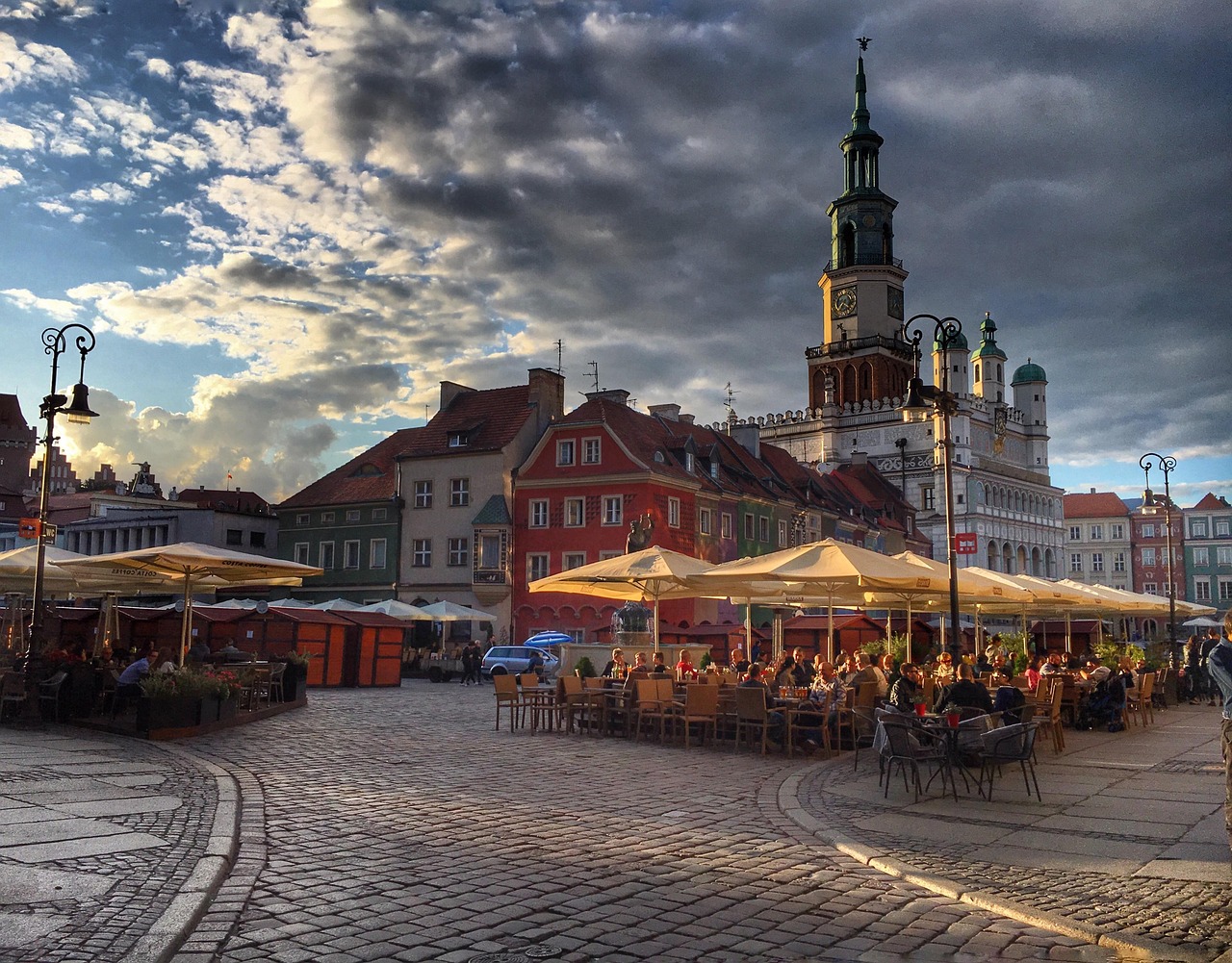
- Wrocław: the Market Square (Rynek) with the Gothic town hall, Cathedral Island (Ostrów Tumski), where the gas lamps are still lit by hand today, and the many small bronze dwarfs in the lanes.
- Centennial Hall (Hala Stulecia): Max Berg's reinforced concrete dome from 1913, a UNESCO World Heritage Site since 2006; next to it the pergola with fountain and the Japanese Garden in Szczytnicki Park.
- Church of Peace in Świdnica: the largest half-timbered church in Europe, built in 1656–57 from wood, clay and straw, with a Baroque interior and galleries for thousands of worshippers – together with the Church of Peace in Jawor a UNESCO World Heritage Site.
- CampingSpirit overnight tip
-
Official campsite or RV park: In Wrocław, Camping nr 117 lies right next to the Olympic Stadium (Stadion Olimpijski) in the east of the city, with electric hook-ups, sanitary facilities and waste disposal, open roughly from April to September; trams run from there to the centre, and Centennial Hall is within walking distance. In Świdnica, the municipal sports centre OSiR runs Camping nr 231 on the southern edge of town, just over 1 km from the old town: electricity, water, showers; seasonal operation, check opening and disposal facilities in advance.
Free camping or nature tip (where legal): City-centre car parks in Wrocław charge fees during the day, are noisy at night and unsuitable for overnight stays; motorhomes over 3.5 t quickly run into access restrictions in the old town. In Poland, sleeping in your vehicle where parking is permitted is not banned nationwide – but camping behaviour with awning, chairs or levelling jacks is. For Wrocław, the campsite is worth it.
- Insider tip for campers
- Wrocław has been planning a low-emission zone (Strefa Czystego Transportu) for the city centre for years but had not introduced it at the time of going to press; check the city's website before your trip to see whether this has changed. Don't drive into the centre with the motorhome; take the tram instead. In Świdnica there is hardly any room for large vehicles at the Church of Peace square – park on the arterial roads and walk the few hundred metres.
2Stage 2: Świdnica to Karpacz (via Książ and Krzeszów) (approx. 100 km)
- The drive
- On the DK35 to Wałbrzych, north of the town to Książ Castle. Then via Szczawno-Zdrój and Boguszów-Gorce into the Kamienna Góra basin and on minor roads to Krzeszów. Finally over Kowary and the Kowarski Pass (just over 700 m) down to Karpacz. Hilly and winding from Wałbrzych, some steep village through-roads, around two and a half hours of pure driving time – with castle and abbey, a full day.
- Highlights & must-sees
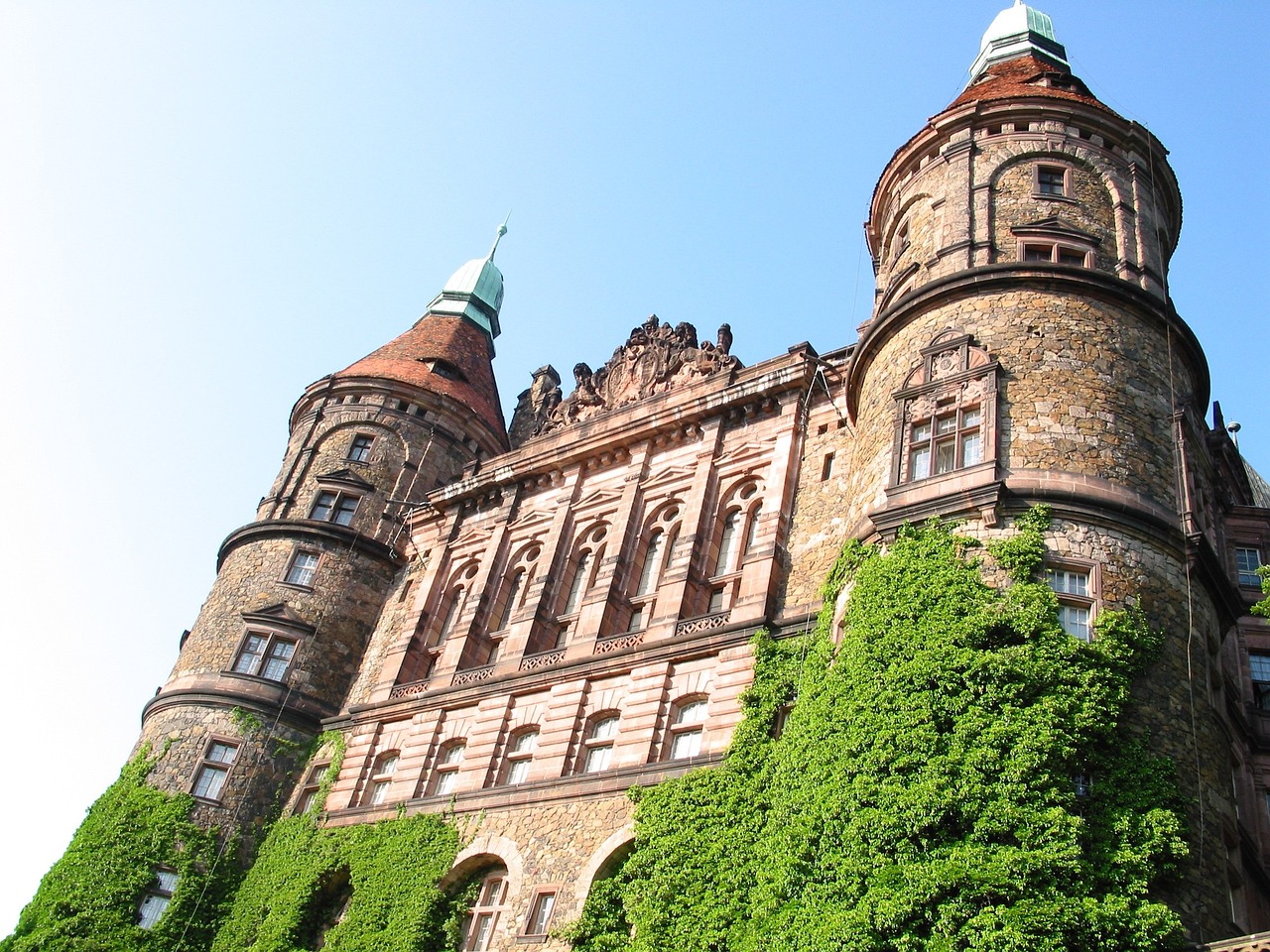
- Książ Castle: the residence of the Hochberg family (Princes of Pless) above a wooded gorge, the largest castle in Lower Silesia, with terraced gardens and a Second World War tunnel system beneath the rock; down in the valley the stallion stud (Stado Ogierów).
- Krzeszów Abbey (Grüssau): Cistercian abbey with the Baroque Basilica of the Assumption, the mausoleum of the Piast dukes of Świdnica-Jawor and the Church of St Joseph with frescoes by Michael Willmann, the “Silesian Rembrandt”.
- Kowarski Pass: view of the Giant Mountains ridge from the east before the road winds down to Karpacz.
- CampingSpirit overnight tip
-
Official campsite or RV park: In Karpacz, Camp 66 lies on the northern edge of the village with electricity and showers; check disposal facilities and opening times in advance. A dedicated motorhome aire is Camper Park Panorama in the western part of the village; for something quieter with a view of the ridge, stay at Camping Wiśniowa Polana in Miłków a few kilometres to the north. Book ahead in summer and on public holidays.
Free camping or nature tip (where legal): Karpacz is a densely built-up holiday resort with paid car parks; many of them prohibit overnight stays by sign. The forest car parks on the edge of the national park are for day use. You can stay more quietly and legally at one of the sites above or at guesthouses with a “miejsce kamperowe” by arrangement.
- Insider tip for campers
- The car parks at Książ Castle charge a fee, and it is a short walk from the car park to the castle; with a large motorhome arrive early, before the coaches. Krzeszów Abbey is a place of pilgrimage: on Sundays and Marian feast days the basilica and car park are full, while on weekdays it is quiet. Kamienna Góra has the last inexpensive petrol stations and supermarkets before Karpacz.
3Stage 3: Karpacz to Szklarska Poręba (approx. 35 km)
- The drive
- A hiking day with a short drive: from Karpacz via Przesieka and Zachełmie along the foot of the ridge to Sobieszów and through the Kamienna valley via Piechowice to Szklarska Poręba. Narrow roads with gradients and bends between granite boulders and spruce forest, hardly any overtaking opportunities. Under an hour of pure driving time.
- Highlights & must-sees
- Wang stave church in Karpacz Górny: a Norwegian wooden church from the 12th/13th century, bought in Vang by the Prussian king in 1841 and re-erected here above the village – with dragon heads, rich woodcarvings and a view of Śnieżka.
- Śnieżka (1,603 m): the highest peak of the Giant Mountains, with the discs of the weather observatory; from Karpacz via Biały Jar or by chairlift to Kopa and on via Śląski Dom, a good three hours to the summit from the village centre.
- Chojnik Castle above Sobieszów: ruins of a 14th-century castle on a granite outcrop, around 45 minutes' climb through the forest, with a sweeping view over the Jelenia Góra Valley from the top.
- CampingSpirit overnight tip
-
Official campsite or RV park: In Szklarska Poręba there are small sites such as Kemping Pod Mostem in the village and Camping Nad Rozkosznym Stawem on the north-western edge of the village. Facilities and disposal are basic, electricity is not available at every pitch, and size is limited – phone ahead. If you'd rather go back down into the valley, you'll find larger sites in Jelenia Góra.
Free camping or nature tip (where legal): The forests around Karpacz and Szklarska Poręba largely belong to Karkonoski Park Narodowy or the State Forests: driving and parking only on public roads and designated car parks, overnight stays in the park only in the mountain huts. Park rangers and the Straż Leśna carry out checks. The Czech side of the ridge with Pec pod Sněžkou is covered by the CampingSpirit travel guide through North Bohemia to the Giant Mountains.
- Insider tip for campers
- The road up to Karpacz Górny and the stave church is steep and narrow, and the car parks at the top charge a fee and fill up quickly – leave the motorhome below and go up on foot or by taxi. An entry ticket is required for the trails in the national park, available at ticket booths along the trails or online from the park. Dogs are only allowed in the park on a few designated trails, such as the blue trail from the Wang stave church via Droga Jubileuszowa. Thunderstorms come in quickly on the ridge; start early.
4Stage 4: Szklarska Poręba to Jelenia Góra (Valley of Palaces) (approx. 50 km)
- The drive
- Back through the Kamienna valley to Piechowice and Jelenia Góra, then a loop south-east through the Jelenia Góra Valley via Łomnica, Wojanów, Bukowiec, Karpniki and Mysłakowice. Well-built country road in the valley, then narrow tree-lined avenues between meadows, ponds and parks, with the Giant Mountains ridge always to the south. Around an hour and a half of pure driving time.
- Highlights & must-sees
- Kamieńczyk and Szklarka waterfalls near Szklarska Poręba: at 27 m the Kamieńczyk is the highest on the Polish side of the Giant Mountains, and you enter the gorge wearing a helmet; both are short walks in the national park.
- Valley of Palaces and Gardens (Dolina Pałaców i Ogrodów): Łomnica Palace with its manor farm and farm shop, Wojanów and Bukowiec with landscape parks, the moated Karpniki Castle, plus in Mysłakowice the houses of the Zillertal Protestants who settled here in 1837.
- Jelenia Góra: arcaded market square with Baroque houses around the town hall, and in the Cieplice district the spa park with thermal baths.
- CampingSpirit overnight tip
-
Official campsite or RV park: On the south-eastern edge of Jelenia Góra towards Karpacz lies Auto-Camping Park, with electric hook-ups and sanitary facilities; you can reach the old town by city bus. Quieter and greener: Camping Wiśniowa Polana in Miłków between Jelenia Góra and Karpacz, with electric hook-ups. Check season, disposal and prices with the operators.
Free camping or nature tip (where legal): The palace parks are private grounds belonging to hotels and foundations: their car parks are for visitors and guests, not for overnight stays. If you want to wild camp in the valley, you'll rarely find legal spots – the network of small agritourism farms with a camper meadow is the better choice. At the Kamieńczyk waterfall, the roadside car parks charge a fee and are intended for daytime use.
- Insider tip for campers
- Visit the Kamieńczyk waterfall gorge early, before the coach groups arrive. In Piechowice, the Julia glassworks with a guided tour of the crystal cutting shop is worthwhile. In the Valley of Palaces the avenues are narrow and lined with trees: with high bodywork watch out for overhanging branches; large vehicles are better parked in Łomnica, continuing by bike.
5Stage 5: Jelenia Góra to Radków (Table Mountains) (approx. 115 km)
- The drive
- The longest stage leads east along the edge of the Sudetes: via Kowary and Kamienna Góra to Mieroszów, then via Głuszyca into the Owl Mountains foothills near Nowa Ruda and via Wambierzyce to Radków. Hilly to mountainous, winding country roads through former mining and weaving villages, steep descents. A good two and a half hours of pure driving time.
- Highlights & must-sees
- Osówka complex near Sierpnica: tunnels of the unfinished Nazi construction project “Riese”, with guided tours through the halls driven into the rock – bring a warm jacket.
- Wambierzyce: pilgrimage basilica on a hill above a broad flight of steps, surrounded by chapels and Stations of the Cross, the so-called “Silesian Jerusalem”.
- Nowa Ruda: the mining museum in the former hard-coal mine, with a descent into the tunnels.
- CampingSpirit overnight tip
-
Official campsite or RV park: By the Radków reservoir lie Camp Radków and Camper Park Radków, both with electric hook-ups and sanitary facilities and a bathing lake within walking distance, a good base for the Table Mountains. Góry Stołowe Camp is also on the reservoir. Seasonal operation roughly May to September; check facilities in advance.
Free camping or nature tip (where legal): The Table Mountains are a national park (Park Narodowy Gór Stołowych): overnight stays only at campsites and in accommodation, and the car parks at the trailheads are paid day car parks. Outside the park, many forest areas are managed by the State Forests – driving bans and barriers are binding.
- Insider tip for campers
- Osówka can only be visited on a guided tour; check start times in advance on the operator's website. The centre of Wambierzyce is cramped – park outside the centre and walk to the basilica. Fill up and shop in Nowa Ruda or Radków; up in Karłów there are only snack bars and souvenir stalls.
6Stage 6: Radków to Kudowa-Zdrój (approx. 40 km)
- The drive
- The Road of a Hundred Bends (Droga Stu Zakrętów, voivodeship road 387) climbs from Radków in hairpins through spruce and beech forest onto the high plateau to Karłów and then descends to Kudowa-Zdrój. Passable for motorhomes but narrow, with cyclists and groups of motorcyclists at weekends. Under an hour of pure driving time, a full day with hikes.
- Highlights & must-sees
- Szczeliniec Wielki (919 m): from Karłów up hundreds of sandstone steps to the highest plateau of the range, with a circular trail at the top through rock crevices and past viewing platforms with views as far as Broumovsko in the Czech Republic.
- Błędne Skały (Errant Rocks): a rock labyrinth on the plateau whose passages you walk through partly stooping and sideways – around an hour, in summer early or late in the day.
- Chapel of Skulls in Czermna (Kudowa-Zdrój): built at the end of the 18th century, its walls and ceiling lined with around 3,000 skulls and bones, with a crypt holding many more beneath.
- CampingSpirit overnight tip
-
Official campsite or RV park: In Kudowa-Zdrój, the municipal sports centre OSiR runs Camping nr 183 on the edge of the spa town, with electric hook-ups and sanitary facilities, seasonal operation. Alternatively, stay two nights at the Radków reservoir and drive the road of bends as a day trip.
Free camping or nature tip (where legal): In the national park and at the car parks in Karłów and Pasterka: paid parking during the day, overnight stays not intended. In Kudowa the car parks by the spa park charge a fee; signs prohibiting motorhomes or overnight stays are binding.
- Insider tip for campers
- Szczeliniec and Błędne Skały charge admission in season; tickets are available at the ticket booths and online from the national park. The narrow access road to the upper car park at Błędne Skały can only be used in season and in alternating one-way traffic at fixed time slots (up on the hour, down on the half hour), and parking there costs extra; with a large motorhome stay at the lower car park on the road of bends and hike up the blue trail in a good hour. Arrive early in Karłów; the car parks fill up by late morning on summer weekends.
7Stage 7: Kudowa-Zdrój to Kłodzko (approx. 45 km)
- The drive
- On the DK8 east through the valley of the Bystrzyca Dusznicka via Duszniki-Zdrój, briefly off to Polanica-Zdrój and on to Kłodzko. Well-built trunk road with lorry traffic; in the spa towns watch your speed and pedestrians. Around an hour of pure driving time.
- Highlights & must-sees
- Paper mill in Duszniki-Zdrój: one of the oldest surviving paper mills in Europe, now a museum of papermaking where paper is still made by hand; in the spa town a festival commemorates Chopin's stay in 1826.
- Polanica-Zdrój: spa park with pump room, wooden pavilions and mineral springs, a quiet stroll beneath old trees.
- Kłodzko Fortress: the Prussian fortress above the old town with mine tunnels and views over the Kłodzko Basin; below, the Gothic St John's Bridge with Baroque statues of saints and the Underground Route through old merchants' cellars.
- CampingSpirit overnight tip
-
Official campsite or RV park: On the slope below the fortress lies Centrum Noclegowe i Camping Na Stoku Twierdzy, with pitches, electricity and sanitary facilities, a few minutes' walk from the old town. If you'd rather stay in the spa town, OSiR sports centre's Camping nr 169 is in Polanica-Zdrój. Check facilities and season in advance.
Free camping or nature tip (where legal): In Kłodzko and the spa towns, the central car parks charge a fee and are not intended for overnight stays. There are lay-bys on the DK8 that are fine for a break but, because of lorry noise, hardly suitable for the night.
- Insider tip for campers
- In Kłodzko, the old town and fortress lie on a slope with narrow cobbled lanes – leave the motorhome at the site or down by the Nysa. For vehicles over 3.5 t, sections of national roads are tolled in the e-TOLL system; the map on etoll.gov.pl shows which. Do your big shop and refill gas in Kłodzko; in the Śnieżnik Massif supplies become thin.
8Stage 8: Kłodzko to Kłodzko (via Kletno and Międzygórze) (approx. 100 km)
- The drive
- A loop through the Śnieżnik Massif: via Lądek-Zdrój to Stronie Śląskie and into the valley to Kletno, back and on minor roads to Międzygórze and via Bystrzyca Kłodzka back to Kłodzko. Mountainous, narrow country roads with tight village through-roads and gradients; Międzygórze lies tucked into the narrow Wilczka valley. A good two and a half hours of pure driving time.
- Highlights & must-sees
- Bear Cave (Jaskinia Niedźwiedzia) in Kletno: a dripstone cave discovered during marble quarrying in 1966, with bones of cave bears; visits only in small groups with fixed entry times, at around 6 °C.
- Międzygórze: spa village with Swiss-style wooden villas and the 22 m Wilczka waterfall right in the village; a trail leads up to the Maria Śnieżna pilgrimage church on Igliczna.
- Lądek-Zdrój: one of the oldest spa towns in Central Europe, with the domed Wojciech baths and a small market square.
- CampingSpirit overnight tip
-
Official campsite or RV park: For the loop, stay at Camping Na Stoku Twierdzy in Kłodzko or, on the way back, choose Camping Bardo on the Eastern Neisse, just under 20 km north-east of Kłodzko, with electricity and sanitary facilities. In the Śnieżnik Massif itself there are only small pitches at inns and agritourism farms – clarify facilities and access in advance.
Free camping or nature tip (where legal): The Śnieżnik area is a landscape park, many areas belong to the State Forests, and the Bear Cave lies in a nature reserve. The paid car parks in Kletno and Międzygórze are intended for visitors, not overnight stays. Forest tracks are closed to motor vehicles.
- Insider tip for campers
- Book the Bear Cave in advance: tours are in small groups, slots are quickly taken on summer weekends, and it is closed on Mondays. From the paid car park in Kletno it is around a kilometre on foot to the entrance; ask at the ticket office whether photography is allowed and whether there is a fee. Park early in Międzygórze – space in the narrow valley is limited. For Śnieżnik (1,425 m) allow half a day, starting in Międzygórze.
Camping practice & local rules
Wild camping & overnight parking
- Poland separates parking and camping: where parking is permitted, no nationwide law prohibits sleeping in your vehicle. If you put out an awning, table, chairs, levelling jacks or ramps, you are camping – and that is not intended outside campsites, tent sites and motorhome aires. In Karpacz, Szklarska Poręba and the spa towns of the Kłodzko Land, municipalities and car park operators frequently prohibit overnight stays by sign.
- National parks: in Karkonoski Park Narodowy (Giant Mountains) and Park Narodowy Gór Stołowych (Table Mountains), overnight stays are only permitted in mountain huts and on designated areas; vehicles stay on public roads and car parks. An entry ticket is required for the trails in the Giant Mountains National Park, and for Szczeliniec and Błędne Skały in season too – at the ticket booths or online. Dogs are only allowed on a few designated trails in the Giant Mountains; for dogs, drones and off-trail walking, check the rules in advance on the parks' websites – park rangers and police carry out checks and impose fines.
- Forest: under the Polish Forest Act, motor vehicles may only drive and park in the forest on public roads and on tracks designated for this purpose; State Forests (Lasy Państwowe) barriers are binding. The “Zanocuj w lesie” programme allows overnight stays on foot with a tent or hammock in marked forest areas, not in a vehicle. Open fires are prohibited in the forest except at designated spots.
- Border proximity: the Giant Mountains and the Kłodzko Land border the Czech Republic. Both countries are part of the Schengen Area, but random checks are still possible – carry your ID. If you cross into the Czech Republic, you'll need a vignette for motorways there.
- Finding sites: typical options are small municipal sites run by sports centres (OSiR), tent meadows (pole namiotowe) and farms with a “miejsce kamperowe”. Many only open from May to September. park4night, Campercontact and municipal websites help; prices in user reports are often out of date.
Waste disposal & supplies
- Service points (“punkt serwisowy dla kamperów”) are mainly found at campsites and aires in Wrocław, Karpacz, Jelenia Góra, Radków and Kłodzko; they are often missing at small tent meadows. Fill up with fresh water and empty the cassette before the mountain stages.
- Never empty grey water or the cassette into streams, ditches or onto the forest floor: the streams in the Giant Mountains and the Table Mountains feed drinking-water intakes and the mineral springs of the spa towns.
- Drinking water: tap water in towns is considered drinkable; at taps look for “woda pitna” (drinkable) or “woda niezdatna do picia” (not drinkable). The healing waters in the pump rooms of Kudowa, Polanica and Duszniki are mineral-rich and not meant for filling your tank.
- Gas: German exchange cylinders are neither exchanged nor refilled in Poland. Autogas (LPG) is available cheaply at many petrol stations, for example in Wrocław, Jelenia Góra and Kłodzko; fill refillable cylinders and gas tanks with an adapter set.
- Money and shopping: payment is in złoty. Petrol stations, supermarkets and most ticket offices at sights accept cards; small tent meadows, car park attendants and farm shops are often cash only.
Vehicle size & traffic rules
- Speed limits for motorhomes up to 3.5 t: 50 km/h in built-up areas, 90 km/h outside built-up areas, 100 km/h on expressways (single carriageway) or 120 km/h (dual carriageway), 140 km/h on motorways. Motorhomes over 3.5 t and vehicle-trailer combinations drive at 70 km/h outside built-up areas and 80 km/h on expressways and motorways. Dipped headlights around the clock, blood alcohol limit 0.2 per mille, phone calls only with a hands-free kit.
- e-TOLL: only vehicles over 3.5 t gross vehicle weight – including heavy motorhomes – are subject to tolls in the electronic e-TOLL system on motorways, expressways and sections of national roads (DK), for example on the approach via the A4 near Wrocław. Register on etoll.gov.pl before entering the country and pay via app or on-board unit. Combinations with a towing vehicle up to 3.5 t are exempt. Vehicles up to 3.5 t travel toll-free on this route and on the state-run A4 from the German border to Wrocław.
- Roads: the minor roads in the Sudetes are narrow, winding and steep, with tight village through-roads in Karpacz, Szklarska Poręba and Międzygórze and tree-lined avenues in the Jelenia Góra Valley. Vehicles over 7 m should check minor routes in advance for weight and width restrictions; use low gears downhill.
- Equipment: warning triangle and fire extinguisher on board – mandatory for Polish vehicles, strongly recommended for foreign ones; mark protruding bike racks. There is no general winter tyre requirement, but in the Giant Mountains and the Śnieżnik Massif expect snow and ice from the end of October, and many sites close in autumn.
- Traffic enforcement and towns: average speed checks and mobile speed cameras are common, and fines are collected on the spot from foreign drivers too. Wrocław, Jelenia Góra and Kłodzko have paid parking zones, paid by machine or app. Wrocław had not introduced a low-emission zone (Strefa Czystego Transportu) at the time of going to press, and none is in force on the rest of the route either – check the city's website before your trip to see whether this has changed.
CampingSpirit packing & preparation checklist
- Cash in złoty in small notes – car park attendants at attractions, tent meadows and farm shops in the Jelenia Góra Valley often don't take cards.
- Warm fleece jacket even in high summer – in the Bear Cave and the Osówka tunnels it is only a few degrees, and a cold wind often blows on the ridge of Śnieżka.
- Sturdy hiking boots with good tread for the wet sandstone steps on Szczeliniec and the granite boulders in the Giant Mountains.
- A small rucksack rather than a bag for Błędne Skały – with large luggage you'll barely fit through the narrowest rock crevices.
- Folding bike or e-bike – in the Valley of Palaces and the cramped spa towns it gets you closer to parks and pump rooms than the motorhome.
- Levelling ramps – many pitches in Karpacz, Szklarska Poręba and on the edge of the spa towns are on slopes.
As of 2026-10. Closures, fees and booking rules change: check official sources before you go.