


In-depth guide · CampingSpirit
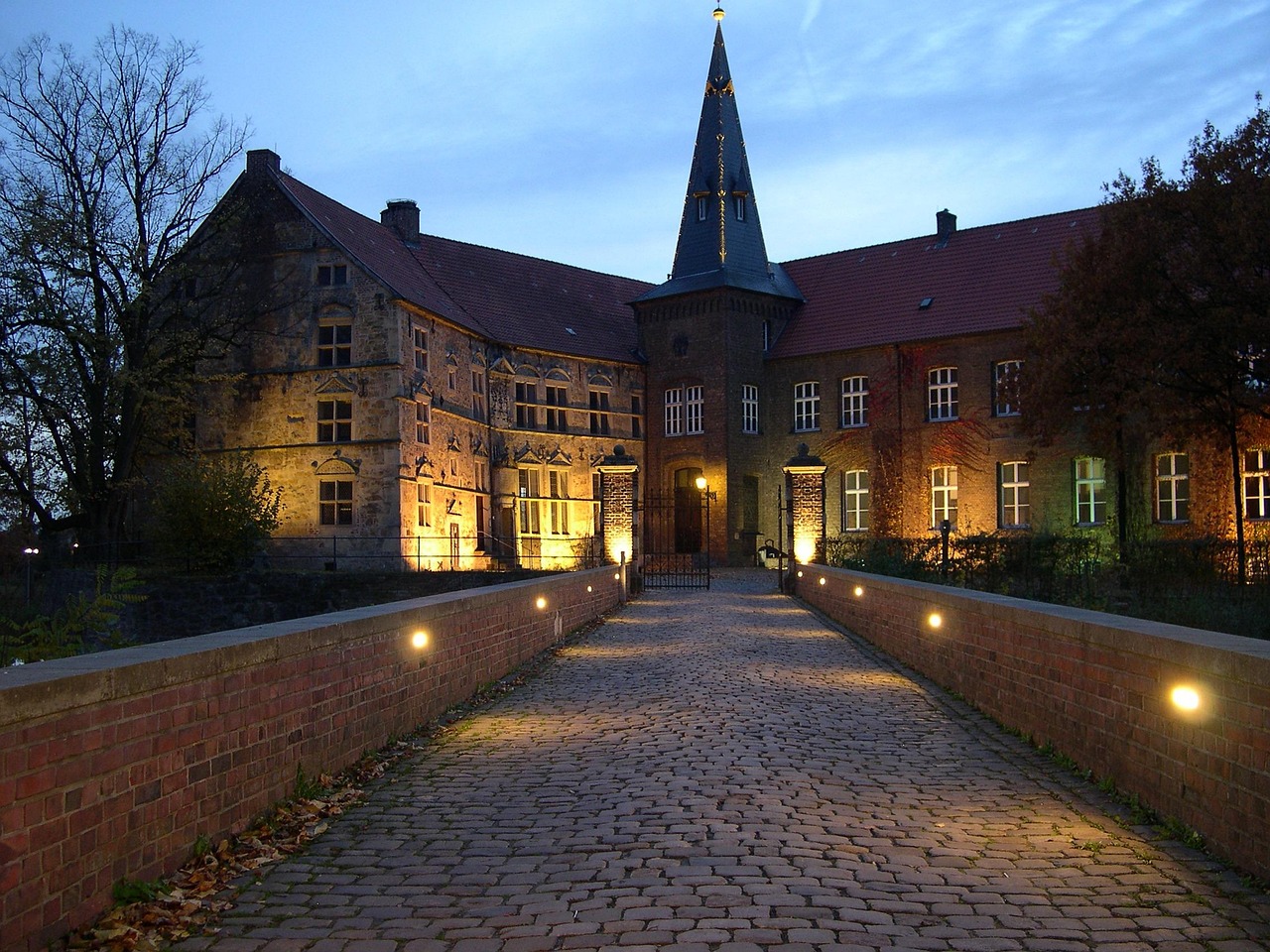
From Münster past the Droste moated castles, Vischering and Nordkirchen, the wild horses in the Merfelder Bruch and the flamingos in the Venn to the sandstone cliffs near Tecklenburg and back via Warendorf: around 380 kilometres on which the motorhome stays put in the evening and the bike does the riding during the day.
The spirit of the route
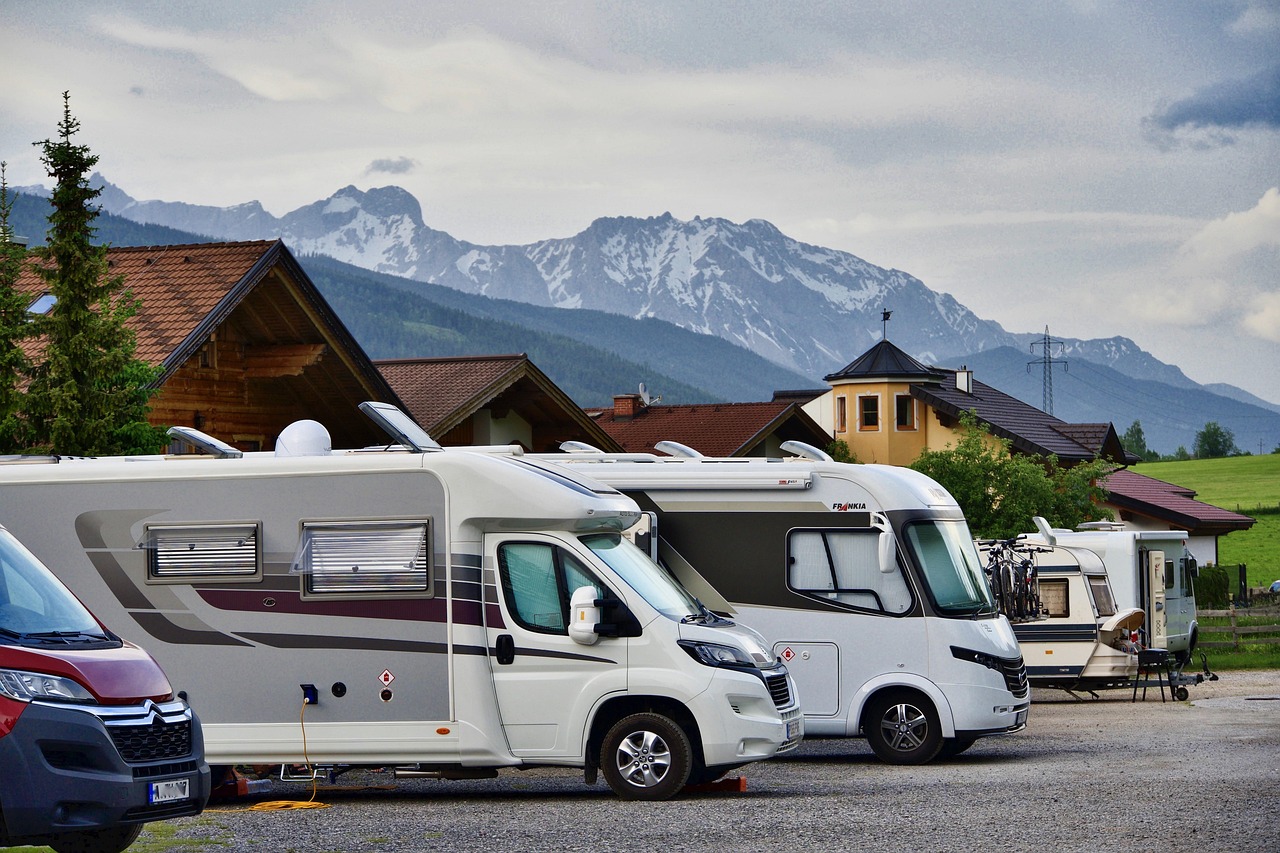
The Münsterland is flat, but not empty. Between maize fields, hedgerow banks and old oaks, Gräften appear – moats in which brick towers and baroque façades are reflected – and behind every farm a Pättken branches off, as people in the Münsterland call their narrow farm tracks. Here the motorhome is above all a base camp: in the morning the bikes come off the rear rack, in the evening you sit in front of the open sliding door, smell freshly mown grass and hear the bells of a village church tower drifting across the fields. In Münster more bicycle bells ring than car horns sound, in the Merfelder Bruch wild horses graze, and in the Zwillbrocker Venn pink flamingos stand in the bog water. In the north the land rises towards the Teutoburg Forest: half-timbering in Tecklenburg, bizarre sandstone rocks near Ibbenbüren, beech woods instead of pasture. A route for people who like to travel slowly and don’t need many bends.
Stage-by-stage plan
1Stage 1: Münster to Havixbeck via Haus Rüschhaus and Burg Hülshoff (approx. 25 km)
- The drive
- The morning belongs to Münster, and by bike: from the campsite on the Werse in the south-east of the city it is around 6 kilometres to the old town, mostly on separate cycle paths. Then take the motorhome along the ring road north-west to the district of Nienberge and Haus Rüschhaus, and on along country roads to Burg Hülshoff between Roxel and Havixbeck. Flat land and well-built roads, but in Münster heavy bike traffic at every junction; pure driving time under an hour.
- Highlights & must-sees
- Prinzipalmarkt with its gabled houses and arcades, the Historic City Hall with the Hall of Peace of the Peace of Westphalia, and St Lambert’s Church with the three iron cages of the Anabaptists on its tower; just behind it, St Paul’s Cathedral with its astronomical clock.
- LWL Museum of Art and Culture on Domplatz, followed by a loop around the Aasee past Claes Oldenburg’s “Giant Pool Balls” – on foot or by bike; a motorhome has no business in the city centre.
- Haus Rüschhaus, the country house designed by Johann Conrad Schlaun where Annette von Droste-Hülshoff lived for many years – with the permanent exhibition “Droste Welten”, a hands-on garden and a café, open Wednesday to Sunday; Burg Hülshoff, her birthplace, is a moated castle with a park. Check the opening times of both houses in advance.
- CampingSpirit overnight tip
-
Official campsite or RV park: Campingplatz Münster on the Laer bank of the Werse in the south-east of the city: according to the city around 70 pitches, open roughly February to December, with electricity, sanitary facilities, Wi-Fi and disposal; in front of it and next to it are motorhome pitches, also for arrivals after reception has closed. Buses run into the centre, but the bike is quicker. If you are moving on to Havixbeck: there are motorhome pitches at the outdoor pool in Havixbeck; check facilities and fees on site.
Free camping or nature tip (where legal): Wild camping is not allowed in North Rhine-Westphalia. Münster has designated a number of small motorhome areas – at the Allwetterzoo (a few pitches with electricity, two nights maximum), on Albersloher Weg/Hafenstraße, at the Eymann sauna, at the Hallenbad Ost indoor pool and on Schlossplatz (closed during major events). There is also a private motorhome area in Roxel (WOMO Hippo-Fun, two days maximum). The city has closed individual car parks to motorhomes, for example at the Mühlenhof open-air museum; take the signs seriously. The car parks at Rüschhaus and Hülshoff are for visitors only.
- Insider tip for campers
- Münster has a low-emission zone – without a green sticker you can’t enter the city centre. The easiest option is to leave the motorhome on the edge of town and cycle, or take the bus from the park-and-ride. The weekly market on Domplatz is on Wednesday and Saturday mornings. And: on bicycle streets cyclists have priority; cars may only enter if an additional sign allows it, and then at no more than 30 km/h; on the Promenade, the green ring around the old town, motor vehicles have no place at all.
2Stage 2: Havixbeck to Nordkirchen via Lüdinghausen (Burg Vischering) (approx. 35 km)
- The drive
- Take back roads south through the foothills of the Baumberge to Senden, cross the Dortmund-Ems Canal there and continue to Lüdinghausen. From there it is only a few kilometres to Nordkirchen. Level, quiet country roads with avenues of trees and cycle paths alongside; in Lüdinghausen avoid the narrow old-town streets and use the signposted car parks at the castles. Pure driving time around 45 minutes.
- Highlights & must-sees
- Burg Vischering in Lüdinghausen: a picture-book moated castle, outer and main castle on two islands, with the Münsterland Museum inside telling the story of the castles and the landscape; right next door is the smaller Burg Lüdinghausen.
- Schloss Nordkirchen, the “Westphalian Versailles”: the largest baroque moated palace complex in Westphalia, now home to the NRW University of Applied Sciences for Finance. The palace park with its moats, Venus Island and orangery is freely accessible; you can only see the interiors on guided tours.
- Bike loop on the 100 Castles Route between Vischering, Lüdinghausen and Nordkirchen – flat, well signposted, with farm cafés along the way.
- CampingSpirit overnight tip
-
Official campsite or RV park: Wohnmobilstellplatz Nordkirchen, close to the village centre and within cycling distance of the palace; check the number of pitches, electricity and water/waste disposal in advance on Campercontact or park4night. There is no conventional campsite in Nordkirchen or Lüdinghausen; the nearest campsites are towards Haltern and Olfen.
Free camping or nature tip (where legal): The palace car parks in Nordkirchen and Lüdinghausen are day car parks. The moats and meadows around the castles are partly landscape protection areas; field tracks and Pättkes are mostly closed to motor vehicles (“Landwirtschaftlicher Verkehr frei”) and too narrow for motorhomes anyway. If you can no longer drive at night, you may stay one night on a regular car park without a prohibition sign – without chairs, awning or levelling jacks.
- Insider tip for campers
- In Senden and Lüdinghausen there are several simple motorhome areas along the Dortmund-Ems Canal; the canal cycle path is a flat alternative for this stage if your partner drives the motorhome ahead. Schloss Nordkirchen is a popular wedding venue, and at weekends the car parks fill up early – come on a weekday or early in the morning.
3Stage 3: Nordkirchen to Haltern am See (approx. 30 km)
- The drive
- Head west via Selm and Olfen into the Lippe valley and across the Lippe to Haltern. Along the way it gets greener and sandier: pine forest, heath and flooded gravel pits herald the Hohe Mark. Good country roads, with lots of day-trip traffic in Haltern itself on warm weekends. Pure driving time around 40 minutes.
- Highlights & must-sees
- LWL Roman Museum in Haltern: finds from the large Roman camp on the Lippe dating from around the birth of Christ, plus, behind the museum, the Römerbaustelle Aliso with reconstructed sections of the camp fortifications (closed over the winter from November).
- Silbersee II near Haltern-Sythen: a flooded gravel pit with pale quartz sand, a bathing lake in summer and a quiet lakeside walk outside the season.
- Halterner Stausee reservoir with the Westruper Heide: juniper, heather and sandy paths; the heath flowers in late summer.
- CampingSpirit overnight tip
-
Official campsite or RV park: In Haltern, motorhomes park at the Aquarell indoor pool, close to the town centre; check pitches, fees and water/waste disposal in advance. Several campsites lie on the edge of the Haard and around the lakes, such as Haard-Camping; in high summer the sites by the bathing lakes are full, and seasonal pitches predominate.
Free camping or nature tip (where legal): The shores of the Silbersee and the reservoir are water protection and nature reserves; overnight stays are banned in the lakeside car parks, and the public order office carries out frequent checks on hot days. In the Haard and the Hohe Mark (Naturpark Hohe Mark), forest tracks are also closed to motor vehicles.
- Insider tip for campers
- On summer weekends traffic to the bathing lakes backs up; leave the motorhome at the motorhome area and cycle to the Silbersee. Haltern borders the Ruhr: if you are arriving from the south, check the current status of the low-emission zones with the Federal Environment Agency (Umweltbundesamt).
4Stage 4: Haltern am See to Coesfeld via Dülmen and the Merfelder Bruch (approx. 45 km)
- The drive
- North to Dülmen, from there west out towards Merfeld to the wild horse reserve, and along country roads through pastures and patches of woodland to Coesfeld. Flat, quiet roads; the access to the wild horse reserve is a narrow country lane, so make room for each other when meeting oncoming traffic. Pure driving time around an hour.
- Highlights & must-sees
- Wildpferdebahn in the Merfelder Bruch: several hundred Dülmen wild horses live all year round without stables on an extensive area of pasture and woodland belonging to the Duke of Croÿ; visitors may walk among the herds on designated paths. Open in season at weekends and on public holidays; check times beforehand.
- Wildpark Dülmen on the edge of town: a freely accessible park with fallow deer, good for a short bike ride.
- Coesfeld: St Lambert’s Church with the Coesfeld Cross, a Gothic forked cross, and the Walkenbrückentor, a remnant of the town fortifications.
- CampingSpirit overnight tip
-
Official campsite or RV park: Wohnmobilstellplatz Coesfeld near the town centre; check facilities and fees on site or in the apps. Alternative halfway along: the motorhome area at Hüttendyk in Dülmen or one of the campsites around Dülmen and the Dülmener See.
Free camping or nature tip (where legal): The Merfelder Bruch is a nature reserve; the visitor car park of the wild horse reserve may only be used during the day. Dogs are not allowed into the reserve.
- Insider tip for campers
- The wild horse reserve is very busy at weekends from midday – come early and bring binoculars, as the herds keep their distance. In Dülmen the weekly market is worth a visit, and many filling stations on the B474 have room for longer vehicles.
5Stage 5: Coesfeld to Burgsteinfurt via Billerbeck and the Zwillbrocker Venn (approx. 110 km)
- The drive
- First east into the Baumberge to Billerbeck, then the longest driving day: westwards via Gescher, Stadtlohn and Vreden almost to the Dutch border into the Zwillbrocker Venn, and via Ahaus, Heek and Metelen to Burgsteinfurt. Mostly good federal and country roads through parkland, with 30 km/h limits and lots of bike traffic through the villages. Pure driving time a good two hours; if you prefer a quieter day, skip the Venn and drive directly from Billerbeck to Burgsteinfurt (a good 30 kilometres).
- Highlights & must-sees
- Ludgerusdom in Billerbeck, a massive neo-Gothic provost church on the spot where St Liudger, the first Bishop of Münster, died in 809; the path leads from the church to the Ludgerus fountain.
- Zwillbrocker Venn: in this raised-bog reserve a small colony of flamingos, considered the northernmost in the world, breeds in the middle of a large black-headed gull colony. From the observation point on the edge you usually see the birds in spring and summer; there is also the biological station and the baroque monastery church of Zwillbrock.
- Bagno in Burgsteinfurt: the 18th-century landscape park of the Counts and later Princes of Bentheim-Steinfurt, with a concert gallery and ponds; next to it the moated castle, which is lived in and can only be viewed from outside.
- CampingSpirit overnight tip
-
Official campsite or RV park: Motorhome area in Burgsteinfurt, within walking distance of the old town, the castle and the Bagno; check water/waste disposal and electricity in advance in the apps. In the western Münsterland there are campsites, for example at the Dreiländersee near Gronau, if you want to spend the night closer to the Venn.
Free camping or nature tip (where legal): The Zwillbrocker Venn is a nature reserve and Natura 2000 site; stay on the paths, keep dogs on a lead, and park only in the visitor car park and only during the day. The colony is sensitive to disturbance – no drones.
- Insider tip for campers
- The visit to the Venn is short: an hour at the observation point is enough; binoculars matter more than a telephoto lens. In Billerbeck it is best to park at the outdoor pool on the edge of the town centre, as the old-town streets around the church are narrow. Fill up in the border area: diesel is usually cheaper in Germany than in the Netherlands, and you can only swap gas bottles on the German side.
6Stage 6: Burgsteinfurt to Tecklenburg via Rheine, Hörstel and the Dörenther Klippen (approx. 65 km)
- The drive
- North to the Ems at Rheine, then east to Hörstel-Gravenhorst, across the Dortmund-Ems Canal to Ibbenbüren and along the country road at the foot of the Teutoburg Forest via Brochterbeck to Tecklenburg. Flat at first, hilly from Ibbenbüren; the last kilometres to Tecklenburg are steep and winding, and the old-town lanes on the ridge are unsuitable for motorhomes. Pure driving time around 1.5 hours.
- Highlights & must-sees
- Rheine: Kloster Bentlage with the Saline Gottesgabe and its graduation tower in the Ems meadows, reachable by bike on the Ems cycle path.
- Kloster Gravenhorst in Hörstel: a former Cistercian convent, now the art centre of the Steinfurt district with changing exhibitions and a quiet cloister garden; not far away is the “Nasses Dreieck” (Wet Triangle), where the Mittelland Canal and the Dortmund-Ems Canal meet.
- Dörenther Klippen: a chain of sandstone rocks on the ridge of the Teutoburg Forest, the best known being the Hockende Weib (Crouching Woman); the Hermannsweg runs along the top, with wide views over the Münsterland.
- CampingSpirit overnight tip
-
Official campsite or RV park: At the Bismarck Tower on the edge of Tecklenburg’s old town there are a few motorhome spaces in a mixed-use car park, a good 1 kilometre on foot to the centre; no water/waste disposal, no electricity, parking fee by app or machine, cheaper or free at night according to user reports – check the current situation on site. With sanitary facilities and water/waste disposal: Campingplatz Dörenther Klippen near Ibbenbüren, or the campsites and the motorhome park in Tecklenburg’s district of Leeden.
Free camping or nature tip (where legal): The Dörenther Klippen lie in a nature reserve; the hiking car parks are for daytime use, and staying overnight in the forest is prohibited under the NRW State Forest Act. In Tecklenburg, parking enforcement checks regularly.
- Insider tip for campers
- Don’t drive into the centre of Tecklenburg’s old town: steep, narrow cobbled lanes with hardly anywhere to turn. Fill and empty your tanks beforehand, for example at the Wohnmobilhafen Riesenbeck on the Dortmund-Ems Canal or at the motorhome area at the Aaseebad in Ibbenbüren. In Rheine and Ibbenbüren there are filling stations with large forecourts. From Tecklenburg the Teutoburg Forest stretches south-east as far as the Externsteine; that part and the Weser Uplands are covered in the CampingSpirit guide “Half-timbering, ferry cables and sandstone rocks” through the Weser Uplands and the Teutoburg Forest.
7Stage 7: Tecklenburg to Warendorf (approx. 45 km)
- The drive
- From the ridge of the Teutoburg Forest via Lengerich back down into the Münsterland and south-east along country roads through farming hamlets and horse pastures to Warendorf on the Ems. Climbs at first, then flat again; in Lengerich a through-road with a level crossing and traffic lights. Pure driving time around an hour.
- Highlights & must-sees
- Tecklenburg in the morning: half-timbered houses, the castle ruins with the open-air stage, the Leinen-Legge as a reminder of the linen trade, and the view from the castle hill over the Münsterland.
- Warendorf as the town of the horse: the NRW State Stud with its stallions can be visited in season on public guided tours; Warendorf is also home to the German Olympic Committee for Equestrian Sports and the German Equestrian Federation. Dates and booking via the tourist information office.
- Warendorf’s old town with gabled houses, market square and Ems promenade.
- CampingSpirit overnight tip
-
Official campsite or RV park: Motorhome area at the Emswehr in Warendorf, within walking distance of the old town on the Ems, with only a few pitches; check electricity and water/waste disposal in advance.
Free camping or nature tip (where legal): The Ems meadows near Warendorf are a floodplain and largely protected; riverside paths are cycle and footpaths. Wild camping is not allowed; there are enough motorhome areas.
- Insider tip for campers
- In Warendorf, arrive early on event days around the stud, when motorhome areas and car parks fill up quickly. If you stayed in Tecklenburg without water/waste disposal: empty your tanks in Lengerich or Warendorf before the last stage to Münster begins.
8Stage 8: Warendorf to Münster via Telgte (approx. 25 km)
- The drive
- Westwards parallel to the Ems to Telgte and from there back to Münster. The fast federal road is busy during rush hour; it is nicer to reach Telgte by bike on the Ems cycle path and bring the motorhome along afterwards. Pure driving time about 30 minutes.
- Highlights & must-sees
- Telgte: a pilgrimage town with the Chapel of Grace and the RELíGIO museum of religious culture, plus a small, quiet old town.
- Ems cycle path between Warendorf and Telgte: flat, through meadows, pastures and small pine woods.
- To finish, Münster in the evening: an evening stroll by the Aasee or through the Kreuzviertel with its Gründerzeit houses before heading home.
- CampingSpirit overnight tip
-
Official campsite or RV park: Motorhome area at the Emstor in Telgte, close to the Ems and the old town, or back to Campingplatz Münster on the Werse; for motorhome areas in Münster see stage 1.
Free camping or nature tip (where legal): NRW law applies here too: no wild camping; one night on a regular car park to restore your fitness to drive is tolerated, camping behaviour is not.
- Insider tip for campers
- Münster’s low-emission zone requires a green sticker. If you leave via the motorway, bypass the city centre on the ring road and the bypasses; turn right slowly at large junctions and check over your shoulder – cyclists going straight ahead have priority.
Camping practice & local rules
Wild camping & overnight parking
- North Rhine-Westphalia does not allow wild camping. Under road traffic law it is permitted to spend one night in a motorhome on a public car park without a prohibition sign in order to become fit to drive again. As soon as the table, chairs, awning or levelling jacks come out, it counts as camping and can be fined as an administrative offence.
- There are many nature reserves on the route: Merfelder Bruch, Zwillbrocker Venn, Dörenther Klippen, parts of the Ems meadows and the lake landscape around Haltern. Stay-on-the-path rules and driving bans apply there; car parks are day car parks. Under state forestry and nature conservation law, forest and field tracks are off limits to motor vehicles.
- Münster has a few small motorhome areas within the city, most with a minimum or maximum length of stay, and has closed individual car parks to motorhomes. Observe the signs and choose the campsite on the Werse for several nights.
- The density of motorhome areas in the Münsterland is high: many municipalities have pitches at outdoor pools, sports centres and farms. Useful resources are park4night, Campercontact, the promobil motorhome area guide and the accommodation directories of Münsterland e. V. and Tecklenburger Land Tourismus.
Waste disposal & supplies
- You will find service points for fresh water and waste disposal at many municipal motorhome areas and campsites, often with coin or card machines. In Münster there is also a disposal-only station at a filling station with a truck wash in the industrial area by the harbour. Simple spots such as the Bismarck Tower in Tecklenburg have no water or waste disposal at all.
- Empty grey water and cassette contents only at service stations, never into drains, moats or streams.
- Tap water is drinking water everywhere. Bring your own drinking-water hose and various tap adapters, because some service posts only have hose couplings without a thread.
- Gas: grey 5 and 11 kg exchange bottles are available at filling stations, DIY stores and many campsites. LPG for refillable bottles is sold at filling stations in Münster, Rheine, Ibbenbüren and on the A1, A30 and A43 motorways. German exchange bottles are not swapped in the Netherlands.
Vehicle size & traffic rules
- Speed limits: motorhomes up to 3.5 t 100 km/h outside built-up areas, recommended speed 130 km/h on the motorway; over 3.5 t up to 7.5 t 80 km/h outside built-up areas and 100 km/h on the motorway; vehicle-and-trailer combinations 80 km/h, 100 km/h on the motorway with Tempo 100 approval. 50 km/h in built-up areas, 30 km/h in many town centres and on all bicycle streets.
- Low-emission zone: Münster has a low-emission zone, entry only with a green sticker. The other places on the route have none. If you are travelling through the Ruhr, check the current status of the zones there with the Federal Environment Agency (Umweltbundesamt).
- Cyclists: when overtaking cyclists keep a distance of at least 1.5 metres in built-up areas and 2 metres outside them. Vehicles over 3.5 t may only turn right in built-up areas at walking pace. On bicycle streets cyclists have priority and may ride side by side.
- No vignette and no car toll; motorhomes are exempt from the truck toll. If you cross into the Dutch border area near Zwillbrock, Dutch rules apply there, such as lower speed limits.
- Winter tyres are compulsory in snow, ice and slippery conditions (tyres with the Alpine symbol). If bikes on the rear rack cover the number plate or rear lights, a light board with a repeat number plate is required. Mobile phone at the wheel only in a holder; blood alcohol limit 0.5, 0.0 for new drivers.
CampingSpirit packing & preparation checklist
- A sturdy bike rack and two good D-locks or folding locks: the Münsterland is explored by bike, and bikes are frequently stolen in Münster.
- A cycling map or app with the Münsterland cycle network and the 100 Castles Route, around 1,000 kilometres long: this lets you plan day loops from every motorhome area.
- Binoculars for the wild horses in the Merfelder Bruch and the flamingos in the Zwillbrocker Venn – you can’t get close there.
- A green emissions sticker on the windscreen, otherwise Münster’s city centre is off limits.
- Rain jacket and rain trousers: the west wind often brings showers to the Münsterland, even in summer.
- Insect repellent for evenings by moats, bog and the Ems.
As of 2026-10. Closures, fees and booking rules change: check official sources before you go.