In-depth guide · CampingSpirit
A good 330 kilometres through Flanders: two port cities with low emission zones, the canals of Bruges, 67 kilometres of coast alongside the tram, the dunes of the Westhoek and the quiet cemeteries between Ypres and the Kemmelberg.
The spirit of the route
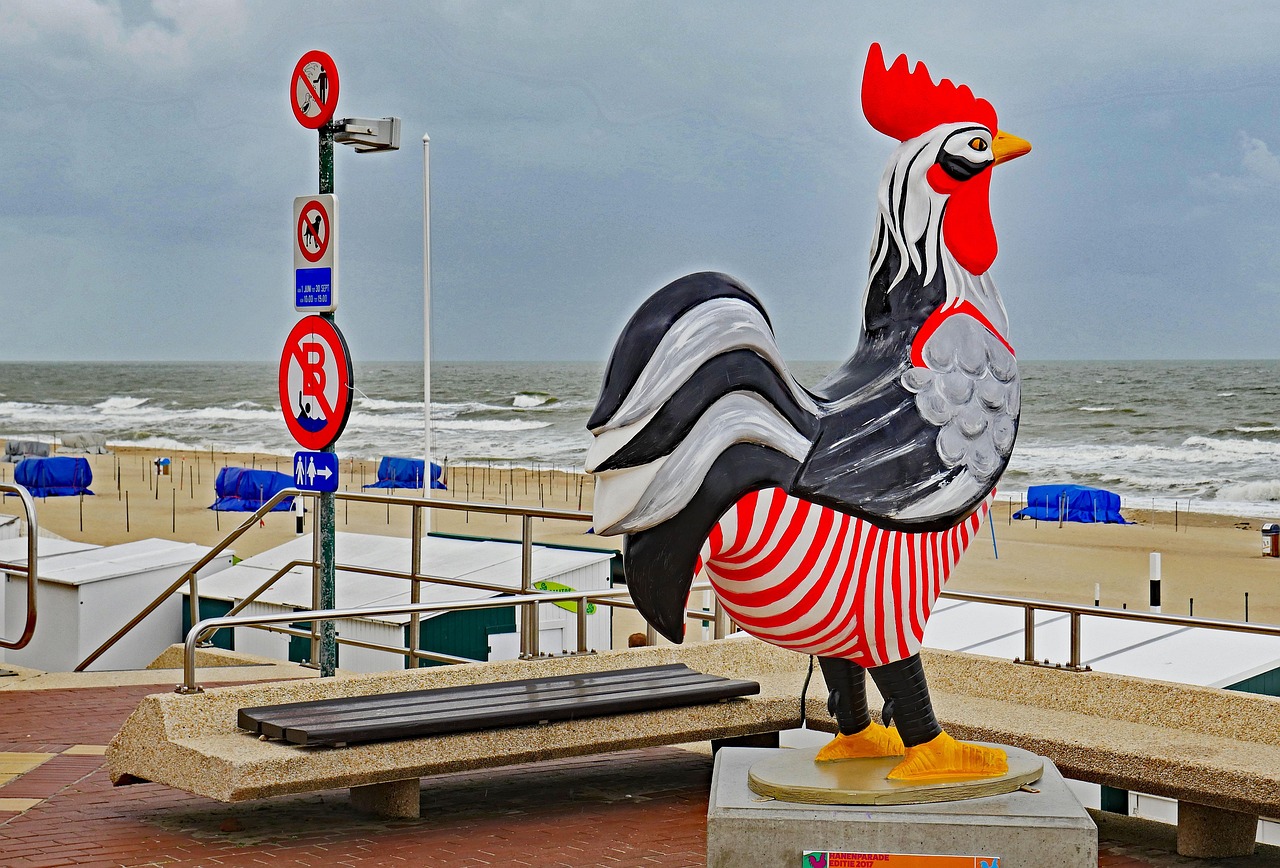
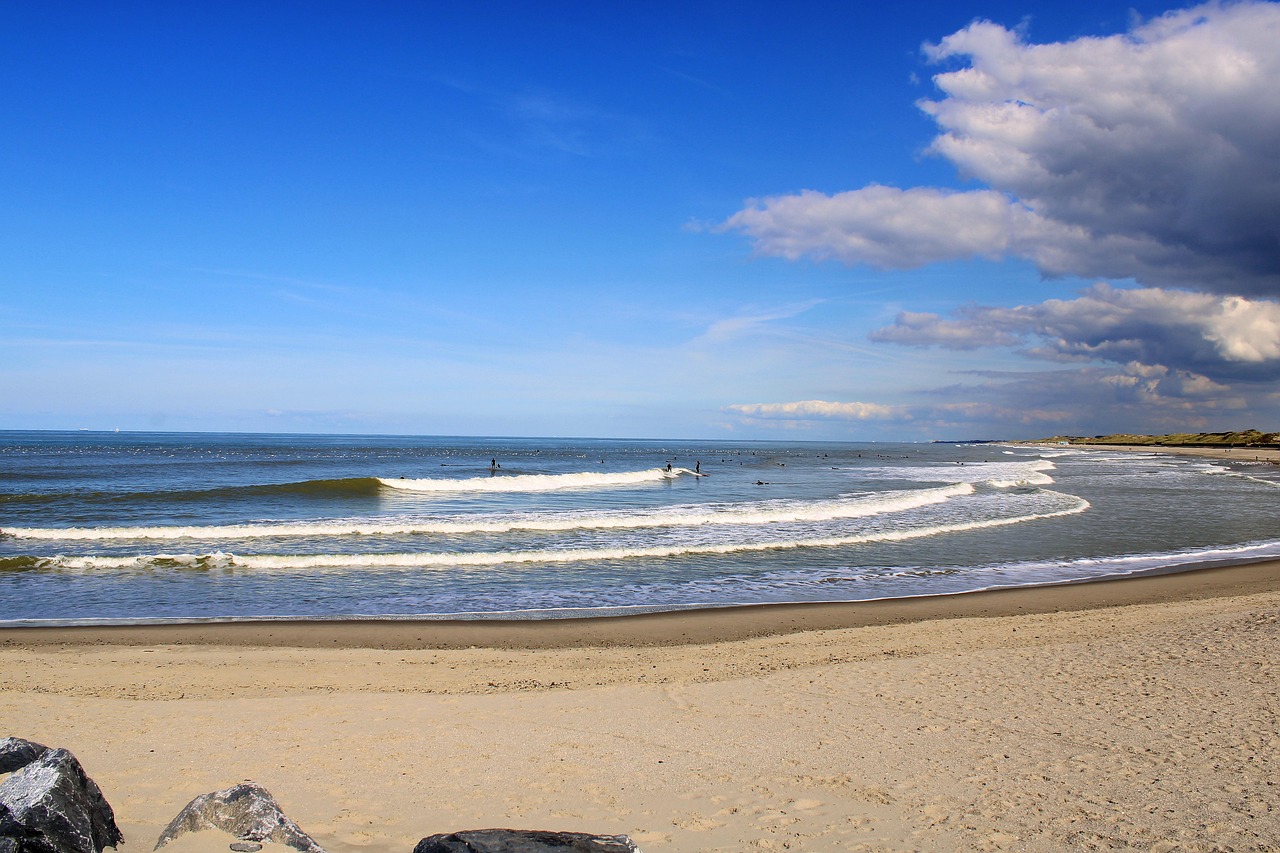
Flanders is a place to drive slowly. Beyond Antwerp the land becomes so flat that church towers and windmills are the only landmarks, rows of poplars line the canals, and there is more going on on every cycle path than on the country road. In Ghent and Bruges the stepped gables stand shoulder to shoulder above the water, the belfries ring out in the evening, and through the sliding door comes the smell of chip fat and malt. On the coast the yellow Kusttram pushes its way between the sea wall and the apartment blocks; beyond De Panne the dunes begin, where the wind sorts marram grass from sand. Then the mood shifts: in the Westhoek hop gardens lie next to soldiers’ cemeteries, and every evening at eight the traffic falls silent under the Menin Gate in Ypres for the Last Post. This route demands planning for low emission zones and aires – and rewards you with short stages, cycle paths straight from the pitch and beer that is best saved for the evening.
Stage-by-stage plan
1Stage 1: Antwerp to Ghent (approx. 60 km)
- The drive
- From Antwerp take the E17 through the Kennedy Tunnel under the Scheldt, then dead straight across the Waasland via Sint-Niklaas and Lokeren to Ghent. Just under an hour, considerably longer in rush hour – the Antwerp ring road is one of the most congested stretches in Belgium, and around the Oosterweel roadworks lanes and exits keep changing. The ring road and motorways lie outside the low emission zone; if you head for the centre, you drive into it.
- Highlights & must-sees
- Cathedral of Our Lady with four Rubens paintings, and the Grote Markt with the Brabo Fountain.
- MAS (Museum aan de Stroom) in the Eilandje district: the roof terrace is free to access and offers the best view over the port and the old town.
- Antwerpen-Centraal station with its domed hall, quickly reached by tram from the edge of the city.
- CampingSpirit overnight tip
-
Official campsite or RV park: In Ghent, Urban Gardens Gent (formerly Camping Blaarmeersen) lies in the leisure area of the same name west of the centre: motorhome pitches with electricity, toilets and showers and service point, a swimming lake and a cycle path into the old town, plus a bus into the city. For the night before setting off in Antwerp: Camperpark Vogelzang in the south of the city (around 100 pitches, electricity, service point) or City Camping Antwerp on the Linkeroever, from where a ferry and a pedestrian tunnel under the Scheldt lead into the old town.
Free camping or nature tip (where legal): Belgium allows you to spend the night in a properly parked vehicle as long as no municipal bylaw or signage prohibits it, and camping behaviour (levelling jacks, chocks, awning) is banned on public roads in any case. In the city centres of Antwerp and Ghent, high parking charges, narrow streets and the low emission zone come on top – the official sites are the only sensible choice.
- Insider tip for campers
- Both cities have a Low Emission Zone (LEZ), and vehicles with German number plates must be registered – even if they meet the standard. Registration via the cities’ official portals (lez.antwerpen.be or lez.stad.gent) is free, only has to be done once and covers Antwerp and Ghent together, but not Brussels; avoid expensive third-party sites. As processing can take up to two weeks, register in good time before your trip. City Camping Antwerp on the Linkeroever lies inside the Antwerp LEZ, Vogelzang just outside it south of the ring road – check on the LEZ map. The Liefkenshoek Tunnel in the north is tolled, the Kennedy Tunnel is not.
2Stage 2: Ghent to Bruges (approx. 50 km)
- The drive
- From Blaarmeersen, without detouring through the centre, take the E40 towards the coast; after a good 40 minutes leave at Sint-Michiels and follow the R30 ring road to the aire by the canal. If you have time, take the N9 instead via Aalter and Beernem, parallel to the Ghent–Bruges canal, through ribbon villages and poplar avenues.
- Highlights & must-sees
- Gravensteen and the rows of houses on the Graslei and Korenlei – at their best from St Michael’s Bridge in the evening light.
- St Bavo’s Cathedral with the Ghent Altarpiece by the van Eyck brothers and the visitor centre in the crypt.
- In Bruges: the Begijnhof and the Minnewater, five minutes’ walk from the aire.
- CampingSpirit overnight tip
-
Official campsite or RV park: Kampeerautoterrein Brugge on the Bargeweg, by the canal south of the old town (run by Interparking): a good 55 pitches on tarmac, electricity, fresh water and waste disposal, no toilets or showers, payment at the machine. Cramped, noisy in summer and quick to fill up, but a quarter of an hour’s walk from the Markt. With toilets and showers: Camping Memling in Sint-Kruis in the east of the city, with a bus connection to the centre.
Free camping or nature tip (where legal): Bruges wants motorhomes on the aire on the Bargeweg; overnight stays in the car parks at the station and on the ring road are not intended and are checked. If the aire is full, switch to the small aires of the surrounding municipalities, for example by the canal in Beernem or in Zuienkerke – check facilities beforehand on Campercontact or park4night.
- Insider tip for campers
- Ghent has a traffic circulation plan: the city centre is divided into sectors, and you can only move between them via the R40 ring road – with a motorhome, don’t head into the centre at all and take a bike, tram or bus. The old town of Bruges inside the ring is narrow, almost entirely 30 km/h and full of one-way streets; the camper stays on the Bargeweg.
3Stage 3: Bruges to Wenduine via Damme and Knokke-Heist (approx. 40 km)
- The drive
- From Bruges along the Damse Vaart to Damme – a narrow poplar avenue where you share the road with plenty of cyclists. On through the polders via Westkapelle to Knokke, then on the N34 coast road parallel to the Kusttram via Heist and Zeebrugge to Blankenberge and Wenduine. Around an hour’s driving, with a lot of port traffic around Zeebrugge.
- Highlights & must-sees
- Damme: the town hall on the Markt, the Uilenspiegel Museum and the Schellemolen by the canal – the route to Bruges can also be covered by bike or excursion boat.
- Zwin Natuur Park near Knokke: salt marshes on the tidal inlet on the border with the Netherlands, observation hides and a stork colony.
- The polder road between Damme and Westkapelle, early in the morning with mist over the meadows.
- CampingSpirit overnight tip
-
Official campsite or RV park: Camper Park Blankenberge on the edge of town, a motorhome-only site with service point and toilets and showers, or the motorhome pitches at Camping De Wielen between Blankenberge and Wenduine. From both it is not far to the tram stop and the sea wall. In the summer holidays arrive early or book where possible.
Free camping or nature tip (where legal): On the Flemish coast, motorhome parking is restricted in many places by municipal bylaws and signage, motorhomes are often excluded altogether from sea-wall and beach car parks, and there are checks in summer. As far as we know there is no public motorhome aire in Knokke-Heist itself, only campsites; the Zwin is a nature reserve. Plan your night firmly on a site.
- Insider tip for campers
- Knokke is hard work in a motorhome: many car parks and underground garages have height restrictions, and parking on the sea wall is paid. For the Zwin, therefore, check beforehand whether the visitor car park can take your vehicle’s length, or leave the camper in Damme and take the bike. Be in Damme early at weekends – the village is very popular with day-trippers.
4Stage 4: Wenduine to Nieuwpoort via De Haan and Ostend (approx. 35 km)
- The drive
- Simply follow the N34 and the Kusttram south-west: through the dune villas of De Haan, past Bredene to Ostend, over the harbour bridge and past the Raversyde Atlantic Wall estate through Middelkerke and Westende to Nieuwpoort. Around 45 minutes, closer to an hour in summer with lots of traffic lights, zebra crossings and tram crossings.
- Highlights & must-sees
- De Haan: the Concessie, a Belle Époque villa quarter with half-timbering and slate roofs, with no high-rises on the sea wall.
- Raversyde estate near Ostend: open-air site with bunkers and trenches of the Atlantic Wall from both world wars.
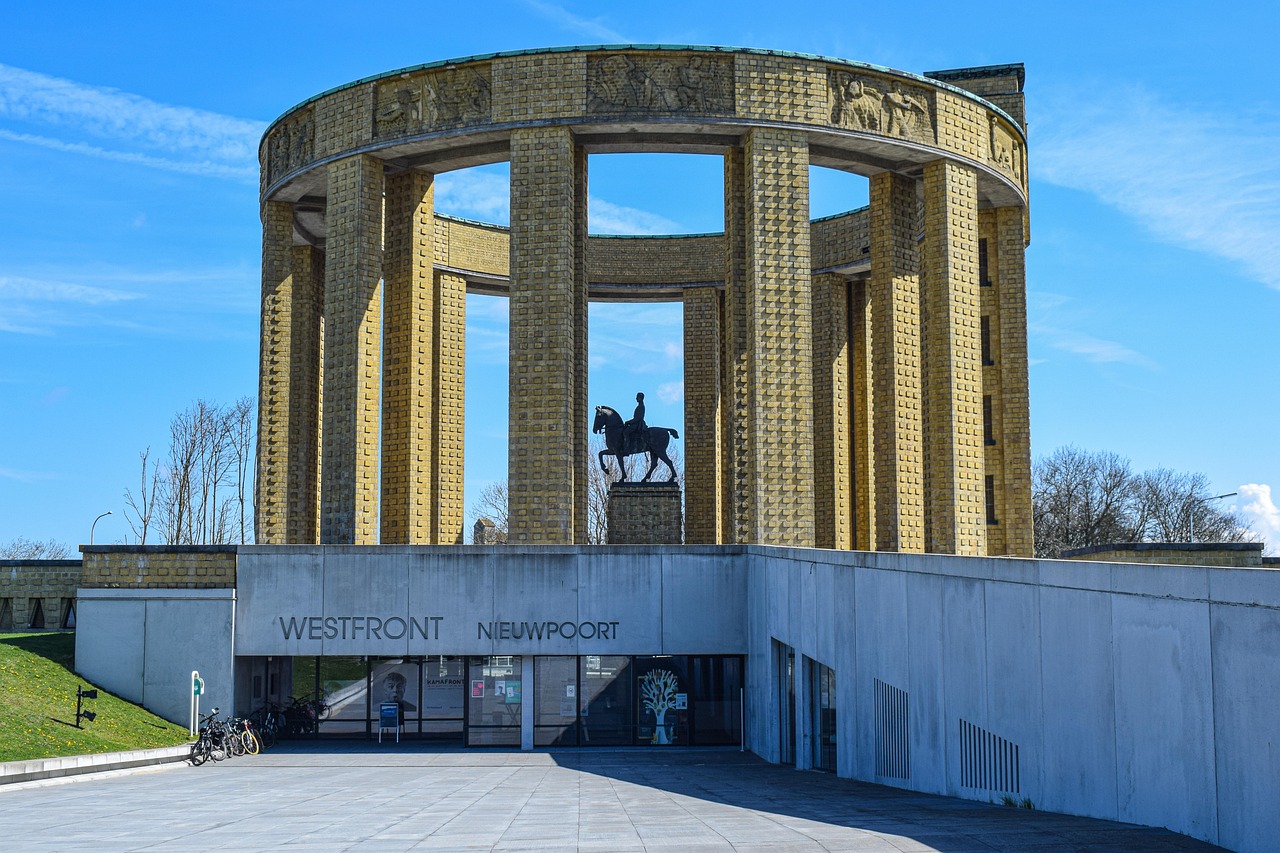
- The Ganzenpoot in Nieuwpoort with the monument to King Albert I and the Westfront Nieuwpoort visitor centre on the flooding of the Yser plain in 1914.
- CampingSpirit overnight tip
-
Official campsite or RV park: In Nieuwpoort: Camperpark De Zwerver on the edge of town, a motorhome site with electricity, service point and toilets and showers, or Kompas Camping Nieuwpoort with its own motorhome area, a large site and a cycle path to the beach. More central for Ostend is Camperpark Zeester near Middelkerke in the hinterland.
Free camping or nature tip (where legal): Between Bredene and Nieuwpoort the same applies as along the whole coast: overnight stays in sea-wall car parks and on the street are not intended and in many places prohibited by bylaw or sign, and the dunes are protected. During the day, car parks on the edge of town are the best choice, continuing from there by tram.
- Insider tip for campers
- The Kusttram links De Panne and Knokke over around 67 kilometres, with stops every few hundred metres. With a De Lijn day ticket you can leave the camper on the site while you explore Ostend and the neighbouring towns. Take care when turning on the N34: the tram runs in the middle of the road and has priority – always look both ways along the tracks before turning left.
5Stage 5: Nieuwpoort to Veurne via De Panne (approx. 30 km)
- The drive
- Continue on the N34 via Oostduinkerke, Koksijde and Sint-Idesbald to De Panne, just short of the French border. From there head inland on the N35 to Veurne. A good 40 minutes’ actual driving time; the coastal towns merge seamlessly into one another, and behind them the strips of dunes get wider.
- Highlights & must-sees
- Oostduinkerke: the shrimp fishers on horseback, a tradition recognised by UNESCO as intangible cultural heritage – ask the local tourist office for dates.
- Westhoek nature reserve in De Panne: shifting dunes, dune valleys and viewpoints on waymarked paths all the way to the border.
- Grote Markt in Veurne with the town hall, belfry and the Sint-Walburgakerk – one of the most unified market squares in Flanders.
- CampingSpirit overnight tip
-
Official campsite or RV park: Camperpark Veurne on the edge of the old town: around 40 pitches with electricity and service point, a few minutes’ walk from the Grote Markt. If you would rather stay on the coast, you will find several campsites in De Panne, such as Greenpark on the edge of town.
Free camping or nature tip (where legal): The dunes of De Panne and Koksijde are a nature reserve: stay on the paths, and park only in the designated car parks; overnight stays there are not allowed. In the hinterland, Steenkerke near Veurne has the simple camper site Steenkerke Rust; check its status and rules with Toerisme Westhoek or in an aire guide.
- Insider tip for campers
- Veurne is a cheaper place to shop and refuel than the coastal towns. If you want to continue into France: beyond De Panne the Côte d’Opale begins – there is a CampingSpirit travel guide to the Opal Coast and the Bay of the Somme. Wear sturdy shoes for the dune walk; in the Westhoek the sand is soft.
6Stage 6: Veurne to Ypres via Diksmuide (approx. 40 km)
- The drive
- On the N35 through the polders of the Yser plain to Diksmuide, then via the N369 and Langemark or directly via Boezinge to Ypres. Flat, straight roads with lots of tractors and cyclists, a good hour. In the front zone of 1914 to 1918, bunkers and small cemeteries lie in the middle of the fields.
- Highlights & must-sees
- Yser Tower in Diksmuide: peace monument and museum on the war on the Yser, with a view over the former front line.
- Dodengang near Diksmuide: a reconstructed Belgian trench right on the Yser.
- Langemark German war cemetery with the mass grave and the oak trees on the site.
- CampingSpirit overnight tip
-
Official campsite or RV park: Urban Gardens Ieper (formerly Camping Jeugdstadion) on the edge of town: motorhome pitches with electricity, toilets and showers and service point, around 15 minutes’ walk to the Menin Gate. Quieter and simpler: the Kampeerautoterrein Zillebekevijver at Zillebeke Lake south-east of the town.
Free camping or nature tip (where legal): Ypres and the surrounding municipalities rely on their camper sites; overnight stays on the Grote Markt and at the memorials are not intended. The car parks at cemeteries and museums are places of remembrance, not for camping.
- Insider tip for campers
- The Last Post has been played under the Menin Gate every evening at 8 pm since 1928. Arrive at least half an hour beforehand; in summer and on remembrance days it gets very crowded, and applause is not customary. Afterwards, the walk along the ramparts to the Lille Gate is worthwhile. The In Flanders Fields Museum in the Cloth Hall needs half a day.
7Stage 7: Ypres to Poperinge via Zonnebeke (approx. 45 km)
- The drive
- East out of Ypres on the N37 to Zonnebeke, on minor roads to Tyne Cot Cemetery and up to the village of Passchendaele, back via Hooge and then west on the N38 to Poperinge. A little over an hour’s driving, narrow country roads between the fields, with tight parking at some of the cemeteries.
- Highlights & must-sees
- Tyne Cot Cemetery: the largest Commonwealth war cemetery in the world, with the memorial wall to the missing and the view back towards Ypres.
- Memorial Museum Passchendaele 1917 in the castle grounds of Zonnebeke, with a reconstructed dugout and trench system.
- In Poperinge: Talbot House, the soldiers’ club behind the front, and the Hop Museum in the old municipal weigh house.
- CampingSpirit overnight tip
-
Official campsite or RV park: Around Poperinge there are several private camper sites, including Camperpunt ’t Heksken between Poperinge and Reningelst with electricity and service point. Right on the route to Hooge is the small Camperpunt Hooge Crater with only a few pitches. Ask the operator about facilities and season beforehand.
Free camping or nature tip (where legal): In the Westhoek the network of small camper sites is dense, and many farms offer pitches via networks such as Campercontact or park4night. Wild parking at cemeteries and on farm tracks is inappropriate and is not tolerated by the municipalities.
- Insider tip for campers
- Tyne Cot Cemetery has its own visitor car park; for longer motorhomes it is most relaxed in the morning. In Poperinge the market square is occupied in the mornings – park on the edge and walk. When driving through Zonnebeke and Passchendaele, watch out for agricultural vehicles; the farm tracks are muddy in autumn.
8Stage 8: Poperinge to Kemmelberg via Westvleteren and Watou (approx. 35 km)
- The drive
- North to the Abbey of Saint Sixtus near Westvleteren, across hop fields to Watou on the French border and through the Heuvelland via Westouter to the Kemmelberg. The only notable climbs on the route, short ramps on sometimes narrow roads; the cobbled side of the Kemmelberg is a cycling classic and no place for motorhomes. A good hour.
- Highlights & must-sees
- Saint Sixtus Abbey and the In de Vrede visitor centre opposite, where Westvleteren beer is served.
- Hop fields around Watou and Poperinge: in late summer the bines hang from wire frames several metres high.
- Kemmelberg with the Belvédère lookout tower and the French ossuary, with views across flat West Flanders to the coast.
- CampingSpirit overnight tip
-
Official campsite or RV park: Camping Ypra at the foot of the Kemmelberg in Kemmel, with walking trails straight from the site; ask about motorhome facilities and season beforehand. Alternatively, Camperpunt Sixtusbos in the woods near Westvleteren with electricity and water – quiet and wooded.
Free camping or nature tip (where legal): The Heuvelland is a nature and walking area; overnight stays in the car parks on the Kemmelberg are not allowed. The camper sites in the region are inexpensive and well spread out.
- Insider tip for campers
- Westvleteren beer is strictly limited and is only sold at the abbey to pre-order; you can try it in the In de Vrede café. If you won’t be driving after the tasting, Sixtusbos is the best place to stay. The drive back to Germany is easy via the A19 and E17 towards Kortrijk and Ghent, without passing through a low emission zone.
Camping practice & local rules
Wild camping & overnight parking
- In Belgium you may spend the night in a properly parked motorhome as long as no municipal bylaw prohibits it. Camping on public roads – chocks, extended levelling jacks, awning, table and chairs – is prohibited. In Flanders the large cities and many coastal municipalities restrict motorhome parking and overnight stays outside designated sites by bylaw or signage; the rules vary from place to place and are not always signposted at the car park.
- Wild camping and free parking in the countryside are not allowed in Flanders; in forests the Forest Decree prohibits camping outside designated areas, and the dunes on the coast are almost entirely protected. Exceptions apply only with the landowner’s permission.
- In Flanders, camper sites count as tourist accommodation and must be registered with Toerisme Vlaanderen. There are municipal sites in towns such as Bruges, Veurne and Ypres, as well as many private sites on farms, at breweries and at vineyards, especially in the Westhoek.
- Useful: Campercontact (particularly complete for Belgium and the Netherlands), park4night, the promobil aire guide and the accommodation pages of Toerisme Westhoek and Visit Bruges. For definitive information about a particular place, ask the municipality or the local police.
Waste disposal & supplies
- Most camper sites in Flanders have fresh water and waste disposal, often with payment by card at a machine; standalone service points outside sites are rare. Empty grey water and the cassette only at the service point.
- Tap water is drinking water. Many sites, however, have no toilet and shower block – a plan for the full cassette and for showering is part of the trip, such as a campsite every second or third night.
- Gas: German exchange cylinders are not exchanged. LPG is available at numerous filling stations; for refillable cylinders, bring a suitable adapter. If you are planning for ten days, arrive with two full cylinders.
- There are supermarkets and bakeries in every town; on Sundays many shops are closed, though on the coast they are often open in season.
Vehicle size & traffic rules
- Speed limits: 50 km/h in built-up areas, 30 km/h in Ghent, Bruges, Antwerp and many town centres; outside built-up areas the limit in Flanders is 70 km/h unless 90 is signposted; motorways and four-lane expressways 120 km/h for motorhomes and car-trailer combinations up to 3.5 t. Motorhomes and combinations over 3.5 t gross vehicle weight may not exceed 90 km/h even on the motorway; on other roads outside built-up areas, 70 km/h or a lower signposted limit applies. Priority to the right also applies at inconspicuous junctions; trams almost always have priority.
- Low emission zones: Antwerp and Ghent have an LEZ; Brussels has its own with its own rules and its own registration. Foreign vehicles (except Dutch ones) must be registered, even if they meet the standard; the free registration covers both Flemish zones. Motorhomes are subject to the rules, and the Euro standard in the vehicle documents is what counts. Currently diesel vehicles from Euro 5 and petrol vehicles from Euro 2 are admitted freely; Euro 4 diesels only with a paid permit whose conditions differ between the cities, and older vehicles only with a limited number of day passes. The Flemish government has scrapped the planned tightening; after an assessment of air quality in 2027 the zones may be adjusted or abolished. Journeys without registration or a permit are recorded by camera and fined. Bruges, the coast and the Westhoek have no low emission zone.
- Tolls: the motorways are currently vignette-free; the only toll is for the Liefkenshoek Tunnel in Antwerp. There the rate depends on height: vehicles of 3 m and above – which means most motorhomes – pay a considerably higher rate during the day than at night. Belgium is introducing a digital vignette linked to the number plate – check before your trip whether it already applies and whether your motorhome is affected. The distance-based toll with a Viapass on-board unit applies to goods vehicles over 3.5 t; if your motorhome is registered as a lorry, check beforehand.
- Parking on the coast: in the seaside resorts, paid parking or a blue zone with a parking disc applies almost everywhere, many car parks and underground garages have height restrictions, and motorhomes are excluded from some sea-wall car parks. Vehicles over 1.65 m high may not park closer than 20 m before traffic lights; over 7.5 t, parking in built-up areas is limited to 8 hours at a stretch, except in signposted areas.
- Equipment and alcohol: high-visibility vest within reach, warning triangle on board. Blood alcohol limit 0.5, 0.2 for professional drivers. Mobile phone at the wheel only with a hands-free system. If bikes protrude beyond the rear, Belgian rules on marking projecting loads apply.
CampingSpirit packing & preparation checklist
- A printout or screenshot of the LEZ registration confirmation for Antwerp and Ghent – the cameras record the number plate, and if there are queries the confirmation is the quickest proof.
- Bikes and a lock: Ghent, Bruges, Damme, the Zwin and the dunes of the Westhoek are better explored by bike than by any motorhome, and Flemish cycle paths are dense and well signposted.
- An EU-standard parking disc for the blue zones in the coastal resorts and small towns.
- A windproof jacket and rainwear: on the coast there is almost always a fresh westerly wind, and showers pass through quickly.
- Wellies or waterproof shoes for the First World War sites, the polder tracks and the dune paths, which are wet and muddy in autumn.
- Mobile data with the De Lijn app for tram and day tickets on the coast and in Ghent.
As of 2026-10. Closures, fees and booking rules change: check official sources before you go.