

In-depth guide · CampingSpirit
From Middelburg via the Delta Works, Kinderdijk, Delft, The Hague and the Bollenstreek, the Zaanse Schans and the dunes of North Holland to Texel and across the Afsluitdijk to the Eleven Cities of Friesland: around 580 kilometres under a wide sky, on which bike, ferry and bascule bridge set the pace.
The spirit of the route
The Netherlands is best explained from the top of a dyke: on one side the sea, on the other the land, lying lower than the waterline. This route follows the Dutch struggle with water – from the steel gates of the Oosterschelde barrier via the polder mills of Kinderdijk to the 32-kilometre Afsluitdijk, where the Wadden Sea glitters on your left and the IJsselmeer on your right. From the sliding door you see canals on which sailing masts seem to glide across the meadows, little brick towns with rows of gables, fields of red, yellow and violet in spring, plus dunes, lighthouses and white ferries. The pace is unhurried: bascule bridges open for flat-bottomed sailing barges, and on every cycle path commuters, schoolchildren and pensioners on e-bikes stream past. Here you learn to leave the camper parked and explore the country the way the locals do – by bike, into the wind.
Stage-by-stage plan
1Stage 1: Middelburg to Zierikzee (approx. 55 km)
- The drive
- From Middelburg head north to Veere on the Veerse Meer, across the Veerse Gatdam to Noord-Beveland and on the N57 over the Delta Works: the Oosterscheldekering with the work island of Neeltje Jans, then across Schouwen-Duiveland via Burgh-Haamstede to Zierikzee. Wide, flat roads, strong crosswinds on the dams and hardly any shelter; in Veere and Zierikzee narrow old-town lanes that are off-limits to motorhomes. Pure driving time a good hour.
- Highlights & must-sees
- Veere: the Campveerse Toren at the harbour, the Schotse Huizen of the Scottish wool merchants and the mighty, never-completed Grote Kerk – best seen from the dyke on the Veerse Meer.
- Oosterscheldekering: the storm surge barrier, around nine kilometres long with movable gates, opened in 1986; on Neeltje Jans the Deltapark Neeltje Jans explains the Delta Works, and on the north side paths lead to viewpoints over the Oosterschelde.
- Zierikzee: the harbour entrance with the Noord- and Zuidhavenpoort, the unfinished “Dikke Toren” (Sint-Lievensmonstertoren) and, in the evening, a detour to the five-kilometre Zeelandbrug.
- CampingSpirit overnight tip
-
Official campsite or RV park: Camping Zierikzee on the eastern edge of town, with a cycle and footpath into the centre; electricity, sanitary facilities, fresh water and waste disposal – check facilities and season in advance. On Schouwen near Burgh-Haamstede there are numerous campsites, such as Ardoer camping Duinoord on the edge of the dunes. Near Veere, Camperpark Zeeland and many mini-campsites on the Veerse Meer offer alternatives; book in high summer and at Whitsun.
Free camping or nature tip (where legal): In Zeeland, overnighting in a motorhome outside campsites and camperplaatsen is banned virtually everywhere by municipal by-law (APV); at beach and dune car parks, on the dams and on Neeltje Jans there are explicit no-overnighting signs, and enforcement officers (BOA) patrol in season. The Oosterschelde is a national park – do not drive onto the foreshore and salt marshes.
- Insider tip for campers
- In storms, the dams and the Zeelandbrug may be closed to high-sided vehicles and car-and-trailer combinations or carry warnings – check the weather and traffic reports (Rijkswaterstaat). From July into spring it is the season for Zeeuwse mosselen; try them in Zierikzee or Bruinisse. The Westerschelde Tunnel, which many people use when arriving from Belgium, has been toll-free since September 2024.
2Stage 2: Zierikzee to Delft via Kinderdijk (approx. 130 km)
- The drive
- Take the N59 across Schouwen-Duiveland and over the Grevelingendam to Goeree-Overflakkee, at Hellegatsplein join the A29 over the Haringvlietbrug and skirt Rotterdam on the A15 as far as Alblasserdam. The last kilometres to Kinderdijk follow narrow dyke and village roads with heavy cycle traffic. Afterwards take the A15/A16 and the A13 to Delft. About 2.5 hours' driving, considerably more in Rotterdam rush-hour traffic.
- Highlights & must-sees
- Watersnoodmuseum in Ouwerkerk: housed in four caissons from the 1953 dyke closure, it tells the story of the storm flood disaster that led to the building of the Delta Works – right on the N59.
- Kinderdijk: the 19 polder mills from the 18th century (UNESCO World Heritage) along the drainage canals; early in the morning or in the evening you'll have the dyke path without the groups.
- Delft: the Markt with the Nieuwe Kerk and town hall, the Oude Kerk with its leaning tower, the canals and the Royal Delft manufactory for blue Delftware.
- CampingSpirit overnight tip
-
Official campsite or RV park: Vakantiepark Delftse Hout on the edge of the woodland park of the same name in the east of Delft, with pitches for motorhomes, electricity, sanitary facilities, fresh water and waste disposal; a few minutes by bike into the centre. If you'd rather stay near the mills: Camperpark Kinderdijk lies in the polder a few kilometres south-east of the mills.
Free camping or nature tip (where legal): Overnighting is not permitted at the Kinderdijk mill area; the dyke roads are too narrow to park on, and the visitor car parks are intended for day visitors. In Delft and the greater Rotterdam area, the municipal by-law prohibits sleeping in vehicles on public roads.
- Insider tip for campers
- Don't drive into Delft's old town: canals, bridges with weight limits and bollards make it unsuitable for campers. Rotterdam currently has no low-emission zone for cars, but has its own rules for heavy vehicles; check motorhomes over 3.5 t in advance on milieuzones.nl. Rather than going through the centre, use the ring motorway – and from Rotterdam the Waterbus line runs to Kinderdijk as an alternative.
3Stage 3: Delft to Noordwijk via The Hague and Lisse (approx. 50 km)
- The drive
- From Delft it's a short hop to Vakantiepark Kijkduin on the south-western edge of The Hague; park there and continue by tram or bike into the centre and to Scheveningen. Then take the N44/A44 through the dune landscape of Wassenaar into the Bollenstreek to Lisse and out to the coast at Noordwijk. Dense city traffic in The Hague with trams and lots of cyclists, then quiet country roads between flower fields. Pure driving time about an hour.
- Highlights & must-sees
- The Hague: the Mauritshuis with Vermeer's “Girl with a Pearl Earring”, the Hofvijver in front of the Binnenhof (partly behind construction fencing due to the long-running renovation) and the old town around the Plein.
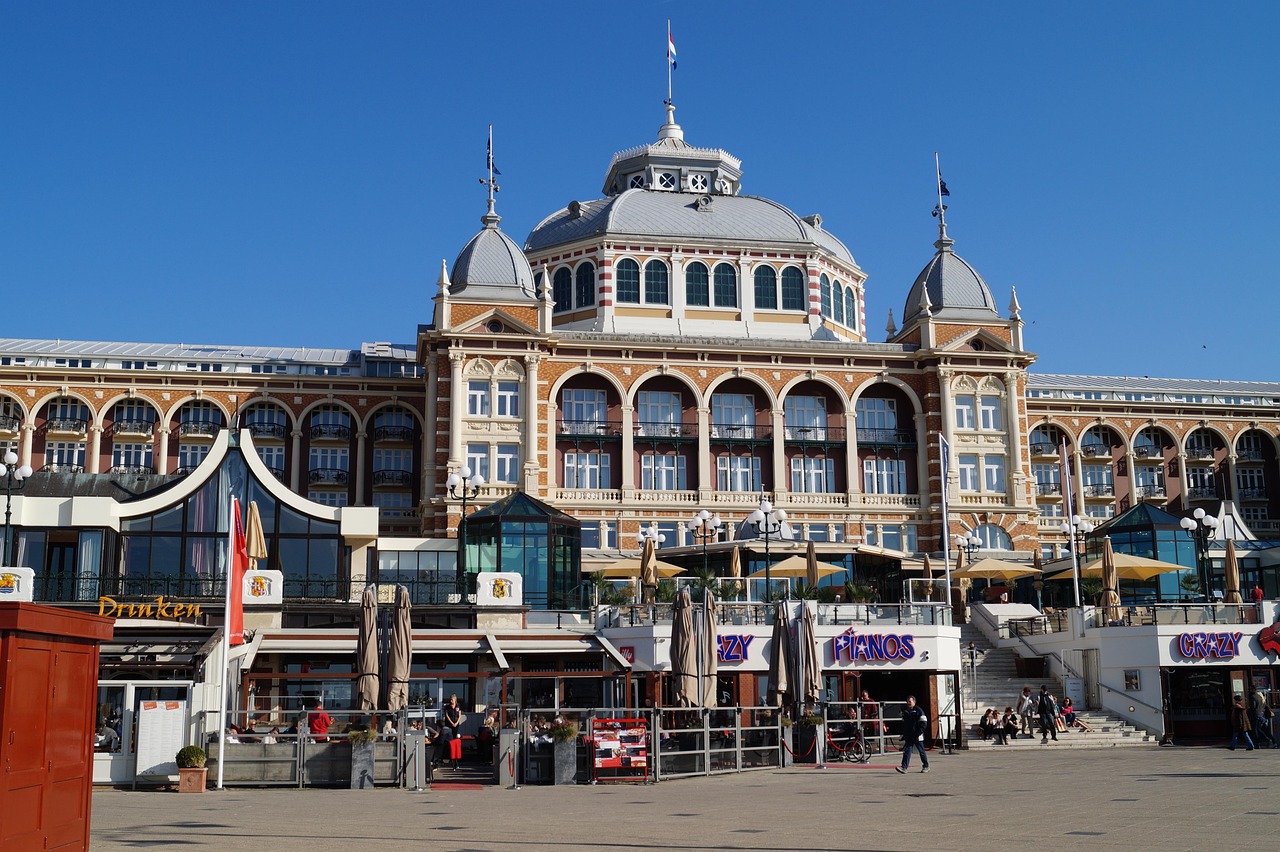
- Scheveningen: promenade, Kurhaus and pier, and in the evening a view across the beach to the North Sea; the fishing harbour with herring stalls.
- Bollenstreek: Keukenhof in Lisse (open in spring only, in 2026 from 19 March to 10 May) with millions of spring flowers, plus the fields between Lisse, Hillegom and Noordwijkerhout and the De Zwarte Tulp museum in Lisse.
- CampingSpirit overnight tip
-
Official campsite or RV park: Between Noordwijk and Noordwijkerhout there are several campsites on the edge of the dunes, such as Camping Le Parage and Camping Sollasi, plus the Camperplaats De Guldenroede; inland near Warmond, Camping De Wasbeek. In The Hague itself, Vakantiepark Kijkduin is the site of choice, with a camping area, sanitary facilities and a tram into the centre. In the Keukenhof season, especially at Easter and on weekends in April, book early.
Free camping or nature tip (where legal): The Hague and the coastal resorts prohibit overnighting in a motorhome on public roads and in car parks; in Scheveningen and Noordwijk, car parks along the promenade are expensive and often not open to large vehicles at all. The Meijendel and Berkheide dune areas are water catchment and nature areas – access only to designated car parks.
- Insider tip for campers
- The Hague has a low-emission zone in the city centre: diesel cars are allowed in only from Euro 4, enforced by number-plate cameras – with a camper you'll park outside anyway. Since 2026 there has also been a separate low-emission zone for Scheveningen harbour (diesel cars from Euro 5, vans from Euro 5, lorries from Euro 6); the Hubertustunnel was recently closed, so follow the diversions. The tram accepts contactless bank cards (OVpay). The flower fields are private land: don't walk into them, and don't stop at the roadside where it's prohibited. Buy Keukenhof tickets online in advance; early in the morning it is much quieter.
4Stage 4: Noordwijk to Castricum via Zaanse Schans (approx. 75 km)
- The drive
- Take the N206 and N208 through the Bollenstreek to Haarlem, then the A9 through the Wijkertunnel under the North Sea Canal and the A8 to Zaandam and the Zaanse Schans. Head back west through Uitgeest to Castricum on the coast. A mix of motorway and country roads, with slow-moving traffic around Haarlem and Zaandam. About 1.5 hours' pure driving time.
- Highlights & must-sees
- Haarlem: the Grote Markt with the Sint-Bavokerk and the Frans Hals Museum – best reached by bike or bus from the edge of town.
- Zaanse Schans: wooden houses in Zaan green and the industrial windmills on the banks of the Zaan, including an oil mill and a paint mill that still work; plus the Zaans Museum.
- Noordhollands Duinreservaat near Castricum: cycling and walking paths through dunes and woodland down to the beach at Castricum aan Zee.
- CampingSpirit overnight tip
-
Official campsite or RV park: Camping Bakkum in Castricum, a large site in the middle of the dunes with electricity, sanitary facilities, fresh water and waste disposal; to the beach by bike. Further north, Kustpark Egmond aan Zee offers another campsite right behind the dunes.
Free camping or nature tip (where legal): The paid visitor car park at the Zaanse Schans is intended for day visitors, not for overnight stays – head to a campsite or camperplaats for the night. In the Noordhollands Duinreservaat, parking outside the car parks is prohibited, and access to some dune areas requires a day ticket from the water company PWN.
- Insider tip for campers
- Amsterdam is not a good idea in a camper: inside the A10 ring there is a low-emission zone requiring Euro 5 for diesel cars and motorhomes, and parking is very expensive. If you want to see the city, use a P+R site on the outskirts or take the train from Zaandam or Castricum. The Zaanse Schans gets crowded from late morning; arrive early.
5Stage 5: Castricum to Den Helder (approx. 55 km)
- The drive
- Head north via Egmond aan Zee, Bergen and Schoorl behind the belt of dunes, then take the coast road at Petten along the Hondsbossche Duinen, through Callantsoog and Julianadorp to Den Helder. Flat, well-built country roads, lots of roundabouts, and in summer parking pressure in the resorts and cycle traffic on cycle streets. Pure driving time a good hour.
- Highlights & must-sees
- Egmond aan Zee: the J.C.J. van Speijk lighthouse on the dune and the wide sandy beach.
- Schoorlse Duinen: the highest dunes in the country with the Klimduin in Schoorl, woodland and heathland paths for bike and walking boots.
- Petten: the Hondsbossche Duinen, sand dunes pumped up in front of the old sea dyke in 2015 – from the former dyke you can see how coastal protection has changed.
- CampingSpirit overnight tip
-
Official campsite or RV park: In Den Helder there are camperplaatsen in the Willemsoord harbour area (Jachtwerf Willemsoord), handy for the morning ferry; check facilities and fees in advance. With full facilities: campsites in Julianadorp such as Camping Julianadorp aan Zee or Camping Koegras.
Free camping or nature tip (where legal): On the North Holland coast, too, the municipalities ban overnighting in motorhomes outside designated sites; the car parks at the dune crossings mostly carry no-overnighting signs and are patrolled. The dunes are a Natura 2000 area.
- Insider tip for campers
- In Den Helder, the Navy Museum (Marinemuseum) at Willemsoord and a walk to Fort Kijkduin near Huisduinen are worthwhile. Fill up with fuel and water before Texel – diesel is usually more expensive on the island. During the day the beach car park at Bergen aan Zee fills up quickly; cycling there from Bergen is more relaxed.
6Stage 6: Den Helder to De Cocksdorp (Texel) (approx. 40 km)
- The drive
- Take the TESO ferry from Den Helder to ’t Horntje on Texel; the crossing takes around 20 minutes, with sailings roughly every hour. On the island, head north via Den Burg and De Koog to De Cocksdorp. Quiet island roads, narrow in the villages, cycle traffic everywhere. With the ferry and breaks, half a day.
- Highlights & must-sees
- Ecomare in De Koog: seal and bird sanctuary with an exhibition on the Wadden Sea and the North Sea.
- De Slufter: a beach plain in the Duinen van Texel National Park into which the sea flows through a gap in the dunes during storm floods – viewpoint on the edge of the dunes.
- The red Texel lighthouse at the northern tip near De Cocksdorp and, in Oudeschild, the Kaap Skil museum on beachcombing and seafaring.
- CampingSpirit overnight tip
-
Official campsite or RV park: Camping De Krim in De Cocksdorp, a large site open all year with electricity, sanitary facilities, fresh water and waste disposal; in the south of the island the same company runs Camping Loodsmansduin near Den Hoorn in the dunes. Near De Koog, Camping Kogerstrand lies on the edge of the dunes, also run by De Krim. On Texel, be sure to book in advance.
Free camping or nature tip (where legal): Wild camping is prohibited on the whole of Texel; since 2023 the VVV, the national park, Natuurmonumenten and Staatsbosbeheer have been cracking down on campers in woods, in remote car parks and in the villages; enforcement officers (BOA) can issue fines. Use only campsites and camperplaatsen.
- Insider tip for campers
- With TESO, every ticket is valid for the outward and return crossing and is bought in Den Helder, ideally online in advance; the price depends on the vehicle category or length and on the day of the week of the outward crossing. Sailing times cannot be reserved – expect waits on summer Saturdays and public holidays. On the island, leave the camper parked and cycle: the cycle network reaches every beach pole.
7Stage 7: Texel to Harlingen via the Afsluitdijk (approx. 100 km)
- The drive
- Back on the ferry to Den Helder, then take the N250 and N99 along the Wadden Sea coast to Den Oever and the A7 across the Afsluitdijk: 32 kilometres of dead-straight carriageway between the Wadden Sea and the IJsselmeer, with lock complexes at Den Oever and Kornwerderzand. From Kornwerderzand continue via Zurich to Harlingen. Gusty crosswinds on the dam; pure driving time around 1.5 hours plus the ferry.
- Highlights & must-sees
- Den Oever: the Stevinsluizen and the statue of the hydraulic engineer Cornelis Lely at the start of the dam.
- Afsluitdijk Monument at the spot where the dam was closed in 1932, with a viewing tower and footbridge; in Kornwerderzand the Afsluitdijk Wadden Center and the Kazemattenmuseum in the bunkers that were defended in May 1940.
- Harlingen: the Noorderhaven with gabled houses and historic sailing ships; ferries leave from here for Terschelling and Vlieland; a few kilometres east, the Eise Eisinga Planetarium in Franeker (UNESCO World Heritage).
- CampingSpirit overnight tip
-
Official campsite or RV park: Camperplaats Tsjerk Hiddessluizen in Harlingen, near the locks and within walking distance of the harbour; check facilities and fees in advance. With full sanitary facilities: Camping De Zeehoeve on the dyke south of town. If you're stopping in North Holland, there's a camperplaats on the Oostkade in Den Oever.
Free camping or nature tip (where legal): On the Afsluitdijk, stopping is only allowed in the designated car parks, and overnighting there is not. Friesland tolerates free camping no more than the rest of the country; the Wadden Sea foreshore and the dykes are protected.
- Insider tip for campers
- The Afsluitdijk has been undergoing reinforcement for years; lane narrowings and night-time closures are possible, so check Rijkswaterstaat traffic reports in advance. For cyclists, a continuous crossing will be possible again from 2027 at the earliest, once temporary cycle bridges are in place at the locks – until then a free bike bus covers sections. If you want to go to Vlieland, leave the camper in Harlingen: the island is closed to visitors' cars.
8Stage 8: Harlingen to Sneek via Hindeloopen (approx. 75 km)
- The drive
- Head south via Makkum and Workum to the IJsselmeer coast at Hindeloopen, then inland via Bolsward or IJlst to Sneek. Narrow country roads through pastureland, often with cycle streets and no centre line, plus bascule and swing bridges that open for boats. The centres of Hindeloopen and Workum are too narrow for campers. Around 1.5 hours' pure driving time.
- Highlights & must-sees
- Makkum: the Royal Tichelaar porcelain factory, and in Workum the Jopie Huisman Museum with paintings by the Frisian rag-and-bone man and painter.
- Hindeloopen: a tiny Eleven Cities town on the IJsselmeer with wooden bridges over the canals and the typical painted furniture, on show in the Museum Hindeloopen.
- Sneek: the water gate (Waterpoort) of 1613 over the canal, plus IJlst with the De Rat sawmill – both stops on the legendary Elfstedentocht.
- CampingSpirit overnight tip
-
Official campsite or RV park: Camping de Domp in Sneek on the water, with electricity, sanitary facilities, fresh water and waste disposal and a short walk into the centre. Along the way, Camping Hindeloopen on the southern edge of the village, right on the IJsselmeer, also offers stop-&-go camper pitches; in IJlst there is a small camperplaats.
Free camping or nature tip (where legal): The municipalities of Súdwest-Fryslân and Harlingen prohibit sleeping in vehicles outside designated sites; there are signs to that effect on the IJsselmeer dyke and at the harbours. A dense network of camperplaatsen at marinas and farms makes free camping unnecessary.
- Insider tip for campers
- The bridges open frequently in season – in high summer and during Sneekweek at the beginning of August, expect waits and use alternative routes via the larger roads. Watch for height restrictions at underpasses and aqueducts. If you want to see the whole Elfsteden route (around 200 km), it's best done in stages by bike.
Camping practice & local rules
Wild camping & overnight parking
- Free camping is effectively banned everywhere in the Netherlands: municipal by-laws (APV) prohibit sleeping in vehicles on public roads and in car parks, and in nature and dune areas nature conservation law applies as well. Checks by enforcement officers (BOA) are frequent on the coast, on Texel and in Zeeland, and fines are issued on the spot.
- The country has a dense network of camperplaatsen: at marinas, on farms, on the edge of towns and as stop-&-go pitches at campsites. On top of that there are mini-campsites, often with only 25 pitches. A tourist tax per person per night is usually charged on top.
- Dunes, dykes, foreshore and national parks (Oosterschelde, Duinen van Texel, Wadden Sea) only on marked paths; some dune areas in North Holland require an entry ticket from the water company.
- To find a place to stay, use Campercontact (strong in the Netherlands), park4night and the VVV websites; book ahead in tulip season and in high summer.
Waste disposal & supplies
- Almost all camperplaatsen have fresh water and disposal for cassette and grey water, often operated by coin, token or card. Never empty grey water into ditches or canals.
- Tap water is drinkable everywhere; at taps, look out for “Geen drinkwater”.
- Gas: German exchange cylinders are not swapped in the Netherlands; refillable tanks can be filled with LPG (“autogas”), and filling stations use the bayonet connector, so bring an adapter. The network of LPG filling stations has thinned out.
- Card payment (“pinnen”) is accepted almost everywhere, though some stations and shops don't accept credit cards; a debit card (such as Visa Debit or Debit Mastercard) is more reliable than cash.
Vehicle size & traffic rules
- Speed limits: motorhomes up to 3.5 t 50 km/h in built-up areas, 80 outside, 100 km/h on expressways (autowegen); on motorways during the day (6 am–7 pm) mostly 100 km/h, at night in places 120 or 130 km/h as signposted. Motorhomes over 3.5 t: 50 in built-up areas, otherwise 80 km/h everywhere, including expressways and motorways. Car-and-trailer combinations (trailer up to 3.5 t): 50 in built-up areas, 80 outside, 90 km/h on expressways and motorways, round the clock.
- Low-emission zones (milieuzones): uniform rules, enforced by number-plate cameras, applicable to foreign vehicles too, with no sticker or registration. The Hague requires at least Euro 4 for diesel cars, Amsterdam (inside the A10) and Utrecht Euro 5. Motorhomes over 3.5 t and campers registered as vans may fall under stricter lorry or zero-emission zone rules; check in advance on milieuzones.nl.
- Cycle traffic: cyclists have priority on fietsstraten (“Auto te gast”), and at roundabouts cycle paths often cross with right of way for cyclists. When turning right, check your blind spot, open doors with your right hand and never stop on red-surfaced cycle paths. Mopeds and e-bikes are fast and quiet.
- Tolls: no motorway tolls; the Westerschelde Tunnel has been toll-free since September 2024, and the Kiltunnel near Dordrecht still charges a toll. Ferries such as TESO charge by vehicle length.
- Alcohol: 0.5 per mille, 0.2 for novice drivers; holding a phone is prohibited even when stopped at traffic lights. A hi-vis vest and warning triangle are not mandatory but strongly recommended. If a load such as a rear rack with bikes projects far beyond the end of the vehicle, it must be marked.
CampingSpirit packing & preparation checklist
- Bikes on the rear rack plus two heavy-duty locks – the country is best discovered by bike, and bike theft is common in the cities.
- Bayonet adapter for LPG if you have a refillable tank – you won't get German exchange cylinders here.
- Storm-proof guy lines, an awning support and sand pegs for dune pitches in Zeeland, North Holland and on Texel.
- A rain and wind jacket with hood plus cycling gloves – a headwind on the dyke is the rule.
- A contactless debit card for service points, the ferry and the tram (OVpay) in The Hague.
- Binoculars for the seals on the sandbanks off Texel and the migrating birds on the Wadden Sea.
As of 2026-09. Closures, fees and booking rules change: check official sources before you go.