
In-depth guide · CampingSpirit
Via Hahndorf, the Barossa and the Clare Valley to Burra, through wheat country to Hawker, beneath the rock bowl of Ikara and through Brachina Gorge, then via Quorn and Port Augusta to Melrose and back: around 1,230 km on which the vineyards slowly give way to red gravel.
The spirit of the route
This loop begins with cellar doors and ends with dust on the dashboard. In the Adelaide Hills the air smells of eucalyptus and wet apples, in the Barossa of fermenting grapes and wood smoke from German smokehouses. Beyond Burra the towns get smaller and the silos taller, until there is nothing left but saltbush, fences and a horizon that never gets any closer. Then the Flinders Ranges rise from the plain like the hull of a stranded ship. In the morning you watch emus trot across the track from your sliding door; in the evening the quartzite of Ikara turns first copper red, then violet, and at night the Milky Way hangs so densely over Brachina Gorge that you no longer need your head torch. Different things matter here than in wine country: full water containers, a look at the heat forecast, respect for Adnyamathanha Country – and the willingness to switch off the engine at dusk.
Stage-by-stage plan
1Stage 1: Adelaide to Tanunda (Barossa Valley) via Hahndorf (approx. 120 km)
- The drive
- From Adelaide take Greenhill Road up into the Adelaide Hills, detour to Mount Lofty Summit, then continue via Crafers and the country roads to Hahndorf. Head north via Oakbank, Lobethal and Gumeracha to Birdwood, and via Springton and Eden Valley down into the Barossa. Winding, narrow hill roads without shoulders, lots of cyclists at weekends; pure driving time a good 2.5 hours.
- Highlights & must-sees
- Mount Lofty Summit: views across the Adelaide plain to Gulf St Vincent, plus a short walk through eucalyptus forest.
- Hahndorf: founded in 1839 by Prussian Lutherans, with a main street of half-timbered and stone houses and the Hahndorf Academy; just outside town lies The Cedars, the home and studio of the painter Hans Heysen.
- Mengler’s Hill Lookout near Angaston, with your first panorama over the Barossa vineyards.
- CampingSpirit overnight tip
-
Official campsite or RV park: Discovery Parks – Barossa Valley on the edge of Tanunda, within walking distance of the main street: powered sites, amenities, dump point. Alternatively the Barossa Tourist Park in Nuriootpa. If you want to linger in the hills, spend a night at the Hahndorf Resort Tourist Park on the edge of town. In Adelaide itself, BIG4 West Beach Parks (formerly Adelaide Shores) works well as a start and end point, with waste disposal.
Free camping or nature tip (where legal): In the Barossa and the Adelaide Hills, council by-laws largely prohibit sleeping in your vehicle on public land; winery car parks are not overnight spots unless the operator explicitly offers this. The basic Wirra Campground in Para Wirra Conservation Park, south-west of the valley (a few sites for small campervans), must be booked online in advance through Parks SA.
- Insider tip for campers
- On Saturday mornings the Barossa Farmers Market in Angaston is worth a visit; come early and look for parking for large vehicles on the edge. Parking a campervan on Hahndorf’s main street is almost impossible at weekends – use the car parks at the end of town instead. Drive to your campsite before any wine tasting: South Australia has a 0.05 blood alcohol limit, and police checks on the wine routes are common.
2Stage 2: Tanunda to Clare (Clare Valley) (approx. 100 km)
- The drive
- Head west via Seppeltsfield with its avenue of palms, then north via Greenock and Kapunda, where wheat fields take over from the vines, and via Tarlee and Auburn into the Clare Valley. Quiet, well-surfaced country roads, about 1.5 hours.
- Highlights & must-sees
- Seppeltsfield: an avenue of more than 2,000 date palms planted in the 1920s, and the Seppelt family mausoleum on the hill.
- Kapunda: copper town with the “Map Kernow” statue honouring the Cornish miners and a short walk through the old mine site.
- Riesling Trail: a former railway line between Auburn and Clare, flat and ideal for cycling from winery to winery; plus Sevenhill Cellars, founded by Jesuits in 1851.
- CampingSpirit overnight tip
-
Official campsite or RV park: Clare Caravan Park on the southern edge of town on the Main North Road: powered sites, amenities, waste disposal. Book early in autumn (vintage) and on festival weekends.
Free camping or nature tip (where legal): The Clare and Gilbert Valleys Council regulates camping on public land by by-law; do not stay overnight outside designated sites. The rest areas along the Riesling Trail are for day use only.
- Insider tip for campers
- Bikes can be hired in Clare and Auburn; if you have your own rear rack, start the trail at one of the car parks by the old Auburn railway station. Fill up and stock up in Clare while prices are still low: from Burra onwards supermarkets get smaller and prices higher.
3Stage 3: Clare to Hawker (approx. 310 km)
- The drive
- Via Farrell Flat to Burra, then north on the Barrier Highway towards Peterborough and via Orroroo and Carrieton to Hawker. Beyond Burra the land opens up: wheat, sheep pasture, saltbush, ribbons of dead-straight bitumen, the odd silo. A good 3.5 hours of pure driving time; with Burra it makes a full day.
- Highlights & must-sees
- Burra: 19th-century copper town with the Monster Mine (open cut with lookout), Redruth Gaol and the dugouts along Burra Creek; several sites can be accessed with the Heritage Passport and a key from the Visitor Centre.
- Magnetic Hill near Orroroo and the Aboriginal rock engravings at Pekina Creek – short stops along the way.
- Yourambulla Caves south of Hawker: Aboriginal rock paintings along a short, steep path.
- CampingSpirit overnight tip
-
Official campsite or RV park: Hawker has caravan parks with power, amenities and waste disposal on the edge of town. To shorten the day, sleep in Burra at the caravan park on Burra Creek. About 35 km further north lies Rawnsley Park Station, with more than 50 sites under pines and red gums, hot showers, a camp kitchen and a pool – the most comfortable base for Ikara.
Free camping or nature tip (where legal): There are rest areas along the highways where short overnight stops are usually tolerated unless a sign says otherwise; facilities are often just a table and a bin. In the towns themselves, the councils regulate overnight stays – only park up on designated sites.
- Insider tip for campers
- Fill up in Burra and Peterborough; beyond them fuel stations are few and far between, and opening hours in the country are short. Don’t drive at dusk: from Orroroo onwards kangaroos and emus cross the road, and sheep stand on unfenced stretches. Hawker is the last town with a supermarket before the ranges.
4Stage 4: Hawker to Wilpena Pound (Ikara) (approx. 55 km)
- The drive
- North on the sealed Flinders Ranges Way, with the Elder Range on your left, past Rawnsley Park and the turn-off to Arkaroo Rock to Wilpena Pound Resort in Ikara-Flinders Ranges National Park. Around 45 minutes’ driving; the rest of the day belongs to the trails.
- Highlights & must-sees
- Arkaroo Rock: loop walk to a rock overhang with Adnyamathanha ochre and charcoal paintings, best in the morning.
- Wangarra Lookout: trail from the Visitor Centre past Hills Homestead up to the rim of the rock bowl – views into the interior of Ikara.
- Stokes Hill Lookout on the road towards Blinman: wide views of the outer walls of the Pound, ideal at sunset.
- CampingSpirit overnight tip
-
Official campsite or RV park: Wilpena Pound Resort campground: powered and unpowered sites, hot showers, toilets, camp kitchen, shop and fuel station nearby. Booked out quickly during school holidays and around Easter – reserve in advance. The national park’s basic campgrounds lie further north in the park.
Free camping or nature tip (where legal): In the national park, only stay overnight in designated campgrounds; lookout and trailhead car parks are off limits. Ikara-Flinders Ranges charges a vehicle entry fee, paid online through Parks SA or covered by a valid park pass. Ikara is a place of great significance to the Adnyamathanha, who co-manage the park: they ask that you do not climb to the summit of St Mary Peak.
- Insider tip for campers
- Ask at the Visitor Centre about current trail closures and the condition of the gravel roads – after rain, creek crossings quickly become impassable. In summer, only start long walks early in the morning and carry at least three litres of water per person. There is mobile coverage at the resort, but hardly any in the rest of the park.
5Stage 5: Wilpena Pound to Parachilna via Brachina Gorge (approx. 80 km)
- The drive
- North on the Flinders Ranges Way to the Brachina Gorge Road turn-off, then around 30 km unsealed west through the gorge to the Outback Highway (B83), and north on bitumen to Parachilna. Corrugations, gravel beds and creek crossings; Parks SA recommends high-clearance vehicles, and after rain the route is often impassable. Allow two hours for the gorge.
- Highlights & must-sees
- Brachina Gorge Geological Trail: interpretive signs along the road explain rock layers spanning several hundred million years – from the Ediacaran to the early Cambrian.
- Yellow-footed rock-wallabies on the cliffs in the western part of the gorge, best spotted with binoculars in the early morning and late afternoon.
- Razorback Lookout on Bunyeroo Road, if you add the loop through Bunyeroo Valley (also gravel).
- CampingSpirit overnight tip
-
Official campsite or RV park: Parachilna Outback Campground in the old school grounds, around 50 m from the Prairie Hotel (run independently of the hotel): unpowered sites only, amenities, camp kitchen, fire pits. If you want to stay in the gorge: Teamsters (six sites on the cliffs above Brachina Creek, drop toilet, rainwater tank with no guarantee of supply) and Youngoona (four sites at the eastern end of Brachina Gorge Road, no facilities); no power.
Free camping or nature tip (where legal): In the national park, only stay in designated campgrounds; book campsites online in advance through Parks SA, and the per-vehicle park entry fee comes on top. Outside the park, the surrounding land is leased station country: do not leave the road or camp without permission.
- Insider tip for campers
- Campervan rental agreements often exclude unsealed roads. Without approval, drive via Hawker and the sealed B83 to Parachilna and see only the western mouth of the gorge. At the Prairie Hotel the “Feral Mixed Grill” with kangaroo, emu and camel is on the menu; from the veranda the view stretches across the plain to the Heysen Range.
6Stage 6: Parachilna to Port Augusta via Quorn (approx. 195 km)
- The drive
- South on the sealed Outback Highway (B83) along the western foot of the ranges to Hawker, then on through the Willochra Basin to Quorn and over Pichi Richi Pass down to Port Augusta at the head of Spencer Gulf. Long, straight stretches, with bends and climbs on the pass; a good 2.5 hours.
- Highlights & must-sees
- Kanyaka ruins between Hawker and Quorn: stone remains of an 1850s sheep station, short walks.
- Quorn: railway town with a preserved stone main street; on selected days the Pichi Richi Railway runs heritage trains over the pass.
- Australian Arid Lands Botanic Garden on the edge of Port Augusta, with paths through arid-zone plants and views of the ranges.
- CampingSpirit overnight tip
-
Official campsite or RV park: Port Augusta has Discovery Parks – Port Augusta and a BIG4 park with power, amenities and waste disposal. Quieter is a night beforehand at the Quorn Caravan Park on the edge of town. For bush camping there is Warren Gorge, around 21 km north of Quorn on Arden Vale Road (all-weather road): managed by the Flinders Ranges Council, drop toilets, fire pits, no bookings; pay the fee at the Visitor Centre or the railway station in Quorn, or self-register at the entrance (cash only there).
Free camping or nature tip (where legal): Port Augusta and the surrounding councils only allow overnight stays on designated sites; the waterfront car parks are not campsites. Collecting firewood is prohibited in Warren Gorge – bring your own wood; on Total Fire Ban days no fires are allowed.
- Insider tip for campers
- Port Augusta is the region’s main supply hub: fill up with fuel, swap gas bottles, empty the cassette, top up water. In Warren Gorge, scan the slopes with binoculars for yellow-footed rock-wallabies; on the access road, expect cattle and sheep on the road.
7Stage 7: Port Augusta to Melrose (Mount Remarkable) (approx. 100 km)
- The drive
- South-east out of Port Augusta, then over Horrocks Pass with its short, steep ramps through the southern Flinders Ranges to Wilmington, a detour to Alligator Gorge in Mount Remarkable National Park, and on south to Melrose at the foot of Mount Remarkable. Around 1.5 hours plus stops.
- Highlights & must-sees
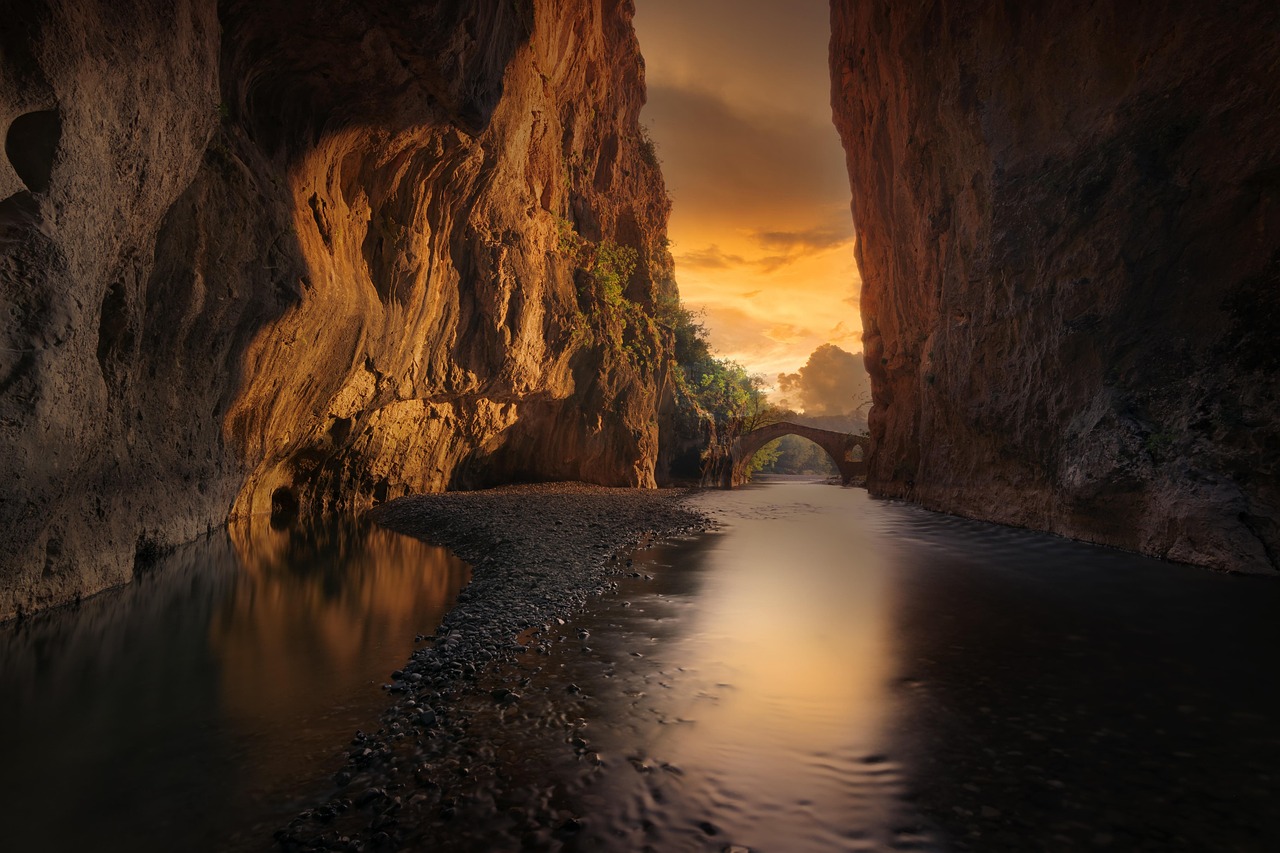
- Alligator Gorge: narrow red quartzite gorge with “The Terraces” and “The Narrows”, reached by stairs from the car park.
- Hancocks Lookout on Horrocks Pass, with views across Spencer Gulf.
- Mount Remarkable summit walk from Melrose: part of the Heysen Trail, steep through eucalyptus forest, around five hours return.
- CampingSpirit overnight tip
-
Official campsite or RV park: Melrose Showgrounds: powered and unpowered sites, toilets, showers, dump point, water; book by phone. Melrose also has a caravan park on the edge of town. Within the national park, on its western side, lies Mambray Creek campground with 53 sites under red gums, hot showers and toilets, bookable online through Parks SA.
Free camping or nature tip (where legal): In Mount Remarkable National Park, only stay overnight in the campgrounds; the vehicle entry fee applies for Alligator Gorge. Melrose is the oldest town in the Flinders Ranges; in town, only park up on designated sites.
- Insider tip for campers
- The access road to Alligator Gorge turns off the Main North Road 1 km south of Wilmington, is very steep and, according to Parks SA, unsuitable for caravans, camper trailers and buses; if in doubt, leave large motorhomes in Wilmington. Check the park’s “Closures & alerts” beforehand, as individual trails are closed from time to time. Melrose is popular with mountain bikers – watch out for cyclists on the main street at weekends.
8Stage 8: Melrose to Adelaide (approx. 270 km)
- The drive
- South via Murray Town, Wirrabara and Laura through the wheat and grazing country of the Southern Flinders, then via Crystal Brook onto the Augusta Highway and via Port Wakefield to Adelaide. Quiet country road as far as Laura, then a wide highway with heavy truck traffic; a good 3 hours.
- Highlights & must-sees
- Wirrabara Silo Art and the woodland at the Forest Reserve – a photo stop on the main street.
- Laura: quiet country town with 19th-century stone houses along Herbert Street, good for a coffee break.
- Port Wakefield: stopover at the head of Gulf St Vincent with mangroves and views over the tidal flats.
- CampingSpirit overnight tip
-
Official campsite or RV park: Back in Adelaide, BIG4 West Beach Parks (formerly Adelaide Shores) is a good choice: powered sites, amenities, dump point, the beach on your doorstep and a cycle path to Glenelg. Before returning the vehicle, empty the tanks and clean the cassette.
Free camping or nature tip (where legal): Councils across greater Adelaide largely prohibit sleeping in vehicles on streets and in beach car parks; fines are issued. No free camping on the city’s coast.
- Insider tip for campers
- Avoid heading into greater Adelaide during rush hour. Reduced speed limits apply at roadworks on the Augusta and Port Wakefield Highways and are strictly enforced. In the city, visit the Central Market – with a camper, it is best reached by bus from West Beach or by tram from Glenelg.
Camping practice & local rules
Wild camping & overnight parking
- South Australia has no general right to free camping: councils regulate camping and sleeping in vehicles on public land by by-law, and in towns and on the coast it is prohibited almost everywhere. Only stay overnight on designated sites and take signs seriously; fines are issued.
- Rest areas on the highways are for driver breaks; short overnight stops are tolerated in many places unless a sign says otherwise. Facilities usually have no water and often no toilet.
- National parks (Ikara-Flinders Ranges, Mount Remarkable): designated campgrounds only; per-vehicle park entry and camping fees are paid or registered online with Parks SA. Campsites are booked online in advance. The park passes (Holiday, Single and Multi Park Pass) cover vehicle entry only, not camping – except the Desert Parks Pass for the desert parks; check with Parks SA beforehand which parks a pass covers.
- Station land (pastoral leases) is private: do not camp off the road without permission, and leave gates as you find them.
- Apps: WikiCamps and CamperMate show campgrounds, rest areas, dump points, water and fuel stations; also use the CFS website for fire warnings and Traffic SA for road closures.
Waste disposal & supplies
- You will find dump points in Adelaide (West Beach), at most caravan parks, in Hawker, Port Augusta and at the Melrose Showground; the national park campgrounds have no waste disposal. Empty your cassette in Hawker or Wilpena before heading into Brachina Gorge.
- Water: the basic campgrounds in Ikara-Flinders Ranges National Park have at most a rainwater tank, whose level and quality Parks SA does not guarantee. In summer, allow 5–7 litres per person per day, plus 20 litres in reserve for breakdowns. Boil rainwater from tanks in the country before drinking it.
- Gas: Australian bottles now mostly have an LCC27 valve, older ones still POL; European bottles will not be refilled. Swap bottles at fuel stations and hardware stores in Adelaide, Clare and Port Augusta; in the ranges, gas is not reliably available.
- Fuel: fuel stations in Burra, Peterborough, Orroroo, Hawker, at Wilpena Pound Resort and in Blinman; between Hawker and Port Augusta only in Quorn. Take every chance to fill up; prices in the ranges are significantly higher than in Adelaide.
Vehicle size & traffic rules
- Drive on the left. Speed limits in South Australia: generally 50 km/h in built-up areas, 100 km/h outside them, 110 km/h on signposted highways; the same limits apply in principle on gravel too – drive much more slowly there. When passing emergency vehicles with red or blue lights and breakdown vehicles with yellow lights, the limit is 25 km/h. Blood alcohol limit 0.05; mobile phones may only be used while driving if mounted in a cradle.
- There are no toll roads in South Australia. If you enter from other states, you must surrender fruit and vegetables at the quarantine checkpoints (fruit fly protection); temporary restricted zones also apply within the state – follow the signs.
- Animals: kangaroos, emus, goats and sheep at dusk and at night, cattle on unfenced stretches. Avoid driving at night; many rental agreements exclude animal damage or driving after sunset.
- Rental campervans may usually only be driven on sealed roads; otherwise insurance cover is void. Brachina Gorge, Bunyeroo Valley and other park roads are unsealed; closed or impassable after rain. Road trains on the B83: only overtake with plenty of room; on gravel, pull over and let the dust plume pass.
- Heat and fire: from December to February daytime temperatures in the ranges are often above 40 °C; finish walks before 9 am. Restrictions apply during the Fire Danger Season, and open fires are prohibited on Total Fire Ban days – check the status for the relevant district with the CFS. If you break down, stay with your vehicle.
CampingSpirit packing & preparation checklist
- Two 20-litre water containers – the rainwater tanks at the national park campgrounds in Ikara cannot be relied upon, and apart from Wilpena there are no supplies between Hawker and Parachilna.
- Fly net for your head: from Burra onwards, and above all in the ranges, bush flies swarm around every walker during the day.
- Binoculars for yellow-footed rock-wallabies in Brachina Gorge and Warren Gorge, which barely stand out from the rock on the slopes.
- Firewood from a shop and a gas stove: no wood may be collected in the parks or in Warren Gorge, and campfires are off limits on Total Fire Ban days.
- Tyre pressure gauge and compressor for the gravel sections, if your vehicle is approved for them.
- Offline maps and printed park pass and camping confirmations – mobile coverage ends shortly beyond Hawker.
As of 2026-10. Closures, fees and booking rules change: check official sources before you go.