

In-depth guide · CampingSpirit
Around 1190 km from Sofia via Rila Monastery, Bansko in the Pirin and the wine town of Melnik to Plovdiv, through the Rose Valley and over the Shipka Pass to Veliko Tarnovo and down to the Black Sea coast at Nessebar, Sozopol and the Strandzha.
The spirit of the route
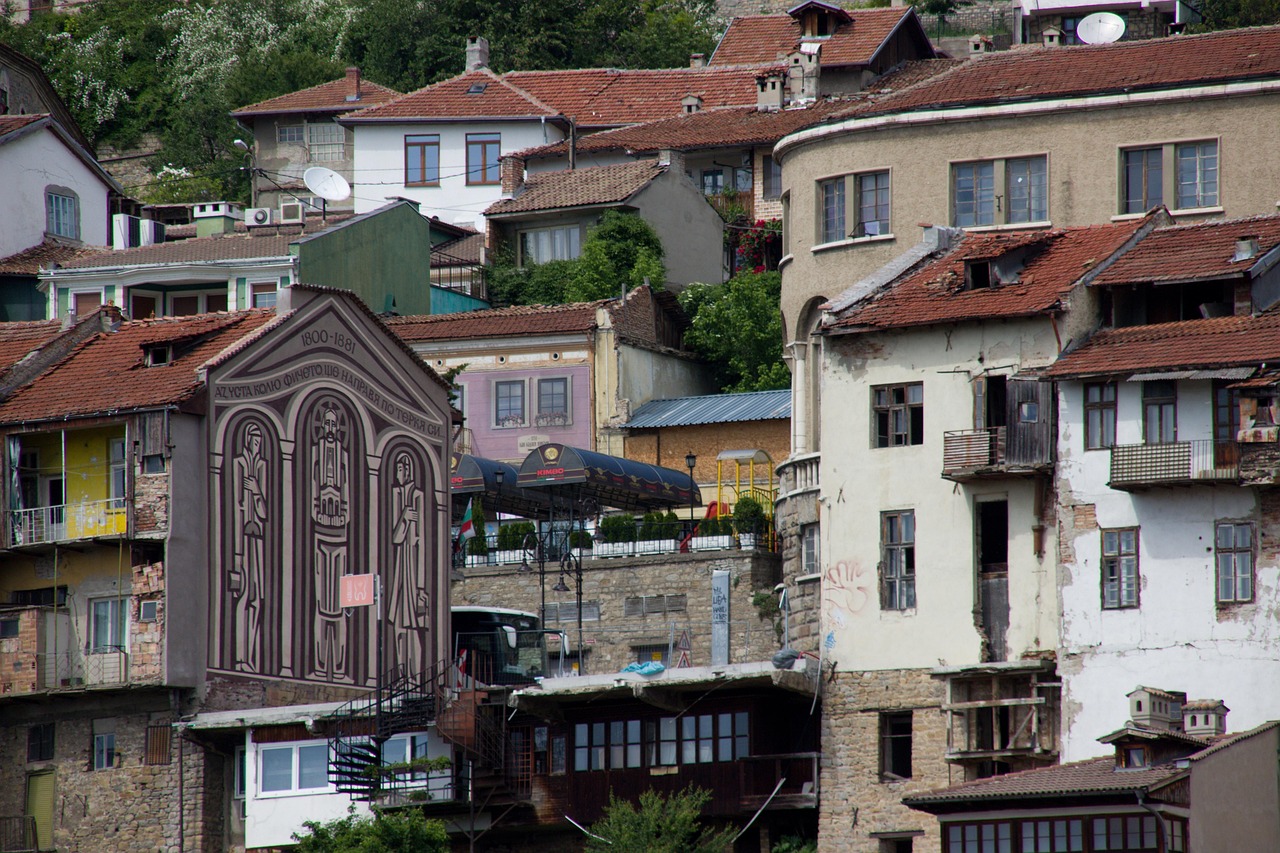
On the first evening the camper is parked under beech trees in the Rila valley, and through the open sliding door you hear the monastery bell above the rushing of the Rilska. Bulgaria is a land of transitions: in one week you drive from granite peaks with glacial lakes into a wine valley where sandstone columns stand like organ pipes above the vineyards, on across the Thracian Plain with its Roman theatres and into a valley that smells of roses in May and June. By the roadside stand spring-fed fountains, the “cheshmi”, where locals fill their canisters; on the village streets there are horse carts and flocks of sheep. Beyond the Shipka Pass the old tsars’ city sits above the loops of the Yantra, and at the end the coast opens up: wooden houses on the Nessebar peninsula, fishing boats off Sozopol and, further south, where the oak forest of the Strandzha reaches down to the water, river mouths pushing through sand dunes into the sea.
Stage-by-stage plan
1Stage 1: Sofia to Rila Monastery (approx. 120 km)
- The drive
- Out of Sofia via the ring road and south on the A3 motorway (Struma, E79) to the Kocherinovo/Rila exit, then on road 107 via the town of Rila up the narrow Rilska valley to the monastery at around 1150 metres. The motorway is in good condition; the last 25 km are a narrow but properly surfaced valley road with bends, rockfall spots and lots of day-trip traffic at weekends. About 2 hours.
- Highlights & must-sees
- Boyana Church on the edge of Sofia (UNESCO World Heritage Site): small medieval church with frescoes from 1259; visits in short time slots, the number of visitors inside is limited.
- Rila Monastery: courtyard with striped arcades, the painted main church and Hrelyo’s Tower, a defensive tower from the 14th century; the largest monastery in the country and a UNESCO World Heritage Site.
- Footpath to the cave of St Ivan of Rila above the monastery, about an hour through the forest; legend has it that whoever climbs through the narrow rock crevice is freed of their sins.
- CampingSpirit overnight tip
-
Official campsite or RV park: In the Rilska valley a few kilometres east of the monastery there are simple sites by roadside restaurants, including Camping “Bor” (listed in OpenStreetMap) and “Zodiak” (in the apps) – meadow pitches, some with electricity and basic sanitary facilities; water and waste disposal mostly unavailable or only makeshift. Facilities and season change, so check in advance. In Sofia itself a campsite is listed in the east by Vrana Park; check its status too.
Free camping or nature tip (where legal): The monastery and the upper valley lie within Rila Monastery Nature Park, with Rila National Park adjoining above. In the national park, overnight stays are only allowed at designated spots; the paid monastery car park is not an overnight spot. The restaurant meadows mentioned are the legal and quiet solution.
- Insider tip for campers
- Buy the e-vignette online before your first drive on a motorway or national road – it is linked only to the number plate and checked by camera. In the monastery, shoulders and knees must be covered, and photography is not allowed inside the church. Early in the morning, before the coaches from Sofia arrive, the courtyard is almost empty; you can get fresh water at the fountains in the valley.
2Stage 2: Rila Monastery to Bansko (approx. 120 km)
- The drive
- Back down the Rilska valley and via Kocherinovo onto the E79 heading south through the Struma valley to Simitli, then on road 19 over the Predela Pass (around 1140 m) between Rila and Pirin into the Razlog basin and on to Bansko. Wide trunk road, potholed in places, with heavy lorry traffic as far as Simitli, then a winding but easy-to-drive pass road. About 2.25 hours.
- Highlights & must-sees
- Stob Pyramids: eroded earth pyramids with stone caps near Kocherinovo, short, steep loop trail from the car park in the village.
- Predela Pass: views north to the Rila peaks and south to the marble ridges of the Pirin.
- Bansko old town: stone houses with high walls, the Holy Trinity Church with its bell tower and the Velyanova House with painted 18th-century interiors.
- CampingSpirit overnight tip
-
Official campsite or RV park: On the edge of Bansko a small site, “Between the Mountains”, is listed in OpenStreetMap; park4night and Campercontact list further pitches at guesthouses and hotels. Bansko is above all a winter sports resort, and in summer many offerings are improvised – clarify electricity, sanitary facilities and waste disposal in advance.
Free camping or nature tip (where legal): Outside protected areas, Bulgaria has no general ban on sleeping in your vehicle. However, Pirin National Park begins immediately above Bansko; camping there is only allowed at designated spots, and the car parks at the mountain huts are not overnight spots.
- Insider tip for campers
- Plan a rest day in Bansko for the Pirin: the narrow road to the Vihren hut (around 1950 m) runs some 15 km up the Banderitsa valley, past the Baikushev pine, which is more than a thousand years old; it is tight, with passing places, and hard work for long motorhomes – a taxi from Bansko is often the better choice. From the hut, trails lead to the glacial lakes and to the summit of Vihren (2914 m).
3Stage 3: Bansko to Melnik (approx. 105 km)
- The drive
- Back over the Predela Pass to Simitli and south on the E79 through the Kresna Gorge; past Sandanski, turn off east into the small Melnik valley. The road through the Kresna Gorge is two-lane, narrow, without a hard shoulder and heavily used by lorries; the A3 motorway has not yet been built all the way through there – drive with concentration and without risky overtaking. About 2 hours.
- Highlights & must-sees
- Kresna Gorge: the Struma between steep rock slopes, one of the most botanically rich areas in the country; lay-bys are rare.
- Melnik Pyramids: sandstone and earth columns with ridges and spires around the village, footpath from the village through the formations to Rozhen Monastery.
- Kordopulov House in Melnik: large merchant’s house from 1754 with wine cellars carved into the rock; in the village you can taste “Shiroka melnishka loza”, the regional red grape variety.
- CampingSpirit overnight tip
-
Official campsite or RV park: There is no regular campsite in Melnik itself; small pitches on the edge of the village are listed in the apps, with varying facilities. Sites with sanitary facilities are near Sandanski (in OpenStreetMap as Camping Sandanski) and south of Sandanski in Kromidovo (Kamping Kromidovo) – check season and facilities in advance.
Free camping or nature tip (where legal): Around Melnik lies the Melnik Pyramids natural monument; do not drive or camp on the earth slopes. According to user reports, sleeping in your vehicle in car parks on the edge of the village is mostly tolerated as long as nothing is put out.
- Insider tip for campers
- At its core, Melnik consists of a single street along a dry stream bed – park the motorhome at the entrance to the village and walk. Many wine cellars sell wine loose in bottles and canisters; Rozhen Monastery can also be reached directly by road, but the car park at the top is small. Sandanski has large supermarkets and filling stations.
4Stage 4: Melnik to Plovdiv (approx. 260 km)
- The drive
- Long transfer day: back on the E79 to Simitli, over the Predela Pass to Razlog, then on road 84 via Yakoruda and the Avramovo saddle (just under 1300 m) between Rila and the Rhodopes to Velingrad and down into the Thracian Plain, via Pazardzhik to Plovdiv. Mountain route with bends, varying road surface and potholes, occasional rockfall on slopes; horse carts and livestock in the villages. About 4.5–5 hours of pure driving time.
- Highlights & must-sees
- Avramovo: highest station on the Septemvri–Dobrinishte narrow-gauge railway, whose trains wind through the mountains alongside the road.
- Velingrad: spa town with mineral springs and the karst lake “Kleptuza” with rowing boats on the edge of town – a good place for a lunch break.
- Plovdiv: ancient theatre above the old town, the Revival quarter with painted merchants’ houses, the Roman stadium beneath the pedestrian zone and the Kapana bar district.
- CampingSpirit overnight tip
-
Official campsite or RV park: If you want to split the stage, there is a thermal campsite in Velingrad (in OpenStreetMap as Thermal Camping Velingrad). In and around Plovdiv the options are thin: OpenStreetMap lists Camping Borsh west of the city and the glamping site “Alliance” on the southern edge of town, with further small sites to the south towards the Rhodopes; the formerly well-known Trakiya site on the western edge of town is no longer listed there. Check operation, facilities and water and waste disposal in advance.
Free camping or nature tip (where legal): Within the city of Plovdiv, camping on streets and in car parks is not intended; motorhomes parked overnight beyond the paid zones attract attention. Better to stay at a site outside the city and take a bus or taxi into the old town.
- Insider tip for campers
- With its cobblestones and narrow lanes, the old town on the hills is unsuitable for motorhomes; car parks around the centre are in paid zones (payment mostly by SMS or app, follow the signs). Allow half a day for Bachkovo Monastery, around 30 km south in the Rhodopes, the second-largest monastery in the country, with a large car park by the road.
5Stage 5: Plovdiv to Kazanlak (approx. 115 km)
- The drive
- North via Karlovo into the Rose Valley between the Balkan Mountains and the Sredna Gora, then east on road 6 via Kalofer to Kazanlak. Well-built country road through a wide valley floor with rose and lavender fields, orchards and villages; few bends. About 2 hours.
- Highlights & must-sees
- Rose fields between Karlovo and Kazanlak: from mid-May to mid-June the Damask rose is picked by hand in the early morning; several distilleries then show how the oil is extracted.
- Rose Museum and Thracian Tomb of Kazanlak (UNESCO World Heritage Site): the original domed tomb from the 4th century BC is protected; visitors see a faithful replica next to it.
- Valley of the Thracian Kings: burial mounds such as Golyama Kosmatka and Shushmanets along the road west of Kazanlak.
- CampingSpirit overnight tip
-
Official campsite or RV park: At the Koprinka reservoir near Kazanlak lies the site listed in OpenStreetMap as Kalvacha Camping, with electricity, sanitary facilities and water; check facilities and season in advance. The apps list further simple sites in the Rose Valley and at the foot of the Balkan Mountains.
Free camping or nature tip (where legal): The shore of the Koprinka reservoir is a popular day-trip destination at weekends; according to user reports, campers on farm tracks and by the lake are tolerated, but fires and barbecues on slopes with dry grass are dangerous in summer and prohibited in many places.
- Insider tip for campers
- On the first weekend of June, Kazanlak celebrates its Rose Festival with a parade and rose-picking rituals; pitches and car parks are scarce then, so arrive early. Buy rose oil, rose water and rose liqueur directly from the distilleries, not from the stalls on the main road. In Karlovo and Kalofer, the birthplaces of the freedom fighters Vasil Levski and Hristo Botev can be visited as museums.
6Stage 6: Kazanlak to Veliko Tarnovo (approx. 105 km)
- The drive
- Via the village of Shipka on road 5, up in hairpins to the Shipka Pass (around 1190 m) and down the north side through forest to Gabrovo, then via Dryanovo to Veliko Tarnovo. Well-built but steep pass road with many hairpins and lorry traffic; use engine braking on the descent. In fog, visibility on the pass is often very poor. About 2.25 hours without sightseeing.
- Highlights & must-sees
- Memorial Church in Shipka: Russian Orthodox church with golden onion domes on the slope above the village, commemorating the battle of 1877/78.
- Freedom Monument on Stoletov Peak at the Shipka Pass: just under 900 steps from the car park, views over the Balkan Mountains, the Rose Valley and the plain to the north.
- Etar open-air museum near Gabrovo: water-powered workshops, mills and a craftsmen’s street from the 19th century; on the way, Dryanovo Monastery with the Bacho Kiro cave.
- CampingSpirit overnight tip
-
Official campsite or RV park: Camping Veliko Tarnovo, listed in OpenStreetMap, is in the village of Dragizhevo about 10 km east of the city, with electricity, sanitary facilities and water and waste disposal; according to user reports a well-kept site with a pool. At Kapinovo Monastery south of the city there is a tent meadow with pitches. Check the season in advance.
Free camping or nature tip (where legal): The Shipka Pass lies within Bulgarka Nature Park; according to user reports, people sleep in their vehicles in the car parks on the pass, but camping with furniture out is not intended there. In the city of Veliko Tarnovo there are no suitable car parks for overnight stays.
- Insider tip for campers
- From the Shipka Pass, a turn-off leads about 12 km to the Buzludzha Monument, the former party headquarters in the shape of a flying saucer; the interior was most recently closed due to the risk of collapse, and conservation work is under way – check access in advance; the road is narrow and partly damaged. In Veliko Tarnovo it is best to stay at the campsite and take a taxi to Tsarevets Fortress; the old town streets are steep and narrow.
7Stage 7: Veliko Tarnovo to Nessebar (approx. 235 km)
- The drive
- East and then south over one of the eastern Balkan passes into the Karnobat and Aytos plain and on to the coast north of Burgas. Depending on navigation, the route goes via Elena or Omurtag and Kotel, or further east via Shumen; country roads with long forest stretches, bends and rough surfaces in places, little traffic. About 4–4.5 hours.
- Highlights & must-sees
- Arbanasi above Veliko Tarnovo: fortified merchants’ houses and the Church of the Nativity with a fully painted interior – in the morning before you set off.
- Zheravna near Kotel: architectural reserve with wooden houses from the Revival period, a small detour on the route via Kotel.
- Nessebar old town (UNESCO World Heritage Site) on the peninsula: Byzantine brick churches such as Christ Pantocrator and St Stephen, wooden houses on stone bases, a windmill by the causeway.
- CampingSpirit overnight tip
-
Official campsite or RV park: Nessebar borders the hotel district of Sunny Beach; campsites are rare there. To the south, near Ravda and Aheloy, there are smaller sites (in OpenStreetMap, among others, Camping “Ahelój” and “Nomad Camp”) with electricity and sanitary facilities, mostly only in the summer season. Check water and waste disposal and vehicle length limits in advance.
Free camping or nature tip (where legal): Along the entire Black Sea coast, camping outside campsites on beaches and dunes is prohibited under the Black Sea Coast Act; vehicles, caravans and tents on dunes incur heavy fines. Reportedly, new penalties for camping on the coast apply from 1 October 2026.
- Insider tip for campers
- Nessebar old town is closed to vehicles; there are paid car parks before the causeway – in summer come early in the morning or in the evening. In high summer the coast road around Sunny Beach is congested – fill up and do your shopping in Aytos or Burgas before you arrive.
8Stage 8: Nessebar to Sinemorets (Strandzha coast) (approx. 130 km)
- The drive
- On road 9 (E87) via Pomorie to Burgas, then south on coast road 99 via Sozopol, Primorsko, Kiten and Tsarevo to Ahtopol and Sinemorets. Well built as far as Sozopol and busy in summer; south of Primorsko narrower and winding through the oak forests of the Strandzha, with tight through-roads in the resort towns. About 2.5 hours.
- Highlights & must-sees
- Lake Pomorie and Lake Atanasovsko near Burgas: salt lagoons with flamingos and pelicans; in late summer the great bird migration passes south along the “Via Pontica”.
- Sozopol old town: wooden houses on the peninsula, fishing harbour, town wall and views of the islands of Sveti Ivan and Sveti Kirik.
- Mouth of the Veleka near Sinemorets in Strandzha Nature Park: river and sea separated by a sandbar, and Silistar bay near the Turkish border.
- CampingSpirit overnight tip
-
Official campsite or RV park: Around Sozopol there are several beach campsites, including Camping Gradina, Zlatna Ribka and Kavatsi, and further south Atliman near Kiten as well as Arapya and Camping Tsarevo near Tsarevo – electricity, sanitary facilities and usually waste disposal, mostly seasonal from around May/June to September. In high season, reservations are advisable; check pitch sizes in advance.
Free camping or nature tip (where legal): Beaches and dunes are off-limits here too. Strandzha Nature Park and the border area with Turkey south of Rezovo are specially protected and patrolled by the border police; always carry your passport or ID card. Do not drive off the forest tracks of the Strandzha; fires are prohibited in summer.
- Insider tip for campers
- In July and August the sites around Sozopol fill up quickly; in June and from mid-September the coast and campsites are quiet and the water is still warm. The boat trip on the Ropotamo river between Sozopol and Primorsko passes through riverine forest with water lilies. Watch out: on the road through the Strandzha, wild boar and cattle cross the carriageway even during the day.
Camping practice & local rules
Wild camping & overnight parking
- Bulgaria has no general nationwide ban on sleeping in your vehicle. Camping is prohibited in national parks (Rila, Pirin, Central Balkan) outside designated spots, in nature reserves and on beaches and dunes along the Black Sea coast; on private land you need the owner’s permission.
- On the coast, setting up tents, motorhomes and caravans on beaches and dunes is prohibited under the Black Sea Coast Act; for a caravan on a dune the law provides for 3000 leva (around €1530), and considerably more under the Biodiversity Act if dunes are damaged. Reportedly, new penalties for camping on the coast have applied since 1 October 2026 – check the current situation before you travel. Municipalities and the border police carry out regular checks in summer.
- Inland, quiet car parks at monasteries, passes and lakes are in practice mostly tolerated as long as you behave as if parked: nothing put out, no grey water, no fire. Do not provoke shepherd dogs; keep your distance.
- Useful apps: park4night and Campercontact, with user reports on sites, water points and checks; many small sites in Bulgaria are listed only there or in OpenStreetMap.
Waste disposal & supplies
- Service points for water and waste disposal are rare and found almost only at campsites; many sites let passing travellers empty their tanks for a fee. Never empty a chemical toilet or grey water into drains or into nature.
- The roadside spring fountains (“cheshma”) in the mountains usually supply good water, and locals fill their canisters there; a sign reading “Непитейна вода” means not drinkable. Tap water in the towns is generally drinkable; on the coast in summer it is sometimes heavily chlorinated.
- Autogas (LPG, in Bulgarian “Propan-Butan” or “Autogas”) is available at very many filling stations and cheap – ideal for refillable gas tanks. German gas cylinders are not exchanged; take an adapter set (usually Dish).
- Since 1 January 2026 the euro has been the national currency (€1 = 1.95583 leva); since 1 February 2026 the lev has no longer been legal tender. In 2026 some prices are still also shown in leva. At village markets, in monasteries and at small sites, cash is still common.
Vehicle size & traffic rules
- Speed limits for cars and motorhomes up to 3.5 t: 50 km/h in built-up areas, 90 km/h outside built-up areas, 120 km/h on expressways, 140 km/h on motorways unless lower limits are signposted. Motorhomes over 3.5 t: 80 outside built-up areas, 90 on expressways, 100 km/h on motorways; vehicle-trailer combinations: 70 outside built-up areas, 90 on expressways, 100 km/h on motorways; 50 km/h in built-up areas in each case. Mobile speed checks are frequent.
- Tolls: vehicles up to 3.5 t need the electronic vignette, which is linked to the number plate online via BG TOLL (bgtoll.bg or the app); options include weekend, 7 days, month, quarter and year, and prices were adjusted in 2026. Vehicles over 3.5 t generally pay distance-based tolls (route ticket or on-board unit); according to BG TOLL information, vehicles over 3.5 t registered as motorhomes (class M1) have been exempt since 2024 and need an e-vignette instead – check on bgtoll.bg before entering the country. Without a valid vignette a compensatory charge is due, considerably higher for heavy vehicles.
- Bulgaria has been a full Schengen member since 1 January 2025; there are no longer regular checks at the borders with Romania and Greece (temporary checks are possible). The borders with Serbia, North Macedonia and Turkey are Schengen external borders with checks. The Danube bridges Ruse–Giurgiu and Vidin–Calafat are tolled.
- Road conditions: motorways (Trakia Sofia–Burgas, Struma with a gap in the Kresna Gorge) are good; minor roads often have potholes and patches; horse carts, pedestrians and livestock on the road, even at night without lights – avoid driving at night. Dipped headlights or daytime running lights are compulsory all year round, including during the day.
- Blood alcohol limit 0.5; mobile phone at the wheel only with a hands-free kit. Carry a warning triangle, first-aid kit and high-visibility vest; a fire extinguisher is recommended. Sofia has introduced a low-emission zone in the centre that may affect older vehicles – check the current status. From 15 November to 1 March a minimum tread depth of 4 mm is required; on passes such as Shipka and Predela, snow chains may be made compulsory by signs.
CampingSpirit packing & preparation checklist
- Sturdy hiking boots for the path to the cave of Ivan of Rila, the Melnik Pyramids and the lakes below Vihren – the trails are stony and steep.
- Long trousers and a scarf for the shoulders within reach, because Rila Monastery, Bachkovo and Dryanovo only let you in covered up.
- Collapsible water canister and water filter to top up at the roadside spring fountains, because water and waste services are hard to find outside campsites.
- A gas adapter set for filling refillable gas tanks with the widely available and cheap autogas.
- Strong insect repellent for the lagoons near Burgas and the river mouths of the Strandzha.
- Euros in small notes and coins for monastery museums, wine cellars in Melnik and village markets.
As of 2026-09. Closures, fees and booking rules change: check official sources before you go.