


In-depth guide · CampingSpirit
Around 590 kilometres from Matka Canyon via Lake Mavrovo, the Radika Valley and Debar to Lake Ohrid, over the Galičica Pass to Lake Prespa and on via Bitola and Prilep into the Tikveš wine country: a North Macedonia loop with mountain roads, Byzantine frescoes and evening light on the lakes.
The spirit of the route
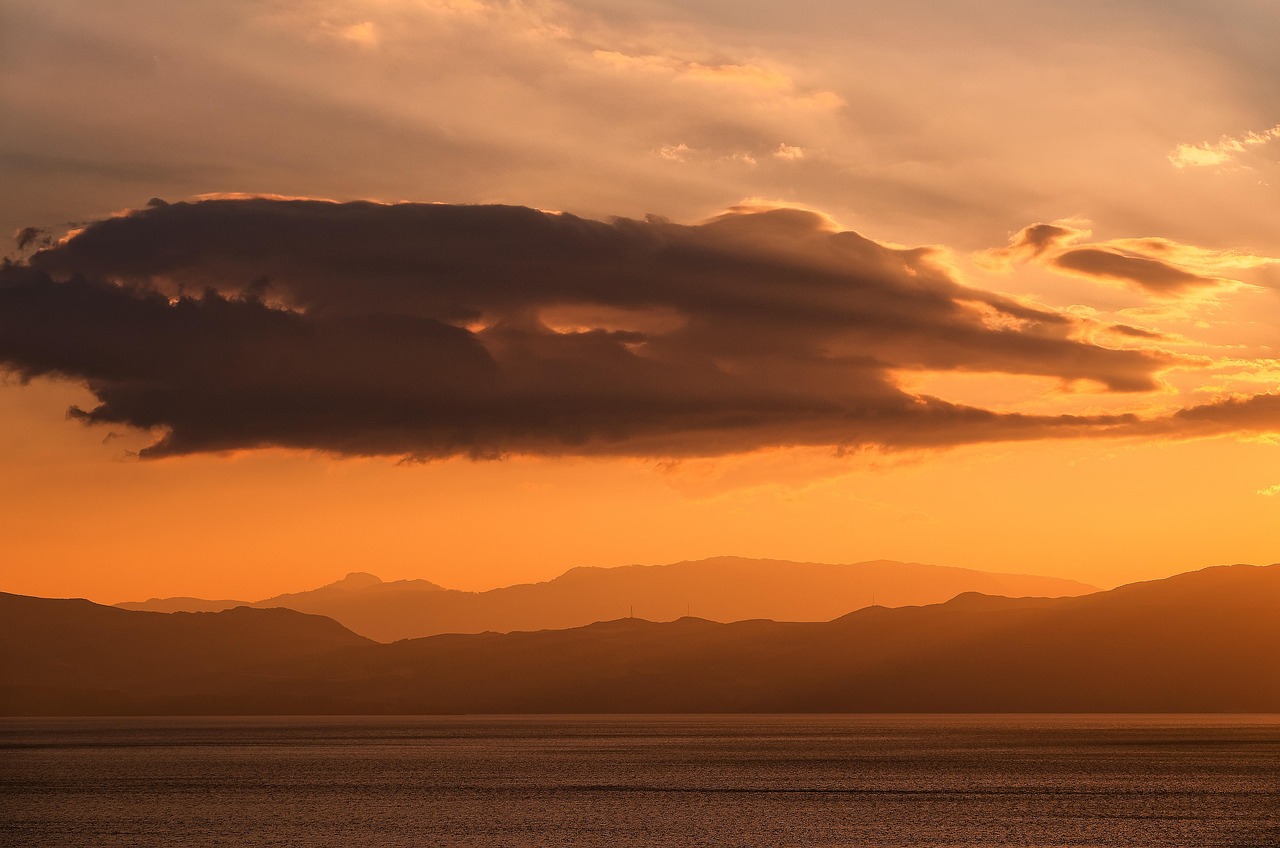
North Macedonia is a land of transitions. Beyond Skopje the roads climb into the limestone mountains of the Šar Planina and the Bistra massif, and the minarets of Tetovo and Gostivar give way to sheep pastures and the stone villages of the Mijaks. On Lake Mavrovo a church tower rises out of the water; in the Radika Valley the air smells of wood smoke and mountain cheese. Then Lake Ohrid opens up: deep blue, clear far down, its shore lined with churches in which medieval frescoes glow. In the morning you see fishermen in flat boats from the sliding door, in the evening the lights of Albania on the opposite shore. The road climbs over the Galičica into wind and stone rosettes; on the other side lies quiet Lake Prespa with its reeds and pelicans. At the end come vineyards in the heat of the Vardar valley. This route is not long, but it is dense – it rewards those who drive slowly and stop at every monastery gate.
Stage-by-stage plan
1Stage 1: Skopje to Mavrovo (approx. 130 km)
- The drive
- In the morning, the detour to Matka Canyon south-west of Skopje: around 20 km via Saraj, the last few kilometres narrow, heavily parked and congested at weekends. Back on the A2 motorway via Tetovo to Gostivar (tolled, payment at the toll stations). From Gostivar take the country road towards Debar, winding up through the valley of the Mavrovska Reka to Lake Mavrovo at around 1,200 m. Without Matka about 1.5 hours; with the detour and a stroll through town, a full day.
- Highlights & must-sees
- Matka Canyon on the Treska, with its reservoir, the 14th-century Sveti Andrej monastery on the shore and boat trips to Vrelo Cave.
- The old bazaar (Čaršija), the Stone Bridge over the Vardar and Kale Fortress in Skopje – best in the morning, before the heat sets in.
- Lake Mavrovo with views of the Bistra ridge, in the evening from the shore near Mavrovo and Leunovo.
- CampingSpirit overnight tip
-
Official campsite or RV park: In Skopje, the Aero Club Skopje site at Stenkovec airfield near Brazda, north of the city, is a well-known address for motorhomes: basic, with electricity and sanitary facilities; ask in advance about the season and waste disposal. There is no large, traditional campsite on Lake Mavrovo – directories list changing pitches at guesthouses, restaurants and hotels in Mavrovo and Leunovo. Ask in advance and explicitly confirm electricity and water.
Free camping or nature tip (where legal): According to the ADAC, wild camping is generally not permitted in North Macedonia; on private land it is possible with the owner's consent. Mavrovo National Park is the largest national park in the country, and overnight stays and fires are only permitted at designated spots. On the lakeshore it helps to ask at a restaurant: in return for dinner you can often stay in the car park.
- Insider tip for campers
- Arrive at Matka early or on a weekday and leave the camper in the lower car park; from there it is a few minutes' walk to the dam, and you avoid turning at the end of the road. Fill up in Skopje and withdraw denars from a cash machine – there are only a few filling stations and cash machines in the national park.
2Stage 2: Mavrovo to Debar (approx. 100 km)
- The drive
- Along the east shore to the sunken church, then to the dam and onto the country road towards Debar. The detour to Galičnik follows a narrow, winding mountain road with few passing places up to around 1,400 m – with a large motorhome only in good weather and with patience. Afterwards head south through the Radika gorge: the road follows the river and is winding, narrow in places and prone to rockfall. With Galičnik, about 3 hours of pure driving time.
- Highlights & must-sees
- Sveti Nikola church in the reservoir near Mavrovo: the village was flooded when the lake was dammed in the 1950s; depending on the water level, the church stands half in the water or entirely exposed on the lake bed.
- Galičnik, the Mijak mountain village with stone houses, sheep's cheese and the traditional Galičnik Wedding in high summer.
- Sveti Jovan Bigorski monastery above the Radika Valley, with the carved iconostasis by 19th-century Mijak masters; from the village of Rostuše a hiking trail leads to the Duf waterfall.
- CampingSpirit overnight tip
-
Official campsite or RV park: There is no traditional campsite in Debar or the Radika Valley. Staying overnight at hotels and restaurants with car parks has proved its worth – around Debar, for example, at the Banjište and Kosovrasti thermal baths; ask for permission and confirm electricity in advance. Bigorski monastery has guest rooms but no camper pitches; the car park below is meant for visitors, not for overnight stays.
Free camping or nature tip (where legal): In the Radika Valley there are gravel areas and verges by the river; however, the upper part belongs to the national park, and wild camping is not permitted anywhere in the country. Better to ask at one of the restaurants along the road. Staying overnight in the monastery's visitor car park is inappropriate.
- Insider tip for campers
- In the monastery wear long trousers and cover your shoulders; women are best in a skirt or with a shawl. Photography inside the church is not welcome. Ask about the road to Galičnik in Mavrovo beforehand – after storms it is occasionally damaged, and in winter it is not always cleared.
3Stage 3: Debar to Struga (approx. 55 km)
- The drive
- From Debar south along Lake Debar and the reservoirs of the Black Drin to Struga. The road is winding, narrow in parts and used by lorries, but easy to drive; views of the green slopes along the Albanian border. About 1.5 hours. Shortly before Struga, the detour to the village of Vevčani on the slopes of the Jablanica is worthwhile.
- Highlights & must-sees
- Vevčani Springs above the village, a shady path to karst springs with wooden boardwalks.
- Struga's lakeside promenade where the Black Drin flows out of Lake Ohrid, with the bridges over the river.
- Kališta cave churches on the lakeshore west of Struga, small rock chapels with frescoes above the water.
- CampingSpirit overnight tip
-
Official campsite or RV park: West of Struga, on the lakeshore near Kališta, are Camping Rino and Camping Lakeside; further towards the Albanian border, directories list Camping Livadišta near Radožda. The sites are family-run, with electricity, sanitary facilities and a bathing spot; ask in advance about facilities, pitch length and season. In July and August the sites are full and noisy in the evening.
Free camping or nature tip (where legal): On Lake Ohrid the shore is largely built up, leased or protected, and the lake area is a UNESCO World Heritage Site. Wild camping is not permitted and is checked during the season. In Struga, a campsite is the only reliable solution.
- Insider tip for campers
- Do not cruise through the centre of Struga in a motorhome: park on the edge of town and walk to the Drin promenade. The Ćafasan–Qafë Thanë border crossing into Albania is only a few kilometres south-west – if you combine the route with Albania, this is the shortest connection.
4Stage 4: Struga to Gradište near Peštani via Ohrid (approx. 35 km)
- The drive
- Along the lakeshore road to Ohrid, a good 20 minutes. After visiting the old town, continue south on the east shore road towards Sveti Naum as far as Peštani. The east shore road is paved and winding, passes through villages and has heavy traffic in summer; scheduled buses and coaches often cross the centre line on bends.
- Highlights & must-sees
- Sveti Jovan Kaneo church on the cliff above the lake – the classic photo spot in the late afternoon, when the light comes from the west.
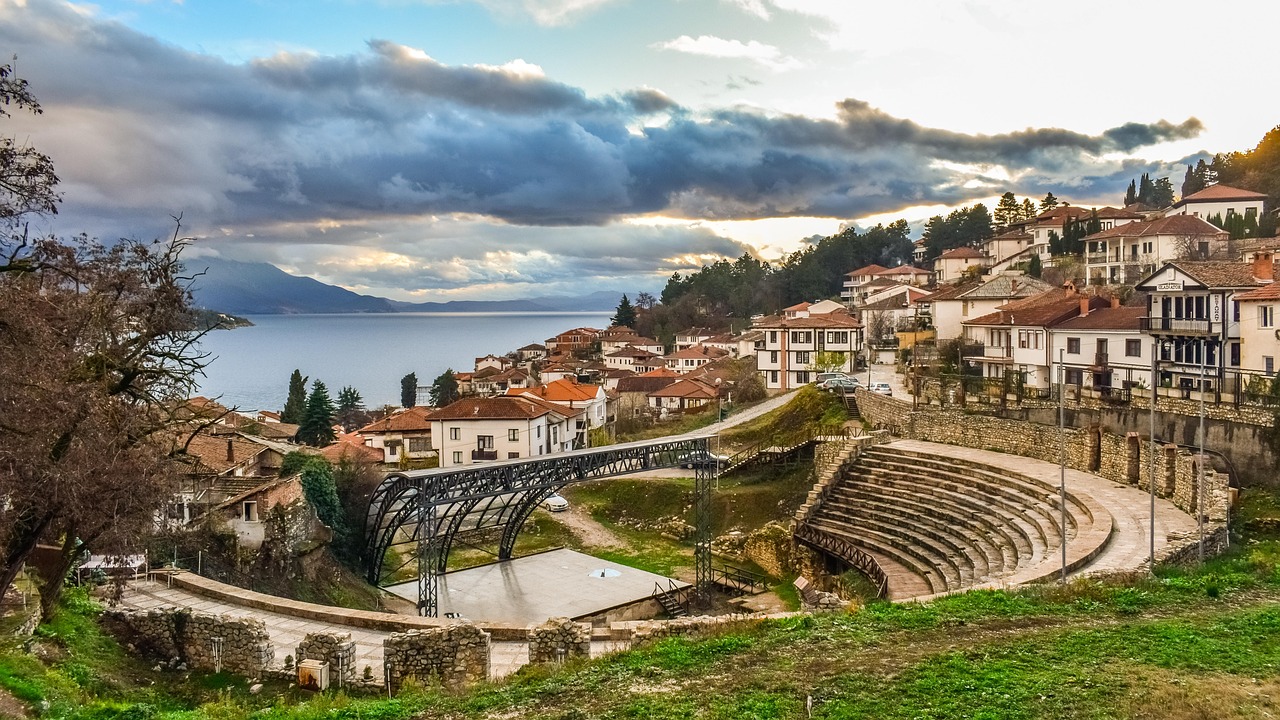
- Samuel's Fortress above the old town, Plaošnik with the Church of St Clement and St Panteleimon, the ancient theatre and the Church of St Sophia with its frescoes.
- Bay of Bones near Gradište: a reconstructed pile-dwelling settlement on a platform in the lake, with a small museum on the water.
- CampingSpirit overnight tip
-
Official campsite or RV park: Autokamp Gradište near Peštani, right on the lake next to the Bay of Bones, is still listed in directories with electricity and a restaurant. According to the Ministry of Culture, however, it is not set up as a campsite under the Camping Act; restitution and court proceedings concerning the site are ongoing, and the media report that the pitches are increasingly being built over with permanent holiday accommodation. Be sure to find out in advance whether, and on what terms, motorhomes can still stay there. The more reliable alternative is Camping Ljubaništa, around 15 km further south (see next stage).
Free camping or nature tip (where legal): On the east shore of Lake Ohrid, campers stay only on campsites. Galičica National Park reaches down to the shore, and the beach car parks are checked during the season. In Ohrid itself, overnight stays in car parks are not intended either.
- Insider tip for campers
- Ohrid's old town is off-limits for motorhomes: steep, narrow lanes, some with access restrictions. Leave the camper in one of the large car parks on the lakeshore road east of the old town and walk, or take a boat taxi from the harbour to Kaneo Bay. Ohrid trout (letnica) is protected – it does not belong on your plate, even if it is offered.
5Stage 5: Gradište to Ljubaništa via Sveti Naum (approx. 20 km)
- The drive
- A short drive south on the lakeshore road via Trpejca to Sveti Naum, just before the border with Albania. The road is winding but wide enough; there is a large paid car park at the monastery. Back to Ljubaništa for the night, barely 5 minutes. A day for water, monastery and swimming.
- Highlights & must-sees
- Sveti Naum monastery on a headland at the southern end of the lake, with the church above the tomb of St Naum and peacocks in the monastery garden.
- Sveti Naum springs: water emerges from the karst of the Galičica, part of it coming underground from the higher-lying Lake Prespa – take a rowing boat through the clear, cold water.
- The fishing village of Trpejca with its small bay and views across the lake to Albania.
- CampingSpirit overnight tip
-
Official campsite or RV park: Camping Ljubaništa lies on the lakeshore between Trpejca and Sveti Naum, a large site with restaurant, beach, electricity and sanitary facilities as well as grey-water disposal; ask about the season in advance. Travellers' reviews are mixed: the location is praised, the sanitary facilities and water supply often criticised. Check the current situation beforehand and bring drinking water in the tank.
Free camping or nature tip (where legal): Everything around Sveti Naum is national park, monastery grounds or border zone. Overnight stays in the monastery car park are not intended. Stay on the campsite.
- Insider tip for campers
- Come to the springs in the morning, before the excursion boats from Ohrid arrive. If you want to go to Albania: the Sveti Naum–Tushemisht border crossing is directly behind the monastery and is the shortest route to Pogradec.
6Stage 6: Ljubaništa to Stenje via the Galičica Pass (approx. 60 km)
- The drive
- Back north on the lakeshore road to the turn-off into Galičica National Park, then winding up to the top of the pass at a good 1,550 m. The road is paved but narrow, in many places without crash barriers, with steep gradients and oncoming traffic on the bends. On the east side, descend to Lake Prespa near Oteševo and head north along the west shore to Stenje. About 2 hours without stops; avoid in winter and in fog.
- Highlights & must-sees
- Viewpoint at the top of the pass: Lake Ohrid on one side, Lake Prespa on the other – on clear days as far as the mountains of Albania and Greece.
- Short hikes across the limestone plateau of the Galičica with summit views, and flower meadows in early summer.
- Reed beds and fishing boats on the west shore near Stenje; pelicans that breed on the Greek side also fish in the Macedonian part of the lake.
- CampingSpirit overnight tip
-
Official campsite or RV park: According to our research, there is currently no officially established campsite on the Macedonian shore of Lake Prespa. Near Stenje and Konjsko on the west shore, and near Krani and Asamati on the east shore, travel apps list changing, basic pitches at guesthouses, beach bars and restaurants. Whether electricity, water and sanitary facilities are available is uncertain – check current entries and ask in advance. If you want to be sure, stay another night on Lake Ohrid and drive the Galičica as a day trip.
Free camping or nature tip (where legal): The Galičica is a national park; overnight stays on the pass road and in the viewpoint car parks are not permitted. On Lake Prespa the nationwide rule applies: no wild camping without the owner's permission; the shore is also part of a cross-border biosphere reserve with bird protection zones.
- Insider tip for campers
- Fill up and do your shopping on Lake Ohrid before the pass road – on the west shore of Lake Prespa there are only village shops. Drive downhill on the Prespa side in second gear using engine braking. A fee is charged for motor vehicles at the entrance to the national park – have cash in denars ready.
7Stage 7: Stenje to Bitola (approx. 65 km)
- The drive
- North along the west shore to Resen, the apple town on Lake Prespa, then over the Gjavato Pass into the Pelagonia basin to Bitola. The road is well built, winding on the pass section and used by lorries. About 1.5 hours.
- Highlights & must-sees
- Sveti Gjorgji church in Kurbinovo above Resen, with frescoes from the late 12th century – ask for the key in the village.
- Heraclea Lyncestis on the outskirts of Bitola: excavations of the ancient city with a theatre and large floor mosaics in the early Christian basilicas.
- Širok Sokak, the pedestrian street with townhouses from the consular era, the clock tower and the mosques of the old town in the evening.
- CampingSpirit overnight tip
-
Official campsite or RV park: Traditional campsites are rare in Bitola. On the edge of town and on the edge of Pelister National Park, directories list pitches at hotels and inns – ask in advance and confirm electricity and water. If you need a proper campsite, spend another night on Lake Prespa and visit Bitola as a day trip.
Free camping or nature tip (where legal): In Bitola, overnight stays within the town and at sights are not intended. Pelister National Park above the town only allows overnight stays at designated spots.
- Insider tip for campers
- There is room for motorhomes in the Heraclea car park, whereas the centre of Bitola is narrow and packed with parked cars; from Heraclea it is a good 20-minute walk to the pedestrian zone. The Medžitlija–Niki border crossing into Greece is around 15 km south – handy for continuing to Florina and Thessaloniki.
8Stage 8: Bitola to Kavadarci (approx. 125 km)
- The drive
- Across the flat Pelagonia plain to Prilep, then over the Pletvar Pass into the Vardar valley and via Gradsko and Negotino to Kavadarci in the Tikveš wine country. Sections of the route are being built and upgraded – expect roadworks and reduced speeds. About 2.5 hours without stops.
- Highlights & must-sees
- Markovi Kuli above Prilep: fortress remains among bizarre granite boulders with views over the tobacco fields of the plain.
- The archaeological site of Stobi near Gradsko, at the confluence of the Crna Reka and the Vardar, with a theatre, basilicas and mosaics.
- Wineries around Kavadarci and Negotino with tastings of the Vranec and Kratošija grape varieties.
- CampingSpirit overnight tip
-
Official campsite or RV park: There is no large campsite in Tikveš. Individual wineries and inns let motorhomes stay on their grounds if you come for a tasting or a meal – ask in advance. You will need to search travel apps in advance for a pitch with electricity and waste disposal and ask directly; if you depend on one, plan the stage as a day's drive back to Skopje.
Free camping or nature tip (where legal): Between the vineyards there are farm tracks and lay-bys, but legally, private land with the owner's permission remains the only clean solution. Ask at the winery – here that is part of the visit.
- Insider tip for campers
- Do not drive after a wine tasting: the blood alcohol limit is 0.5 ‰, and 0.0 ‰ for novice drivers. Near Negotino you reach the A1 motorway – north to Skopje and Serbia, south to the Greek border at Bogorodica–Evzoni. Fill up before the border; diesel is usually cheaper in North Macedonia than in Greece.
Camping practice & local rules
Wild camping & overnight parking
- North Macedonia is not part of the EU. According to the ADAC, wild camping is generally not permitted; you may stay overnight on private land with the owner's consent. This also applies to sleeping in a motorhome on roads and in car parks. In practice, restaurants, guesthouses and wineries are happy to give permission.
- In the Mavrovo, Galičica and Pelister national parks and in the UNESCO area on Lake Ohrid, overnight stays are only permitted at designated sites. Open fires are off-limits in summer because of the risk of forest fires; never dispose of rubbish or grey water in nature – Lake Ohrid is an extremely sensitive ecosystem.
- Foreigners must register their stay with the police within 24 hours; at hotels, guesthouses and campsites the establishment does this for you. If you are not staying at an accommodation establishment, for example with a host or in a restaurant car park, you must register yourself at the nearest police station – otherwise you risk a fine when leaving the country.
- The network of campsites is sparse and concentrated on Lake Ohrid; many sites are small and family-run, and opening times vary. park4night, iOverlander and Campercontact help with the search – read comments from the last few months and ask in advance by phone or messenger.
Waste disposal & supplies
- Service stations outside campsites practically do not exist. Empty grey water and cassette at campsites – ask even if you are just passing through, for a small fee; sometimes the only option is the toilet in the sanitary block.
- Tap water in the towns is generally drinkable; on small sites it sometimes comes from wells or tanks – ask where it comes from and use a filter or disinfectant when filling the tank. Locals make much use of roadside springs, but the quality is not guaranteed.
- Gas: German exchange cylinders are not swapped. Autogas (LPG) is available at many filling stations and can be used to fill refillable cylinders and gas tanks; carry an adapter set (Dish, bayonet, ACME) and arrive with two full cylinders.
- The currency is the denar (MKD). Card payment usually works at large filling stations, supermarkets and toll stations; campsites, car parks, monasteries, boats and national park ticket offices often expect cash. Euros are accepted in many places, with change given in denars.
Vehicle size & traffic rules
- Documents: driving licence, vehicle registration certificate and passport or identity card. A Green Card is required and is valid if the country code MK, MKD or NMK is not crossed out; without a valid card you must take out border insurance at the border. The minimum cover amounts are well below German levels. If you are not the vehicle's registered keeper, you need a letter of authorisation.
- Speed limits according to the ADAC: cars 50 km/h in built-up areas, 80 km/h outside built-up areas, 110 km/h on expressways, 130 km/h on motorways. Motorhomes up to 7.5 t and vehicles with trailers 50 km/h in built-up areas, 80 km/h outside built-up areas, on expressways and on motorways. Drivers who have held their licence for less than two years may not exceed 100 km/h, even in a car. Dipped headlights or daytime running lights are compulsory all year round, including during the day. Radar detectors are prohibited.
- Tolls: no vignette. Sections of the A1, A2 and A4 motorways are tolled, on this route mainly Skopje–Tetovo–Gostivar and, on the way back, the A1. You pay at barrier toll stations in cash in denars or euros (the operator publishes its own euro tariffs) or by card; electronically with the rechargeable M-Smart card or the M-Tag, which deducts the toll without stopping on dedicated lanes at 30 km/h – both are available from the state road operator and at toll stations. Vehicles are classified by number of axles and height above the front axle: two-axle vehicles between 1.3 and 1.8 m fall into category II, two-axle vehicles of 1.8 m and above – i.e. most motorhomes – into category III. The new Kičevo–Ohrid motorway is opening in sections; check the current status before your trip.
- Border crossings: to Greece Bogorodica–Evzoni (A1) and Medžitlija–Niki (near Bitola), to Albania Ćafasan–Qafë Thanë (near Struga) and Sveti Naum–Tushemisht, to Serbia Tabanovce, to Bulgaria Deve Bair among others. The borders with Greece and Bulgaria are Schengen external borders with checks; allow for waiting times in summer and on public holidays.
- Blood alcohol limit 0.5 ‰, 0.0 ‰ for drivers who have held their licence for less than two years. Phone calls only with a hands-free system. Winter tyres are compulsory from 15 November to 15 March (minimum tread 4 mm up to 3.5 t, 6 mm above; alternatively summer tyres with snow chains on board); vehicles over 3.5 t must carry a snow shovel. Maximum dimensions: 12 m length, 2.55 m width, 4 m height, vehicle combinations 16.5 m.
- Mandatory equipment: warning triangle (two for vehicles with trailers), hi-vis vests for everyone who gets out in the event of a breakdown or accident, and a tow rope or tow bar; a first-aid kit and spare bulbs belong on board anyway. Every accident must be recorded by the police – no report, no insurance payout. Emergency 112, police 192, fire brigade 193, ambulance 194.
- Road conditions: motorways and main roads are decent; mountain routes such as Galičnik, the Radika Valley and the Galičica are narrow, winding and partly without crash barriers. Roadworks without warning, potholes, animals and unlit vehicles are common – avoid driving at night. North Macedonia is not part of the EU roaming zone; check your tariff or use a local SIM or eSIM card.
CampingSpirit packing & preparation checklist
- A printed Green Card with the MK code not crossed out, a letter of authorisation and a copy of the vehicle registration certificate – documents are requested at borders and during checks.
- A tow rope or tow bar – compulsory in North Macedonia and rarely carried in German motorhomes.
- A water filter or disinfectant and two 10-litre jerrycans: waste disposal and fresh water points are rare, and the water on small sites often comes from wells.
- An LPG adapter set and two full gas cylinders on arrival.
- Long trousers and a shoulder scarf within reach in the cab – for the Bigorski and Sveti Naum monasteries and the churches of Ohrid.
- Binoculars for the pelicans and waterbirds on Lake Prespa and the birds of prey over the Galičica.
As of 2026-10. Closures, fees and booking rules change: check official sources before you go.