


In-depth guide · CampingSpirit
Around 770 kilometres from the campsites on the Vltava riverbank in Prague via Karlštejn and Kutná Hora to the pond country around Třeboň, to Český Krumlov, Lipno Reservoir and up to the source of the Vltava – a loop on which you follow the river almost from its mouth to its origin.
The spirit of the route
In the morning mist hangs over a pond near Třeboň, a grey heron stands motionless in the reeds, and behind the 16th-century dam old oaks rise up. South Bohemia is a landscape built by people that still feels wild: fishponds instead of lakes, canals instead of streams, castles on every other hill. From the sliding door you see the castle of Český Krumlov above the Vltava bend one evening, the smooth surface of Lipno Reservoir the next, and then spruces, raised bogs and wide meadows around Kvilda, where the Vltava seeps out of the peat as a trickle. In between lie Kutná Hora with its silver history, squares with arcades and taverns serving carp and dumplings. The roads are narrow, the villages quiet, the distances short – this loop rewards those who drive slowly and still walk for an hour around the water in the evening.
Stage-by-stage plan
1Stage 1: Prague to Karlštejn (approx. 40 km)
- The drive
- Out of Prague south along the left bank of the Vltava via Zbraslav or Radotín into the Berounka valley, then upstream via Černošice and Dobřichovice to Karlštejn. Heavy traffic and tram tracks as far as the city limits, then a narrow, winding valley road with a railway line alongside; tight passages through the villages. A good hour.
- Highlights & must-sees
- Vyšehrad above the Vltava: fortress walls, basilica and cemetery with the graves of Dvořák and Smetana – reachable on foot or by tram from the Císařská louka campsite, almost deserted early in the morning.
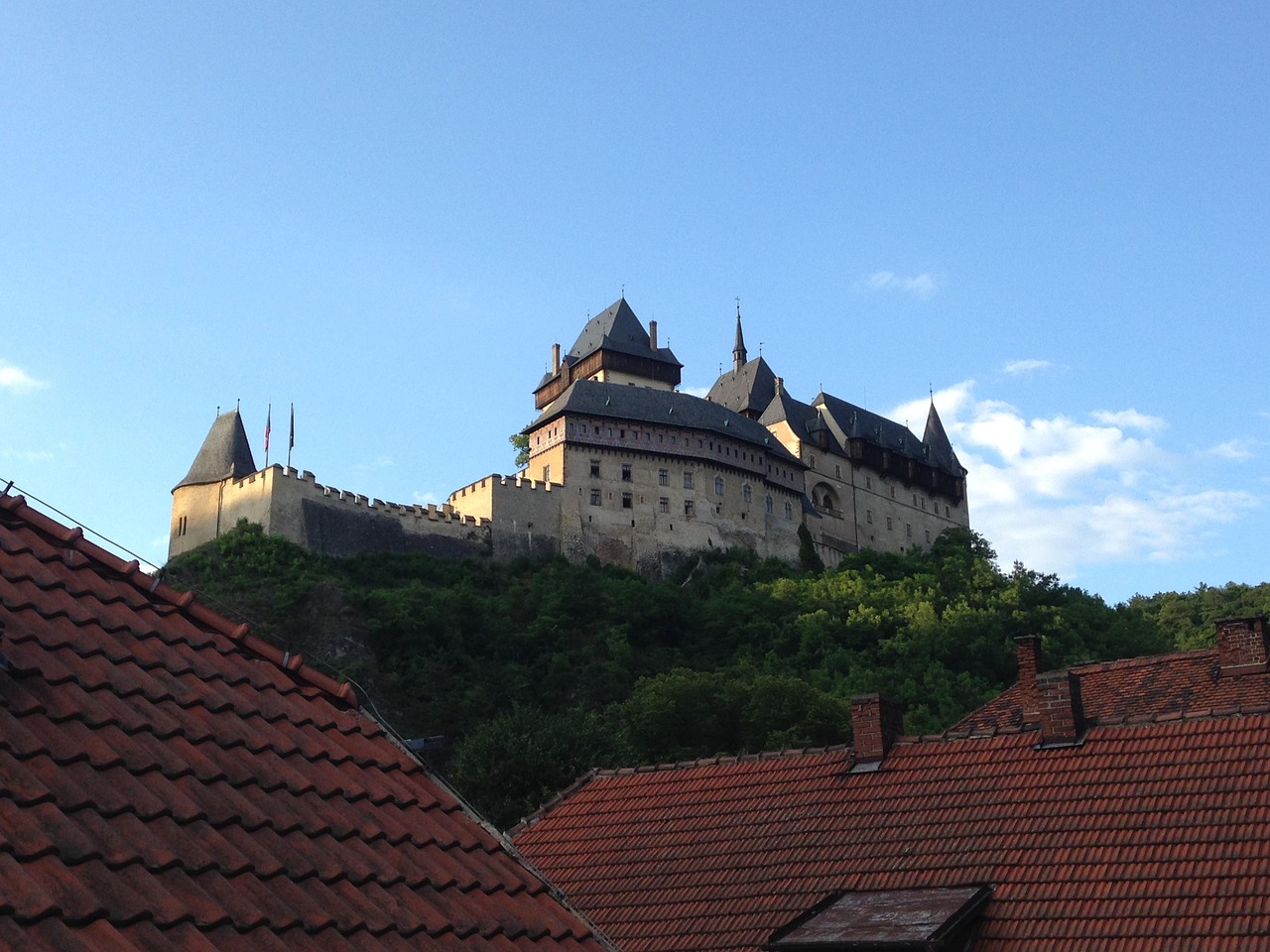
- Karlštejn Castle, built by Emperor Charles IV from 1348 as a repository for the imperial regalia: the walk up from the village takes half an hour; the Chapel of the Holy Cross with its panel paintings can only be seen on a separate, limited guided tour – reserve tickets in advance.
- Velká Amerika near Mořina: a flooded limestone quarry with sheer walls in the Bohemian Karst, visible from the viewpoint at its edge; climbing and swimming are prohibited, hiking trails lead over from Karlštejn.
- CampingSpirit overnight tip
-
Official campsite or RV park: In Prague itself the campsites are on the edge of the city: Caravan Park Yacht Club Císařská louka on the Vltava island in Smíchov with electricity, sanitary facilities and a view of Vyšehrad, the row of small family sites on Trojská street in Troja (such as Autocamp Trojská, Camp Herzog, Camp Sokol Troja) near the zoo and Troja Château, or Camp Slivenec in the south-west with a bus connection. In Karlštejn, Autokemp Karlštejn lies on the Berounka below the village, a few kilometres upstream is Camp Srbsko, downstream Autocamp Ostrov in Zadní Třebaň. Check season and facilities beforehand; the sites on the Berounka are usually only open in the summer half of the year.
Free camping or nature tip (where legal): Karlštejn lies in the Český kras Protected Landscape Area (CHKO Bohemian Karst): camping and overnight stays outside designated sites are prohibited there, as is driving on forest and field tracks. The car parks at the entrance to Karlštejn are paid day car parks, not overnight spots. In Prague, free standing is not an option – blue residents' zones, tow services and packed streets.
- Insider tip for campers
- Leave the motorhome at the campsite in Prague and travel by tram, bus and metro (tickets in the PID integrated transport system, also via app) – the Old Town and Malá Strana are unsuitable for motorhomes. In Karlštejn the village street up to the castle is closed to vehicles; park in the large car parks on the edge of the village. If you don't want to drive: the train from Prague to Beroun stops in Karlštejn and follows the Berounka.
2Stage 2: Karlštejn to Kutná Hora (approx. 100 km)
- The drive
- Via the Berounka villages back to the Prague motorway ring D0, round the south of Prague on it and east on the D11 to the exit towards Kolín, then on the country road through farmland to Kutná Hora. The ring and the D11 require a vignette. About 1.5 hours. If you want to avoid motorways, drive through southern Prague and via Říčany and Kouřim – slower, with many village passages.
- Highlights & must-sees
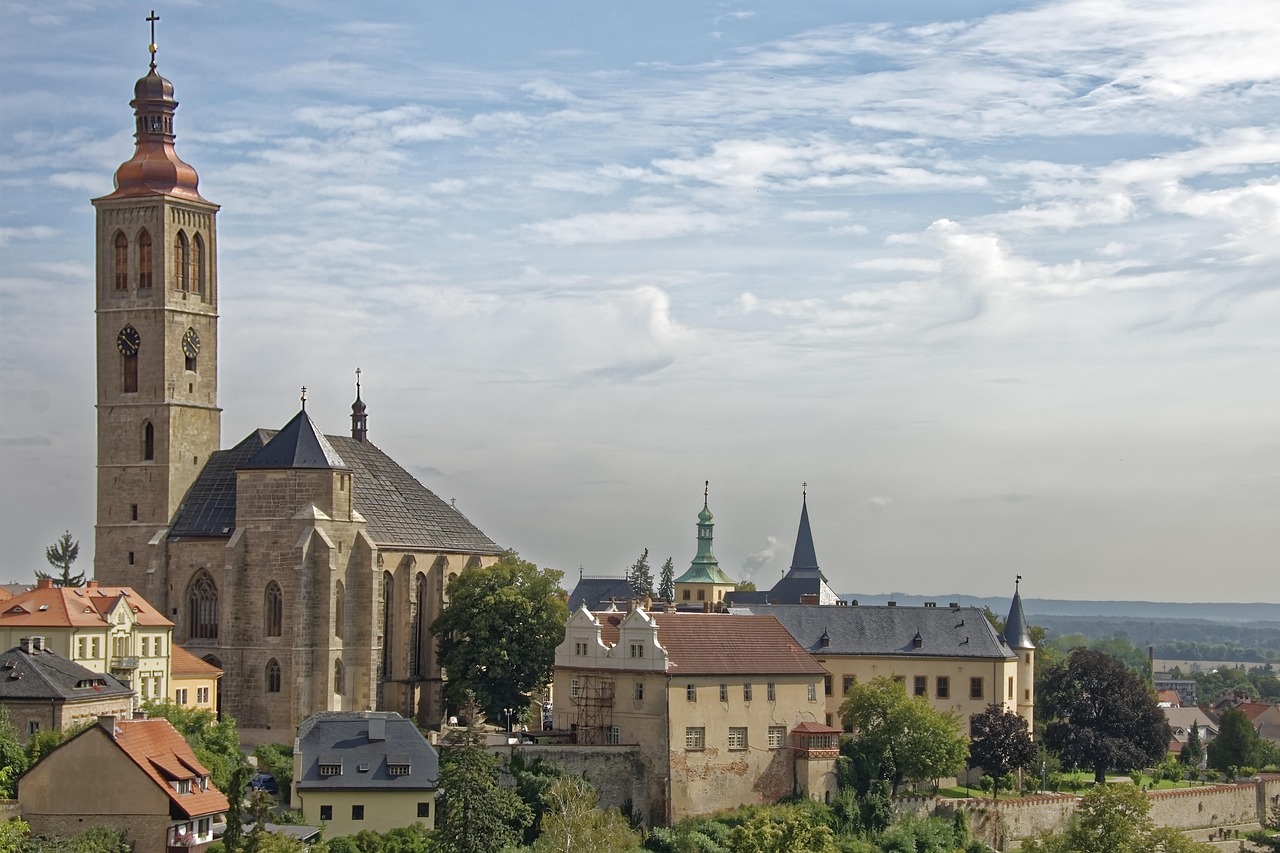
- St Barbara's Church: the miners' Gothic cathedral with its tent-like roof ridge and mining scenes in the chapels, approached along the Jesuit College terrace with a view over the Vrchlice valley.
- Sedlec Ossuary beneath the Cemetery Church of All Saints, decorated with the bones of tens of thousands, and the nearby Cathedral of the Assumption – crowds are large, come in the morning.
- Italian Court, the former Royal Mint with the hall in which the Prague groschen were struck, and in the Hrádek the Silver Museum with its walk into a medieval mine gallery (helmet and cape provided).
- CampingSpirit overnight tip
-
Official campsite or RV park: Barbora Kemp on the north-western edge of town, Autocamp Transit in Sedlec within walking distance of the ossuary and, a little outside to the south, Autokemp Malešov. Electricity and sanitary facilities are standard at the sites, a dedicated service point not everywhere – ask on site. Check season and prices beforehand.
Free camping or nature tip (where legal): Czech law has no general right to free standing, but also no nationwide ban on sleeping in a vehicle in a public car park. Signage and municipal regulations are what count. In Kutná Hora, one of the most visited towns in the country, the car parks by the Old Town and Sedlec are paid and intended for day visitors – take one of the campsites for the night.
- Insider tip for campers
- The Old Town of Kutná Hora is narrow and steep; park on the edge and walk. Sedlec and the Old Town are about three kilometres apart – there is also a town bus. Combined tickets are available for the sights; the tour of the silver mine is limited in group size, so book slots in advance.
3Stage 3: Kutná Hora to Třeboň (via Jindřichův Hradec) (approx. 160 km)
- The drive
- Via Čáslav and Golčův Jeníkov through the hills of the Bohemian-Moravian Highlands to Humpolec, then on the I/34 via Pelhřimov and Kamenice nad Lipou to Jindřichův Hradec and on into the plain around Třeboň. Well-built country roads without motorway, with village passages and occasional lorry convoys. Two and a half to three hours of pure driving time – one of the long stages of the loop, best with a lunch break in Jindřichův Hradec.
- Highlights & must-sees
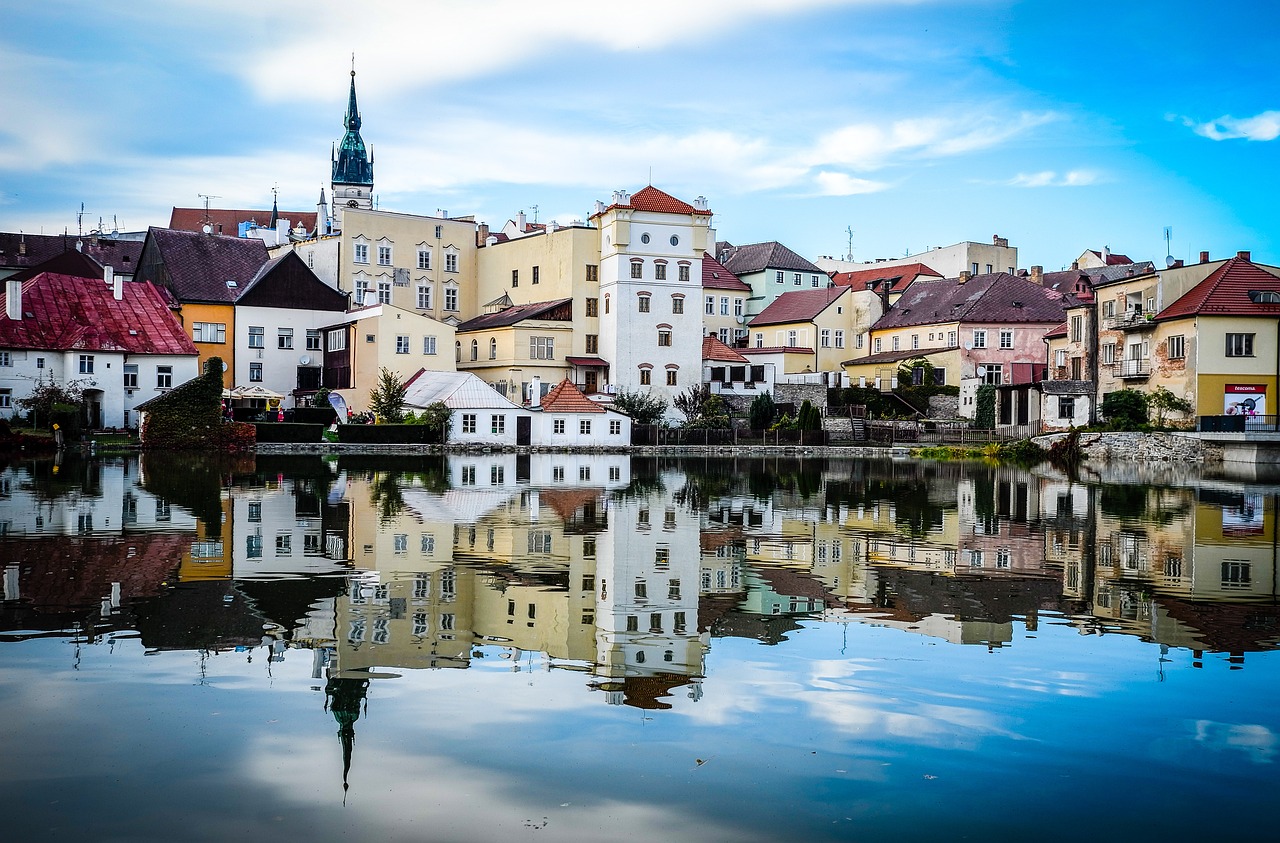
- Jindřichův Hradec Castle on Vajgar pond, one of the largest castle complexes in the country, with the Renaissance rondel in the garden; guided tours on several routes.
- Rožmberk Pond north of Třeboň, at around 490 hectares the largest pond in the Czech Republic: you walk along Jakub Krčín's tree-lined dam with a view over the water.
- Třeboň itself: the market square with arcaded houses, the château of the Rosenbergs and Schwarzenbergs, the Regent brewery and, by Svět pond, the Schwarzenberg Tomb in the forest.
- CampingSpirit overnight tip
-
Official campsite or RV park: Autokemp Třeboň on the southern edge of town, a good ten minutes' walk to the centre, with electricity, sanitary facilities and pitches for motorhomes; a little further south by the water is Sportcentrum Doubí. Both cater for cyclists and bathers – arrive early in July and August. Check facilities and opening times beforehand.
Free camping or nature tip (where legal): The pond landscape is the Třeboňsko Protected Landscape Area and Biosphere Reserve: camping outside campsites is prohibited, the dam paths of the ponds are closed to motor vehicles and serve cyclists and fishermen. The bathing ponds and lakeshores are patrolled. Use the sites in Třeboň for the night.
- Insider tip for campers
- The ponds are harvested in autumn: from about mid-October into November one pond after another is drained, at Rožmberk with a fish market and festival – check dates with the town. The area is flat and well served by cycle paths; the loops around Svět and Opatovický ponds are ideal for the bikes from the rear rack. Pack insect repellent.
4Stage 4: Třeboň to Český Krumlov (via Hluboká, České Budějovice and Holašovice) (approx. 85 km)
- The drive
- Through forest and pond country via Lišov to Hluboká nad Vltavou, down along the Vltava to České Budějovice, then west into the hills to Holašovice and over the edge of the Blanský les to Český Krumlov. Alternating plain and gentle climbs, city traffic in Budějovice. Pure driving time around two hours, a full day with sightseeing.
- Highlights & must-sees
- Hluboká Castle, remodelled by the Schwarzenbergs in English Tudor Gothic style, with a park and the Aleš Gallery in the former riding hall; below in the forest, Ohrada hunting lodge.
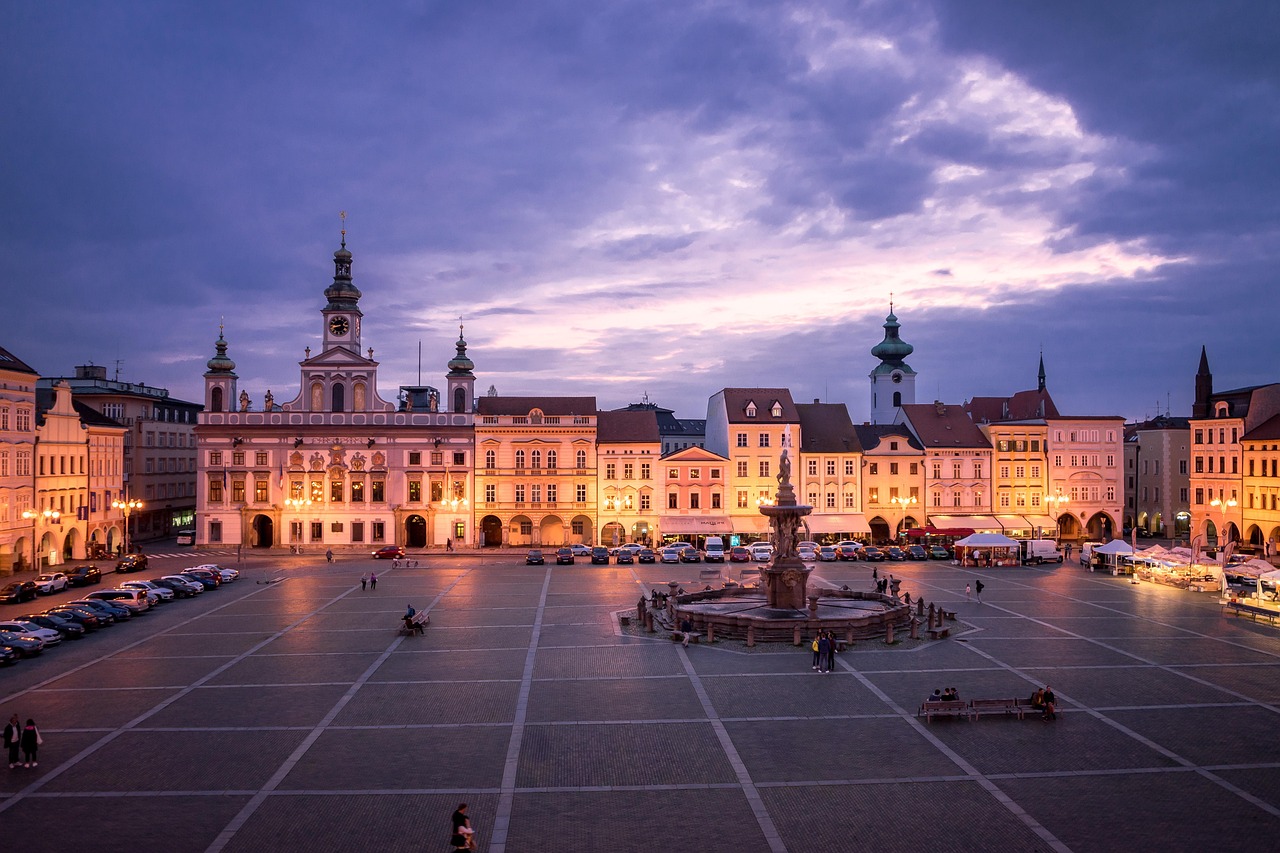
- Přemysl Otakar II Square in České Budějovice, one of the largest market squares in Central Europe, with the Samson Fountain and the Black Tower as a viewpoint; to the north, the Budějovický Budvar brewery with guided tours.
- Holašovice, a village in South Bohemian rural Baroque with curved gables around the green, a UNESCO World Heritage Site – a quiet stroll rather than a major sightseeing visit.
- CampingSpirit overnight tip
-
Official campsite or RV park: Český Krumlov has several sites by the river: Kemp Krumlov on the Vltava north-east of the Old Town, Kemp Nové Spolí and Kemp Vltavan to the south, popular with paddlers, and Caravan Camp Petráškův Dvůr west of town as a site with electric hook-ups and waste disposal. If you want to stay in Hluboká: Autokemp Křivonoska north of the town or the sites at Bezdrev pond to the south-west. Check season and facilities beforehand.
Free camping or nature tip (where legal): Holašovice lies in the Blanský les Protected Landscape Area; the Vltava banks near Krumlov are densely built up and heavily visited. In Český Krumlov the large car parks at the edge of the Old Town are day car parks – overnight stays are not intended there. Take one of the sites by the river for the night.
- Insider tip for campers
- Do not drive into the Old Town of Český Krumlov: the centre is closed to traffic, the lanes are narrow and steep. The town signposts numbered, paid large car parks (P1 to P4) on its edge; check in advance with the town's information centre whether and where motorhomes are permitted there. Budějovice has large supermarkets and filling stations with LPG on the edge of town – good for stocking up before Lipno and the Bohemian Forest.
5Stage 5: Český Krumlov to Frymburk (via Vyšší Brod and Lipno nad Vltavou) (approx. 55 km)
- The drive
- Up the Vltava via Rožmberk nad Vltavou to Vyšší Brod, then along the river via Loučovice up to the dam at Lipno nad Vltavou and along the southern shore of the reservoir to Frymburk. Narrow, winding valley road with paddler traffic and minibuses, a noticeable climb between Loučovice and Lipno. About 1.5 hours.
- Highlights & must-sees
- Rožmberk Castle high above a bend in the Vltava, ancestral seat of the Rosenbergs, with guided tours through state rooms.
- Vyšší Brod Cistercian Monastery, founded in 1259, with a Gothic abbey church and library; from here a short detour to the granite blocks of the Devil's Wall (Čertova stěna) in the Vltava valley.
- Lipno Treetop Walk (Stezka korunami stromů) on the slope above Lipno nad Vltavou, a wooden walkway through the canopy up to a tower with a view over the reservoir and, on clear days, to the Alps.
- CampingSpirit overnight tip
-
Official campsite or RV park: Along the reservoir the sites lie close together: Camping Lipno Modřín in Lipno nad Vltavou, Camping Frymburk on terraces right by the water in Frymburk, north of it Camp Vřesná and near Lipno Camping Panorama. Most sites have electricity, sanitary facilities and boat jetties; lakeside pitches are booked up early in summer. Check season dates beforehand, many close in autumn.
Free camping or nature tip (where legal): At Lipno Reservoir, overnight stays outside campsites are practically impossible: shoreline areas are private or protected, municipalities and the water authority have issued bans, and many lakeside car parks have signs against camping and overnight stays. Checks take place mainly in the season. Use established sites.
- Insider tip for campers
- The Vltava between Vyšší Brod and Český Krumlov is busy with canoes; in July and August the car parks at the put-in points and the roads through Rožmberk are full of vans carrying boats – set off early. The section below the Lipno dam only has enough water when water is released. A cycle path runs around the lake, and sections of it can be combined with the ferry.
6Stage 6: Frymburk to Borová Lada (via Horní Planá, Volary and Lenora) (approx. 85 km)
- The drive
- Take the Frymburk–Frýdava car ferry to the northern shore, then on the I/39 via Horní Planá and Nová Pec past the upper end of the reservoir to Volary and via Lenora up through the Vltava valley to Borová Lada at around 900 m. Forest roads with long climbs, narrower from Lenora; watch for wildlife crossing. About two hours. The ferry crosses hourly and also takes motorhomes (vehicles up to 20 t); it only runs in the season from about the end of April to October and not in very bad weather – check the timetable beforehand. Without the ferry, the overland route around the lake is a considerable detour.
- Highlights & must-sees
- Adalbert Stifter's birthplace in Horní Planá, now a museum, plus the viewpoint looking across the lake to the mountains.
- Schwarzenberg Canal near Jelení Vrchy: the timber-floating canal, built from 1789, linked the Vltava and the Danube and here runs through a masonry tunnel; from there on foot or by bike up to Plešné jezero (Plöckenstein Lake) below the Stifter rock face.
- Boubín Primeval Forest (Boubínský prales) near Kubova Huť, protected since 1858: a circular trail leads around the primeval forest with spruces, firs and beeches several hundred years old; the core itself cannot be entered.
- CampingSpirit overnight tip
-
Official campsite or RV park: Zahrádky in Borová Lada, a simple municipal site at the edge of the forest with sanitary facilities and pitches for motorhomes; near Lenora are Kemp Lenora and Kemp Pod Boubínem near Zátoň. If you want to stay by the lake: Caravan Camping Horní Planá and Kemp U Kukačků in Horní Planá. Check facilities, electricity and season beforehand – in the Bohemian Forest many sites only open in May.
Free camping or nature tip (where legal): From Nová Pec you drive through the Šumava National Park and Protected Landscape Area. In the national park, tenting and camping outside designated sites is prohibited; the forest and hiking car parks are not intended for overnight stays, not even in a vehicle. Forest roads must not be driven on; under the Czech Forest Act, driving and parking in the forest is prohibited, and fines can be very high. The car parks at Jelení Vrchy and by the primeval forest are day car parks.
- Insider tip for campers
- Volary has a filling station and supermarket – the last good-value opportunity before the high ground. At Plešné jezero and Boubín Primeval Forest the car parks are far below the destinations; plan the routes on foot or by bike. The forest roads around Plešné jezero are closed to private vehicles.
7Stage 7: Borová Lada to Antýgl (via Kvilda and Modrava) (approx. 35 km)
- The drive
- Across the plateau of the Bohemian Forest to Kvilda, one of the highest villages in the country, then via Filipova Huť downhill to Modrava and through the Vydra valley to Antýgl. Wide but winding roads over open bogs and meadows at 1,000 to 1,100 m. Barely an hour's driving – the day belongs to the trails on foot.
- Highlights & must-sees
- Source of the Vltava (Pramen Vltavy) on the Černý potok west of Kvilda: a short walk from the car park on the road to Bučina to the enclosed spring; in Bučina a viewpoint reaching as far as the Bavarian Forest.
- Jezerní slať, a raised bog between Kvilda and Horská Kvilda, with a boardwalk and an observation tower over the peat pool; one of the coldest places in the Czech Republic.
- Povydří: the hiking trail from Antýgl along the wild, rocky Vydra to Turnerova chata and the historic Čeňkova pila hydroelectric power station, around 7 km one way.
- CampingSpirit overnight tip
-
Official campsite or RV park: Antýgl, a simple site in an old Bohemian Forest farmstead right on the Vydra, with sanitary facilities and a limited number of pitches; only open in the warmer months, reservations not always possible – arrive early in the afternoon. Alternatives further down the valley are Kemp Annín near Sušice and Klášterský Mlýn. Be sure to check facilities and season beforehand.
Free camping or nature tip (where legal): The high ground around Kvilda, Modrava and Antýgl is national park: camping outside designated sites is prohibited, and the car parks in Modrava and at the source of the Vltava are day car parks, not overnight spots. The roads to Březník and other destinations in the interior are closed to private vehicles; some trails, such as in the Luzenské údolí beyond Březník, are closed permanently or temporarily to protect the capercaillie – observe the signs.
- Insider tip for campers
- Modrava has paid car parks and a national park information centre; from there cycle and hiking trails lead to Březník and the Vchynice-Tetov Canal. In the season, excursion buses run through the Bohemian Forest – a good way to leave the camper parked. Even in summer, nights below 5 °C are normal here.
8Stage 8: Antýgl to Prague (via Kašperské Hory, Písek and Zvíkov) (approx. 210 km)
- The drive
- Down the Vydra valley via Čeňkova pila to Rejštejn, a detour up to Kašperské Hory, then via Sušice and Horažďovice along the Otava to Písek. From Písek north with a detour to Zvíkov Castle and on the D4 to Prague. Winding and narrow in the mountains, a wide country road from Sušice, the D4 requires a vignette. A long day with breaks, pure driving time a good three hours.
- Highlights & must-sees
- Kašperské Hory, an old gold-mining town, and above it Kašperk Castle, one of the highest royal castles in Bohemia, with a view over the Bohemian Forest.
- Písek's 13th-century Stone Bridge over the Otava, the oldest surviving bridge in the Czech Republic, and the Old Town with the Prácheňské Museum.
- Zvíkov Castle on a rocky spur above the confluence of the Otava and the Vltava on Orlík Reservoir – a quiet finale before Prague.
- CampingSpirit overnight tip
-
Official campsite or RV park: On Orlík Reservoir near Zvíkov there are several kemps, such as Kemp Vážka and Kemp Ivanek – check season and facilities beforehand. Back in Prague: Camp Slivenec in the south-west is close to the approach from the D4 and saves you crossing the city; alternatively Caravan Park Yacht Club Císařská louka.
Free camping or nature tip (where legal): The shores of Orlík Reservoir are densely built up with holiday homes, there are hardly any free shoreline areas, and camping bans are common by the water. In Písek, overnight stays in the town car parks are not intended. For the last night choose one of the sites on the reservoir or in Prague.
- Insider tip for campers
- Before returning the motorhome or heading home, it's worth filling up and emptying at the campsite in Prague; public service points are rare in the Czech Republic. If you are heading home via Bavaria, from Písek you can also drive back to the border via Strakonice and Strážný or via Klatovy instead of to Prague.
Camping practice & local rules
Wild camping & overnight parking
- The Czech Republic has no explicit right to free standing. A night in your vehicle in a public car park where parking is permitted is usually tolerated as long as you don't camp: no chairs, tables, awning or levelling jacks, no grey water on the ground. Municipalities can prohibit camping and overnight stays by regulation and signage – this is common in tourist places such as Český Krumlov, Lipno and Kutná Hora.
- Under the Forest Act, driving and parking motor vehicles in the forest is prohibited, as is open fire in and near the forest; penalties can be very high. Field and forest tracks are not pitches.
- The loop passes through several protected areas: the Český kras, Třeboňsko, Blanský les and Šumava Protected Landscape Areas and the Šumava National Park. In the national park and protected landscape areas, tenting and camping outside designated sites is prohibited, and car parks there are generally not overnight spots. In the national park there are only a few designated bivouac sites for hikers, not for vehicles; trails in the core zones are partly closed or only open seasonally.
- Campsites (autokemp, kemp, tábořiště) are plentiful, often simple and inexpensive, but many are only open from May to September. You'll find sites in park4night, Campercontact and printed pitch guides; information from municipal and national park websites takes precedence over user reports.
Waste disposal & supplies
- Dedicated service points outside campsites are rare. Plan to empty grey and black water at the sites; most have a chemical toilet disposal point, not all a drive-over grey-water drain.
- Tap water in the Czech Republic is drinkable. Streams and springs in the Bohemian Forest are not safe drinking water, not even the source of the Vltava.
- Gas: German and Austrian exchange cylinders are not swapped in the Czech Republic, and local cylinders have different connections. Count on your own reserve or a refillable cylinder. Autogas is called LPG or autoplyn and is available at many filling stations, especially on main roads and in towns; sort out the right adapter in advance. Whether vehicles with an LPG system may enter underground and multi-storey car parks is governed by the signs on site.
- Fuel and shopping: large supermarkets and filling stations on the edge of Prague, Kutná Hora, České Budějovice and Český Krumlov; in the Bohemian Forest the network is sparse – stock up in Volary or Vimperk. Payment is in koruna (CZK); cards are accepted almost everywhere.
Vehicle size & traffic rules
- Speed: motorhomes up to 3.5 t 50 km/h in built-up areas, 90 outside, 130 km/h on motorways (usually 110 on expressways). Motorhomes over 3.5 t and vehicle combinations 80 km/h outside built-up areas and on motorways and expressways. Lower limits apply in many villages and in the national park.
- Vignette: for vehicles up to 3.5 t, the electronic dálniční známka, linked to the number plate, is required on motorways and marked expressways (including the Prague ring D0, the D11 and the D4). 2026 prices: 1 day 230 CZK (valid until midnight of the chosen day), 10 days 300 CZK, 30 days 480 CZK, annual vignette 2,570 CZK – buy only via the official eDálnice portal or official sales points, not via third-party sites charging a mark-up. Validity can be checked there with the number plate. A car and caravan combination only needs a vignette for the towing vehicle.
- Tolls over 3.5 t: instead of the vignette, vehicles over 3.5 t pay a distance-based electronic toll with an on-board unit (OBU) on motorways and on selected first-class roads, on this loop for example on sections of the I/34. Register the vehicle before entering the country and collect the on-board unit at a distribution point, for example near the border.
- Traffic rules: 0.0 per mille, zero tolerance. Dipped headlights or daytime running lights all year round, including during the day. Mobile phone only with a hands-free system. Carry a high-visibility vest, warning triangle and first-aid kit. There are currently no low-emission zones in the Czech Republic (as of 2026-09); in Prague, however, large parts of the city centre are residents' parking zones, and there are through-traffic restrictions for heavier vehicles – observe the signs.
- Winter: from 1 November to 31 March, winter tyres are compulsory in wintry road conditions and on correspondingly signed routes. In the Bohemian Forest around Kvilda snow can fall as early as October; carry snow chains. Rear rack: number plate and lights must remain visible, otherwise use a light board with a repeater plate.
CampingSpirit packing & preparation checklist
- Insect repellent and mosquito nets for windows and roof hatch: by the ponds near Třeboň and on the Vltava, summer evenings are damp and full of mosquitoes.
- Bikes for the dam paths of the Třeboň ponds, the cycle path around Lipno Reservoir and the closed national park roads to Březník and Plešné jezero.
- Warm sleeping bags and a parking heater or enough gas: on the high ground around Kvilda, nights drop below 5 °C even in summer.
- Tick repellent and tick tweezers: South Bohemia is one of the areas with a high TBE risk – check your vaccination status before the trip.
- A waterproof dry bag and life jacket if you want to paddle the Vltava between Vyšší Brod and Český Krumlov.
- Small change in koruna for parking meters, electricity posts and shower tokens at simple campsites.
As of 2026-09. Closures, fees and booking rules change: check official sources before you go.