



In-depth guide · CampingSpirit
Around 510 kilometres from the Teutonic castle on the Nogat via the inclined planes of the Elbląg Canal, Copernicus’ cathedral hill on the Vistula Lagoon and the bishops’ castles of Warmia to the great lakes around Giżycko, Mikołajki and Ruciane-Nida: a quiet route along tree-lined avenues, with boats crossing meadows and evenings on the jetty.
The spirit of the route
Warmia and Masuria are a land for slow days. Beyond Malbork Castle the plain of the Vistula delta opens out, then the Oberland rises, and on the Elbląg Canal carriages on rails haul excursion boats over green slopes – 19th-century engineering that still runs today. On the Vistula Lagoon the air smells of brackish water and reeds, and the cathedral bell rings out over Frombork. Further east there are brick churches, storks’ nests on power poles and cobblestones in villages whose German names still appear on old maps. Then the water begins: Niegocin, Mamry, Śniardwy, Bełdany, linked by canals on which sailing boats tack back and forth in summer. From the sliding door you see pine forest, a jetty and, in the evening, mist over the lake. The mosquitoes come at dusk, the cranes in autumn. Allow time for a punt trip on the Krutynia and for an evening with nothing planned.
Stage-by-stage plan
1Stage 1: Malbork to Buczyniec (Elbląg Canal) (approx. 75 km)
- The drive
- From Malbork take national road DK22 north-east through the flat Vistula-Nogat delta to Elbląg, then head south-east via Pasłęk into the hilly Oberland as far as the Buczyniec inclined plane. Wide, well-built roads as far as Elbląg, then district and municipal roads lined with avenue trees and with potholes in the villages. A good 1.5 hours of pure driving time; with a castle visit it is a full day.
- Highlights & must-sees
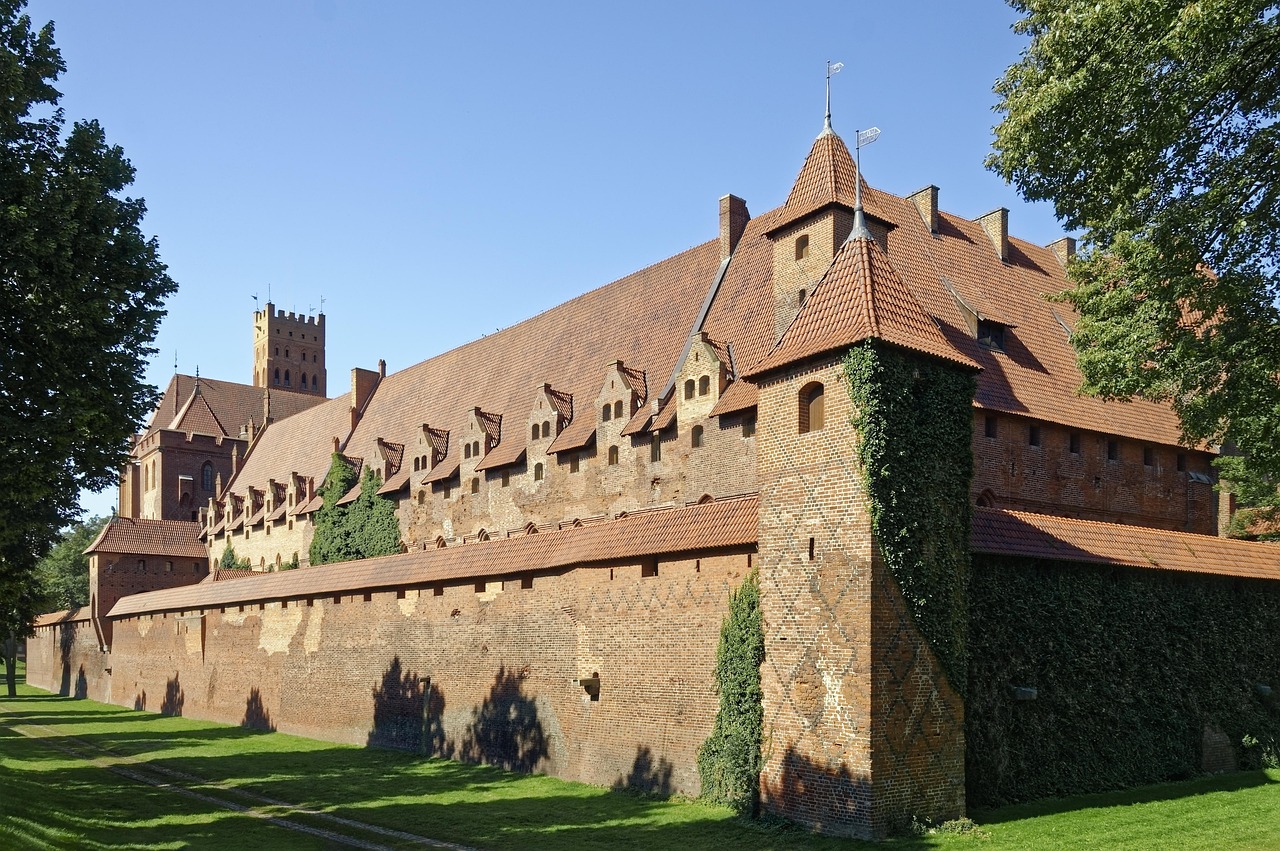
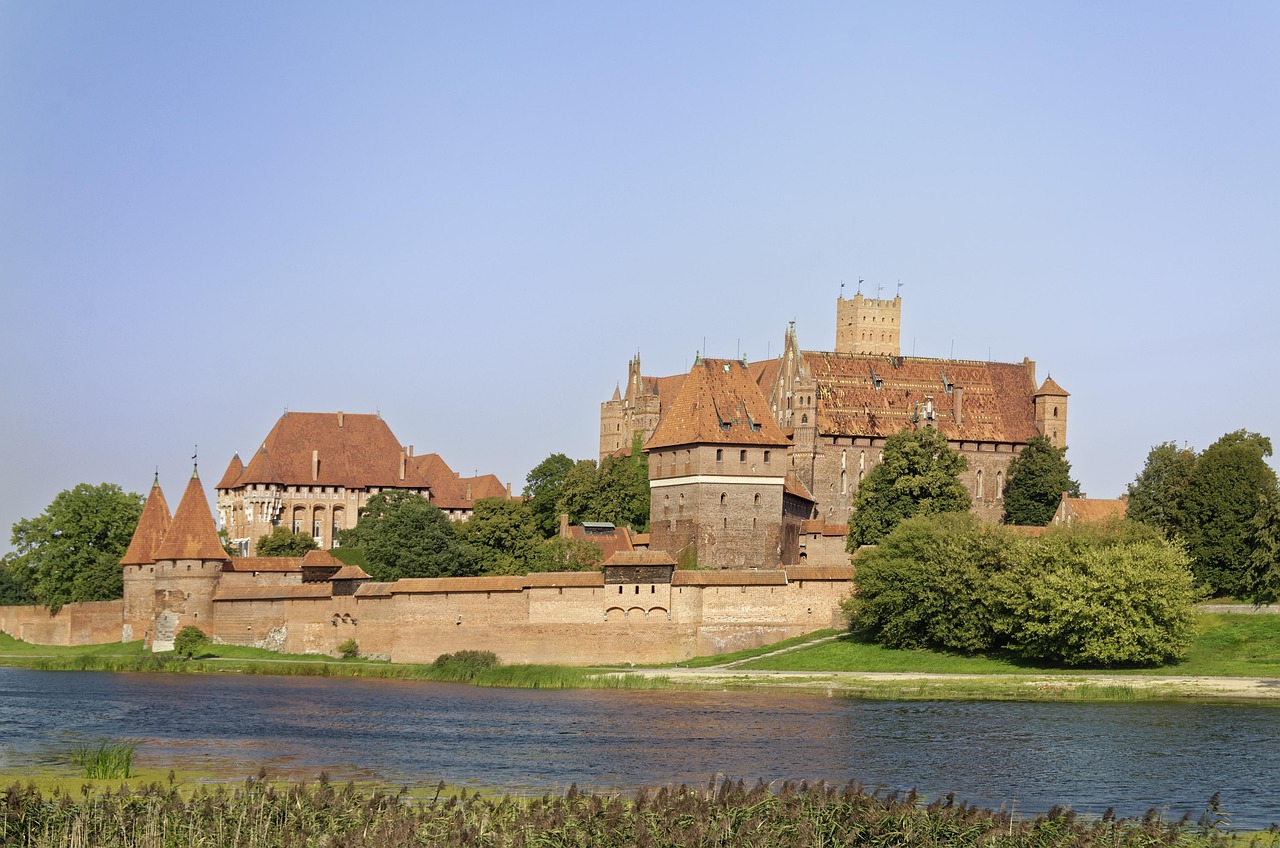
- Malbork Castle (Zamek w Malborku): headquarters of the Teutonic Order, the largest brick castle in the world by area and a UNESCO World Heritage Site; allow three to four hours for the High Castle, Middle Castle and Grand Master’s Palace with an audio guide.
- View of the castle from the west bank of the Nogat across the footbridge – in the afternoon the façade is in the light.
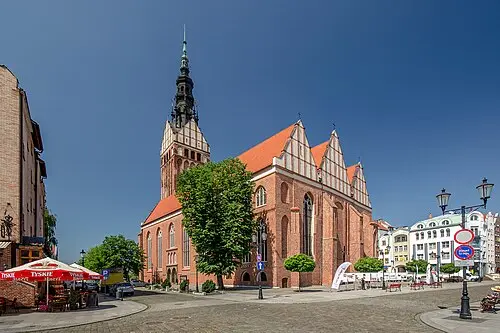
- Elbląg Old Town: destroyed in 1945, rebuilt from the 1980s on the old street plan with modern gabled houses (“retroversion”), plus the Market Gate and St Nicholas’ Church with its tall tower.
- CampingSpirit overnight tip
-
Official campsite or RV park: In Buczyniec, OpenStreetMap lists a small campsite (“Camping Buczyniec”) near the inclined plane; ask in advance about facilities, electricity and season. If you want more infrastructure, stay at Camping nr 61 in Elbląg on the river of the same name, a few minutes’ walk from the Old Town (electricity, toilets and showers, water and waste disposal; seasonal, check opening times in advance), and drive to the canal in the morning. In Malbork, Camping “Nad Stawem” is within walking distance of the castle.
Free camping or nature tip (where legal): In the Oberland, forest and field tracks quickly put you on State Forests land: in Poland, driving motor vehicles into the forest off public roads is prohibited. At the Buczyniec inclined plane there is a large visitor car park; whether motorhomes are tolerated there overnight is not consistently regulated – follow the signs and do not set up camp.
- Insider tip for campers
- In season (roughly May to September) excursion boats run, among other routes, the section between Buczyniec and Jelenie over four inclined planes. Check timetable, direction of travel, duration and any bus transfer to the departure pier online in advance when buying tickets – there are only a few departures a day. If the trip ends in Buczyniec, the camper can stay parked there and will be waiting at your destination.
2Stage 2: Buczyniec to Frombork (approx. 85 km)
- The drive
- Back via Pasłęk to Elbląg, then along regional road 503 along the Elbląg Upland: the road runs through beech woods, winds through Suchacz and Kadyny and mostly stays within sight of the Vistula Lagoon as far as Tolkmicko. Narrow, winding sections on a hillside; little lorry traffic. Just under 2 hours.
- Highlights & must-sees
- Engine house at the Buczyniec inclined plane with the water wheel that drives the cable drums, and the small exhibition on the history of the canal (built 1844–1860 to plans by Georg Steenke).
- Kadyny (Cadinen): Kaiser Wilhelm II’s former estate with brick buildings and the very old oak in the estate park.
- Frombork: cathedral hill with a Gothic cathedral in which the remains of Nicolaus Copernicus have been reburied since 2010, plus the Radziejowski Tower with views over the Vistula Lagoon to the Spit.
- CampingSpirit overnight tip
-
Official campsite or RV park: Camping Frombork on the eastern edge of town on the road to Braniewo (electricity, toilets and showers, season roughly May to September; check current status on the site’s website). A little to the south-west, near Narusa, is “Narusa Leśna Przystań” with a tent meadow and camper pitches at the edge of the forest. In high season, arrive early at weekends.
Free camping or nature tip (where legal): On the lagoon shore between Tolkmicko and Frombork there are reed belts and Natura 2000 sites; access to the shore is often via farm tracks or private land. Do not plan on free camping here. East of Frombork the border zone with the Russian exclave of Kaliningrad soon begins: there is no tourist border traffic, and the Border Guard patrols the border.
- Insider tip for campers
- The DW503 is narrow in Kadyny and Tolkmicko, with bus shelters right next to the carriageway on bends – drive slowly in a large camper and stop at the few lay-bys, not at the roadside. Fill up and shop in Elbląg before you continue: petrol stations and large supermarkets are rare on the lagoon. The boat service from Frombork to Krynica Morska on the Spit runs only in high summer (usually July and August) and only once or twice a day; check the timetable in advance.
3Stage 3: Frombork to Olsztyn (approx. 120 km)
- The drive
- Via Braniewo and Pieniężno to Lidzbark Warmiński, then via Dobre Miasto to Olsztyn. National roads with a good surface, interspersed with long avenues and village through-roads with speed bumps. Around 2.5 hours without breaks; checks with radar vans and average speed cameras are common in Poland.
- Highlights & must-sees
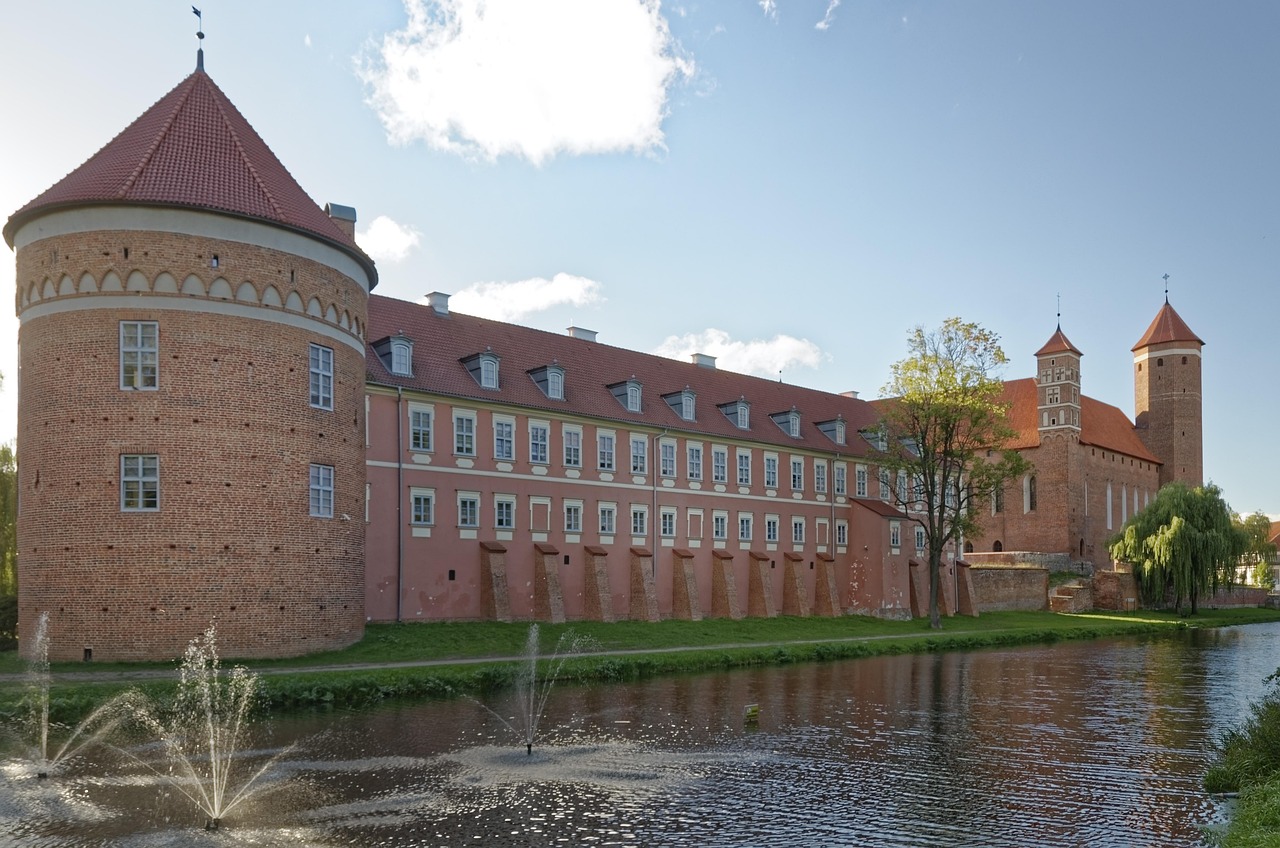
- Bishops’ Castle in Lidzbark Warmiński (Heilsberg): four-winged Gothic building of the Warmian bishops with a cloister, where Copernicus lived for some years as secretary and physician to his uncle.
- Collegiate church in Dobre Miasto, one of the great brick churches of Warmia, on the way with no detour.
- Olsztyn: castle of the Warmian cathedral chapter with the astronomical table Copernicus drew in the cloister, the High Gate and the Old Town market square.
- CampingSpirit overnight tip
-
Official campsite or RV park: Camping Ukiel on Jezioro Ukiel (Krzywe) on the west side of the city, with electricity, toilets and showers, water and waste disposal, a bathing beach and a cycle path into the centre. Quieter and a little further out is Camping “Herkus” in Dywity, north of the city. Check the seasons of both sites in advance.
Free camping or nature tip (where legal): Olsztyn has paid parking zones in the centre; they are not suitable for overnight stays. The forests around the city belong to the municipal forest and the State Forests – the same rule applies there as everywhere in Poland: no vehicle access off public roads.
- Insider tip for campers
- Leave the camper at the site on the Ukiel and go into the Old Town by bike or tram; car parks near the Old Town partly have height barriers. In Lidzbark Warmiński the car park below the castle is also usable for longer vehicles, but full at weekends. The castle in Olsztyn is a museum (Muzeum Warmii i Mazur): check opening times and closing days in advance.
4Stage 4: Olsztyn to Gierłoż (Wolf’s Lair) (approx. 95 km)
- The drive
- Via Barczewo to Biskupiec, then north via Reszel to Święta Lipka and on via Kętrzyn to Gierłoż. Beyond Biskupiec the roads get narrower, with many avenues with trees right next to the carriageway – with a wide body and awning box, keep your distance from the edge. Just under 2 hours.
- Highlights & must-sees
- Pilgrimage basilica of Święta Lipka (Heiligelinde): Baroque complex with a cloister and an organ with moving figures, demonstrated several times a day in season.
- Reszel (Rößel): bishops’ castle and brick old town on a hill, a few kilometres before Święta Lipka.
- Wolf’s Lair near Gierłoż: Hitler’s former headquarters with the remains of the bunkers blown up in 1945 and the memorial plaque at the site of the assassination attempt of 20 July 1944; the site is managed by the State Forests.
- CampingSpirit overnight tip
-
Official campsite or RV park: On the Wolf’s Lair grounds the State Forests (Nadleśnictwo Srokowo) offer overnight stays; OpenStreetMap lists a campsite with pitches there. Check electricity, toilets and showers and season on the site’s website. An alternative is a campsite on the lakes north of Giżycko, such as “Roganty” – that makes the next stage shorter.
Free camping or nature tip (where legal): The Wolf’s Lair lies in the middle of State Forests land; parking vehicles on forest tracks and in the forest is prohibited. The bunker ruins must not be entered or climbed – there is a risk of collapse, and staff keep an eye on it.
- Insider tip for campers
- In Święta Lipka the large car park opposite the basilica charges a fee and is full by around midday in season; look up the times of the organ demonstrations in advance and plan your visit around them. Kętrzyn is the best place on this stage to fill up, shop and get cash. At the Wolf’s Lair an audio guide or guided tour is worthwhile: the information panels are brief.
5Stage 5: Gierłoż to Giżycko (approx. 30 km)
- The drive
- Take regional road 592 east through forest and moraine hills to Giżycko, which sits on an isthmus between Niegocin and Kisajno. Short and easy, a good half hour; the rest of the day belongs to the water and the fortress.
- Highlights & must-sees
- Boyen Fortress (Twierdza Boyen): Prussian fortress from the mid-19th century on the isthmus, with ramparts, bastions and a museum, within walking distance of the centre.
- Swing bridge over the Łuczański Canal: the listed bridge from the late 19th century is still turned by hand by one man and opened several times a day for boat traffic, when road traffic stops.
- Promenade on the Niegocin with the harbour and the excursion boats of the White Fleet (Żegluga Mazurska) to Mikołajki or Węgorzewo.
- CampingSpirit overnight tip
-
Official campsite or RV park: Around Giżycko there are several sites on the water, such as Camping Szekla on the Niegocin south of the town and Camping Bystry in Borowo to the east; plus pitches at hotels and marinas and the “Camper Plac” at Siedlisko u Tymka. Compare the facilities and seasons of the individual sites in advance; book in the sailing season in July and August.
Free camping or nature tip (where legal): Free camping on the shores of Niegocin and Kisajno is practically impossible: many stretches of shore are private land, landscape protection areas or nature reserves, and while the shore strip is publicly accessible, it is not for camping. The town and harbours generally only allow motorhomes overnight in designated areas.
- Insider tip for campers
- The swing bridge opens at fixed times published by the district road authority (ZDP Giżycko) – reach it in the wrong quarter of an hour and you wait. On the Łuczański Canal a new bridge on ul. Obwodowa is being built for the DK59 bypass; expect diversions and bottlenecks, and do not look for parking in the centre. Excursion boats from the harbour are the easiest way to see the chain of lakes without your own boat; timetables usually only apply from May to September.
6Stage 6: Giżycko to Mikołajki (approx. 45 km)
- The drive
- South via Ryn through the hills between lakes Ryńskie and Tałty, then on to Mikołajki. Well-built road, with a short cobbled stretch through Ryn. Just under an hour; in Mikołajki expect congestion in the centre in July and August.
- Highlights & must-sees
- Teutonic castle of Ryn (Rhein) on the hill above the small town, now a hotel; plus the windmill on the edge of town.
- Mikołajki: harbour and promenade on Lake Mikołajskie, the starting point for boats onto the Śniardwy, Poland’s largest lake.
- Nature reserve on Jezioro Łuknajno east of Mikołajki, known for mute swans and waterfowl; observation tower on the shore.
- CampingSpirit overnight tip
-
Official campsite or RV park: Ośrodek Wypoczynkowy Wagabunda on the edge of Mikołajki, with motorhome pitches, electricity, toilets and showers; further sites lie on Lake Mikołajskie and on the Tałty, including small sites such as “Kokoszka” and “Kama”. In high summer and at weekends with regattas, book early.
Free camping or nature tip (where legal): Around Mikołajki the Masurian Landscape Park (Mazurski Park Krajobrazowy) begins, where protection rules restrict camping and parking vehicles outside designated places; at Łuknajno the nature reserve regulations apply. Free camping in Mikołajki itself is not tolerated.
- Insider tip for campers
- When it is busy, visit the town on foot or by bike from the site; the car parks in the centre are small and expensive. The harbour has disposal facilities for boaters; for motorhomes, the campsite’s service point is the safe choice. In the evening it quickly gets damp by the water and the mosquitoes come out – close the mosquito screens on doors and roof vents before sunset.
7Stage 7: Mikołajki to Krutyń (approx. 35 km)
- The drive
- South-west towards Ukta through the pine forest of the Piska Forest (Puszcza Piska), then on a minor road to Krutyń. Little traffic, but in the forest asphalt alternates with patched sections; in Krutyń the village street is narrow and full of pedestrians in summer. About 45 minutes.
- Highlights & must-sees
- Punt trip on the Krutynia: local boatmen silently pole flat wooden boats over the clear water through the protected area below Krutyń – around one to one and a half hours, departing from the jetties in the village.
- Krutynia canoe trail: one of the best-known paddling routes in Poland; short sections can also be hired as a day trip with return transport.
- Kadzidłowo Wildlife Park near Ukta with elk, wolves and other native wild animals in enclosures, good for a stop on the way.
- CampingSpirit overnight tip
-
Official campsite or RV park: Stanica Wodna PTTK Krutyń in the village, a water-tourism station with a tent meadow and pitches, toilets and showers and boat hire; ask in advance about facilities for motorhomes (electricity, disposal). In the surrounding area there are several small campsites on the river and lakes, such as “Nad Mokrym” on the lake of the same name; many are basic and only open in the summer months.
Free camping or nature tip (where legal): Krutyń lies in the Masurian Landscape Park and in the middle of State Forests land; the banks of the Krutynia are a nature reserve along long stretches, with bans on entry and mooring. Only stay overnight at campsites here. The forest overnight areas of the “Zanocuj w lesie” programme are intended for tents or hammocks, not vehicles.
- Insider tip for campers
- The punt trips are quietest in the morning and early evening; at midday during the holidays groups are waiting. Payment is on the spot, often in cash in złoty. The large car park at the entrance to the village charges a fee and is suitable for motorhomes – do not drive down to the river, there is hardly anywhere to turn at the bottom.
8Stage 8: Krutyń to Ruciane-Nida (approx. 25 km)
- The drive
- Via Ukta and Wojnowo south-east to the eastern shore of the chain of lakes and to Ruciane-Nida between Jezioro Nidzkie and Bełdany. Quiet forest roads through the Piska Forest (Puszcza Piska), several level crossings. A good half hour.
- Highlights & must-sees
- Wojnowo: the former Old Believers’ (Philippons’) monastery with a wooden church and cemetery – a testament to the Russian immigrants of the 19th century; check access and opening times locally.
- Guzianka lock between Lake Bełdany and Guzianka pond: here sailing boats and excursion boats change level, easy to watch from the bank.
- Pranie forester’s lodge on Jezioro Nidzkie, where the poet Konstanty Ildefons Gałczyński spent his summers, now a museum in the forest.
- CampingSpirit overnight tip
-
Official campsite or RV park: In Ruciane-Nida the Stanica PTTK lies on the water; on Jezioro Nidzkie, “Zielona Binduga” is a site at the edge of the forest, plus smaller pitches at guesthouses. Check facilities, electricity and opening outside the holidays in advance – many sites close at the end of September.
Free camping or nature tip (where legal): Jezioro Nidzkie and parts of the Piska Forest are nature reserves; you must stay on paths there and driving on forest tracks is prohibited. In public car parks in the town a night in the vehicle without camping behaviour is not expressly prohibited, but frowned upon; the campsites are inexpensive and the better choice.
- Insider tip for campers
- Ruciane-Nida has a railway station on the line to Olsztyn and Ełk – handy if you plan the return transfer to an earlier stage town without the camper. Before heading home, fill up and top up your gas in Pisz or Mrągowo: LPG is available at almost every larger petrol station, whereas there are hardly any supplies in the forest villages.
Camping practice & local rules
Wild camping & overnight parking
- Legally, Poland distinguishes between parking and camping: where parking is permitted, no national law prohibits sleeping in the vehicle. But anyone who puts out an awning, chairs, stabilisers or levelling ramps is camping – and that is not provided for outside campsites, tent sites and motorhome pitches. Municipalities, harbours and car park operators can ban overnight stays by means of signs.
- Forest: under the Polish Forest Act, driving and parking motor vehicles in the forest is only permitted on public roads and on tracks approved for this; barriers and signs of the State Forests (Lasy Państwowe) are binding, and violations are punished with fines. The “Zanocuj w lesie” programme allows overnight stays in designated forest areas only on foot with a tent, hammock or sleeping bag, in small groups and for a few nights – you may not drive in with a vehicle, and open fires are prohibited.
- Lakes and shores: the shore strip of public waters is accessible to pedestrians but is not a camping spot. In nature reserves (Łuknajno, Jezioro Nidzkie, Krutynia), in the Masurian Landscape Park and in the numerous Natura 2000 sites, additional bans apply; rangers and the forest guard carry out checks in season.
- Masuria has a dense network of small sites: “pole namiotowe” (tent meadow), “pole biwakowe” (basic bivouac site), water-tourism stations (“stanica wodna”, often PTTK) and farms with a “miejsce kamperowe”. They are usually inexpensive, basic and often only open from May to September. You can find them via park4night, Campercontact and the municipalities’ websites; user information on prices is often out of date.
Waste disposal & supplies
- In Polish, a service point is called “punkt serwisowy dla kamperów” or “zrzut nieczystości”; public stations away from campsites are rare. Plan your disposal at sites such as those in Elbląg, Olsztyn, Giżycko or Mikołajki, and drive into the forest villages with an empty grey water tank.
- Never empty grey water or the cassette into lakes, ditches or onto the forest floor: the lakes are shallow, sensitive to nutrients and used for drinking water or bathing. Many small tent sites only have toilets for tent guests – ask whether you may empty the cassette there.
- Drinking water: tap water in towns is considered drinkable; at tent sites and at wells you will see “woda pitna” (drinkable) or “woda niezdatna do picia” (not drinkable). At basic sites, use a water filter or canisters with water from town.
- Gas: German exchange and owned bottles are not refilled or exchanged in Poland. Autogas (LPG) is available at very many petrol stations at low prices; fill refillable bottles and gas tanks using an adapter set, and have the attendant show you the right connection beforehand. Payment is in złoty; cards are common at petrol stations and large sites, while at tent meadows and with boatmen it is often cash only.
Vehicle size & traffic rules
- Speed limits for motorhomes up to 3.5 t: 50 km/h in built-up areas, 90 km/h outside built-up areas, 100 km/h on expressways (single carriageway) or 120 km/h (dual carriageway), 140 km/h on motorways. Motorhomes over 3.5 t and car-caravan combinations drive at 70 km/h outside built-up areas and 80 km/h on expressways and motorways. There is hardly any motorway on this route; the limits on avenues and through villages matter more than the maximum values. Cross-check the figures with the ADAC or the Polish transport authority before you travel.
- Tolls: for vehicles over 3.5 t maximum permissible weight, including motorhomes over this limit, the electronic e-TOLL system applies on a network of motorways, expressways and national roads – in the north, for example, on the S7 near Elbląg and on sections of the DK roads. Register before entering the country and pay via the app, an on-board unit or an approved device; the map of toll roads is on etoll.gov.pl. Since 21 September 2026, car-caravan combinations only pay if the towing vehicle itself has a maximum permissible weight of more than 3.5 t; cars and vans up to 3.5 t with a caravan are exempt from e-TOLL (amendment to the Public Roads Act, signed in July 2026). A bill introduced in April 2026 (Sejm print 2551) to also exempt motorhomes over 3.5 t on tourist journeys had not been passed at the time of going to press – check the current status before you travel.
- Vehicles up to 3.5 t – since 21 September 2026 also with a caravan – travel toll-free on this route; the toll motorway sections for cars are far away in the west and south of the country.
- Dipped headlights are mandatory around the clock, the blood alcohol limit is 0.2, and phone calls are only permitted hands-free. Carry a warning triangle and fire extinguisher – mandatory for Polish vehicles, strongly recommended for foreign ones. Average speed checks and mobile speed cameras are widespread, and fines are collected on the spot from foreign drivers too.
- Season and nature: in Masuria mosquitoes are at their worst from late May into July, especially after a wet spring, on still evenings and near the water; blackflies add to them. Warmia-Masuria is one of the regions of Poland with the most cases of tick-borne encephalitis (TBE) – discuss tick protection and vaccination with your doctor. There is no general winter tyre requirement in Poland, but many sites close in October.
CampingSpirit packing & preparation checklist
- Mosquito screens for the sliding door, roof vents and windows, plus repellent with DEET or icaridin – on still June evenings by the lake this matters more than any other equipment.
- Tick tweezers and long, light-coloured clothing for forest and lakeside paths; check your TBE vaccination status before you travel.
- LPG adapter set for refillable bottles, because Polish autogas is cheap and widely available, but German bottles are not exchanged.
- Złoty in small notes and coins for the punt trip, tent meadows, parking machines and boat hire – cards are not accepted everywhere.
- Long water hose and power cable (at least 25 m) with CEE adapter: on tent meadows and at water-tourism stations, hook-up posts and taps are far apart.
- Packable rubber boots or water shoes for damp lakeside meadows, muddy access tracks after rain and getting in and out at the canoe jetty.
As of 2026-09. Closures, fees and booking rules change: check official sources before you go.