

In-depth guide · CampingSpirit
From Kraków via the Wieliczka Salt Mine, Zakopane, Morskie Oko and the Pieniny across the border to Ždiar, Štrbské Pleso, Liptov, the Slovak Paradise and Levoča: around 480 kilometres around the highest range of the Carpathians – with straight talk on parking tickets, e-TOLL, the e-vignette and national park rules.
The spirit of the route
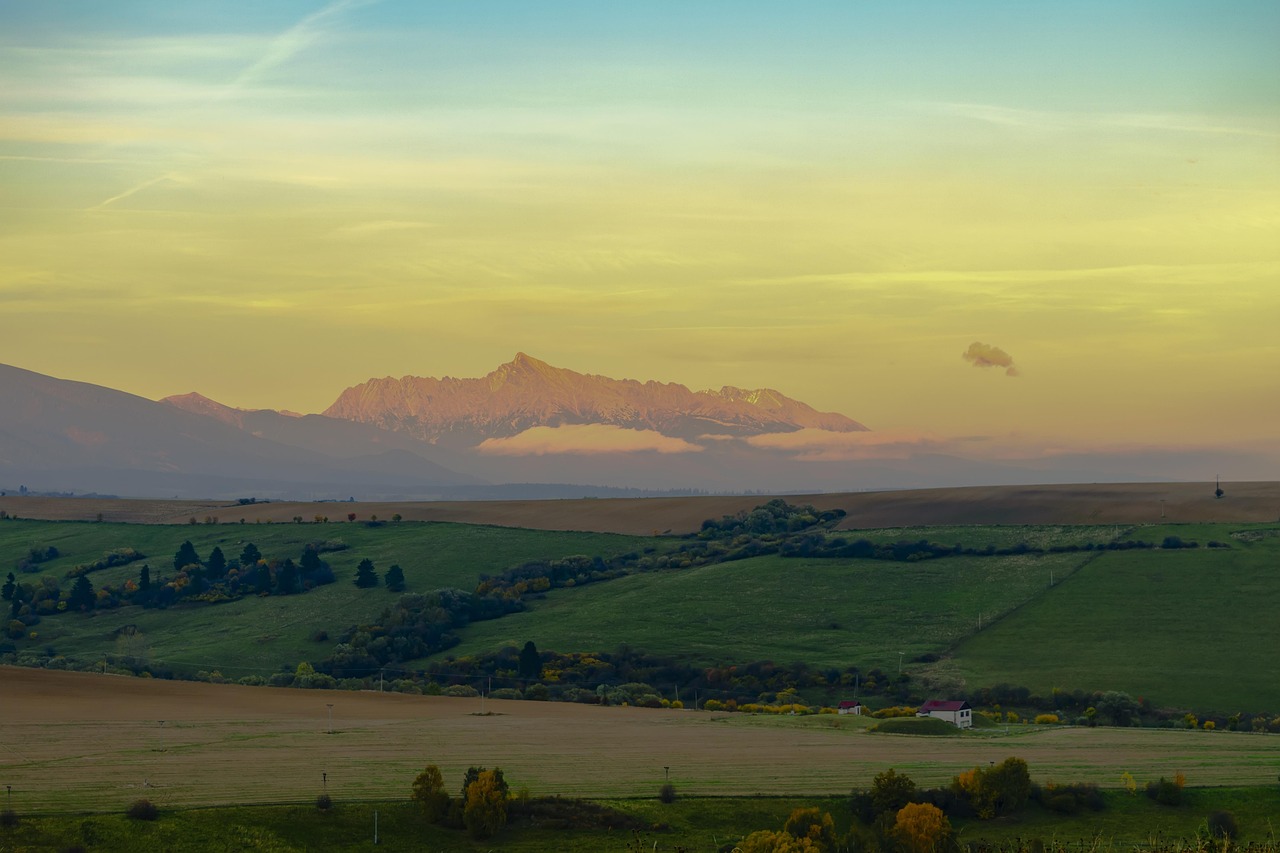
The Tatras are small, but they rise steeply and suddenly above the land: beyond the hills of Podhale a granite wall grows out of the meadows, and from then on it accompanies you on both sides of the border. On the Polish side the air smells of woodsmoke and smoked oscypek, the Górale houses wear steep shingle roofs, and on the Dunajec raftsmen push their wooden boats through the limestone gorge of the Pieniny with long poles. Over in Slovakia, mountain lakes such as Štrbské Pleso lie almost at eye level with the peaks, the Tatra railway rattles through spruce forest, and in the Slovak Paradise you climb iron ladders up through waterfalls. From the sliding door you see mist over the meadows of Ždiar in the morning and the silhouette of Spiš Castle in the evening. The route is short but dense – and it demands planning: tickets, vignettes and clear lines between car park and national park.
Stage-by-stage plan
1Stage 1: Kraków to Zakopane (via Wieliczka) (approx. 115 km)
- The drive
- From Kraków south-east to Wieliczka (around 15 km, city traffic), then via the S7 expressway and the DK47, the “Zakopianka”, through Myślenice, Lubień and Nowy Targ to Zakopane. The S7 is built out far to the south; from Nowy Targ the road becomes two-lane with many villages to pass through. A good 2 hours without stops, considerably more on Fridays, Saturdays and at the start of the holidays.
- Highlights & must-sees
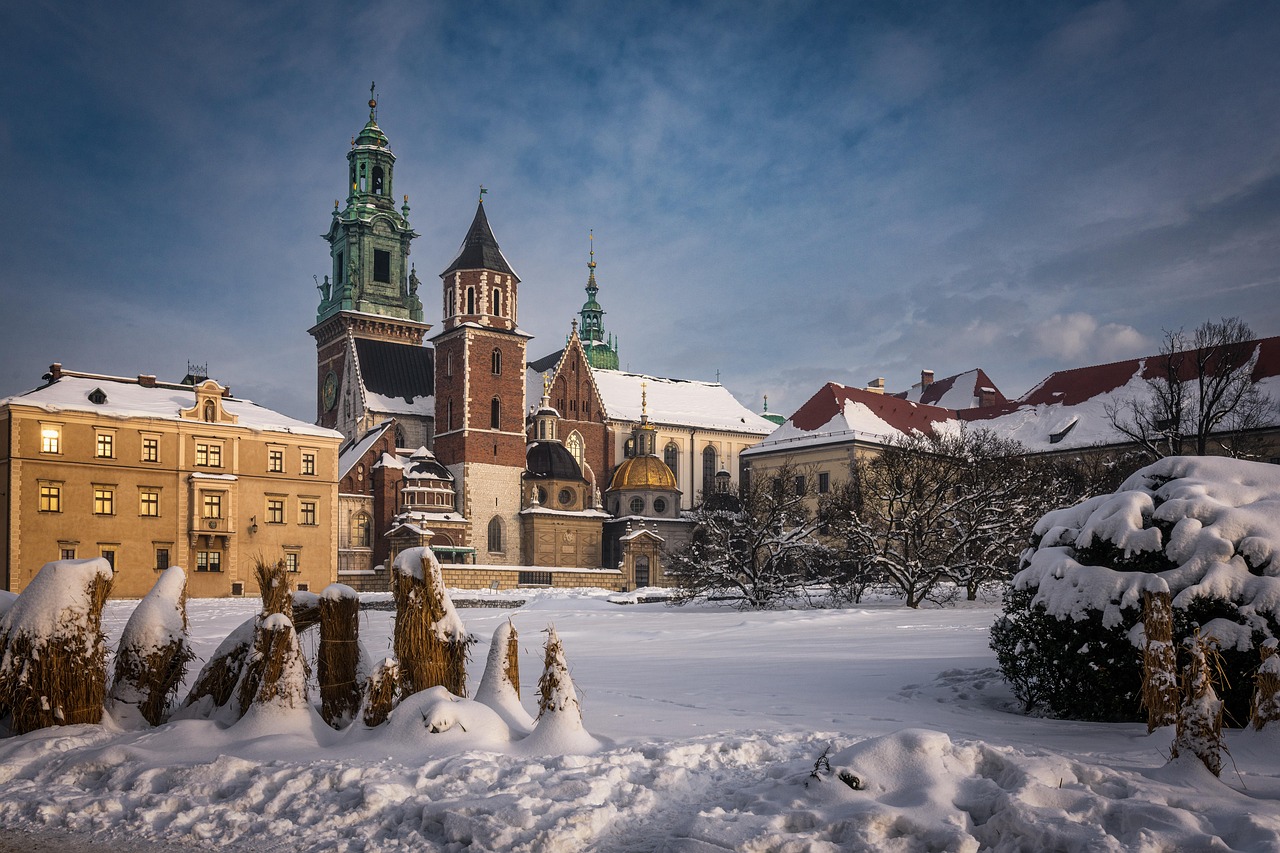
- Kraków before you set off: Wawel Hill with its cathedral, the Rynek Główny with the Cloth Hall and the Jewish quarter of Kazimierz – best reached by tram from the campsite.
- Wieliczka Salt Mine (UNESCO World Heritage): tourist route through chambers, salt lakes and the Chapel of St Kinga, guided tours only; book timed tickets in advance.
- First view of the Tatra range on the approach over the heights between Nowy Targ and Poronin, in clear weather in the morning.
- CampingSpirit overnight tip
-
Official campsite or RV park: In Kraków, Camping Clepardia in the north of the city has electricity, water/waste, toilets and showers and a tram connection; Camping Smok lies in the west and Camping Krakowianka in the south. In Zakopane, Camping Pod Krokwią below the Wielka Krokiew ski jump offers electricity, water/waste and toilets and showers within walking distance of the centre; Camper Park Olimp and Camping Ustup are alternatives. Check season and prices in advance.
Free camping or nature tip (where legal): In Poland, sleeping in your vehicle on public car parks where parking is allowed is not generally prohibited – camping behaviour such as an awning, chairs or levelling jacks is. Kraków and Zakopane have paid parking zones and many prohibition signs; free camping is not a good idea here, use the sites.
- Insider tip for campers
- Kraków has a low-emission zone (Strefa Czystego Transportu) covering most of the city; vehicles with foreign number plates must be registered online in advance at sct.krakow.pl, even if they meet the emissions standard (petrol Euro 4, diesel Euro 6). Non-compliant vehicles can use a paid transitional arrangement until the end of 2028; check details and possible exemptions on the city’s website. In Wieliczka you park in the private car parks around the Daniłowicz Shaft; the centre is cramped. The mine is cool all year round, and the tour begins with a long descent down many stairs.
2Stage 2: Zakopane to Palenica Białczańska (Morskie Oko) and back (approx. 50 km)
- The drive
- Via Poronin and Bukowina Tatrzańska on the road to Łysa Polana as far as the Palenica Białczańska car park, the end point for private vehicles. A winding but well-built mountain road, with queues of traffic from early morning in summer. From the car park, a tarmac road of around 9 km, closed to private traffic, leads to the lake; a good 2 hours on foot each way.
- Highlights & must-sees
- Morskie Oko at just under 1,400 m, the largest lake in the Tatras, with the face of Mięguszowiecki Szczyt and the mountain hut on the shore.
- Czarny Staw pod Rysami: around an hour’s steep climb from Morskie Oko to the higher cirque lake below Rysy.
- Wodogrzmoty Mickiewicza: cascades right beside the path, roughly halfway along.
- CampingSpirit overnight tip
-
Official campsite or RV park: Back to the same site in Zakopane, or move to the Bukowina Tatrzańska and Białka Tatrzańska area, where there are smaller campsites and pitches at guesthouses – ask about facilities and season beforehand.
Free camping or nature tip (where legal): Palenica Białczańska lies in the Tatra National Park (TPN); overnight stays and camping are not allowed there or along the access road. The car park at Polana Głodówka is also a day destination with a panoramic view, not a place to spend the night.
- Insider tip for campers
- Reserve the Palenica Białczańska car park online with the TPN in advance for a specific day; spaces go quickly on summer weekends, and the price varies with season and day of the week. Check on the TPN website when buying whether your motorhome is admitted and at which rate. Without a reservation you are better off taking the bus from Zakopane. Most recently (pilot phase) the horse-drawn carts only run as far as Wodogrzmoty Mickiewicza – check the current status in advance; TPN electric buses operate further towards Włosienica; check the current arrangement with the TPN. An entrance ticket is also required for the trails in the national park.
3Stage 3: Zakopane to Pieniny (Niedzica/Sromowce) (approx. 55 km)
- The drive
- To Nowy Targ, then east via Dębno and Frydman to the Czorsztyn Reservoir and round the south shore to Niedzica; on to Sromowce Wyżne and the raft landing. Quiet minor roads through the Podhale basin with views back to the Tatras, narrow in the villages. A good hour’s driving.
- Highlights & must-sees
- Wooden Church of St Michael in Dębno, one of the wooden churches of southern Lesser Poland on the UNESCO list, painted throughout inside.
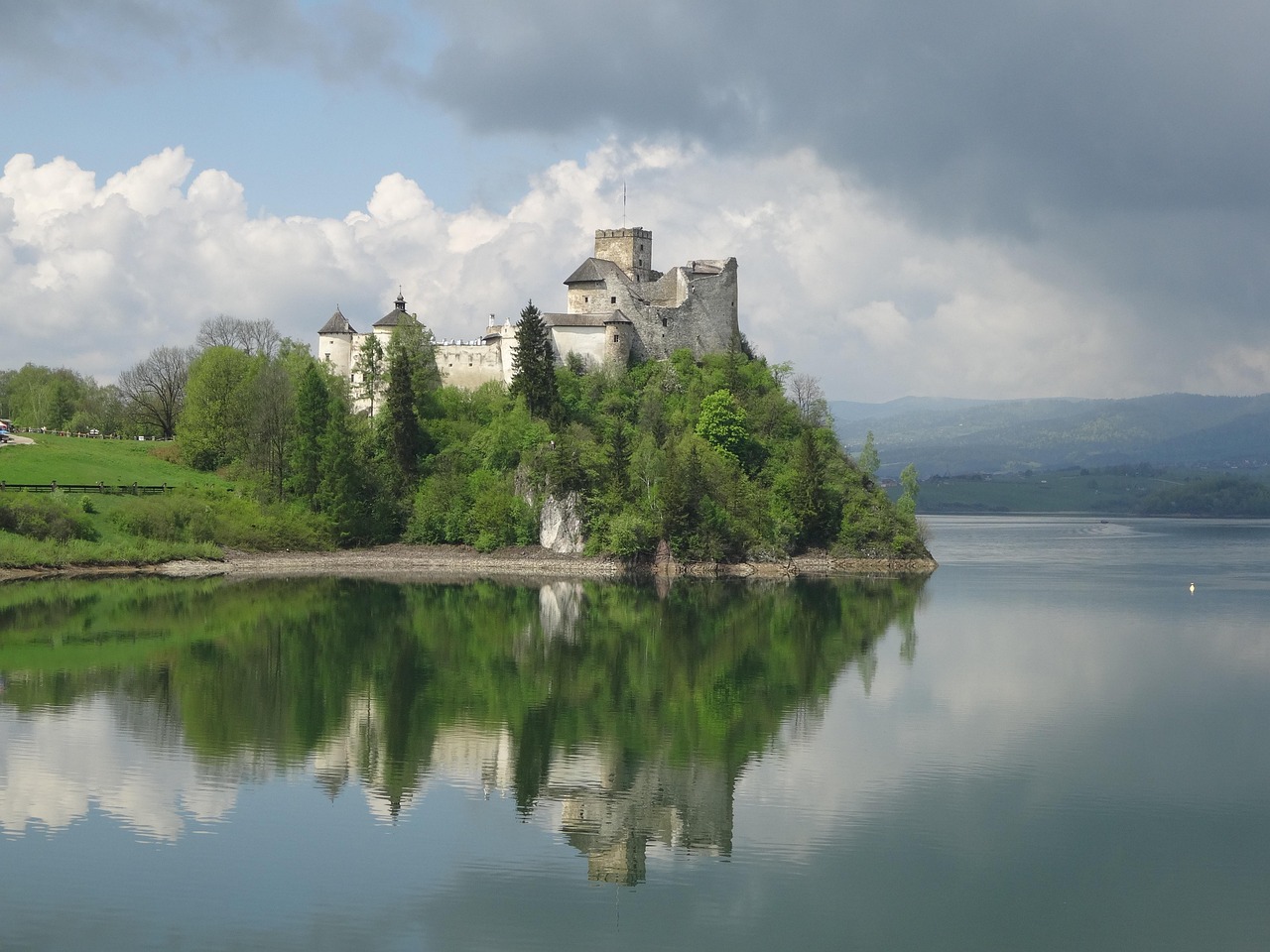
- Niedzica Castle above the Czorsztyn Reservoir, with Czorsztyn ruin opposite – both in view from the dam.
- Dunajec rafting from Sromowce-Kąty through the Pieniny gorge to Szczawnica, around 2 to 3 hours depending on water level; season roughly April to October.
- CampingSpirit overnight tip
-
Official campsite or RV park: Camping Polana Sosny in Niedzica below the dam with electricity, water/waste and toilets and showers; in Sromowce Niżne the field “Przy OSP” lies close to the Dunajec. Opposite on the Slovak side, Autokemping Červený Kláštor and Camping Dunajec offer pitches right by the river.
Free camping or nature tip (where legal): The Pieniny National Park (PPN) on the Polish side and PIENAP on the Slovak side prohibit camping outside designated sites. At the reservoir the lakeside car parks charge during the day; overnight stays there are frowned upon.
- Insider tip for campers
- The rafts set off at Sromowce-Kąty; you park in the raftsmen’s car park there and at the end take the shuttle bus back from Szczawnica – sort out the return trip when buying your ticket. Trips are cancelled when the river is in flood. The cycle path along the Dunajec between Sromowce and Szczawnica is a good alternative for the way back.
4Stage 4: Niedzica to Tatranská Lomnica (via Ždiar) (approx. 65 km)
- The drive
- Via Łapsze Niżne and the Polish Spiš borderland to Jurgów, across the small Podspády border crossing into Slovakia and on to Ždiar; then along the foot of the Belianske Tatry via Tatranská Kotlina to Tatranská Lomnica. Alternatively via Bukowina and the Łysa Polana crossing. Narrow country roads, with gradients and bends around Ždiar; watch for signs on weight and length restrictions. Around 1.5 hours’ driving.
- Highlights & must-sees
- Ždiar: Górale village with painted wooden houses, a view of the limestone spikes of the Belianske Tatry, and a hike into Monkova dolina.
- Belianska jaskyňa near Tatranská Kotlina, the only cave in the High Tatras open to visitors, guided tours only.
- Tatranská Lomnica: cable car to Skalnaté pleso and on to Lomnický štít at around 2,630 m; secure the limited summit tickets online in advance.
- CampingSpirit overnight tip
-
Official campsite or RV park: Kemp Tatranec on the edge of Tatranská Lomnica, RIJOCamping Vysoké Tatry in Stará Lesná and Leharo Camping below the Tatra resorts, all with electricity and toilets and showers. Book in July, August and on Slovak public holidays.
Free camping or nature tip (where legal): Ždiar and the Tatra resorts lie in or on the edge of the Tatra National Park (TANAP); camping outside designated sites is prohibited in the national park. Trailhead car parks charge a fee and are intended for day use.
- Insider tip for campers
- Buy the Slovak e-vignette before crossing the border if you will be using the D1 in the following days. Fuel is usually more expensive in Slovakia than in Poland – fill up before the border in Nowy Targ or Łapsze. Tatranská Lomnica has a station on the Tatra Electric Railway (TEŽ); the camper can stay put.
5Stage 5: Tatranská Lomnica to Liptovský Mikuláš (via Štrbské Pleso) (approx. 70 km)
- The drive
- On the Cesta Slobody, the Tatra main road along the foot of the mountains, via Starý Smokovec and Tatranská Polianka to Štrbské Pleso; then down to Štrba and west on the D1 motorway (e-vignette) to Liptovský Mikuláš. The mountain road is well built but busy in summer, with many pedestrians in the resorts. Around 1.5 hours’ driving.
- Highlights & must-sees
- Hrebienok from Starý Smokovec by funicular, then on foot to the Studenovodské vodopády.
- Štrbské Pleso: mountain lake at around 1,350 m with a circular path and views of the ski jumps and Kriváň.
- Hike from Štrbské Pleso to Popradské pleso and the Symbolic Cemetery for mountain victims, around 1 hour each way.
- CampingSpirit overnight tip
-
Official campsite or RV park: Mara Camping in Liptovský Trnovec on the north shore of Liptovská Mara with electricity, water/waste and toilets and showers; Camping Marina Liptov near Bobrovník at the western end of the lake. If you would rather stay closer to the Tatras, use Autocamping Tatranská Štrba below Štrbské Pleso.
Free camping or nature tip (where legal): In Štrbské Pleso the car parks charge a fee and are not intended for overnight stays; the resort lies within TANAP. On the shore of Liptovská Mara, campers park in car parks outside the season; check for local prohibition signs there, as camping behaviour is not tolerated.
- Insider tip for campers
- The car parks in Štrbské Pleso are full from late morning on summer days – arrive early or take the Tatra Electric Railway from Tatranská Lomnica. There are no toll booths on the D1; the e-vignette is checked by number plate. In Liptovský Mikuláš you will find large supermarkets with car parks without height barriers.
6Stage 6: Liptovský Mikuláš to Slovak Paradise (Hrabušice/Podlesok) (approx. 80 km)
- The drive
- East on the D1 along the Tatras to Poprad, then south via Spišský Štvrtok or Vydrník to Hrabušice and on a narrow local road to the hamlet of Podlesok on the edge of the national park. Good motorway, narrow village road at the end. A good hour’s driving.
- Highlights & must-sees
- Demänovská dolina south of Liptovský Mikuláš before you set off: Demänovská jaskyňa slobody and the Demänovská ľadová jaskyňa ice cave, guided tours only.
- Suchá Belá gorge from Podlesok: ladders, walkways and waterfalls, a one-way trail that can only be walked uphill, returning via Kláštorisko.
- Prielom Hornádu: the Hornád gorge with chains and walkways above the water, from Podlesok or Čingov.
- CampingSpirit overnight tip
-
Official campsite or RV park: Autocamping Podlesok right at the entrance to Suchá Belá with electricity, water/waste and toilets and showers; on the north side of the national park near Čingov there is Autocamp Čingov. Arrive early in July and August.
Free camping or nature tip (where legal): The Slovak Paradise is a national park; camping outside designated sites is prohibited. The large car park in Podlesok charges a fee and is intended for day visitors.
- Insider tip for campers
- Some gorge trails are closed in the winter half of the year, the ladder gorges are one-way and can only be walked uphill, and individual trails may stay closed for longer after landslides. Follow the current notices from the national park administration. Sturdy footwear with a good tread is a must, and the ladders are slippery after rain. Buy food in Poprad or Spišská Nová Ves; there is little available in Podlesok.
7Stage 7: Podlesok to Spišský hrad (via Levoča) (approx. 45 km)
- The drive
- Via Hrabušice and Spišská Nová Ves to Levoča, then on the road towards Prešov to Spišské Podhradie below Spiš Castle. Well-built country roads through the hills of Spiš; the old town of Levoča is cramped. Just under an hour’s driving.
- Highlights & must-sees
- Levoča (UNESCO World Heritage): market square with town hall and the Church of St James with the Gothic wooden altar by Master Paul, the tallest of its kind.
- Spišský hrad: one of the largest castle complexes in Central Europe on a travertine hill, with a walk through the ruins and views as far as the Tatras.
- Spišská Kapitula with its cathedral, and the Church of the Holy Spirit in Žehra with medieval wall paintings.
- CampingSpirit overnight tip
-
Official campsite or RV park: Autocamping Levočská dolina in the valley north of Levoča with electricity and toilets and showers; check the season in advance. For the last night it is the obvious base for Levoča and Spiš Castle.
Free camping or nature tip (where legal): Outside the national parks, sleeping in your vehicle on public car parks in Slovakia is not expressly prohibited unless local signs forbid it. It is not intended at the castle car park or in Levoča – plan on the campsite.
- Insider tip for campers
- In Levoča, park outside the town walls and walk in. The access road to the upper castle car park is narrow and steep; with a large vehicle, park below in Spišské Podhradie or on the approach near Žehra. Photographed in the evening from the road to Žehra, the castle stands backlit above the fields.
Camping practice & local rules
Wild camping & overnight parking
- Poland: there is no explicit nationwide ban on sleeping in a vehicle on a legal car park; camping with an awning, table and levelling jacks outside sites is prohibited, however. In the national parks (Tatra National Park TPN, Pieniny National Park PPN), camping and overnight stays outside designated places are prohibited. Driving motor vehicles off public roads in forests is prohibited; the State Forests’ “Zanocuj w lesie” programme applies only to tents or hammocks, not to vehicles.
- Slovakia: in the Tatra National Park (TANAP), in PIENAP and in the Slovak Paradise National Park, camping outside designated sites is prohibited; checks by the national park rangers are frequent, and the administration reports that a large share of violations are committed by visitors. Outside protected areas, sleeping in a vehicle is not prohibited in principle, but municipalities can forbid it with signs.
- Because of the dense protected areas, free camping makes little sense on this route; you will find campsites and pitches at guesthouses and farms via park4night, Campercontact and the tourist boards’ websites. Get private agreements confirmed by message.
Waste disposal & supplies
- Water and waste facilities are available at the campsites; public service points are rare in both countries. Empty grey water and cassettes only at stations, never into streams or drains – in karst areas such as the Slovak Paradise, dirt goes straight into the groundwater.
- Tap water is generally drinkable in Kraków, Zakopane and the Slovak Tatra resorts; at fountains and springs, look out for signs.
- Gas: German exchange cylinders are not exchanged in Poland or Slovakia, and the connections of the local cylinders do not fit. Autogas (LPG) is available at a great many filling stations in Poland, less often in Slovakia; take an adapter set for refillable cylinders and check the connection on site.
Vehicle size & traffic rules
- Poland – tolls: vehicles up to 3.5 t pay only on sections of the A1, A2 and A4 motorways (for example A4 Katowice–Kraków), at toll booths or by app. For vehicles over 3.5 t, the electronic e-TOLL system applies on tolled motorways, expressways and national roads: register before entering the country and pay via app, on-board unit or approved device. For combinations, only the permissible gross weight of the towing vehicle counts: cars and vans up to 3.5 t towing a caravan are exempt from e-TOLL, while motorhomes over 3.5 t still pay. The S7 and the Zakopianka are toll-free for vehicles up to 3.5 t.
- Slovakia – tolls: motorways and many expressways, including the D1 in Liptov and around Poprad, may only be used by vehicles up to 3.5 t with an e-vignette (eznamka.sk, linked to the number plate). Check current prices on eznamka.sk; vignettes are available for 1, 10 and 30 days, plus an annual vignette valid for 365 days from a date of your choice. Vehicles over 3.5 t pay distance-based tolls in the MYTO system with an on-board unit.
- Speed limits Poland: 50 km/h in built-up areas (around the clock), 90 km/h outside built-up areas, 100 or 120 km/h on expressways, 140 km/h on motorways for vehicles up to 3.5 t. Motorhomes over 3.5 t and vehicles with trailers are limited to 80 km/h on motorways and expressways and 70 km/h on other roads outside built-up areas. Dipped headlights are compulsory during the day all year round, and the blood alcohol limit is 0.2.
- Speed limits Slovakia: 50 km/h in built-up areas, 90 km/h outside built-up areas, 130 km/h on motorways for vehicles up to 3.5 t; according to ADAC, motorhomes over 3.5 t and vehicles with trailers may drive no faster than 90 km/h outside built-up areas and on motorways. Daytime lights are compulsory, and the blood alcohol limit is 0.0. In both countries, using a phone while driving is only allowed hands-free.
- Low-emission zones and parking: Kraków has a low-emission zone (Strefa Czystego Transportu) covering most of the city; foreign vehicles must be registered in advance at sct.krakow.pl. Zakopane, Kraków and the Slovak Tatra resorts have paid parking zones, often paid by app or machine. Winter equipment: in Slovakia it is compulsory in wintry road conditions, and generally from 15 November to 31 March for vehicles over 3.5 t; in Poland there is no general requirement; in the Tatras it can snow as early as October. Carry your ID card; the border lies within the Schengen area.
CampingSpirit packing & preparation checklist
- Printed or saved confirmations: Palenica Białczańska parking ticket, Wieliczka time slot, Lomnický štít cable car and Slovak e-vignette – much of this is limited in number and checked by number plate or QR code.
- A warm jacket for the salt mine and the mountain lakes: it is cool underground, and at Morskie Oko and Štrbské Pleso it cools down quickly in the evening.
- Hiking boots with grippy soles and gloves for the ladders and chains in Suchá Belá and Prielom Hornádu.
- Złoty cash in small notes for the rafting trip, private car parks, oscypek stalls and toilets on hiking trails – cards are not accepted everywhere.
- An LPG adapter set for refillable cylinders, because Polish autogas stations are the cheapest source of gas on the route.
- Levelling ramps for the often sloping meadow pitches in Zakopane, the Pieniny and at Podlesok.
As of 2026-09. Closures, fees and booking rules change: check official sources before you go.