




In-depth guide · CampingSpirit
From the Sacra di San Michele via Susa, Fenestrelle and the moraine lakes of the Canavese to the Sacred Mountains of Oropa and Varallo and on to the foot of Monte Rosa: around 650 km of northern Piedmont away from the well-known wine hills and lakeshores.
The spirit of the route
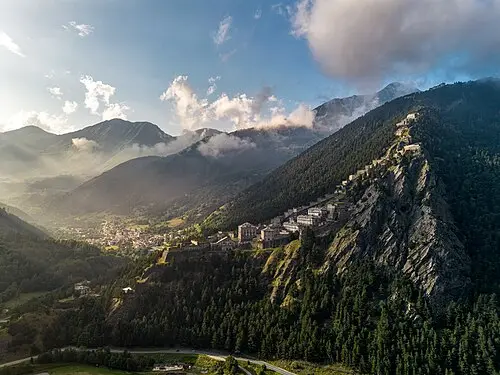
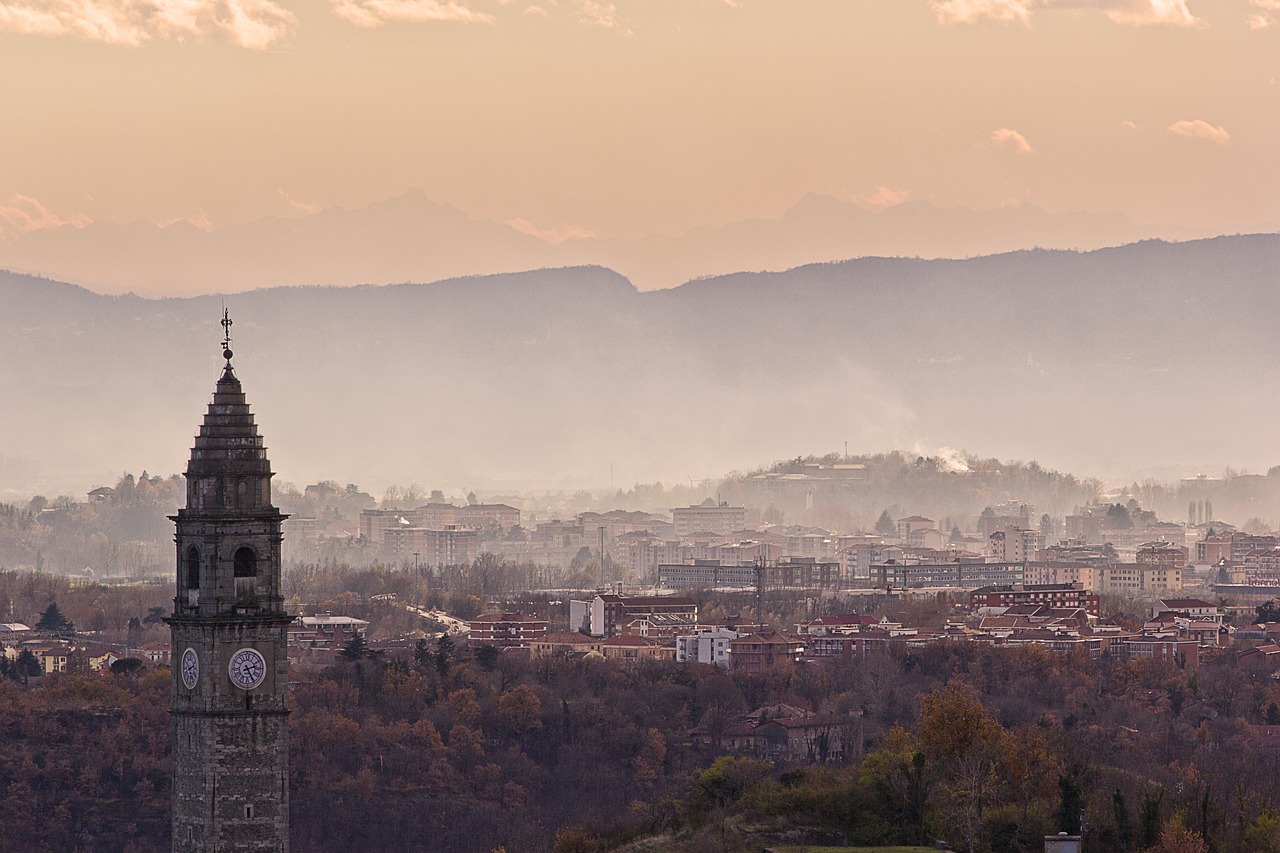
Northern Piedmont is the land between plain and glacier, and you feel that transition on every stage. In the morning the haze rises from the rice fields and moraine lakes, at midday you stand beneath fortress walls built to protect a kingdom against France, and in the evening, at an area di sosta by a pilgrimage site, all you hear are the bells and the stream. From the sliding door you look out at the abbey of the Sacra high on its rocky spur, at the dead-straight Serra moraine above Lago di Viverone and at the east face of Monte Rosa at the head of the valley in Alagna. In between lie textile villages with brick factory chimneys, a wool manufacturer’s high road through rhododendrons and beech woods, Roman arches and Walser houses of larch wood. This route is quieter than the Langhe and the great lakes – with municipalities that still welcome motorhomes, as long as you behave like a guest.
Stage-by-stage plan
1Stage 1: Turin to Susa (via Sacra di San Michele and Avigliana) (approx. 80 km)
- The drive
- Turin only as a starting point: take the Tangenziale (with toll barriers along the way) towards Fréjus onto the A32, or run parallel up the valley on the SS25 state road. From Avigliana or Sant’Ambrogio a narrow, winding mountain road climbs Monte Pirchiriano to the Sacra; in the upper section oncoming traffic can only pass at passing places. Then back to the Avigliana lakes and along the SS25 through the broad lower Susa Valley, shaped by industry and the motorway, to Susa. Pure driving time a good 2 hours.
- Highlights & must-sees
- Sacra di San Michele: the abbey at around 960 m, the symbol of Piedmont, with the “Scalone dei Morti” and the Romanesque Zodiac Portal; from the forecourt the view takes in the whole Susa Valley as far as the Po plain.
- Lago Grande and Lago Piccolo in the Avigliana Lakes Natural Park: lakeside paths and reed beds, with Avigliana’s old town and Piazza Conte Rosso above.
- Footpath from Sant’Ambrogio up to the Sacra (an old mule track, around 1.5–2 hours uphill) as an alternative to the mountain road.
- CampingSpirit overnight tip
-
Official campsite or RV park: In Susa the small municipal area di sosta camper lies on the edge of town with fresh water and waste disposal (only a few spaces; check electricity and fees in advance). If you would rather stay by the water: Avigliana has an Area Camper near the lakes with water and disposal as well as a campsite by the lakes; Chiusa di San Michele also has a small aire with water and disposal.
Free camping or nature tip (where legal): Italy allows parking with an overnight stay anywhere parking is not prohibited (Art. 185 Codice della Strada) – but not camping behaviour. The car park below the Sacra and the lakeside car parks in Avigliana are fine during the day; at night the designated aires are the better choice. Some municipalities in the Susa Valley have put up their own no-motorhome signs, and these apply.
- Insider tip for campers
- Central Turin has a camera-controlled ZTL – do not even think of driving in with a motorhome. For a city visit there is a camper car park on Via Caio Mario in the south with a public transport connection (check its status in advance). The mountain road to the Sacra is unpleasant for large motorhomes and caravan outfits; if your vehicle is over 7 m long, leave it in Avigliana or Sant’Ambrogio. Before taking the A32, bear in mind that it is one of the most expensive motorways in Italy; for the short stretch to Susa the SS25 is enough.
2Stage 2: Susa to Fenestrelle (via Novalesa, Exilles and Sestriere) (approx. 90 km)
- The drive
- In the morning, the short detour along the Mont Cenis road and a minor road up to Novalesa (around 9 km each way) and back. Then on the SS24 through the narrowing upper Valle di Susa to Exilles, on via Oulx and Cesana Torinese and up in hairpins to the Colle del Sestriere (around 2,035 m), then on the SS23 through the Val Chisone via Pragelato to Fenestrelle. A well-built pass road lined with the 2006 Olympic buildings; just under 2.5 hours’ driving.
- Highlights & must-sees
- Susa before you leave: the Arch of Augustus from 9/8 BC, the small Roman amphitheatre and the Porta Savoia with the cathedral of San Giusto.
- Novalesa Abbey, founded in the 8th century and still home to Benedictine monks, with the frescoed chapel of Sant’Eldrado.
- Forte di Exilles: the barrier fortress on the rock bar above the Dora, in its present form from the 19th century, with a museum on the Alpine troops (seasonal opening).
- CampingSpirit overnight tip
-
Official campsite or RV park: In Fenestrelle there is the camper area by the Casermette on the edge of the village with electricity and disposal, plus the Serre Marie campsite a few hundred metres further on. On the way, Camping Gran Bosco near Salbertrand on the edge of the natural park of the same name is worth it if your day ends in the Valle di Susa.
Free camping or nature tip (where legal): The valley floors of the upper Valle di Susa and the Val Chisone are narrow, and lay-bys on the pass road are passing places, not somewhere to spend the night. Tents and camping are prohibited in the Gran Bosco di Salbertrand Natural Park and in the Orsiera-Rocciavrè Park. At Sestriere itself, motorhomes are tolerated on the large ski car parks during the day; at night, better head down into the valley.
- Insider tip for campers
- Do not get the idea of taking a shortcut from Susa straight to Fenestrelle over the Colle delle Finestre: the upper roughly 8 km of the road are gravel, narrow and unsuitable for motorhomes, and it is also closed in the winter half of the year. The same goes for the Assietta ridge road, which in summer is additionally closed to motor vehicles on set days. Oulx and Cesana have supermarkets and fuel stations – prices are higher at Sestriere.
3Stage 3: Fenestrelle to Ivrea (via Pinerolo) (approx. 135 km)
- The drive
- Down the Val Chisone on the SS23 via Perosa Argentina to Pinerolo (around 35 km, winding but quick). Then the connecting day: on the expressway to Turin, round the city on the northern Tangenziale and on the A5 towards Aosta as far as Ivrea. With the Pinerolo stop it is half a day’s drive; pure driving time just under 2 hours.
- Highlights & must-sees
- Fortezza di Fenestrelle in the morning: the largest fortification system in the Alps climbs around 3 km up the slope, linked by a covered staircase of about 4,000 steps. Guided tours only, of varying length; sturdy shoes needed.
- Pinerolo: the old town around San Donato Cathedral and the hill of San Maurizio, plus the Cavalry Museum in the old riding school.
- Ivrea in the evening: the Castello with its red corner towers above the Dora Baltea and a short stroll through the old town.
- CampingSpirit overnight tip
-
Official campsite or RV park: Ivrea has the Area Camper La Dora by the river, with around ten spaces, water and disposal, within walking distance of the old town (check status and fee in advance). Pinerolo has an Area Camper with water and disposal for a stopover.
Free camping or nature tip (where legal): In greater Turin and the industrial suburbs, free camping is neither pleasant nor advisable; shopping centre car parks are not places to spend the night. Stick to the municipal aires on this day.
- Insider tip for campers
- The Tangenziale has toll stations (barriers) where you pay in cash, by card or with Telepass; the A5 is also tolled. Ivrea’s old town is a ZTL – walk in from the aire. The Olivetti buildings on Corso Jervis, the reason for Ivrea’s UNESCO listing as an “Industrial City of the 20th Century”, can be seen on a waymarked circular walk; that too is best done on foot.
4Stage 4: Ivrea to Lago di Viverone (via Lago di Candia and Castello di Masino) (approx. 40 km)
- The drive
- A short day through the Ivrea morainic amphitheatre: south on country roads to Lago di Candia, then over hills and vineyards to Caravino and the Castello di Masino, and along the foot of the Serra to Lago di Viverone. Narrow but easily driven provincial roads through villages, around an hour’s driving.
- Highlights & must-sees
- Lago di Candia: a small, shallow moraine lake in a natural park with reeds, water lilies and birdwatching, and a path around the shore.
- Castello di Masino (FAI): ancestral seat of the Counts of Valperga, with a park, one of the largest hedge mazes in Italy and a carriage museum; check opening days in advance.
- Serra di Ivrea: the long, straight moraine ridge above Lago di Viverone, at its most beautiful in the evening light seen from the lakeshore.
- CampingSpirit overnight tip
-
Official campsite or RV park: Lago di Viverone has several campsites on or near the shore, such as Camping La Rocca in Viverone and the larger Camping Internazionale del Sole, plus others near Anzasco/Piverone. Electricity, sanitary facilities and water/disposal are standard; many have seasonal pitches and open only from spring to autumn. Marinas and an area in Piverone also offer motorhome spaces.
Free camping or nature tip (where legal): On the Viverone lakeshore, many car parks have municipal restrictions on motorhomes, plus parking charges in summer. The wetlands at Lago di Candia are protected – park there during the day only.
- Insider tip for campers
- Lago di Viverone is home to one of the Piedmont pile-dwelling sites of the UNESCO World Heritage Site “Prehistoric Pile Dwellings around the Alps”; there is nothing to see under the water, but information boards on the shore explain the site. For Masino, do not drive into the narrow village centre of Caravino; head for the visitor car park at the castle instead.
5Stage 5: Lago di Viverone to Oropa (via Candelo, Biella and Valle Cervo) (approx. 85 km)
- The drive
- Over the Serra to Candelo, on to Biella and along the provincial road through the Valle Cervo via Andorno Micca and Campiglia Cervo to Rosazza and Piedicavallo. The valley gets narrow higher up, with roads squeezing through villages between stone houses. Back to Biella and up the well-built road to the pilgrimage site of Oropa at just under 1,200 m. A good 2.5 hours’ driving.
- Highlights & must-sees
- Ricetto di Candelo: a medieval fortified storage village with around 200 two-storey storehouses behind walls and cobbled lanes, one of the best preserved of its kind.
- Rosazza in the Valle Cervo: a mountain village that Senator Federico Rosazza had rebuilt in the 19th century in an idiosyncratic, symbol-laden architecture; plus the mountain sanctuary of San Giovanni d’Andorno.
- Santuario di Oropa with the Black Madonna, the large cloister courtyard and the Sacro Monte, part of the Sacri Monti UNESCO World Heritage Site.
- CampingSpirit overnight tip
-
Official campsite or RV park: Oropa has an Area Camper by the Santuario with electricity, water and disposal, for a fee, with buses and footpaths to the sanctuary. At the Ricetto di Candelo there is a basic camper area without electricity, good for a lunch break.
Free camping or nature tip (where legal): In the Biellese, motorhomes stand undisturbed in many village car parks as long as there is no prohibition sign and you are only parking. In the upper Valle Cervo the parking areas are small and meant for walkers – do not stay overnight there.
- Insider tip for campers
- Do not take the direct mountain road from the Valle Cervo via the Galleria Rosazza to Oropa: it is narrow, and the tunnel is tight and low, unsuitable for motorhomes. Avoid central Biella with a motorhome; you can reach the upper town, Biella Piazzo, by funicular. In Oropa the nights are cool even in summer, and fog often rises in the afternoon.
6Stage 6: Oropa to Varallo (via the Panoramica Zegna) (approx. 105 km)
- The drive
- Down to Biella and through the textile valleys around Valle Mosso to Trivero (now the municipality of Valdilana). This is where the Panoramica Zegna (SP232) begins: a high road built from 1938 on the initiative of wool manufacturer Ermenegildo Zegna, which sweeps in wide bends across the mountainsides to Bielmonte (around 1,500 m). Back on the same road, then via Pray and Crevacuore into the Sesia valley and up the valley via Borgosesia to Varallo. The Panoramica is easy to drive, with winding minor roads on the crossing to the Valsesia; around 3 hours.
- Highlights & must-sees
- Conca dei Rododendri on the Panoramica Zegna, a sea of rhododendron and azalea blossom in May and June.
- Viewpoints on the Panoramica looking out over the Po plain to the Apennines and north to Monte Rosa.
- Casa Zegna in Trivero, the family’s archive and exhibition house, as an insight into the history of the Biellese wool industry.
- CampingSpirit overnight tip
-
Official campsite or RV park: Varallo has an Area Sosta Camper on the edge of town with water, within walking distance of the valley station of the cable car to the Sacro Monte, plus Campeggio Valsesia a few kilometres up the valley. Check facilities and opening in advance.
Free camping or nature tip (where legal): Bielmonte has a camper area on the large ski car parks; it is usually quiet in summer, but check the facilities and current rules in the apps beforehand. The Oasi Zegna is an open nature area, not a national park – fire and camping bans in the woods still apply.
- Insider tip for campers
- At weekends the Panoramica is a meeting point for motorcyclists; on weekdays you will have it almost to yourself. In winter it is partly snow-covered, and sections are occasionally closed for works or rockfalls – check the current status with the Province of Biella or the Oasi Zegna. In the Sesia valley, fuel is cheaper in Borgosesia than further up.
7Stage 7: Varallo to Alagna Valsesia (approx. 36 km)
- The drive
- On the SP299 up the valley along the Sesia via Balmuccia, Scopa, Campertogno and Riva Valdobbia to Alagna at the foot of Monte Rosa. A steady climb, well built, narrow in some villages; just under an hour.
- Highlights & must-sees
- Sacro Monte di Varallo in the morning: the oldest of the Sacred Mountains, founded at the end of the 15th century, with over 40 chapels and life-size figure scenes; by cable car or on foot from the town.
- Santa Maria delle Grazie in Varallo with the great fresco wall by Gaudenzio Ferrari.
- The Walser village of Alagna: wooden houses with galleries, the Walser Museum in the hamlet of Pedemonte and the cable cars towards the Monte Rosa massif.
- CampingSpirit overnight tip
-
Official campsite or RV park: Campeggio Alagna lies on the edge of the village by the Sesia, with sanitary facilities and electricity; in Riva Valdobbia, now part of Alagna, there is an Area Camper with electricity and water/disposal. Further down near Campertogno there are small campsites. In high season, arrive early.
Free camping or nature tip (where legal): Around Alagna and at the cable car valley stations, overnight stays in the car parks are not intended; use the area in Riva Valdobbia. The Valsesia is rafting country – riverside land along the Sesia is often private property of the operators.
- Insider tip for campers
- The SP299 is the only road into the upper Valsesia and has been closed several times after storms and landslides; check road conditions before you set off. The road ends just beyond Alagna – higher up you can only go by cable car or on foot. At over 3,000 m at the top stations it is wintry even in high summer.
8Stage 8: Alagna Valsesia to Orta San Giulio (approx. 75 km)
- The drive
- The SP299 back to Varallo, then via Borgosesia to Valduggia and over the low Colle della Cremosina to Lake Orta, and from Gozzano along the east shore to Orta San Giulio. The alternative link via Civiasco and the Colle della Colma is shorter but narrower and twistier. Around 1.5 hours.
- Highlights & must-sees
- A short stop in Varallo if the Sacro Monte got too little time the day before.
- Isola San Giulio, a few minutes by boat across from Orta.
- The Sacro Monte di Orta above the town, rounding off this route’s series of Sacred Mountains.
- CampingSpirit overnight tip
-
Official campsite or RV park: Orta San Giulio has an area camper on the edge of town as well as Camping Cusio; more campsites lie on the east shore near Pettenasco. You will find more about the lake in the CampingSpirit guide to Lake Maggiore, Orta and the Ossola.
Free camping or nature tip (where legal): On Lake Orta the shores are largely built up and the car parks are pay-and-display; free camping is not a realistic option here.
- Insider tip for campers
- The centre of Orta is closed to traffic; park in the car parks at the top of the access road and walk the few hundred metres down. For the journey home you can reach the A26 at Borgomanero or Gravellona Toce.
Camping practice & local rules
Wild camping & overnight parking
- The legal basis is Art. 185 Codice della Strada: when parked, a motorhome counts as a vehicle and may stand, including overnight, anywhere parking is allowed. Anything that extends beyond the vehicle or connects it to the ground is prohibited: awning, chairs, stabiliser legs, levelling ramps, waste water.
- Municipalities may exclude motorhomes from certain areas by ordinance; in Piedmont this happens mainly on lakeshores (Viverone, Orta) and at walkers’ car parks. Signs showing a crossed-out motorhome are binding, and fines are collected from foreign number plates too.
- In the natural parks along the route (Avigliana Lakes, Gran Bosco di Salbertrand, Orsiera-Rocciavrè, Lago di Candia, Alta Valsesia), tents, camping and open fires are prohibited. In dry spells Piedmont declares maximum forest fire danger – barbecues near woodland are then banned too.
- The network of municipal “aree di sosta” is dense and often inexpensive in northern Piedmont; pilgrimage sites such as Oropa and Varallo have traditionally catered for coaches and motorhomes. Up-to-date information on CamperOnline, park4night and Campercontact.
Waste disposal & supplies
- Water and disposal (“camper service”, “carico e scarico”) are available at most areas; some service points work with coins or tokens, which you can get at the bar or the town hall.
- Empty grey water and cassettes only at service points; small mountain aires often have water only – in that case dispose at the next site down in the valley.
- Drinking water from public fountains is usually good in the mountain valleys, but only take it where marked “acqua potabile”.
- Gas: foreign exchange cylinders are not swapped; refillable cylinders and gas tanks can be filled at LPG (GPL) stations with the Italian adapter. Around Turin, Biella and Borgosesia GPL stations are common, in the high valleys rare.
Vehicle size & traffic rules
- Speed limits: motorhomes up to 3.5 t 90 km/h outside built-up areas, 110 on expressways, 130 on motorways; over 3.5 t 80 and 100 km/h respectively; caravan outfits 70 outside built-up areas and 80 on the motorway. Dipped headlights outside built-up areas, also during the day.
- Tolls: the A32 Turin–Fréjus, A5 Turin–Aosta, A4 and A26 as well as the toll stations on the Turin Tangenziale are tolled; the class depends on the number of axles and the height at the front axle (up to 1.30 m class A, otherwise usually B). Payment in cash, by card or with Telepass or an EU toll box.
- ZTL: Turin, Ivrea, Biella, Pinerolo, Susa and Orta have restricted traffic centres, some with cameras; fines arrive by post months later. In the winter half of the year, Turin and other municipalities in the Po plain also restrict older diesel vehicles depending on Euro standard and smog level – the rules change frequently, so check the current status with the Piedmont Region.
- Winter equipment (winter tyres or chains on board) is compulsory on many roads from 15 November to 15 April, and practically everywhere in the Susa Valley, at Sestriere and in the Valsesia. Loads projecting beyond a rear carrier need the red-and-white 50 × 50 cm warning panel.
- Blood alcohol limit 0.5, 0.0 for new drivers and professional drivers; phone only with a hands-free system.
CampingSpirit packing & preparation checklist
- Sturdy walking shoes and a head torch: the guided tour of the Fenestrelle fortress takes you up thousands of steps in dimly lit passages.
- Cash in coins and small change for token service points and small municipal aires without card readers.
- Italian GPL adapter, because in the high valleys the nearest gas station is a long way off.
- Binoculars for the birdlife at Lago di Candia and the glaciers above Alagna.
- Warm jacket and rain gear: Oropa, Bielmonte and Alagna are high up, and fog and thunderstorms come in quickly.
- A printed list of ZTL boundaries or a navigation app with ZTL warnings for Turin, Ivrea and Biella.
As of 2026-10. Closures, fees and booking rules change: check official sources before you go.