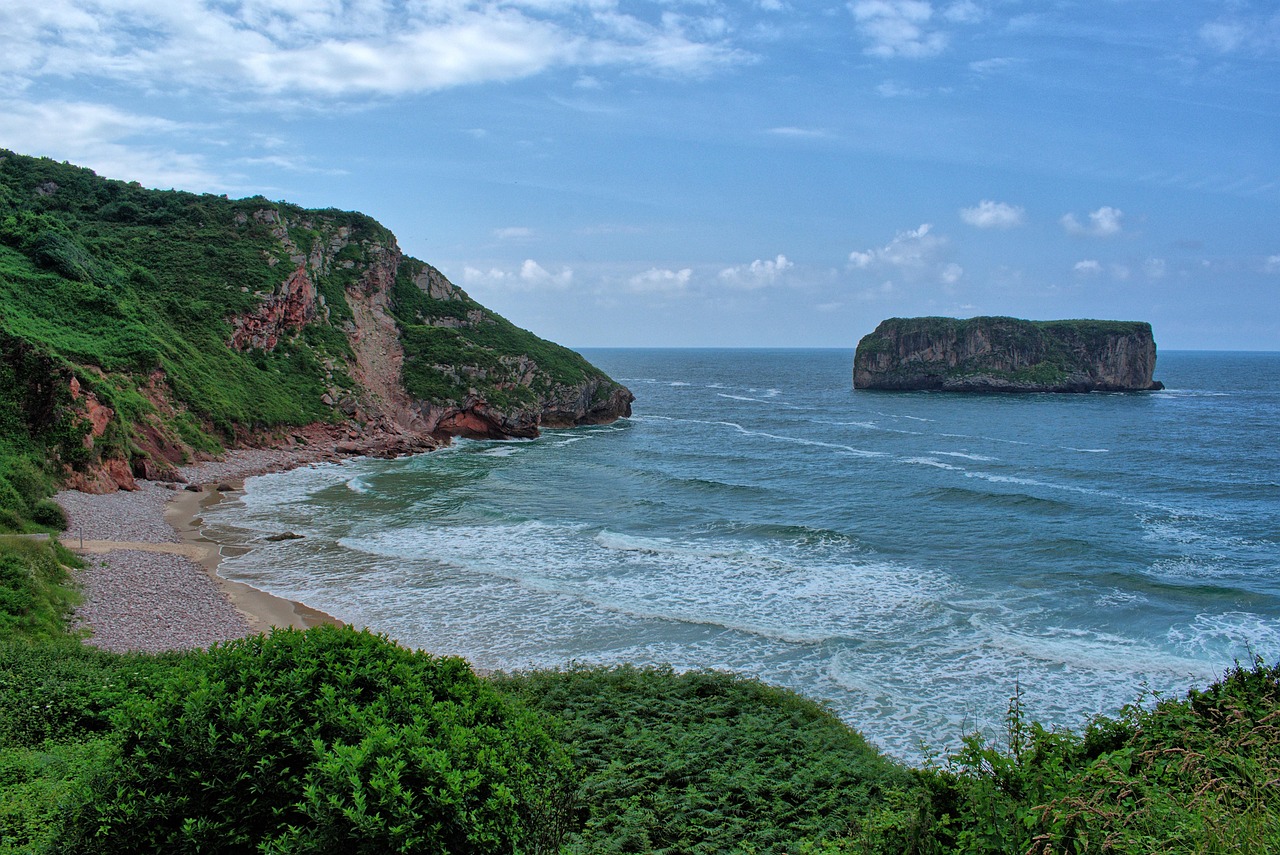
Cantabrian Coast (Green Spain)
The northern Spanish coast from Bilbao to A Coruña follows the A-8 motorway past beaches, fishing ports and towns near the Picos de Europa. Rain is part of the picture, which is why the region is green.
- Region
- Basque Country to Galicia
- Length
- About 550 km (340 mi), Bilbao–A Coruña
- Suggested time
- 2–3 days or more
- Best season
- May–Oct; rain possible anytime
- Road
- A-8 Autovía del Cantábrico
What should you know before visiting Cantabrian Coast (Green Spain)?
Tolls and vignettes for a car: about €8 (Spain).
- The A-8 (Autovía del Cantábrico) is the main axis. It runs about 480 km from Bilbao to Baamonde in Galicia, and the A-6 leads on to A Coruña (one guide counts 550 km in all). Reported toll-free; check before you leave.
- Rain is common, so plan flexible days rather than fixed viewpoint times. One guide names May to October as milder. A foggy stretch of the A-8 in Galicia, between Mondoñedo and Abadín, has warning signals.
- Spain does not treat sleeping in a properly parked vehicle as illegal parking. Awnings, tables or chairs outside count as camping, which is allowed only in designated areas.
- The Coastal Law bans driving and parking on beach sand, so use marked parking near the shore. Councils can also limit or ban overnight stays, so look for signs.
The drive
From Bilbao the A-8 runs west through Cantabria, with Castro Urdiales and Santander on the way and Santillana del Mar as a sightseeing stop. In Asturias the shore turns wilder: Llanes lies in the east, followed by Gijón and Avilés, with Cudillero, a small fishing port, nearby. In Galicia the road passes Ribadeo, and the A-6 continues toward A Coruña.
Camping
A camping directory lists many Asturian campsites with beach access and calls Llanes in the east a good base for the Picos de Europa. Not all campsites are open year-round, so confirm opening times and book ahead in high season. Outside campsites, councils can limit or ban motorhome parking, and protected coastal areas have their own rules. Look for signs and ask the town hall if in doubt.
FAQs
Is the A-8 toll-free?
A travel guide describes the Autovía del Cantábrico as toll-free. East of Bilbao the road continues as the AP-8, a separate road. Tolls and regional rules can change, so check the current situation with the road authority or your navigation before departure.
How many days should I plan?
One guide gives about 5.5 hours of non-stop driving from Bilbao to A Coruña and suggests 2 to 3 days, though its own figures vary. With beach stops, detours and rain days, plan more time.
Can I sleep in my motorhome at the beach?
Sleeping in a properly parked vehicle is not automatically illegal in Spain, but setting up an awning or outdoor furniture counts as camping. Parking on beach sand is banned. Municipalities and protected areas can ban parking, so check signs.
Places to see
 © Luis Parra Rubio · CC BY-SA 4.0
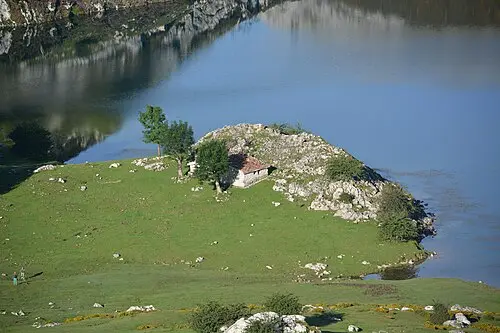
Lagos de Covadonga
Two glacial lakes in the Picos de Europa. Private cars are restricted in peak season, so take the bus.

 © David Corral Gadea · CC BY-SA 3.0 es
Segovia aqueduct
A Roman aqueduct of granite blocks held without mortar, 28 m high where it crosses the old town.
 © dynamosquito from France · CC BY-SA 2.0
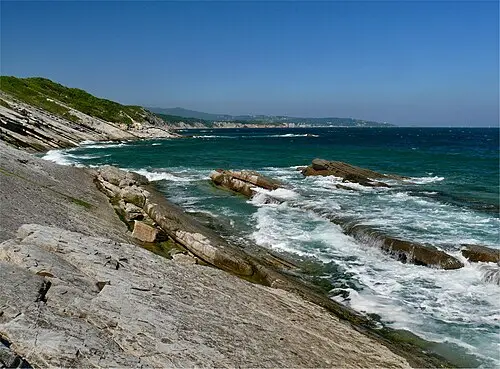
Corniche Basque
A clifftop road between Socoa and Hendaye above layered flysch rock that slants into the Atlantic. Park at…
 © Centenoyespelta · CC BY-SA 4.0
La Rhune rack railway
A wooden rack railway from 1924 that climbs to the 905 m summit on the Spanish border. From the top you see…

 © Jules Verne Times Two · CC BY-SA 4.0
Museo Guggenheim
A titanium-clad museum on the river, with a giant flower-covered puppy by the entrance.
 © Luis Fermín TURIEL PEREDO · CC BY-SA 4.0
Santillana del Mar
A medieval village of stone houses and balconies. The Altamira cave museum is two kilometres away.
 © Joana Martins · CC BY-SA 4.0
Peneda-Gerês National Park
Granite mountains, waterfalls and old Roman milestones in Portugal’s only national park.
Trip guides
 Photo by Hayffield L on Unsplash
Green Spain: Basque Country to Asturias
 Photo by Marco De Hevia on Unsplash
Old Castile: aqueducts and city walls
 Photo by Micael Rodrigues on Unsplash
Northern Portugal: Minho and Gerês
 © dynamosquito from France · CC BY-SA 2.0